Loading…
← All schools
Heartland Welding Academy
Andover, KSprivate forprofitheartlandweldingacademy.com
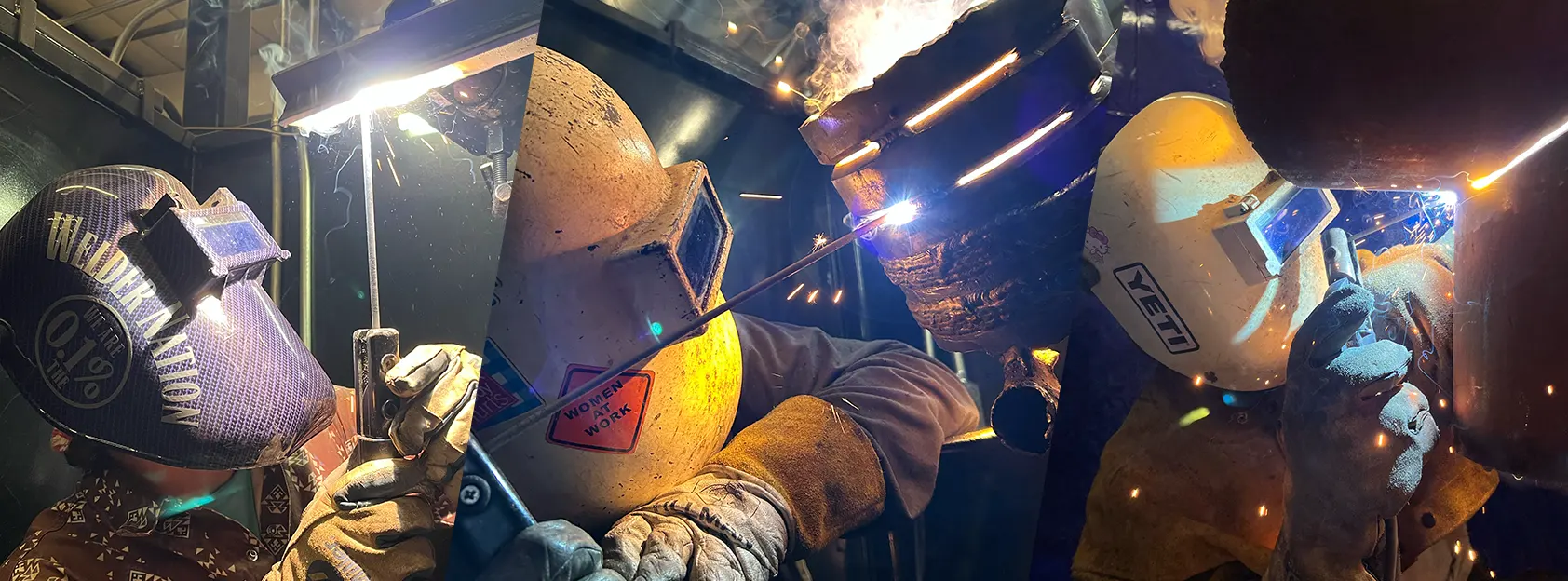
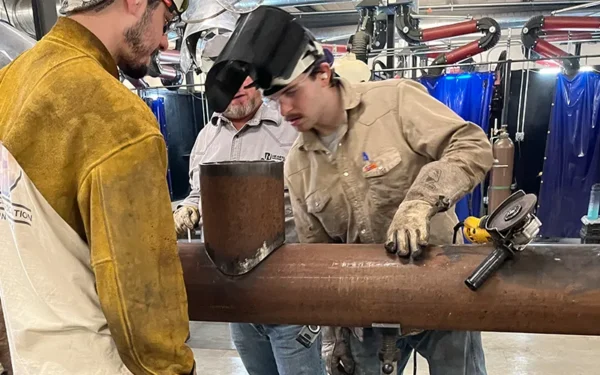
Heartland Welding Academy is a singular institution in the trade-school landscape: a hyper-focused, 24-week bootcamp for aspiring welders that operates with the intensity and practical clarity of a job site. Forget dorms and dining halls; this is a work-like environment in Andover, Kansas, where 90% of training is hands-on, and the goal is not a broad degree but specific, industry-recognized certifications. It's a place for those who want to build a tangible skill fast, with a 100% acceptance rate that reflects its open-door mission to train anyone willing to put in the work, and outcomes that show graduates quickly enter the workforce.
More details
- Undergrad enrollment
- 47
- Program Length
- 24 weeks
- Training Focus
- 90% hands-on
- Graduation Rate
- 91.8%
- Earnings 1 Year After Graduation
- $36,427
- Earnings 5 Years After Graduation
- $45,519
- Avg. Institutional Grant/Scholarship
- $2,738
- Institutional Grant/Scholarship Recipients
- ~14%
Outcomes & value
Outcomes & value
- Pell (lower-income) share
- 49%
Earnings = median of students working ~10 years after entry; debt = median of graduates. Value divides 10-yr earnings by one year’s net price — read it as earnings per dollar of annual cost, not a full lifetime ROI; it favors lower-cost schools. Source: U.S. Dept. of Education College Scorecard. Figures lag ~2 years and reflect all students, not your intended major.
Financial health
1.5 / 3.0Meets the federal financial-responsibility standard
U.S. Dept. of Education Financial Responsibility Composite Score (FY2022-23). Scale −1.0 to 3.0; ≥1.5 meets the standard. Reported for private nonprofit & for-profit institutions only — public universities are state-backed and not scored, so this is a stability signal, not a ranking.
Campus & location
Campus safety
- On-campus violent crimes (2024)
- 0
On-campus criminal offenses classed as violent (murder/non-negligent manslaughter, rape, robbery, aggravated assault) for the most recent reported year. Source: U.S. Dept. of Education Campus Safety and Security (Clery Act). Counts reflect what’s reported to the school, and urban campuses often report more partly due to non-student incidents nearby — read alongside campus size and setting, not as a standalone safety verdict.
Climate
- Pleasant days / yr
- 77
- Summer high
- 89°F
- Winter low
- 27°F
- Annual rain
- 28.2"
- Annual snow
- 12.6"
- Natural-hazard risk
- Relatively Low
Pleasant days counts days per year with a mean temperature of 55–75°F, a high at or below 90°F, a low at or above 45°F, and little precipitation — a transparent comfort measure, not a weighting we invented. Computed from Open-Meteo ERA5 daily history (2019–2023). Natural-hazard risk is the county’s composite rating from the FEMA National Risk Index.
Quick answers
- How much does Heartland Welding Academy cost?
- At Heartland Welding Academy, the average net price (after aid) is about $20,194 per year. Actual cost varies with financial aid and residency.
- How many undergraduates attend Heartland Welding Academy?
- Heartland Welding Academy enrolls approximately 47 undergraduate students.
- Where is Heartland Welding Academy located?
- Heartland Welding Academy is located in Andover, KS.
Admissions
Admissions at Heartland Welding Academy is defined by its open-access, skills-focused mission, not by competitive selection. The institution has a 100% , reflecting a policy that is open to all applicants who meet the basic requirements [7][8]. The process is straightforward and procedural, designed to assess readiness for a rigorous, fast-paced program rather than to weed out candidates.
Prospective students must be at least 17 years old, pay a $75 application fee, provide a valid photo ID, and submit proof of high school completion (a diploma, GED, or transcript) [3]. There is no mention of SAT or ACT requirements in the available data; test scores are not reported as a factor for admission [8][10]. The primary gatekeeper is not the application but the program itself: to successfully complete the course and earn certification, students must maintain a 70% cumulative GPA on all written tests and meet visual standard requirements on all practical welds [1]. The admissions data is categorized for institutions that do not have an open admission policy, but the 100% acceptance rate indicates Heartland's process is effectively open-enrollment [2]. Demonstrated interest, a factor tracked by some colleges via the (C7), is not discussed in the context of this trade academy; the focus is squarely on meeting the baseline entry criteria [24][25][26][27][28].
Compare Heartland Welding Academy
See colleges similar to Heartland Welding Academy →Sources
- Student Handbook
- Heartland Welding Academy - DFR Report HTML
- Admissions Process | Heartland Welding Academy Wichita KS
- Heartland Welding Academy: Enrollment, Tuition and Outcomes ...
- Heartland Welding Academy - Colleges
- Common Data Set: Home
- Heartland Welding Academy
- Heartland Welding Academy | College Scorecard
- FAQs | Heartland Welding Academy | Wichita, KS
- Heartland Welding Academy | EDsmart College Rankings 2026
- Heartland Welding Academy | Welding School | Wichita KS