Admit rate has ranged 57%–90% over the last 5 years — notably volatile. Source: IPEDS via Urban Institute.
Acceptance & SAT from Common Data Set / IPEDS; net price, earnings & graduation from the U.S. Dept. of Education College Scorecard. Figures lag ~1–2 years — verify with the school.
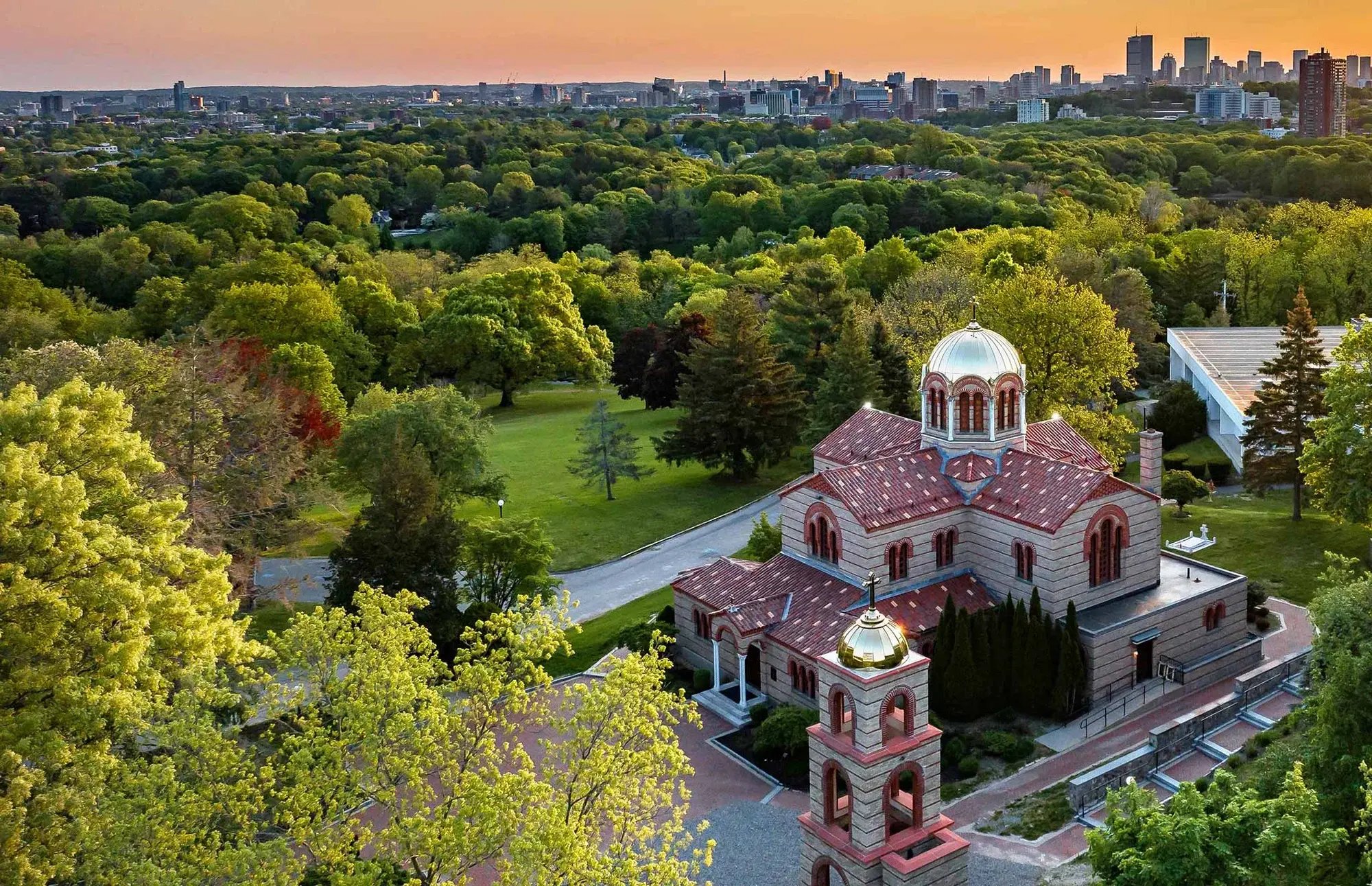
Hellenic College-Holy Cross Greek Orthodox School of Theology is not just a college; it's a singular, immersive ecosystem for Orthodox Christian formation in Brookline, Massachusetts. As the only accredited Orthodox Christian college, graduate school of theology, and seminary in the United States, it operates with a dual mission: offering a traditional liberal arts undergraduate experience through Hellenic College and preparing clergy and scholars through its Holy Cross graduate school. The campus vibe is intensely communal and faith-centered, where theology is lived as much as it is studied, but this unique focus comes with significant academic and financial challenges that prospective students must weigh carefully.
Admission requirements
Test-optional — scores considered if submitted
Required
Grade point average
Letters of recommendation
Demonstrated competencies
TOEFL (non-native English)
Considered (not required)
High school transcript
Class rank
Test scores (SAT/ACT)
College-prep program
Source: IPEDS Admissions survey (2022) via Urban Institute. Covers formal factors only — it does not reflect essays, extracurriculars, or other holistic criteria.
More details
Undergrad enrollment
64
In-state tuition
$22,490
Out-of-state tuition
$22,490
Unique Status
Only accredited Orthodox Christian college & seminary in the U.S.
Graduation Rate
44%
Median Earnings (10yr)
$51,724
Financial Aid Recipients
86% of first-year undergraduates
Outcomes & value
Outcomes & value
Median earnings (10 yr)
$51,724
Value (earnings ÷ net price)
2.1×
Median debt at graduation
$21,500
Graduation rate
44%
First-year retention
71%
Reducing loan balance (3 yr)
61%
Pell (lower-income) share
24%
Endowment / student
$186,234
Earnings = median of students working ~10 years after entry; debt = median of graduates. Value divides 10-yr earnings by net price — read it as earnings per dollar of annual cost, not a full lifetime ROI; it favors lower-cost schools. Source: U.S. Dept. of Education College Scorecard. Figures lag ~2 years and reflect all students, not your intended major.
Campus & location
Campus safety
On-campus violent crimes (2024)
0
Per 1,000 students
0.00
On-campus criminal offenses classed as violent (murder/non-negligent manslaughter, rape, robbery, aggravated assault) for the most recent reported year. Source: U.S. Dept. of Education Campus Safety and Security (Clery Act). Counts reflect what’s reported to the school, and urban campuses often report more partly due to non-student incidents nearby — read alongside campus size and setting, not as a standalone safety verdict.
Climate
Pleasant days / yr
91
Summer high
81°F
Winter low
25°F
Annual rain
49"
Annual snow
31.4"
Natural-hazard risk
Relatively Moderate
Pleasant days counts days per year with a mean temperature of 55–75°F, a high at or below 90°F, a low at or above 45°F, and little precipitation — a transparent comfort measure, not a weighting we invented. Computed from Open-Meteo ERA5 daily history (2019–2023). Natural-hazard risk is the county’s composite rating from the FEMA National Risk Index.
Deep dive — research, future-scholar output & economic mobility▾
Research output
Institutional h-index
27
Scholarly works
185
Institutional research volume and impact from OpenAlex. The h-index reflects large research universities and will be low for teaching-focused liberal-arts colleges — not a measure of undergraduate quality.
Quick answers
What is the acceptance rate at Hellenic College-Holy Cross Greek Orthodox School of Theology?
Hellenic College-Holy Cross Greek Orthodox School of Theology's acceptance rate is approximately 80% (Brookline, MA), based on the most recent figures we compiled from public and primary sources.
How much does Hellenic College-Holy Cross Greek Orthodox School of Theology cost?
At Hellenic College-Holy Cross Greek Orthodox School of Theology, the average net price (after aid) is about $25,203 per year. Actual cost varies with financial aid and residency.
How many undergraduates attend Hellenic College-Holy Cross Greek Orthodox School of Theology?
Hellenic College-Holy Cross Greek Orthodox School of Theology enrolls approximately 64 undergraduate students.
Where is Hellenic College-Holy Cross Greek Orthodox School of Theology located?
Hellenic College-Holy Cross Greek Orthodox School of Theology is located in Brookline, MA.
Admissions
Admissions at HCHC are characterized by an open, rolling process with a focus on academic readiness and, implicitly, alignment with its Orthodox Christian mission. The undergraduate is high, but the school reports specific academic benchmarks for consideration. All undergraduate applicants must have a GPA of at least 3.5 to be eligible. The process is not highly selective in a traditional sense, but it is gatekept by this minimum academic standard and the school's specialized religious character. Admissions operates on a rolling basis for both first-year and transfer students for the Fall and Spring semesters. The incoming class size can vary significantly; one recent year saw an incoming enrollment of 93 students, which the school noted was one of the largest in its history. While standardized test scores are not a focal point in the provided sources, one external source suggests an SAT range for admitted students might be between 1080 and 1220. The admissions office explicitly states it accepts students of all races and creeds, though the core curriculum and community life are deeply rooted in Orthodox tradition.
The academic structure is bifurcated between the undergraduate Hellenic College and the graduate-level Holy Cross Greek Orthodox School of Theology, creating a continuum from bachelor's to master's and doctoral studies in Orthodox thought. Hellenic College offers six undergraduate major programs: Theology, Classics and Greek Studies, Literature and History, Psychology and Human Development, Liberal Studies, and Business Management. The Theology major is a cornerstone, where students attain religious literacy through exposure to the theology and history of Orthodox Christianity, its liturgical arts, and scriptural tradition. The graduate school offers degrees like the Master of Theological Studies (MTS), a two-year program designed to educate students and give them proficiency in Orthodox theology and history. The pedagogical approach, as described within the Orthodox community, aims to balance rigorous academics with practical skills. For instance, a Master of Divinity student will have classes in patristics, dogmatic theology, and other scholarly disciplines alongside pastoral training. This integration of deep theological study with formation for ministry defines the academic culture.
Life at HCHC is an all-encompassing Orthodox Christian experience, far removed from a typical secular college campus. The Office of Student Life emphasizes that students do not learn Orthodox theology only in the classroom; they put it into practice in the Chapel, campus housing, the cafeteria, and through student organizations. The campus fosters a tight-knit residential community where faith and daily life are seamlessly integrated. The institution also cultivates cultural and artistic engagement tied to its Hellenic and Orthodox heritage. Its "Art and Culture" program recently presented events exploring different but equally fascinating dimensions of artistic tradition. Social media portrayals from the institution highlight its unique status as the only accredited Orthodox Christian college, graduate school of theology, and seminary in the U.S., serving a community of nearly 60 years. The administration provides various resources and policies to guide campus life, positioning staff as supports for the student journey within this highly specific religious environment.
Outcome metrics for HCHC present a complex picture, marked by a significant gap between access and completion. The six-year graduation rate is notably low, a fact that external analysts highlight places the institution in the lower quartile nationally. This suggests challenges with student retention and progression through its programs. Post-graduation earnings data for undergraduates is not detailed in the provided sources, leaving a gap in understanding the career trajectories for its liberal arts and theology graduates. The school's own communications acknowledge ongoing challenges, with one report citing financial woes and dropping enrollment numbers as issues plaguing the theological institution. However, there are also signs of strategic planning for sustainability. The Board of Trustees has unanimously voted on a strategic plan for growth, with the well-stewarded proceeds from certain initiatives intended to generate annual income vital to sustaining the seminary's campus, operations, and supporting scholarships.
Understanding the net cost of attending HCHC requires careful calculation, as sticker price and aid packages vary. The school provides a Calculator to help families estimate their actual cost after grants and scholarships, which do not have to be repaid. A significant majority—86%—of full-time beginning undergraduates receive some form of grant or scholarship aid. The average financial aid package and average net price figures from external sources show variation, underscoring the importance of the individual calculator. One source projects costs based on income, suggesting students with family incomes over $110,000 might pay around $29,831. The school encourages students and families to start with savings, grants, scholarships, and federal student loans to pay for college. Its ability to provide aid is directly tied to donor support; the institution states that without generous supporters, it would not be able to continue educating and providing scholarships and financial aid to deserving students. Policies and procedures regarding institutional and student eligibility for aid are documented, but the school does not advertise a no-loan policy or a guarantee of meeting full demonstrated financial need.
Hellenic College-Holy Cross stands alone in American higher education. It is the only fully accredited institution in the United States that combines an Orthodox Christian liberal arts college (Hellenic College) with a graduate school of theology and seminary (Holy Cross). This creates a total-immersion environment for Orthodox formation that is unparalleled. The education here is not merely academic; it is a holistic integration of theology, liturgy, community living, and Hellenic culture. Students are exposed to the rich history, theology, and liturgical traditions of Orthodox Christianity in a program designed to prepare graduates for service within the Church. This singular mission attracts a specific student body—those deeply committed to the Orthodox faith, whether aiming for lay leadership, academic theology, or ordained ministry. While it faces the practical challenges of a small, specialized institution, including financial pressures and a low graduation rate, its niche is absolute. For the right student—one seeking an authentic, all-encompassing Orthodox Christian education—there is simply no other comparable option in the country.
Hellenic College-Holy Cross Greek Orthodox School of Theology seal · sourceHellenic College Holy Cross Greek Orthodox School of Theology - Wikipedia · sourceHellenic College Holy Cross | HCHC FULL ACCREDITATION REAFFIRMED · sourceHCHC | Academic Programs · source