Loading…
← All schools
Heritage Valley Health System School of Nursing
McKees Rocks, PAprivate nonprofitwww.heritagevalley.org/
Acceptance
82%
Avg net price
$23,656
Earnings (10 yr)
$79,831
Admit rate has ranged 41%–100% over the last 5 years — notably volatile. Source: IPEDS via Urban Institute.
Acceptance & SAT from Common Data Set / IPEDS; net price, earnings & graduation from the U.S. Dept. of Education College Scorecard. Figures lag ~1–2 years — verify with the school.
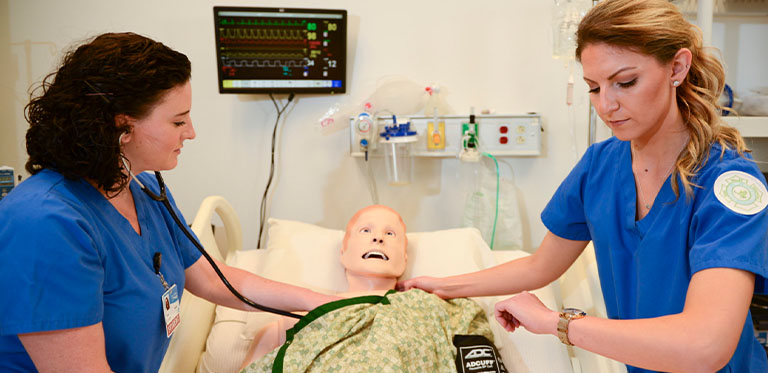
Heritage Valley Health System School of Nursing is a single-purpose, ACEN-accredited diploma program embedded directly within a major Pennsylvania hospital network. It operates with the pragmatic, no-frills focus of a professional trade school: the entire curriculum is dedicated to Registered Nursing, clinical rotations happen within the system's own facilities, and the admissions process prioritizes specific, demonstrable readiness over holistic review. This creates a direct, accelerated pipeline into the nursing workforce, reflected in its accessible 82% acceptance rate and a median graduate salary approaching $80,000.
Admission requirements
Test-blind — scores not considered
Required
- Grade point average
- Letters of recommendation
Considered (not required)
- High school transcript
- Demonstrated competencies
Source: IPEDS Admissions survey (2022) via Urban Institute. Covers formal factors only — it does not reflect essays, extracurriculars, or other holistic criteria.
More details
- Undergrad enrollment
- 71
- In-state tuition
- $22,800
- Out-of-state tuition
- $22,800
- Accreditation
- ACEN
- Graduation Rate
- 56%
- Single Major Offered
- Registered Nursing
- Demonstrated Interest
- Not considered
- Median Earnings (10yr)
- $79,831
Outcomes & value
Outcomes & value
- Median earnings (10 yr)
- $79,831
- Value (earnings ÷ net price)
- 3.4×
- Reducing loan balance (3 yr)
- 70%
- Pell (lower-income) share
- 17%
Earnings = median of students working ~10 years after entry; debt = median of graduates. Value divides 10-yr earnings by one year’s net price — read it as earnings per dollar of annual cost, not a full lifetime ROI; it favors lower-cost schools. Source: U.S. Dept. of Education College Scorecard. Figures lag ~2 years and reflect all students, not your intended major.
Campus & location
Campus safety
- On-campus violent crimes (2024)
- 0
On-campus criminal offenses classed as violent (murder/non-negligent manslaughter, rape, robbery, aggravated assault) for the most recent reported year. Source: U.S. Dept. of Education Campus Safety and Security (Clery Act). Counts reflect what’s reported to the school, and urban campuses often report more partly due to non-student incidents nearby — read alongside campus size and setting, not as a standalone safety verdict.
Climate
- Pleasant days / yr
- 92
- Summer high
- 82°F
- Winter low
- 27°F
- Annual rain
- 47.4"
- Annual snow
- 21"
- Natural-hazard risk
- Relatively High
Pleasant days counts days per year with a mean temperature of 55–75°F, a high at or below 90°F, a low at or above 45°F, and little precipitation — a transparent comfort measure, not a weighting we invented. Computed from Open-Meteo ERA5 daily history (2019–2023). Natural-hazard risk is the county’s composite rating from the FEMA National Risk Index.
Quick answers
- What is the acceptance rate at Heritage Valley Health System School of Nursing?
- Heritage Valley Health System School of Nursing's acceptance rate is approximately 82% (McKees Rocks, PA), based on the most recent figures we compiled from public and primary sources.
- How much does Heritage Valley Health System School of Nursing cost?
- At Heritage Valley Health System School of Nursing, the average net price (after aid) is about $23,656 per year. Actual cost varies with financial aid and residency.
- How many undergraduates attend Heritage Valley Health System School of Nursing?
- Heritage Valley Health System School of Nursing enrolls approximately 71 undergraduate students.
- Where is Heritage Valley Health System School of Nursing located?
- Heritage Valley Health System School of Nursing is located in McKees Rocks, PA.
Admissions
The admissions process at Heritage Valley is straightforward and competency-focused, designed to filter for candidates who are immediately prepared for the rigors of a nursing program. With an of 82%, the school is accessible but maintains specific gateways. The primary requirements are concrete: applicants must achieve an adjusted individual score of 65% or higher on the ATI TEAS exam and complete an interview with the school's administration. The process is initiated by submitting an Application for Admission form, available online. Notably, the school reports a 100% rate, meaning every student who is admitted ultimately enrolls—a sign of a self-selecting, highly committed applicant pool. There is no indication that the school tracks or considers demonstrated interest as part of its admissions criteria.
- Acceptance Rate: 82%
- Yield Rate: 100%
- Key Requirements: ATI TEAS exam (65%+), interview, completed application.
- Demonstrated Interest: Not considered.
Compare Heritage Valley Health System School of Nursing
See colleges similar to Heritage Valley Health System School of Nursing →Sources
- [PDF] SON Catalog (2024-2026) Revised - Heritage Valley Health System
- Heritage Valley Health System School of Nursing - Data USA
- Heritage Valley Health System School of Nursing - DFR Report HTML
- [PDF] Heritage Valley Health System School of Nursing
- Admission Information/Forms - Heritage Valley Health System
- Common Data Set: Home
- Admission Requirements - Heritage Valley Health System
- Heritage Valley Health System - Facebook
- Heritage Valley Health System School of Nursing - College Scorecard