Admit rate has ranged 57%–68% over the last 5 years — notably volatile. Source: IPEDS via Urban Institute.
Acceptance & SAT from Common Data Set / IPEDS; net price, earnings & graduation from the U.S. Dept. of Education College Scorecard. Figures lag ~1–2 years — verify with the school.
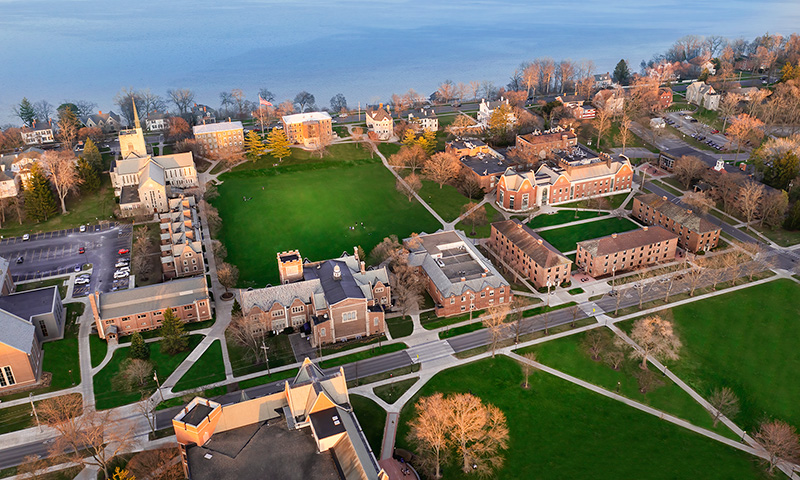
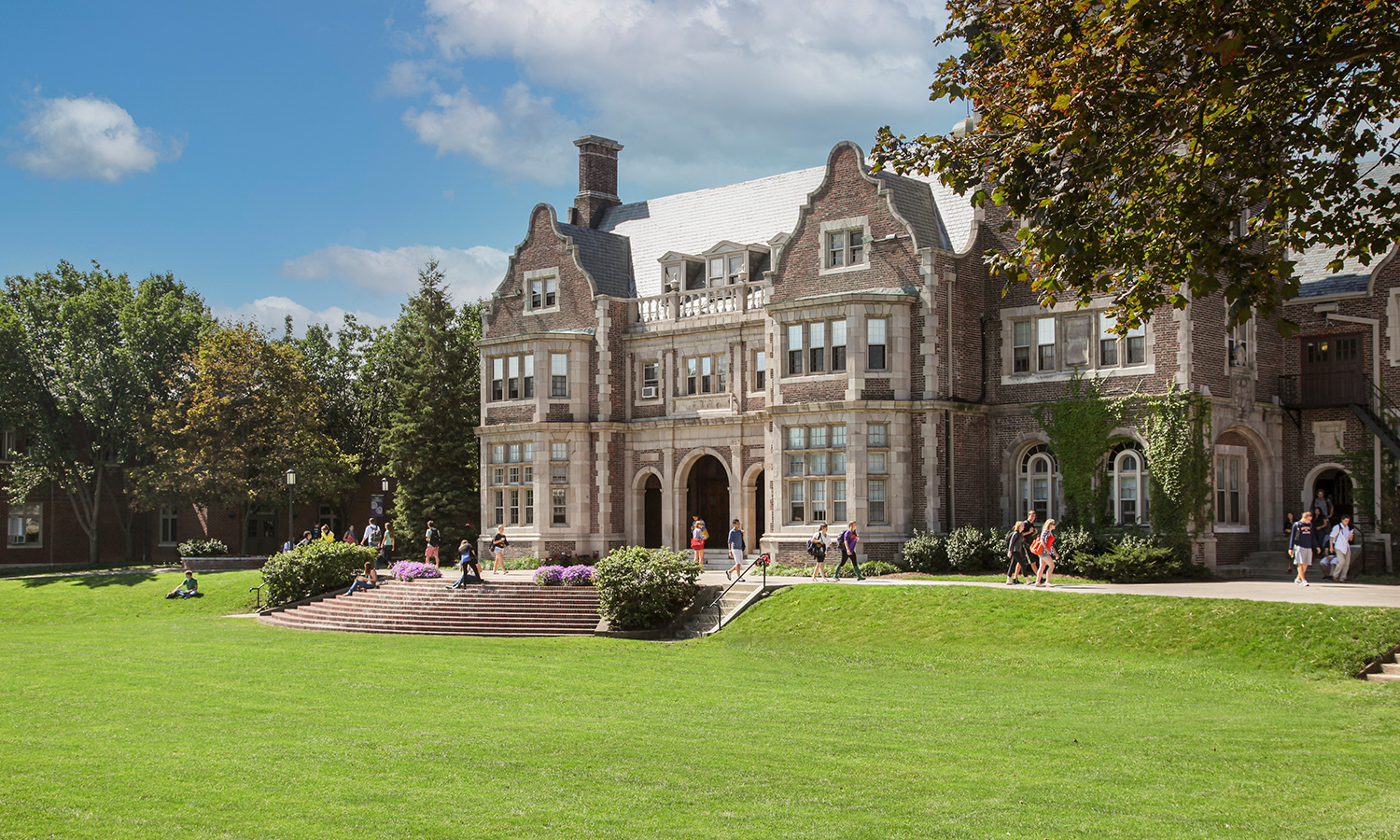
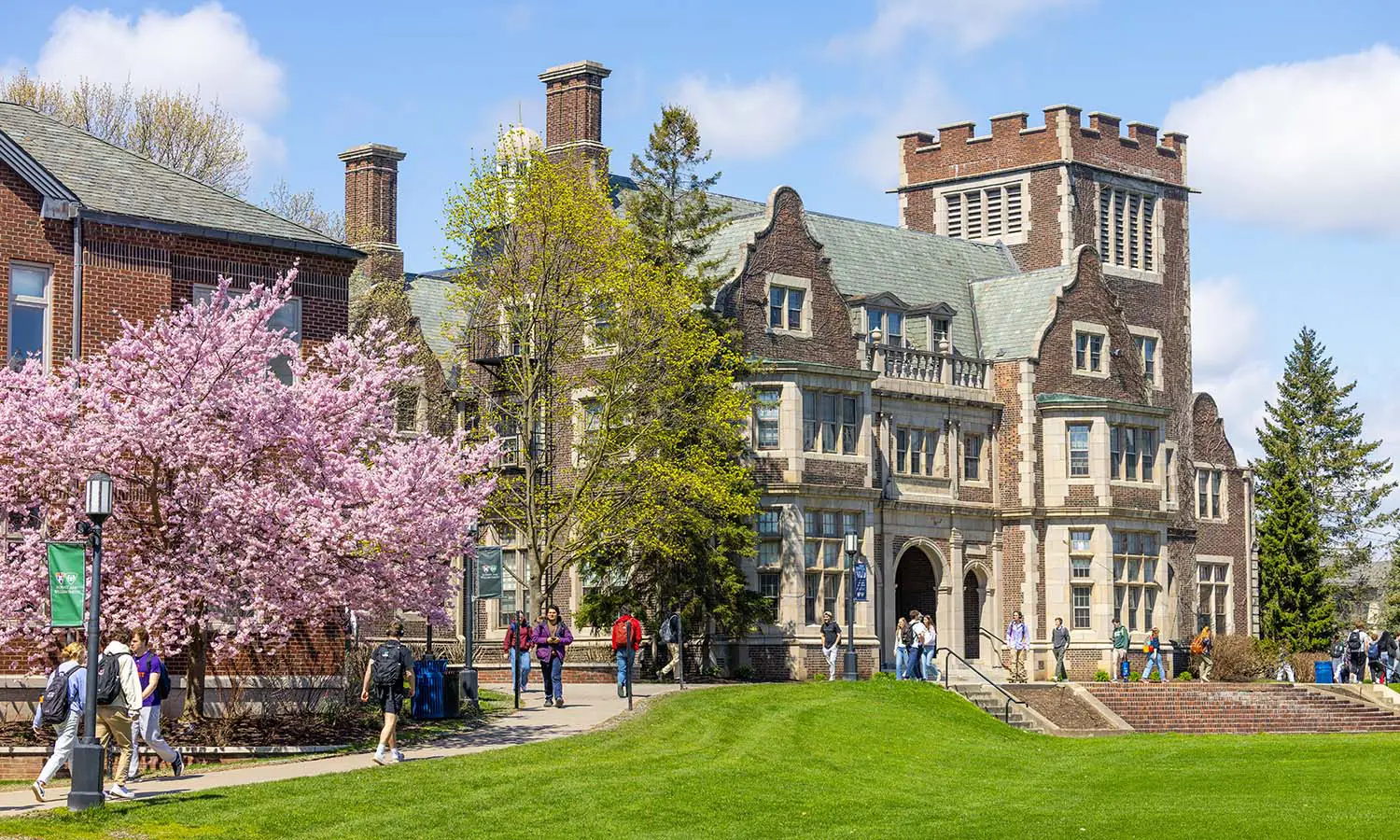
Hobart and William Smith Colleges (HWS) is a distinctive coordinate liberal arts college in New York's Finger Lakes region, where the academic rigor of a traditional liberal arts education meets the profound influence of its stunning natural setting. The school's identity is deeply intertwined with Seneca Lake, which serves as both a laboratory for environmental studies and aquatic science and a central hub for campus social life. With a collaborative, close-knit community fostered by over 70 academic programs and a strong emphasis on interdisciplinary study, HWS cultivates graduates who are as prepared for leadership as they are for thoughtful inquiry.
Admission requirements
Test-optional — scores considered if submitted
Required
High school transcript
Letters of recommendation
College-prep program
TOEFL (non-native English)
Considered (not required)
Grade point average
Class rank
Test scores (SAT/ACT)
Source: IPEDS Admissions survey (2022) via Urban Institute. Covers formal factors only — it does not reflect essays, extracurriculars, or other holistic criteria.
More details
Undergrad enrollment
1,786
In-state tuition
$65,117
Out-of-state tuition
$65,117
No-Loan Policy
No formal policy indicated
Graduation Rate
77%
Meets Full Need
Seeks to meet 'as much as possible'
ED Share of Class
25.6%
First-Year Retention
Not stated in sources
Demonstrated Interest
Considered
Student Organizations
80+
Median Earnings (10yr)
$68,831
Varsity Athletic Teams
31
Outcomes & value
Outcomes & value
Median earnings (10 yr)
$68,831
Value (earnings ÷ net price)
2.2×
Median debt at graduation
$27,000
Graduation rate
77%
First-year retention
86%
Reducing loan balance (3 yr)
80%
Pell (lower-income) share
25%
First-gen share (among federal-aid recipients)
13%
Top-earning majors
Median earnings by field of study (highest credential), ~2 years after completion.
Economics$55,512
Public Policy Analysis$44,942
Liberal Arts and Sciences, General Studies and Humanities$42,682
History$41,193
Natural Resources Conservation and Research$34,348
Psychology, General$33,281
Campus & location
Campus safety
On-campus violent crimes (2024)
10
Per 1,000 students
5.46
On-campus criminal offenses classed as violent (murder/non-negligent manslaughter, rape, robbery, aggravated assault) for the most recent reported year. Source: U.S. Dept. of Education Campus Safety and Security (Clery Act). Counts reflect what’s reported to the school, and urban campuses often report more partly due to non-student incidents nearby — read alongside campus size and setting, not as a standalone safety verdict.
Climate
Pleasant days / yr
92
Summer high
80°F
Winter low
24°F
Annual rain
45.1"
Annual snow
41.6"
Natural-hazard risk
Relatively Low
Pleasant days counts days per year with a mean temperature of 55–75°F, a high at or below 90°F, a low at or above 45°F, and little precipitation — a transparent comfort measure, not a weighting we invented. Computed from Open-Meteo ERA5 daily history (2019–2023). Natural-hazard risk is the county’s composite rating from the FEMA National Risk Index.
Quick answers
What is the acceptance rate at Hobart William Smith Colleges?
Hobart William Smith Colleges's acceptance rate is approximately 64% (Geneva, NY), based on the most recent figures we compiled from public and primary sources.
What SAT score do you need for Hobart William Smith Colleges?
Admitted students at Hobart William Smith Colleges typically score 1190–1385 on the SAT (the middle-50% range). Scores outside this band are still admitted, especially with strong applications.
How much does Hobart William Smith Colleges cost?
At Hobart William Smith Colleges, the average net price (after aid) is about $31,563 per year. Actual cost varies with financial aid and residency.
How many undergraduates attend Hobart William Smith Colleges?
Hobart William Smith Colleges enrolls approximately 1,786 undergraduate students.
Where is Hobart William Smith Colleges located?
Hobart William Smith Colleges is located in Geneva, NY.
Admissions
Hobart and William Smith occupies a selective but accessible niche in the liberal arts landscape. The admissions process is holistic, with the college reporting that it considers a range of factors beyond test scores and grades. While the overall is 64%, applying Early Decision can provide a significant advantage; one source notes the ED acceptance rate is 51%, and the college reports that 25.6% of the first-year class matriculates via Early Decision. The rate—the percentage of admitted students who enroll—is a modest 12.5%, indicating that HWS competes for students who have many options. The middle 50% SAT range for admitted students is 1190–1385, with a corresponding ACT range of 28–32. Academic factors like GPA, class rank, and the rigor of a student's secondary school record are rated as 'very important' in the , while extracurricular activities, character, and status are 'important.' Notably, demonstrated interest is listed as 'considered' in the admissions evaluation, suggesting that campus visits, interviews, and engagement with admissions materials can play a role. The regular decision deadline is February 1.
Earnings = median of students working ~10 years after entry; debt = median of graduates. Value divides 10-yr earnings by one year’s net price — read it as earnings per dollar of annual cost, not a full lifetime ROI; it favors lower-cost schools. Source: U.S. Dept. of Education College Scorecard. Figures lag ~2 years and reflect all students, not your intended major.
Communication and Media Studies
$32,569
English Language and Literature, General$30,409
Source: U.S. Dept. of Education College Scorecard (field-of-study earnings). Figures cover graduates who received federal aid and lag ~2 years; not all programs report data.
The academic experience at HWS is defined by the breadth and depth of a classic liberal arts curriculum, delivered through a coordinate college system where Hobart (for men) and William Smith (for women) share faculty, facilities, and classes but maintain distinct traditions and student governments. The college offers more than 70 majors, minors, and pre-professional programs. Popular and signature programs include Economics, Media & Society, Environmental Studies, and Psychological Science. The setting on Seneca Lake is integral to academics, particularly fueling strong programs in Aquatic Science and Environmental Studies, which use the lake as a living laboratory. The faculty are emphasized as both 'respected scholars and scientists' and 'devoted educators' who prioritize teaching and collaboration with students. This creates an environment where interdisciplinary study is common, and students are encouraged to make connections across traditional academic boundaries. The most common fields of study for graduates include Architecture and Related Services, Visual and Performing Arts, Biological and Biomedical Sciences, and History.
Life at HWS is intensely campus-centric, shaped by its beautiful location and a strong sense of community. The campus's idyllic setting on the shores of Seneca Lake is a major focal point for student life; as one student noted, a favorite activity is to 'go down to the docks and enjoy the beauty and serenity of the lake.' This connection to the outdoors fosters a relaxed yet engaged campus vibe. Students can choose from over 80 student-run clubs and organizations, 12 on-campus cultural centers, and a robust athletics program with 31 varsity teams (the 'Statesmen' for Hobart and 'Herons' for William Smith) and numerous intramural options. Campus Life offices strengthen the community through shared resources and traditions that mark key milestones in the student experience. The social scene is described as cohesive, where 'the entire campus tends to come together for social events, creating a welcoming atmosphere where students support each other's academic and personal success.' This creates a tight-knit environment where it's easy to find your niche while still feeling part of a larger, supportive whole.
Hobart and William Smith Colleges produce graduates with strong long-term outcomes, a testament to the value of its liberal arts education. The graduation rate is 77%. Financially, the return on investment is solid; the median earnings for graduates ten years after entry is $68,831. This earning potential outperforms the midpoint for four-year colleges. The college has been recognized in national rankings for its combination of quality education and graduate outcomes, with one recent ranking noting it rose more than 125 spots year-over-year. These figures suggest that HWS successfully prepares students not just for their first job, but for sustained career success and leadership, fulfilling its mission to prepare students 'to build and lead their brightest futures.'
As a private liberal arts college, HWS carries a high sticker price, with comprehensive costs for tuition, fees, housing, and food exceeding $87,000. However, the institution is committed to making this education accessible through substantial financial aid. The college awards more than $80 million in scholarship and grant funds annually, and 99% of undergraduate students receive some form of financial aid. The average after aid is $31,563. The college states it 'works to meet as much demonstrated financial need as possible' using a combination of scholarships, grants, work-study, and loans. This indicates that while HWS may not have a formal 'no-loan' policy for all students, it strives to minimize debt through generous grant aid. Families are encouraged to use the HWS net price calculator for a personalized estimate. Merit-based scholarships are also available and can range 'from a few thousand dollars to well over $20,000 per year.'
Hobart and William Smith Colleges stand out for the powerful and authentic way its environment shapes its entire educational and social ecosystem. This isn't just a pretty campus; Seneca Lake is a central character in the HWS story. It directly informs top academic programs in environmental and aquatic sciences, provides a unique backdrop for research and study, and serves as the community's primary recreational and social gathering place. This deep integration of place with purpose is rare. Furthermore, the coordinate college system—maintaining separate Hobart and William Smith colleges within a fully coeducational academic program—offers a unique blend of tradition, identity, and leadership development that you won't find at fully merged coed or single-sex institutions. It fosters a specific kind of community where collaboration is paramount, but distinct histories and support systems are preserved. The result is a college that feels both timeless in its liberal arts commitment and distinctly grounded in its spectacular Finger Lakes setting, producing graduates who are as comfortable leading in a boardroom as they are reflecting by the water's edge.
Hobart William Smith Colleges seal · sourceAbout Us | Hobart and William Smith Colleges · sourceAbout Us | Hobart and William Smith Colleges · sourceAdmissions | Hobart and William Smith Colleges · source