Admit rate has ranged 76%–92% over the last 5 years — notably volatile. Source: IPEDS via Urban Institute.
Acceptance & SAT from Common Data Set / IPEDS; net price, earnings & graduation from the U.S. Dept. of Education College Scorecard. Figures lag ~1–2 years — verify with the school.
Hope College is a private Christian liberal arts college in Holland, Michigan, that operates with the unassuming confidence of a Midwestern institution that knows exactly what it is. It’s a place where high academic standards—evident in its robust undergraduate research and more than 90 majors—coexist with a deeply communal, faith-infused campus life. While its admissions are accessible, the outcomes are solid, with a strong track record of placing graduates into jobs or graduate school within six months, all wrapped in a package that feels both traditional and genuinely supportive.
Admission requirements
Test-optional — scores considered if submitted
Required
High school transcript
Grade point average
College-prep program
Considered (not required)
Test scores (SAT/ACT)
TOEFL (non-native English)
Source: IPEDS Admissions survey (2022) via Urban Institute. Covers formal factors only — it does not reflect essays, extracurriculars, or other holistic criteria.
Earnings = median of students working ~10 years after entry; debt = median of graduates. divides 10-yr earnings by net price — read it as earnings per dollar of annual cost, not a full lifetime ROI; it favors lower-cost schools. Source: U.S. Dept. of Education College Scorecard. Figures lag ~2 years and reflect all students, not your intended major.
Financial health
2.9 / 3.0Meets the federal financial-responsibility standard
U.S. Dept. of Education Financial Responsibility Composite Score (FY2022-23). Scale −1.0 to 3.0; ≥1.5 meets the standard. Reported for private nonprofit & for-profit institutions only — public universities are state-backed and not scored, so this is a stability signal, not a ranking.
Top-earning majors
Median earnings by field of study (highest credential), ~2 years after completion.
Engineering, General$67,101
Accounting and Related Services$58,777
Registered Nursing, Nursing Administration, Nursing Research and Clinical Nursing$58,108
Political Science and Government$44,942
Business Administration, Management and Operations$44,418
Special Education and Teaching
Campus & location
Campus safety
On-campus violent crimes (2024)
4
On-campus criminal offenses classed as violent (murder/non-negligent manslaughter, rape, robbery, aggravated assault) for the most recent reported year. Source: U.S. Dept. of Education Campus Safety and Security (Clery Act). Counts reflect what’s reported to the school, and urban campuses often report more partly due to non-student incidents nearby — read alongside campus size and setting, not as a standalone safety verdict.
Climate
Pleasant days / yr
99
Summer high
77°F
Winter low
25°F
Annual rain
43.9"
Annual snow
45.2"
Natural-hazard risk
Relatively Moderate
Pleasant days counts days per year with a mean temperature of 55–75°F, a high at or below 90°F, a low at or above 45°F, and little precipitation — a transparent comfort measure, not a weighting we invented. Computed from Open-Meteo ERA5 daily history (2019–2023). Natural-hazard risk is the county’s composite rating from the FEMA National Risk Index.
Deep dive — research, future-scholar output & economic mobility▾
Research output
Institutional h-index
154
Scholarly works
4,945
Institutional research volume and impact from OpenAlex. The h-index reflects large research universities and will be low for teaching-focused liberal-arts colleges — not a measure of undergraduate quality.
Economic mobility
Mobility rate
0.5%
Bottom → top quintile
22%
From bottom quintile
2%
Mobility rate = the share of students who both start in the bottom household-income quintile and reach the top quintile; bottom → top is that chance conditional on starting at the bottom. Source: Opportunity Insights Mobility Report Cards (Chetty, Friedman, Saez, Turner & Yagan). Reflects 1980–82 birth cohorts, so it’s directional, not current.
Quick answers
What is the acceptance rate at Hope College?
Hope College's acceptance rate is approximately 79% (Holland, MI), based on the most recent figures we compiled from public and primary sources.
What SAT score do you need for Hope College?
Admitted students at Hope College typically score 1100–1340 on the SAT (the middle-50% range). Scores outside this band are still admitted, especially with strong applications.
How much does Hope College cost?
At Hope College, the average net price (after aid) is about $27,182 per year. Actual cost varies with financial aid and residency.
How many undergraduates attend Hope College?
Hope College enrolls approximately 3,288 undergraduate students.
Where is Hope College located?
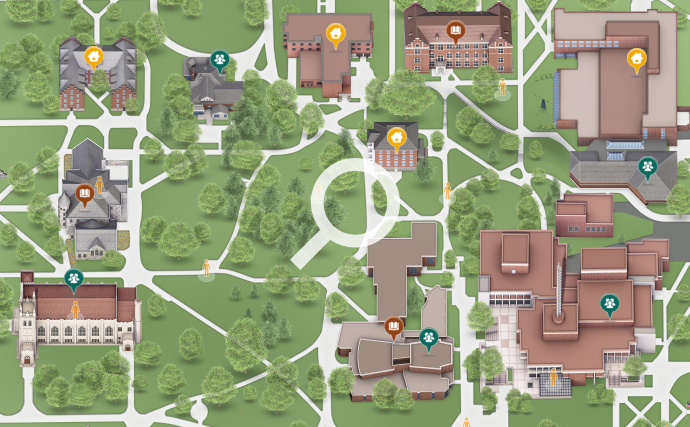
Hope College is located in Holland, MI.
Admissions
Hope College’s admissions process is notably accessible, positioning it as a realistic target for a wide range of students. The college receives a substantial number of applications—over 10,300 in a recent cycle—and admits a clear majority of them. Test scores are considered but not required, reflecting a flexible, . The admitted student profile is strong, with an average GPA of 3.81. While the is the definitive source for detailed factor importance, applicants should note that Hope offers an Early Decision option with a November 1 deadline, a route that typically offers a statistical advantage, though specific Early Decision for Hope are not detailed in the provided sources.
Application Volume: Over 10,300 applicants in a recent cycle.
Admitted Student Profile: Average GPA of 3.81.
Testing Policy: SAT/ACT scores are considered but not required.
Early Decision: An Early Decision option exists with a November 1 deadline.
Teacher Education and Professional Development, Specific Levels and Methods$39,369
Teacher Education and Professional Development, Specific Subject Areas$38,621
Source: U.S. Dept. of Education College Scorecard (field-of-study earnings). Figures cover graduates who received federal aid and lag ~2 years; not all programs report data.
Hope’s academic identity is firmly rooted in the liberal arts, but it’s far from a generic program. The college offers specialized study through more than 80—and up to 90—majors, minors, and pre-professional programs, providing both breadth and depth. It has built a reputation for "academic excellence" and is particularly noted for being "top-ranked" in undergraduate research, offering students hands-on scholarly opportunities often reserved for graduate students at larger universities. The most popular majors cluster in practical and people-focused fields: Business, Management, Marketing; Education; Psychology; and Biological and Biomedical Sciences. This blend suggests a curriculum designed to be both intellectually rigorous and directly applicable to careers and further study.
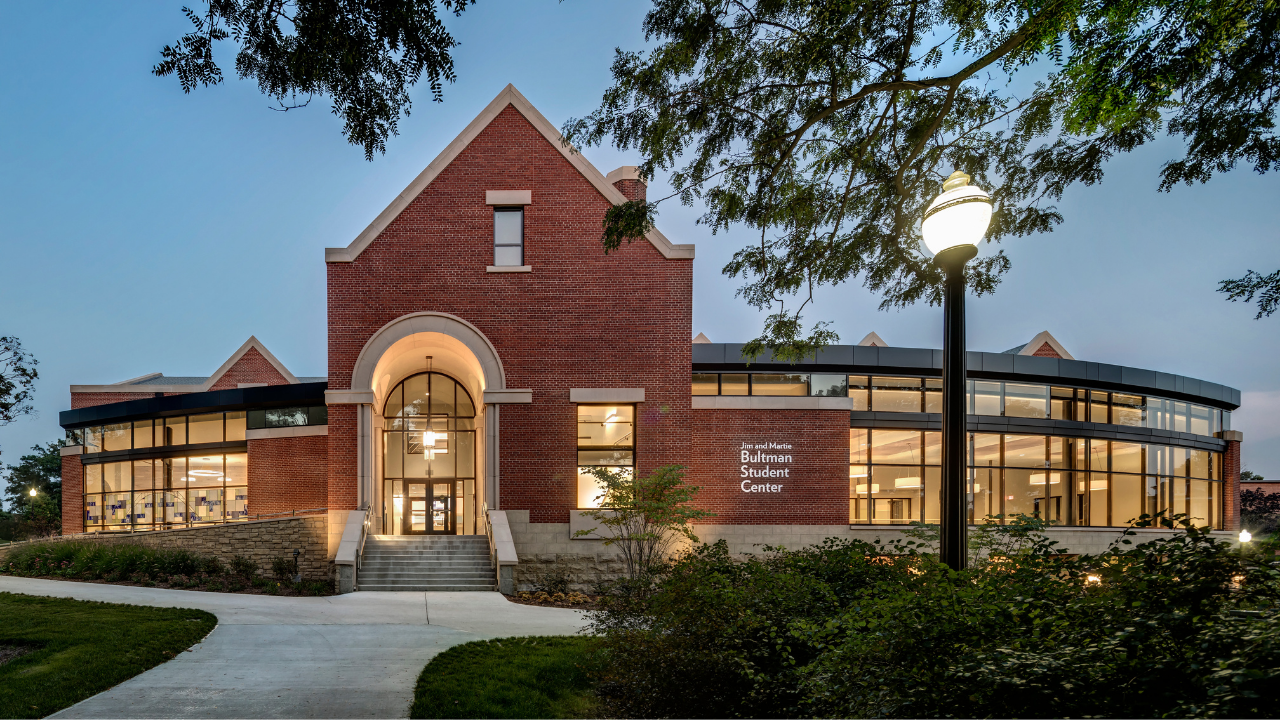
Life at Hope is intensely communal and activity-rich, described by the college itself as "vibrant" and focused on "whole-person development." The campus is a hub of organized activity, featuring "hundreds of student organizations, groups and events" that students can "plug into, serve with, play in, root for." A dedicated office for Student Organizations exists to enrich the community by promoting dialogue and building connections. Well-being resources are explicitly highlighted as a key support system, helping students balance academics, social life, and self-care. This environment fosters a strong sense of belonging, which is likely a contributing factor to the high retention and graduation rates. The campus is also praised in student reviews for its housing and overall campus life quality.
Hope College delivers strong, tangible results for its graduates. Its most striking outcome statistic is a 94% placement rate within six months of graduation, meaning the overwhelming majority of alumni are either employed or enrolled in graduate school shortly after receiving their degrees. The college also boasts a high first-year retention rate of 90%, indicating students are satisfied and successful enough to return. Graduation rates are a point of strength, with an 82% six-year rate placing Hope in the top 10% of colleges nationally. A significant 77% of a recent graduating class reported being accepted to their first or second choice for employment or graduate school, suggesting the college effectively prepares students for their next steps.
Like most private liberal arts colleges, Hope carries a high sticker price, but it actively works to offset that through financial aid. The college emphasizes that students must submit the FAFSA to be considered for , and eligibility for assistance is explicitly "based on demonstrated financial need." Its financial aid office states that it offers "the full array of financial aid" for which a student is eligible in an "equitable" manner. Various sources report the average —the cost after grants and scholarships—though the figures differ; the canonical figure provided should be used. Notably, nearly half (49.9%) of students receive financial aid, with an average aid package reported at $39,866. The college provides a Net Price Calculator for families to estimate their individual cost.
Hope College stands out for its potent combination of open arms and high standards. It is not an exclusive, hyper-selective institution, yet it maintains a rigorous academic environment known for exceptional undergraduate research—a rarity that provides students with profound scholarly experience. This academic seriousness is seamlessly woven into a dense tapestry of student life, where hundreds of organizations and a focus on whole-person development create an enveloping, supportive community. The Christian identity is a throughline, informing the culture without seeming to narrow the intellectual scope. Ultimately, what defines Hope is its effectiveness: it takes a broad range of students and, with notable consistency, transforms them into successful graduates ready for work or further study, all within a vibrant, communal setting that feels both purposeful and genuine.
Hope College seal · sourcePhysical Plant | Hope College · sourceHope College – Colleges That Change Lives · sourceHope College: Top 5 Reasons - Life at Hope College · source