Admit rate has ranged 32%–40% over the last 5 years. Source: IPEDS via Urban Institute.
Acceptance & SAT from Common Data Set / IPEDS; net price, earnings & graduation from the U.S. Dept. of Education College Scorecard. Figures lag ~1–2 years — verify with the school.
Hope International University is a small, Christian liberal arts school in Fullerton, California, where faith, service, and learning are intentionally woven together. With a tight-knit community of around 500 on-campus students and a 13:1 student-faculty ratio, HIU offers a highly personal, hands-on education anchored in practical majors like business, criminal justice, and ministry. It's a place for students seeking a supportive, faith-based environment where they can be known by name, but its outcomes and graduation rates suggest the academic journey can be challenging.
Admission requirements
Test-optional — scores considered if submitted
Required
High school transcript
Grade point average
Letters of recommendation
TOEFL (non-native English)
Considered (not required)
Class rank
Test scores (SAT/ACT)
College-prep program
Source: IPEDS Admissions survey (2022) via Urban Institute. Covers formal factors only — it does not reflect essays, extracurriculars, or other holistic criteria.
More details
Undergrad enrollment
564
In-state tuition
$38,050
Out-of-state tuition
$38,050
On-Campus Housing
72%
Classes <20 Students
66%
Student-Faculty Ratio
13:1
Graduation Rate (6-yr)
49%
Median Earnings (10yr)
$49,697
First-Year Retention Rate
52%
Outcomes & value
Outcomes & value
Median earnings (10 yr)
$49,697
Value (earnings ÷ net price)
1.7×
Median debt at graduation
$23,000
Graduation rate
49%
First-year retention
52%
Reducing loan balance (3 yr)
54%
Pell (lower-income) share
44%
First-gen share (among federal-aid recipients)
39%
Financial health
0.5 / 3.0Below the federal standard — financial stress
U.S. Dept. of Education Financial Responsibility Composite Score (FY2022-23). Scale −1.0 to 3.0; ≥1.5 meets the standard. Reported for private nonprofit & for-profit institutions only — public universities are state-backed and not scored, so this is a stability signal, not a ranking.
Top-earning majors
Median earnings by field of study (highest credential), ~2 years after completion.
Theological and Ministerial Studies$47,846
Business Administration, Management and Operations$38,289
Human Development, Family Studies, and Related Services$36,141
Psychology, General$32,284
Source: U.S. Dept. of Education College Scorecard (field-of-study earnings). Figures cover graduates who received federal aid and lag ~2 years; not all programs report data.
On-campus criminal offenses classed as violent (murder/non-negligent manslaughter, rape, robbery, aggravated assault) for the most recent reported year. Source: U.S. Dept. of Education Campus Safety and Security (Clery Act). Counts reflect what’s reported to the school, and urban campuses often report more partly due to non-student incidents nearby — read alongside campus size and setting, not as a standalone safety verdict.
Climate
Pleasant days / yr
252
Summer high
84°F
Winter low
48°F
Annual rain
17.9"
Natural-hazard risk
Very High
Pleasant days counts days per year with a mean temperature of 55–75°F, a high at or below 90°F, a low at or above 45°F, and little precipitation — a transparent comfort measure, not a weighting we invented. Computed from Open-Meteo ERA5 daily history (2019–2023). Natural-hazard risk is the county’s composite rating from the FEMA National Risk Index.
Deep dive — research, future-scholar output & economic mobility▾
Research output
Institutional h-index
11
Scholarly works
97
Institutional research volume and impact from OpenAlex. The h-index reflects large research universities and will be low for teaching-focused liberal-arts colleges — not a measure of undergraduate quality.
Quick answers
What is the acceptance rate at Hope International University?
Hope International University's acceptance rate is approximately 33% (Fullerton, CA), based on the most recent figures we compiled from public and primary sources.
What SAT score do you need for Hope International University?
Admitted students at Hope International University typically score 840–1220 on the SAT (the middle-50% range). Scores outside this band are still admitted, especially with strong applications.
How much does Hope International University cost?
At Hope International University, the average net price (after aid) is about $29,310 per year. Actual cost varies with financial aid and residency.
How many undergraduates attend Hope International University?
Hope International University enrolls approximately 564 undergraduate students.
Where is Hope International University located?
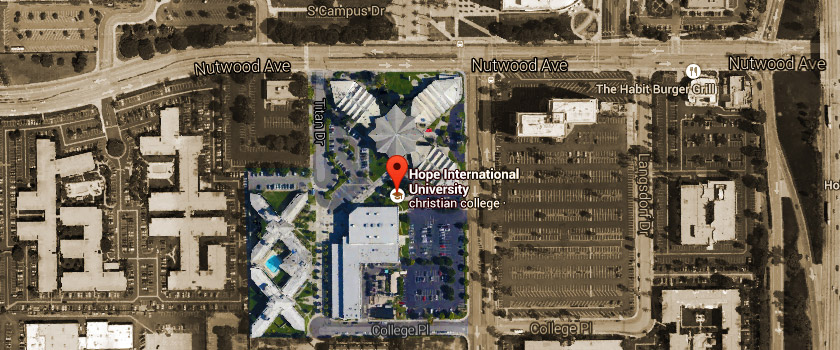
Hope International University is located in Fullerton, CA.
Admissions
Hope International University operates on a rolling admissions policy, allowing applicants to apply anytime before the start of each semester. The process is moderately selective, with an of 33%. The university has a test-optional policy and does not accept the Common Application. For those who submit scores, the middle 50% SAT range for admitted students is 840–1220, and the average high school GPA is 3.37. The admissions office adheres to a rolling review cycle, meaning there are no strict early decision or early action deadlines, and decisions are made as applications are completed.
Academic life at HIU is defined by its small scale and Christian integration. With a 13:1 student-faculty ratio and 66% of classes having fewer than 20 students, the environment is intensely personal. The undergraduate curriculum is built around a core of faith-based learning, offering Bachelor of Arts degrees in practical, service-oriented fields. The most popular majors reflect this focus:
Earnings = median of students working ~10 years after entry; debt = median of graduates. Value divides 10-yr earnings by one year’s net price — read it as earnings per dollar of annual cost, not a full lifetime ROI; it favors lower-cost schools. Source: U.S. Dept. of Education College Scorecard. Figures lag ~2 years and reflect all students, not your intended major.
Biblical Studies
Business and Management
Children & Family Ministry
Church Ministry
Communication Studies
Criminal Justice/Safety Studies
Cross-Cultural Studies
Human Development and Family Studies
The university also provides graduate and online programs, expanding its reach beyond the traditional residential cohort. The academic approach is described as having "an intentional focus on faith, service, and learning" within a close-knit community.
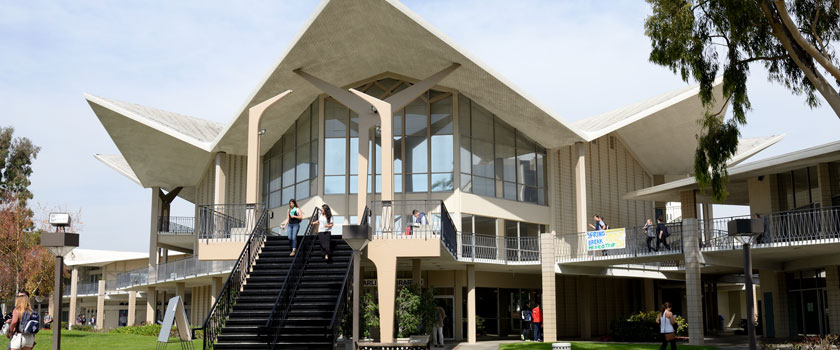
Life on HIU's Fullerton campus revolves around its intimate Christian community. With approximately 500 students on campus, it fosters a "really tight-knit" atmosphere where students get to know their professors well. The university prides itself on being "more than classes and studying," emphasizing "fun, fellowship and services." A significant majority of students—72%—live in college-owned, -operated, or -affiliated housing, with women's dorms making up 42% of that housing. The remaining 28% live off-campus. While small, the community values diversity and welcomes international students from many countries. Student life includes various campus activities, clubs, and faith-based gatherings, though the scale is more akin to a large extended family than a bustling university town.
Post-graduation outcomes at Hope International University are mixed and present a significant consideration for prospective students. The six-year graduation rate is reported at 45-46%, which is below the national midpoint for four-year colleges. The first-year retention rate is 52%. For those who do graduate, earnings data shows progression: one year after graduation, median earnings are $35,979, climbing to $54,020 after five years. The median earnings ten years after entry are $49,697. These figures suggest that while many graduates find footing in the workforce, a substantial number of students who enroll do not complete their degrees within six years, impacting the overall outcomes profile.
The published tuition and fees at HIU are $38,650. However, the average after aid—what students typically pay—is $29,310. The university provides a net price calculator to help families estimate their actual cost, which factors in tuition, required fees, books, supplies, and typical living expenses minus expected grants and scholarships. Financial aid is primarily delivered through federal programs, including Pell Grants for eligible undergraduates demonstrating need, and Direct Loans (both subsidized and unsubsidized). The university's financial aid materials emphasize maintaining satisfactory academic progress, warning that aid can be suspended if a student fails to complete at least two-thirds of enrolled units. There is no indication of a "no-loan" policy or a guarantee to meet 100% of demonstrated financial need without loans.
Hope International University stands out for one primary reason: it is a deeply personal, faith-saturated community on a very small scale. This is not a university where you get lost in the crowd; with about 500 on-campus students and a 13:1 faculty ratio, it promises—and delivers—an environment where everyone is known. The trade-off is immediacy for expanse. Its identity is crystal clear: every academic program, from Business to Biblical Studies, is framed through a Christian lens of service and learning. This creates a cohesive, mission-driven campus culture that is its greatest strength. However, this distinctive character exists alongside significant challenges, notably a six-year graduation rate that lags behind national averages. HIU is a specific fit—ideal for a student seeking an intimate, supportive, and explicitly Christian undergraduate experience who is also prepared to navigate and persist within its academic framework to graduation.
Hope International University seal · sourceHope International University | Photos / Virtual Tours · sourceHope International University | Map / Directions · sourceHope International University | Commencement Maps / Directions · source