Admit rate has ranged 49%–68% over the last 5 years — notably volatile. Source: IPEDS via Urban Institute.
Acceptance & SAT from Common Data Set / IPEDS; net price, earnings & graduation from the U.S. Dept. of Education College Scorecard. Figures lag ~1–2 years — verify with the school.
Howard Payne University is a small, private Baptist university in the heart of Texas, offering a distinctly Christ-centered education in a tight-knit community. With an acceptance rate of 67%, it provides a more accessible path to a liberal arts education, anchored by popular programs in business, kinesiology, and Christian studies. The experience is defined by its residential, faith-focused campus life, though students and families must weigh its relatively low graduation rate against the supportive, personal environment it cultivates.
Admission requirements
Test-optional — scores considered if submitted
Required
High school transcript
Grade point average
Class rank
Considered (not required)
Letters of recommendation
Test scores (SAT/ACT)
College-prep program
Demonstrated competencies
TOEFL (non-native English)
Source: IPEDS Admissions survey (2022) via Urban Institute. Covers formal factors only — it does not reflect essays, extracurriculars, or other holistic criteria.
More details
Undergrad enrollment
713
In-state tuition
$34,982
Out-of-state tuition
$34,982
Housing
49% on-campus, 51% off-campus
Graduation Rate
28%
Median Earnings (10yr)
$48,376
Average Total Aid Awarded
$20,357
Outcomes & value
Outcomes & value
Median earnings (10 yr)
$48,376
Value (earnings ÷ net price)
2.0×
Median debt at graduation
$26,793
Graduation rate
28%
First-year retention
52%
Reducing loan balance (3 yr)
55%
Pell (lower-income) share
44%
First-gen share (among federal-aid recipients)
37%
Financial health
3.0 / 3.0Meets the federal financial-responsibility standard
U.S. Dept. of Education Financial Responsibility Composite Score (FY2022-23). Scale −1.0 to 3.0; ≥1.5 meets the standard. Reported for private nonprofit & for-profit institutions only — public universities are state-backed and not scored, so this is a stability signal, not a ranking.
Top-earning majors
Median earnings by field of study (highest credential), ~2 years after completion.
Business Administration, Management and Operations$37,568
Teacher Education and Professional Development, Specific Levels and Methods$33,993
Criminology$32,563
Teacher Education and Professional Development, Specific Subject Areas$31,042
Sports, Kinesiology, and Physical Education/Fitness$23,649
Source: U.S. Dept. of Education College Scorecard (field-of-study earnings). Figures cover graduates who received federal aid and lag ~2 years; not all programs report data.
Campus & location
Campus safety
On-campus violent crimes (2024)
1
Per 1,000 students
1.30
On-campus criminal offenses classed as violent (murder/non-negligent manslaughter, rape, robbery, aggravated assault) for the most recent reported year. Source: U.S. Dept. of Education Campus Safety and Security (Clery Act). Counts reflect what’s reported to the school, and urban campuses often report more partly due to non-student incidents nearby — read alongside campus size and setting, not as a standalone safety verdict.
Climate
Pleasant days / yr
96
Summer high
96°F
Winter low
39°F
Annual rain
26.7"
Annual snow
1.8"
Natural-hazard risk
Relatively Low
Pleasant days counts days per year with a mean temperature of 55–75°F, a high at or below 90°F, a low at or above 45°F, and little precipitation — a transparent comfort measure, not a weighting we invented. Computed from Open-Meteo ERA5 daily history (2019–2023). Natural-hazard risk is the county’s composite rating from the FEMA National Risk Index.
Deep dive — research, future-scholar output & economic mobility▾
Research output
Institutional h-index
18
Scholarly works
127
Institutional research volume and impact from OpenAlex. The h-index reflects large research universities and will be low for teaching-focused liberal-arts colleges — not a measure of undergraduate quality.
Economic mobility
Mobility rate
2.1%
Bottom → top quintile
20%
From bottom quintile
10%
Mobility rate = the share of students who both start in the bottom household-income quintile and reach the top quintile; bottom → top is that chance conditional on starting at the bottom. Source: Opportunity Insights Mobility Report Cards (Chetty, Friedman, Saez, Turner & Yagan). Reflects 1980–82 birth cohorts, so it’s directional, not current.
Quick answers
What is the acceptance rate at Howard Payne University?
Howard Payne University's acceptance rate is approximately 67% (Brownwood, TX), based on the most recent figures we compiled from public and primary sources.
What SAT score do you need for Howard Payne University?
Admitted students at Howard Payne University typically score 880–1160 on the SAT (the middle-50% range). Scores outside this band are still admitted, especially with strong applications.
How much does Howard Payne University cost?
At Howard Payne University, the average net price (after aid) is about $23,627 per year. Actual cost varies with financial aid and residency.
How many undergraduates attend Howard Payne University?
Howard Payne University enrolls approximately 713 undergraduate students.
Where is Howard Payne University located?
Howard Payne University is located in Brownwood, TX.
Admissions
Howard Payne's admissions process is moderately selective, designed to be accessible to a broad range of students. The university provides clear, straightforward criteria for first-year applicants: a GPA of 2.6 or higher, a class rank in the top 50%, or official test scores of at least an ACT 19, SAT 990, or CLT 64. For the middle 50% of admitted students who submit scores, the SAT range is 880–1160, and the ACT range is 18–25. The process is not described as highly competitive, with sources characterizing it as "somewhat selective" and "less selective." There is no indication from the provided sources that Howard Payne employs an Early Decision program or that it considers demonstrated interest as a formal factor in admissions decisions; the available information focuses on academic benchmarks.
Academics at Howard Payne are organized within a traditional liberal arts framework, explicitly framed within a "vibrant, Christ-centered academic community." The university offers more than 100 majors, minors, and pre-professional programs across several schools: the School of Business, School of Christian Studies, School of Humanities, and School of Education & Professional Studies. The curriculum includes general studies requirements. Popular majors are notably career-oriented and regional. For the 2024 graduating class, the most popular majors were Sports, Kinesiology, and Physical Education/Fitness (11% of graduates) and Business Administration and Management (8%). The university also offers several engineering programs, leading to Bachelor of Science degrees in Engineering Science, Software, and Biomedical Engineering. Degree offerings span fields from Accounting and Biology to Bible and Athletic Training.
Earnings = median of students working ~10 years after entry; debt = median of graduates. Value divides 10-yr earnings by one year’s net price — read it as earnings per dollar of annual cost, not a full lifetime ROI; it favors lower-cost schools. Source: U.S. Dept. of Education College Scorecard. Figures lag ~2 years and reflect all students, not your intended major.
Campus life is intentionally designed to foster spiritual growth, leadership, and community, central to the university's Baptist identity. The Office of Student Experience orchestrates engagement with the stated purpose of helping students "grow in relationship to Christ, develop leadership skills, build relationships, and participate in..." campus life. The residential experience is split, with 49% of students living in college-owned, -operated, or -affiliated housing and 51% living off campus. This suggests a commuter population alongside a traditional residential core. The campus is located at 1000 Fisk Street in Brownwood, Texas, a small city setting that likely contributes to a close-knit, self-contained community atmosphere where campus events and organizations form the primary social fabric.
Post-graduation outcomes present a mixed picture, with a significant focus on the institution's graduation rate. The six-year graduation rate is a central metric, reported variably between 28% and 39% across different sources; the canonical figure is 28%. This places the university's graduation rate well below the national midpoint for four-year colleges. For those who do graduate, earnings data shows progression. According to federal data, median earnings for graduates are $48,376 ten years after entry. Other sources report earnings of $37,543 one year after graduation and $46,238 five years after. An alternative figure cites median earnings of $50,567 four years post-graduation. The "Outcomes" score in national rankings is relatively low, heavily influenced by the graduation rate.
The published is uniform for in-state and out-of-state students, with tuition and fees listed at $38,238. However, the —the average cost after grants and scholarships are applied—is significantly lower. Sources report this average net price variably as $23,627, $24,117, $25,768, and $26,871; the canonical figure is $23,627. The average total financial aid award is reported as $20,357. The university offers a net price calculator for families to estimate their individual cost. Financial aid includes scholarships and federal loan programs. Demonstrated financial need is not always a requirement for certain aid programs, and students must be enrolled at least half-time (six credit hours) to qualify for aid. There is no indication in the provided sources of a no-loan policy or a commitment to meet 100% of demonstrated financial need for all admitted students.
Howard Payne stands out for its unwavering commitment to providing a specific type of education: a low-barrier-to-entry, faith-integrated college experience in a small Texas setting. It is not a highly selective research university, but rather a teaching-focused institution where the Christian identity is explicitly front-and-center in both academic and student life missions. Its appeal lies in its clear admissions standards, its array of over 100 practical and ministry-oriented programs (from engineering to Christian studies), and its intentionally designed, relationship-driven campus community. The trade-off is stark and important for prospective students to consider: the supportive, personal environment and accessible admissions come with the serious challenge of a low graduation rate, suggesting the university may struggle to retain and graduate a significant portion of its entering class. It is a college for students seeking a close-knit, faith-based foundation, who are prepared to navigate and persist within its particular academic ecosystem.
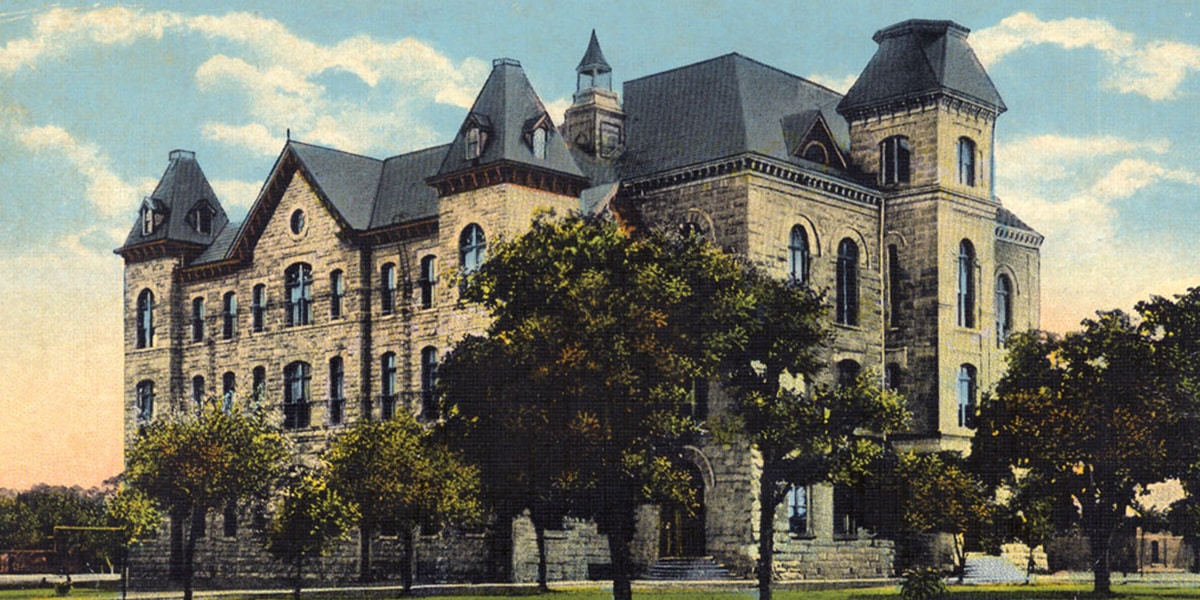
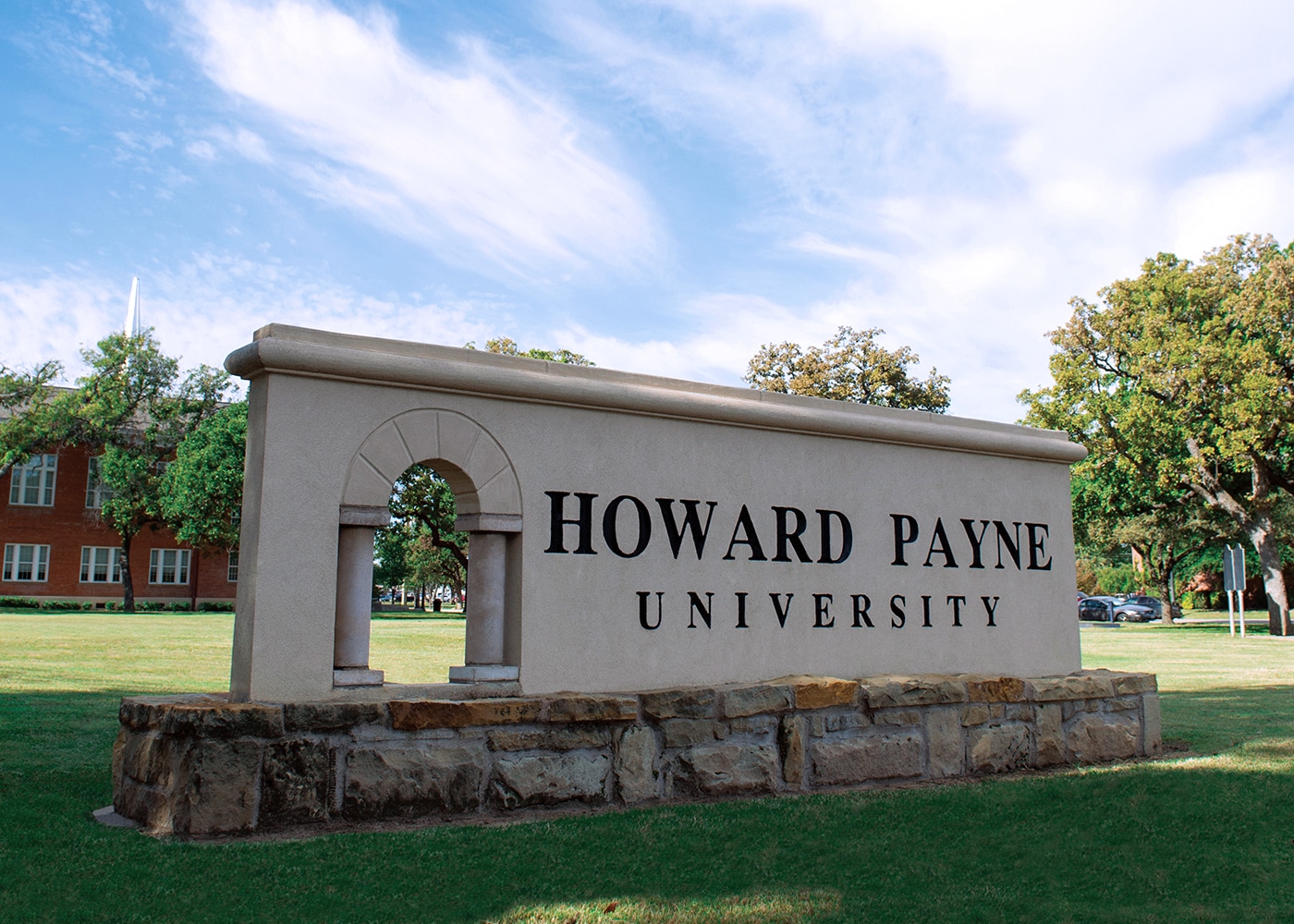
Howard Payne University seal · sourceHistory | Howard Payne University · sourceHoward Payne University works to serve needs of rural Texas schools | Howard Payne University · sourceHPU to improve campus experience with two major facility projects | Howard Payne University · source