Admit rate has ranged 43%–53% over the last 5 years — notably volatile, though the latest figure above (60%) falls outside that window. Source: IPEDS via Urban Institute.
Acceptance & SAT from Common Data Set / IPEDS; net price, earnings & graduation from the U.S. Dept. of Education College Scorecard. Figures lag ~1–2 years — verify with the school.
Hult International Business School is a singular, globe-trotting institution that treats business education as a passport. With its primary undergraduate campus in Cambridge, Massachusetts, Hult is less a traditional college and more a hyper-practical, multicultural launchpad for aspiring entrepreneurs and corporate leaders. Its identity is defined by an intense focus on real-world application, a staggeringly diverse student body, and a curriculum designed to build 'human skills' alongside financial acumen. While its admissions are more accessible than elite Northeastern rivals, its price tag and professional intensity demand a clear-eyed commitment to its unique, borderless brand of business training.
Admission requirements
Test-blind — scores not considered
Required
Grade point average
Letters of recommendation
TOEFL (non-native English)
Considered (not required)
High school transcript
Source: IPEDS Admissions survey (2022) via Urban Institute. Covers formal factors only — it does not reflect essays, extracurriculars, or other holistic criteria.
More details
Undergrad enrollment
618
In-state tuition
$57,160
Out-of-state tuition
$57,160
Graduation Rate
67%
Median Earnings (4yr)
$75,197
Financial Aid Recipients
82% of first-year undergraduates
Outcomes & value
Outcomes & value
Graduation rate
67%
First-year retention
80%
Pell (lower-income) share
7%
Earnings = median of students working ~10 years after entry; debt = median of graduates. Value divides 10-yr earnings by one year’s net price — read it as earnings per dollar of annual cost, not a full lifetime ROI; it favors lower-cost schools. Source: U.S. Dept. of Education College Scorecard. Figures lag ~2 years and reflect all students, not your intended major.
Financial health
1.3 / 3.0Passing, but in the added-oversight zone
U.S. Dept. of Education Financial Responsibility Composite Score (FY2022-23). Scale −1.0 to 3.0; ≥1.5 meets the standard. Reported for private nonprofit & for-profit institutions only — public universities are state-backed and not scored, so this is a stability signal, not a ranking.
Campus & location
Campus safety
On-campus violent crimes (2024)
5
Per 1,000 students
2.49
On-campus criminal offenses classed as violent (murder/non-negligent manslaughter, rape, robbery, aggravated assault) for the most recent reported year. Source: U.S. Dept. of Education Campus Safety and Security (Clery Act). Counts reflect what’s reported to the school, and urban campuses often report more partly due to non-student incidents nearby — read alongside campus size and setting, not as a standalone safety verdict.
Climate
Pleasant days / yr
91
Summer high
81°F
Winter low
25°F
Annual rain
49"
Annual snow
31.4"
Natural-hazard risk
Relatively High
Pleasant days counts days per year with a mean temperature of 55–75°F, a high at or below 90°F, a low at or above 45°F, and little precipitation — a transparent comfort measure, not a weighting we invented. Computed from Open-Meteo ERA5 daily history (2019–2023). Natural-hazard risk is the county’s composite rating from the FEMA National Risk Index.
Deep dive — research, future-scholar output & economic mobility▾
Research output
Institutional h-index
41
Scholarly works
428
Institutional research volume and impact from OpenAlex. The h-index reflects large research universities and will be low for teaching-focused liberal-arts colleges — not a measure of undergraduate quality.
Quick answers
What is the acceptance rate at Hult International Business School?
Hult International Business School's acceptance rate is approximately 60% (Cambridge, MA), based on the most recent figures we compiled from public and primary sources.
How much does Hult International Business School cost?
At Hult International Business School, the average net price (after aid) is about $45,447 per year. Actual cost varies with financial aid and residency.
How many undergraduates attend Hult International Business School?
Hult International Business School enrolls approximately 618 undergraduate students.
Where is Hult International Business School located?
Hult International Business School is located in Cambridge, MA.
Admissions
Hult's admissions process is characterized by a higher-than-average and a policy, positioning it as a more accessible gateway into business education compared to the fiercely competitive elite schools that surround its Cambridge campus. For the 2024 cycle, the undergraduate acceptance rate was approximately 60.5%, with 1,065 students admitted from 1,761 applications. Other sources report similar figures, clustering around 59% to 61%. This selectivity is described as "somewhat selective."
The school makes standardized tests optional for applicants, stating clearly that "SAT/ACT scores are optional." There is no available source data from the provided snippets regarding an Early Decision plan, a specific Early Decision acceptance rate, or the share of the class filled via Early Decision. Similarly, the provided sources do not contain a Hult-specific that would indicate whether "demonstrated interest" is considered in admissions decisions. The admissions data applies to first-time, degree-seeking undergraduates, as the school does not have an open admissions policy. The rate—the percentage of admitted students who enroll—is described as "Low" in one source, though a specific figure is not provided. Online discussions suggest the school can be aggressive in its recruitment and that some applicants have found it difficult to obtain detailed statistics on admitted student profiles.
Academics at Hult are relentlessly practical and globally oriented, built around the Bachelor of Business Administration (BBA) degree. The school's philosophy is to "combine the power of theory and practice" by placing "real-world challenges at the center of every class." The curriculum is explicitly designed to build the professional and human skills that the future demands, with a sharp focus on communication, critical thinking, creativity, curiosity, and collaboration.
Hult promotes itself as a "multicultural community of forward-thinking business talent" and its programs have been ranked by publications like the Financial Times, the Economist, Forbes, and Bloomberg Businessweek. The faculty is noted to include professors from other respected institutions such as Babson and Boston University, suggesting "good academic standards" and accreditation. The undergraduate program overview emphasizes getting "personal support from professional" advisors, underscoring the school's career-focused, supportive approach. The entire academic experience is framed as transformative, aimed at those who see business as a tool for global impact rather than a purely theoretical discipline.
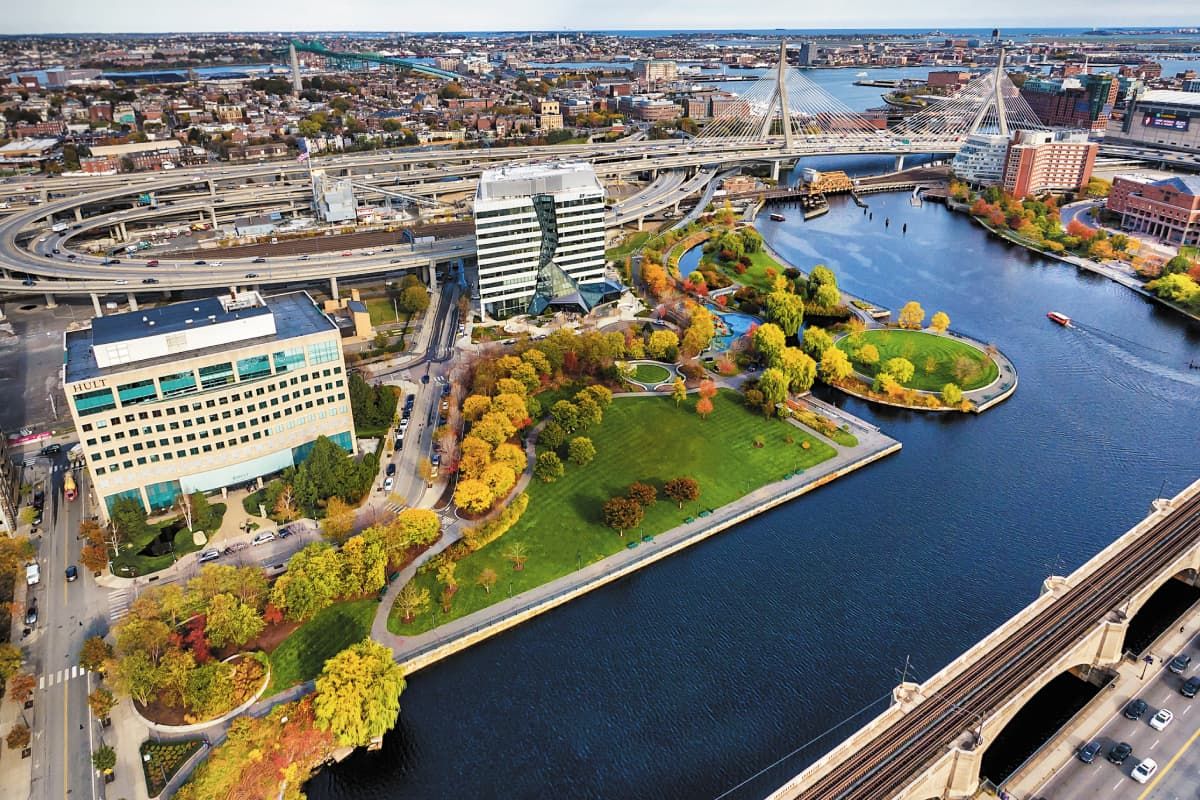
Life at Hult is an exercise in global immersion. The undergraduate experience is centered on the Boston campus (located in Cambridge, MA), where students are encouraged to dive into the city's vibrant student life, rich sports culture, and forward-thinking business environment. The campus is promoted as a place to "build your global network on and off campus."
With a total undergraduate enrollment of about 1,769 students, the community is intimate but profoundly diverse. For a significant portion of the student body, attending Hult means a major life adjustment, "immersing yourself in a new city, a new country, and culture." This creates a shared experience of adaptation and a student body bonded by international ambition. The vibe is less about traditional campus rah-rah and more about professional networking and cosmopolitan exploration. Online discussions reveal a split perception: while some critics question the school's reputation, current and former students often defend the practical, global experience and the quality of the peer network it provides.
Hult markets its value through strong post-graduation earnings and career mobility, particularly for its graduate students. For undergraduates, median earnings outcomes are reported to be strong. One source notes that median earnings of $75,197 run about 25% higher than national outcomes four years after graduation. Niche reports a graduation rate of 67%, with earnings of $56,569 one year after graduation and $73,047 five years after graduation.
The school's four-year graduation rate is also reported at 63%, which is considered high and ranks in the top 20% of institutions, suggesting a structured program that helps students finish on time. For MBA graduates, outcomes highlight significant career pivots: 87% of 2024 MBA graduates changed industry, and 71% changed function, indicating the degree's utility for career changers. These results are drawn from graduates across 37 countries, reinforcing the global reach of the Hult network.
Attending Hult commands a premium price, but the school offers substantial grant and scholarship aid to a large majority of its students. The average after aid—the cost to the student after grants and scholarships—is a key figure. One source lists this as $55,251, while another notes the average net price is $45,447.
Financial support is available across three categories: merit-based scholarships, need-based financial aid, and automatic grants. A significant 82% of full-time beginning undergraduates receive grant or scholarship aid. Another source puts this figure at 81%, with an average award of $20,647. Federal Pell Grants are received by 7% of undergraduates, with an average award of $6,244. Need-based financial aid is offered on a case-by-case basis, with a committee reviewing each accepted student's situation. The annual tuition cost is listed as $85,200. The school is also an eligible institution for international student loans, including options without a cosigner for those who qualify.
Hult International Business School carves out a distinct niche by rejecting the traditional liberal arts college model in favor of a single-minded, global professional training ground. It stands out for three compelling reasons:
Unapologetic Global Praxis: Every aspect of the Hult experience—from the curriculum built around "real-world challenges" to the student body drawn from across the world—is engineered for immediate professional application. It's for students who want to study business in the context of global markets from day one, not as an abstract theory.
The Multicultural Microcosm: The campus is less a slice of America and more a deliberate gathering of future international business leaders. This creates a unique peer-learning environment where cultural intelligence and global networking are inherent parts of the education, not extracurricular additions.
Career-Change Engine: Particularly at the graduate level, Hult demonstrates remarkable success in facilitating major career pivots, as evidenced by the high percentage of MBA graduates changing both industry and function. This positions it as a strategic choice for professionals seeking a tangible reset button, backed by a globally dispersed alumni network.
However, its distinctiveness comes with caveats. Its reputation is debated, its cost is high, and its appeal is highly specific. It stands out most for the self-directed, ambitious student who views college not as a holistic exploration but as a targeted investment in a borderless business career.
Hult International Business School seal · sourceRequest a Campus Tour · sourceBoston Campus | Hult International Business School · sourceBusiness School Locations | Hult International Business School · source
.jpg?width=1600)

)