Admit rate has ranged 85%–91% over the last 5 years, though the latest figure above (81%) falls outside that window. Source: IPEDS via Urban Institute.
Acceptance & SAT from Common Data Set / IPEDS; net price, earnings & graduation from the U.S. Dept. of Education College Scorecard. Figures lag ~1–2 years — verify with the school.
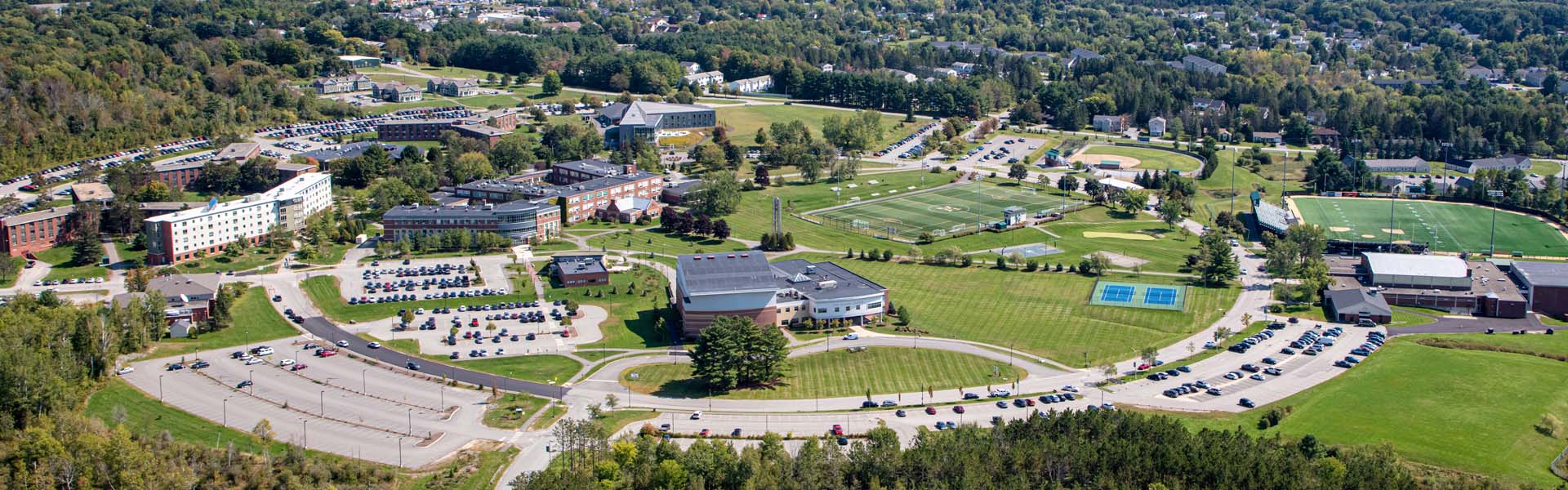
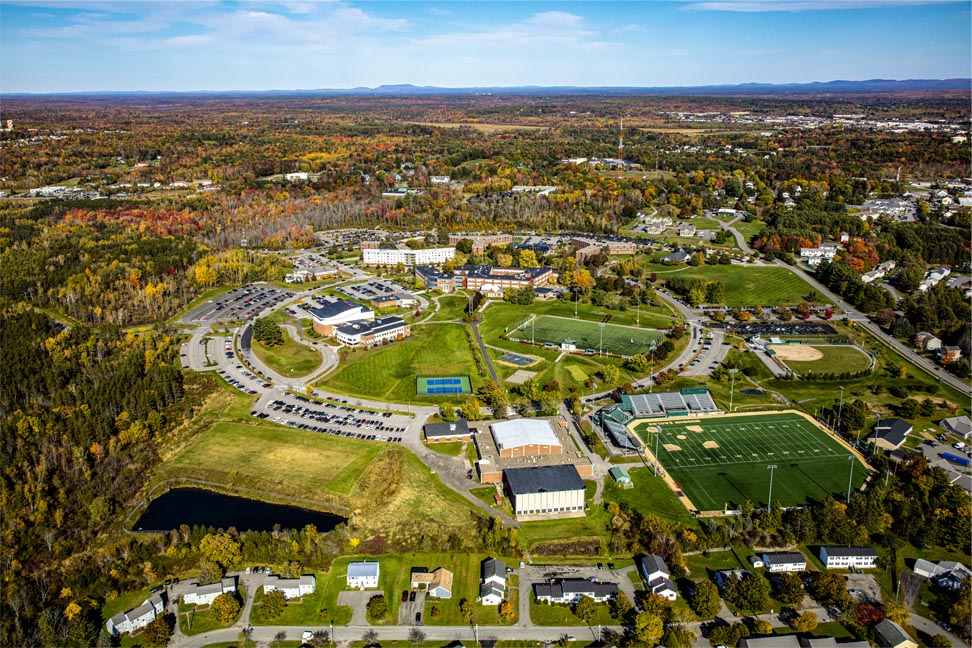
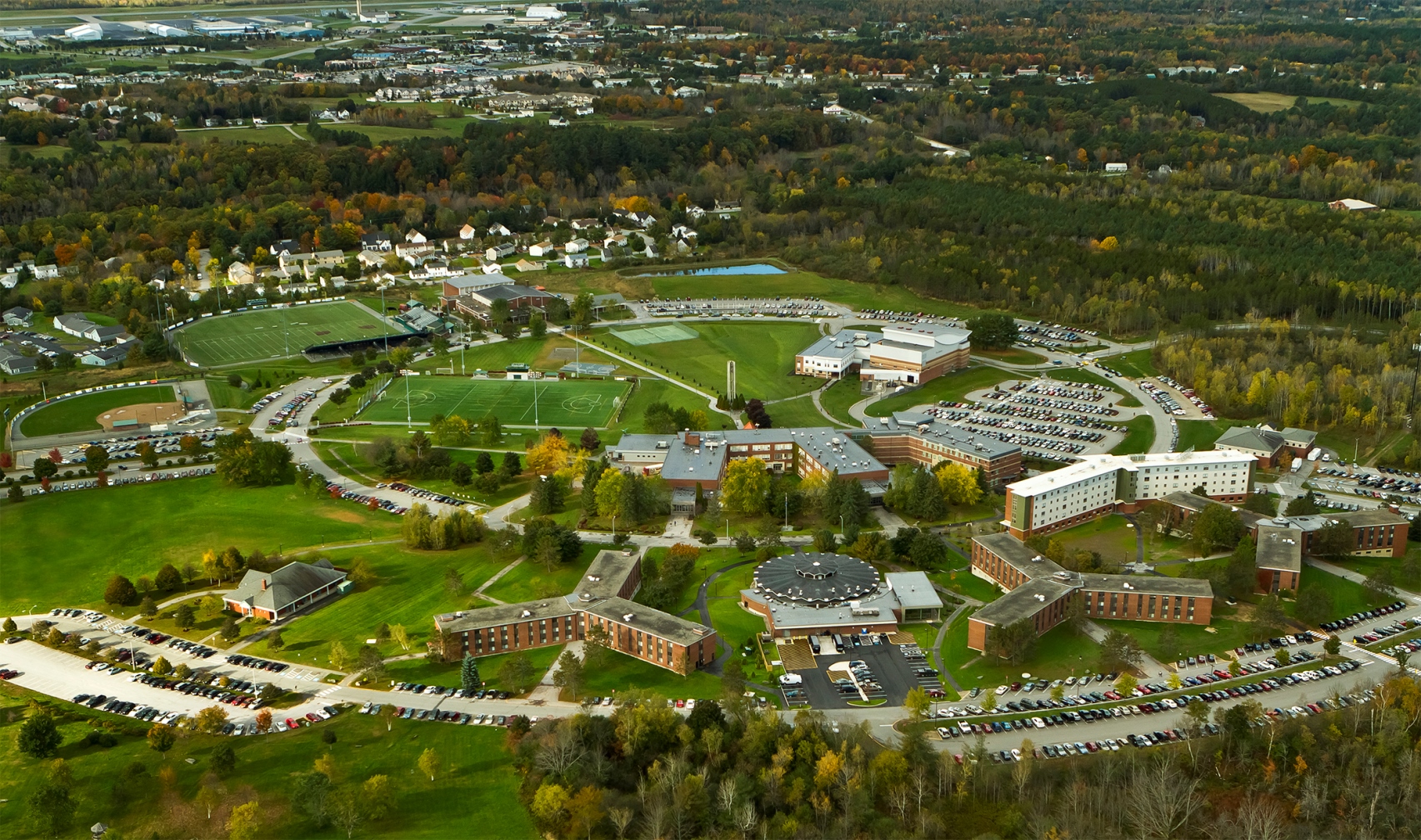
Husson University is a small, pragmatic private university in Bangor, Maine, built for students who want a direct, career-focused education without the admissions gauntlet. Its identity is defined by a sprawling menu of over 100 professional programs—especially in health, business, and communications—delivered in a tight-knit, no-frills community where professors know your name. This is a place where practicality reigns: you come for the hands-on experience and the job, not for the ivy-covered prestige.
Admission requirements
Test-optional — scores considered if submitted
Required
High school transcript
Grade point average
Letters of recommendation
College-prep program
TOEFL (non-native English)
Considered (not required)
Class rank
Test scores (SAT/ACT)
Source: IPEDS Admissions survey (2022) via Urban Institute. Covers formal factors only — it does not reflect essays, extracurriculars, or other holistic criteria.
More details
Undergrad enrollment
2,618
In-state tuition
$23,304
Out-of-state tuition
$23,304
Graduation Rate
59%
On-Campus Housing
41%
First-Year Retention
75%
Demonstrated Interest
Considered
Median Earnings (10yr)
$45,025
Outcomes & value
Outcomes & value
Median earnings (10 yr)
$45,025
Value (earnings ÷ net price)
2.1×
Median debt at graduation
$27,000
Graduation rate
59%
First-year retention
75%
Reducing loan balance (3 yr)
62%
Pell (lower-income) share
39%
First-gen share (among federal-aid recipients)
32%
Financial health
2.7 / 3.0Meets the federal financial-responsibility standard
U.S. Dept. of Education Financial Responsibility Composite Score (FY2022-23). Scale −1.0 to 3.0; ≥1.5 meets the standard. Reported for private nonprofit & for-profit institutions only — public universities are state-backed and not scored, so this is a stability signal, not a ranking.
Top-earning majors
Median earnings by field of study (highest credential), ~2 years after completion.
Registered Nursing, Nursing Administration, Nursing Research and Clinical Nursing$58,274
Accounting and Related Services$46,673
Business Administration, Management and Operations$39,153
Criminal Justice and Corrections$38,289
Teacher Education and Professional Development, Specific Levels and Methods$33,993
Hospitality Administration/Management
Campus & location
Campus safety
On-campus violent crimes (2024)
4
Per 1,000 students
1.24
On-campus criminal offenses classed as violent (murder/non-negligent manslaughter, rape, robbery, aggravated assault) for the most recent reported year. Source: U.S. Dept. of Education Campus Safety and Security (Clery Act). Counts reflect what’s reported to the school, and urban campuses often report more partly due to non-student incidents nearby — read alongside campus size and setting, not as a standalone safety verdict.
Climate
Pleasant days / yr
87
Summer high
78°F
Winter low
16°F
Annual rain
49.1"
Annual snow
54.8"
Natural-hazard risk
Relatively Low
Pleasant days counts days per year with a mean temperature of 55–75°F, a high at or below 90°F, a low at or above 45°F, and little precipitation — a transparent comfort measure, not a weighting we invented. Computed from Open-Meteo ERA5 daily history (2019–2023). Natural-hazard risk is the county’s composite rating from the FEMA National Risk Index.
Deep dive — research, future-scholar output & economic mobility▾
Research output
Institutional h-index
68
Scholarly works
609
Institutional research volume and impact from OpenAlex. The h-index reflects large research universities and will be low for teaching-focused liberal-arts colleges — not a measure of undergraduate quality.
Economic mobility
Mobility rate
2.0%
Bottom → top quintile
15%
From bottom quintile
13%
Mobility rate = the share of students who both start in the bottom household-income quintile and reach the top quintile; bottom → top is that chance conditional on starting at the bottom. Source: Opportunity Insights Mobility Report Cards (Chetty, Friedman, Saez, Turner & Yagan). Reflects 1980–82 birth cohorts, so it’s directional, not current.
Quick answers
What is the acceptance rate at Husson University?
Husson University's acceptance rate is approximately 81% (Bangor, ME), based on the most recent figures we compiled from public and primary sources.
What SAT score do you need for Husson University?
Admitted students at Husson University typically score 1065–1275 on the SAT (the middle-50% range). Scores outside this band are still admitted, especially with strong applications.
How much does Husson University cost?
At Husson University, the average net price (after aid) is about $21,005 per year. Actual cost varies with financial aid and residency.
How many undergraduates attend Husson University?
Husson University enrolls approximately 2,618 undergraduate students.
Where is Husson University located?
Husson University is located in Bangor, ME.
Admissions
Husson’s admissions process is straightforward and accessible, designed to welcome a broad range of students rather than filter them out. The university is test-optional, meaning submission of SAT or ACT scores is not required for admission. The admissions office practices a , but the bar for entry is not particularly high; the is high, reflecting a mission of access. The rate—the percentage of admitted students who choose to enroll—is relatively low, indicating that many admitted students have other options. Demonstrated interest is a factor in the admissions process, meaning that visiting campus, engaging with an admissions counselor, or applying early can work in an applicant's favor. There is no mention of a binding Early Decision program in the provided sources, suggesting the primary application pathways are Regular Decision and possibly non-binding Early Action.
Earnings = median of students working ~10 years after entry; debt = median of graduates. Value divides 10-yr earnings by one year’s net price — read it as earnings per dollar of annual cost, not a full lifetime ROI; it favors lower-cost schools. Source: U.S. Dept. of Education College Scorecard. Figures lag ~2 years and reflect all students, not your intended major.
$33,993
Psychology, General$31,941
Clinical, Counseling and Applied Psychology$31,127
Source: U.S. Dept. of Education College Scorecard (field-of-study earnings). Figures cover graduates who received federal aid and lag ~2 years; not all programs report data.
Academics at Husson are unapologetically career-oriented. The curriculum is a sprawling catalog of over 100 undergraduate, graduate, and certificate programs, with the heaviest concentration in professional fields. The most popular majors cluster squarely in Health Professions and Related Programs and Business, Management, Marketing, and Related Support Services. Think nursing, pharmacy, physical therapy, business administration, and accounting, alongside strong programs in communications, counseling, criminal justice, and education. The approach is hands-on and practical, with many programs designed to help students "acquire professional experience" and "develop maturity, self-confidence, and communication skills" alongside their academic coursework. This isn't a liberal arts college; it's a professional training ground where the line between classroom and career is deliberately thin.
Life at Husson revolves around a close-knit, supportive community on a manageable scale. Students repeatedly describe the environment as friendly and personal, where "the small class sizes" and accessible professors make it "so easy to make friends on campus." It’s a commuter-heavy campus; only about 41% of students live in college-owned, -operated, or -affiliated housing, with the majority living off-campus. The vibe is less about rah-rah school spirit and more about building a practical, supportive network. The Office of Student Life promotes a community that "practices hospitality, embraces the concept of personal accountability, and nurtures" its members. Activities and events are present, but the social scene is modest, reflecting the fact that many students are focused on their professional trajectories and may have jobs or other commitments outside of school.
Husson’s outcomes are a mixed bag that reflects its mission. The first-year retention rate is 75%, which is decent for an institution with open admissions. The six-year graduation rate is solid but not exceptional. Where Husson aims to shine is in career placement. The median earnings for former students ten years after entry are competitive, especially given the regional economy of Maine. This suggests that graduates are landing jobs in their fields—particularly in the high-demand health and business sectors the university emphasizes. The data indicates that a Husson degree, while not from a nationally renowned brand, provides a tangible return on investment by funneling graduates into stable, middle-class careers.
Husson is a private university with a sticker price that reflects that status, but it works aggressively to bring down the net cost for most students. 100% of full-time beginning undergraduates receive grant or scholarship aid. The average financial aid package is substantial, significantly reducing the published tuition. The university offers both need-based and , stating it provides "a limited amount of grant and scholarship assistance to students with demonstrated financial need and/or academic achievement." There is no indication in the provided sources that Husson has a "no-loan" policy or meets 100% of demonstrated financial need without loans. Students are expected to file the FAFSA annually to remain eligible for federal, state, and institutional aid. The after aid brings the cost more in line with public university rates for many families.
Husson stands out as a no-nonsense, high-access professional university. It doesn't pretend to be something it's not—there's no climbing wall or pretensions of Ivy League rigor. Instead, it offers a clear value proposition: a direct, practical education in fields with clear job pathways, delivered in a small, supportive environment where you won't get lost in the crowd. For a student who knows they want to be a nurse, a physical therapist, an accountant, or a business manager, Husson provides a streamlined, hands-on curriculum designed to get them there. Its strength is its focus and its community, making it a compelling choice for Maine residents and others in New England seeking a career-focused degree without the cutthroat competition or overwhelming debt of more famous institutions.
Husson University seal · sourceAbout · sourceHusson University Facilities · sourceU.S. News & World Report Research Highlights New England Colleges with Best Educational Value · source