Admit rate has ranged 50%–63% over the last 4 years — notably volatile, though the latest figure above (39%) falls outside that window. Source: IPEDS via Urban Institute.
Acceptance & SAT from Common Data Set / IPEDS; net price, earnings & graduation from the U.S. Dept. of Education College Scorecard. Figures lag ~1–2 years — verify with the school.
Huston-Tillotson University is a private, historically Black university that serves as a vital anchor in the heart of Austin, Texas. It offers a compact, mission-driven liberal arts and STEM education, where a close-knit campus community thrives amidst the city's booming tech and cultural scene. The school's identity is defined by its role as a producer of leaders and its focus on providing access and opportunity, particularly for first-generation and Pell-eligible students.
Admission requirements
Test-optional — scores considered if submitted
Required
Grade point average
TOEFL (non-native English)
Considered (not required)
Letters of recommendation
Test scores (SAT/ACT)
Source: IPEDS Admissions survey (2022) via Urban Institute. Covers formal factors only — it does not reflect essays, extracurriculars, or other holistic criteria.
More details
Undergrad enrollment
1,005
In-state tuition
$26,709
Out-of-state tuition
$26,709
Graduation Rate
34%
Pell Grant Recipients
62%
Median Earnings (10yr)
$42,937
First-Year Retention Rate
58%
Average Financial Aid Package
$4,929
Students Receiving Financial Aid
91%
Outcomes & value
Outcomes & value
Median earnings (10 yr)
$42,937
Value (earnings ÷ net price)
2.2×
Median debt at graduation
$30,750
Graduation rate
34%
First-year retention
58%
Reducing loan balance (3 yr)
29%
Pell (lower-income) share
61%
First-gen share (among federal-aid recipients)
43%
Financial health
2.7 / 3.0Meets the federal financial-responsibility standard
U.S. Dept. of Education Financial Responsibility Composite Score (FY2022-23). Scale −1.0 to 3.0; ≥1.5 meets the standard. Reported for private nonprofit & for-profit institutions only — public universities are state-backed and not scored, so this is a stability signal, not a ranking.
Campus & location
Campus safety
On-campus violent crimes (2024)
0
Per 1,000 students
0.00
On-campus criminal offenses classed as violent (murder/non-negligent manslaughter, rape, robbery, aggravated assault) for the most recent reported year. Source: U.S. Dept. of Education Campus Safety and Security (Clery Act). Counts reflect what’s reported to the school, and urban campuses often report more partly due to non-student incidents nearby — read alongside campus size and setting, not as a standalone safety verdict.
Climate
Pleasant days / yr
98
Summer high
95°F
Winter low
44°F
Annual rain
47.6"
Annual snow
1.5"
Natural-hazard risk
Relatively High
Pleasant days counts days per year with a mean temperature of 55–75°F, a high at or below 90°F, a low at or above 45°F, and little precipitation — a transparent comfort measure, not a weighting we invented. Computed from Open-Meteo ERA5 daily history (2019–2023). Natural-hazard risk is the county’s composite rating from the FEMA National Risk Index.
Deep dive — research, future-scholar output & economic mobility▾
Research output
Institutional h-index
22
Scholarly works
232
Institutional research volume and impact from OpenAlex. The h-index reflects large research universities and will be low for teaching-focused liberal-arts colleges — not a measure of undergraduate quality.
Quick answers
What is the acceptance rate at Huston-Tillotson University?
Huston-Tillotson University's acceptance rate is approximately 39% (Austin, TX), based on the most recent figures we compiled from public and primary sources.
What SAT score do you need for Huston-Tillotson University?
Admitted students at Huston-Tillotson University typically score 800–1160 on the SAT (the middle-50% range). Scores outside this band are still admitted, especially with strong applications.
How much does Huston-Tillotson University cost?
At Huston-Tillotson University, the average net price (after aid) is about $19,719 per year. Actual cost varies with financial aid and residency.
How many undergraduates attend Huston-Tillotson University?
Huston-Tillotson University enrolls approximately 1,005 undergraduate students.
Where is Huston-Tillotson University located?
Huston-Tillotson University is located in Austin, TX.
Admissions
Admissions at Huston-Tillotson are selective, with a focus on providing access within a structured academic framework. The university reports a regular admission pathway requiring a minimum 2.3 to 2.49 GPA and a 16 ACT composite or 900 SAT score. The middle 50% SAT range for admitted students is 800–1160. The university's admissions process does not appear to offer an Early Decision option, and sources discussing Early Decision or its share of the enrolled class are not applicable to HT. Similarly, while the is a standard resource for admissions factors like demonstrated interest, the provided sources do not include HT's specific CDS to confirm whether it is considered in their review. The admissions office oversees major reporting through its Office of Institutional Planning, Research and Assessment.
Earnings = median of students working ~10 years after entry; debt = median of graduates. Value divides 10-yr earnings by one year’s net price — read it as earnings per dollar of annual cost, not a full lifetime ROI; it favors lower-cost schools. Source: U.S. Dept. of Education College Scorecard. Figures lag ~2 years and reflect all students, not your intended major.
HT provides a focused, market-aware education built around a robust liberal arts and STEM core. The university offers more than 23 major degree programs through its College of Arts & Sciences and School of Business & Technology. Students can pursue bachelor's degrees in fields ranging from Biology, Chemistry, and Computer Science to Business Administration, Communication, Criminal Justice, Education, and English. The curriculum is designed to be flexible, allowing students to pursue their passions across disciplines, and includes offerings at the associate, baccalaureate, and master's degree levels, as well as market-driven certifications. This practical approach aims to connect classroom learning directly to career pathways.
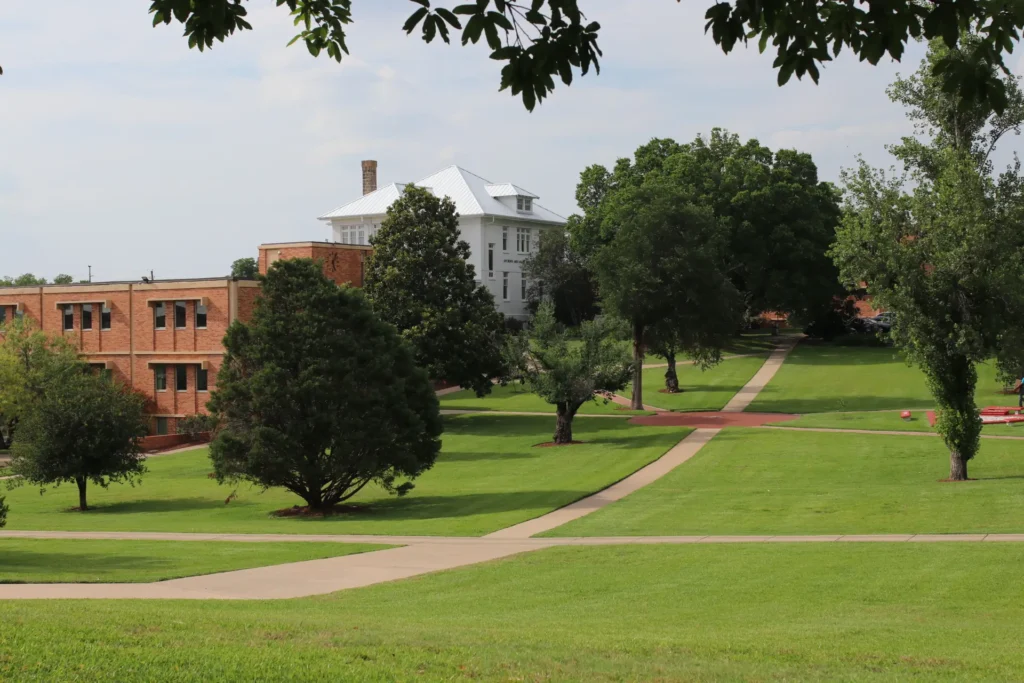
Life on HT's Austin campus is described as vibrant, with a strong emphasis on community, integrity, and personal accountability. The university fosters a safe, respectful, and inclusive environment. Student life is animated by numerous organizations covering academic interests, culture, service, arts, faith, politics, and media. Highlights include active dance teams like the RamNites and various cultural groups. The campus itself is more than just a collection of buildings; it's portrayed as a historic place where dreams take root and leaders are developed. Modern classrooms and state-of-the-art labs support the academic experience, while the overall vibe is one of a close-knit community preserving history and forging future paths together in a dynamic city.
Outcomes for HT graduates show a mixed picture, with the university highlighting strong return on investment for its alumni. The institution has been ranked number one among its peers for Return on Investment (ROI), a metric evaluating the financial success of graduates in the job market. Median alumni earnings one year after graduation are reported as $53,324. However, persistence and graduation rates present a challenge. The first-year retention rate is 58%. The four-year graduation rate is reported at 30%, and the six-year rate at 41%. The university's Office of Institutional Planning, Research and Assessment archives documents tracking persistence and degree attainment nationally, indicating a focus on improving these metrics.
HT is proactive in using financial aid to make education accessible, with a significant majority of its student body receiving assistance. A full 91% of undergraduate students receive financial aid, and 62% are beneficiaries of federal Pell grants, indicating a high population of students with demonstrated financial need. The university administers more than a dozen prestigious scholarship programs, with awards ranging from a few thousand dollars up to full tuition. Annually, it awards $250,000 in scholarships through UNCF programs alone. The average financial aid package per student is reported as $4,929. This aid significantly reduces the , though the provided sources do not indicate the existence of a formal "no-loan" policy or a commitment to meet 100% of demonstrated financial need without loans.
Huston-Tillotson stands out as a singular institution for its role and location. It is the only HBCU in Austin, Texas—a city known for its tech boom, music scene, and political significance—creating a unique juxtaposition of a historically Black, liberal arts-focused campus within a fast-paced, majority-white metropolitan area. This positioning allows students to benefit from the tight-knit support and identity-affirming environment of an HBCU while having direct access to the internships, networking, and cultural experiences of a major state capital. The university's mission is palpable: it is explicitly a place "where dreams took root, leaders were developed, and history [is] preserved." Its academic model, combining robust liberal arts with market-driven STEM and professional programs, is deliberately crafted to ensure graduates are competitive. Ultimately, HT's distinctiveness lies in being a critical engine of social mobility and leadership development for its students, right in the heart of one of America's most dynamic cities.
Huston-Tillotson University seal · sourceCampus Tours - Huston-Tillotson University · sourceHuston-Tillotson University · sourceSafe and Healthy Rams - Huston-Tillotson University · source