Loading…
← All schools
I M Beauty School
Glenview, ILprivate forprofitgmail.com
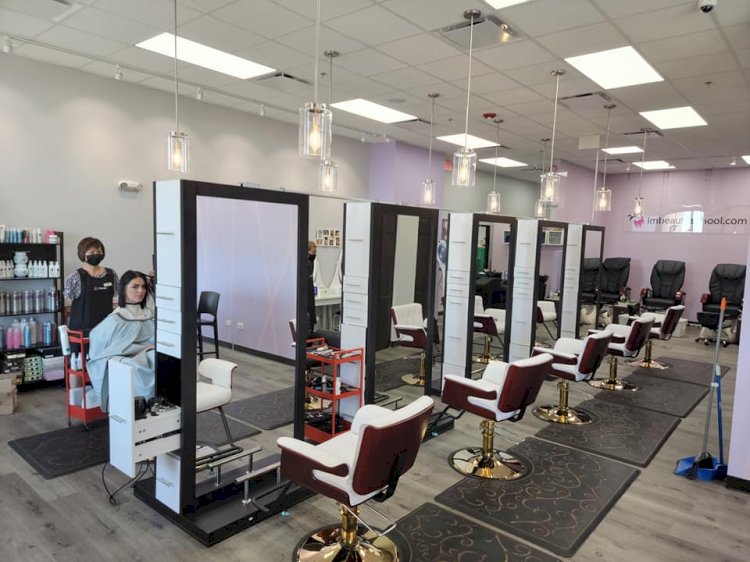
I M Beauty School is a tiny, hyper-focused vocational academy in Glenview, Illinois, training a cohort of just 13 students in the practical arts of cosmetology. It operates with the direct, unpretentious ethos of a trade school: there are no dorms, no football teams, and no lectures on Plato—just hands-on instruction in hair, skin, and nails, backed by federal financial aid and the ability to sponsor international student visas. This is a place for those with a clear, singular career goal, offering a fast track into the beauty industry with a notably low net price.
More details
- Undergrad enrollment
- 13
- Location
- Glenview, IL
- Program Focus
- Cosmetology
- FAFSA Certified
- Yes
- I-20 / M-1 Visa Certified
- Yes
Outcomes & value
Outcomes & value
- Pell (lower-income) share
- 8%
Earnings = median of students working ~10 years after entry; debt = median of graduates. Value divides 10-yr earnings by one year’s net price — read it as earnings per dollar of annual cost, not a full lifetime ROI; it favors lower-cost schools. Source: U.S. Dept. of Education College Scorecard. Figures lag ~2 years and reflect all students, not your intended major.
Campus & location
Campus safety
- On-campus violent crimes (2024)
- 0
On-campus criminal offenses classed as violent (murder/non-negligent manslaughter, rape, robbery, aggravated assault) for the most recent reported year. Source: U.S. Dept. of Education Campus Safety and Security (Clery Act). Counts reflect what’s reported to the school, and urban campuses often report more partly due to non-student incidents nearby — read alongside campus size and setting, not as a standalone safety verdict.
Climate
- Pleasant days / yr
- 94
- Summer high
- 80°F
- Winter low
- 22°F
- Annual rain
- 32.5"
- Annual snow
- 33.5"
- Natural-hazard risk
- Very High
Pleasant days counts days per year with a mean temperature of 55–75°F, a high at or below 90°F, a low at or above 45°F, and little precipitation — a transparent comfort measure, not a weighting we invented. Computed from Open-Meteo ERA5 daily history (2019–2023). Natural-hazard risk is the county’s composite rating from the FEMA National Risk Index.
Quick answers
- How much does I M Beauty School cost?
- At I M Beauty School, the average net price (after aid) is about $9,879 per year. Actual cost varies with financial aid and residency.
- How many undergraduates attend I M Beauty School?
- I M Beauty School enrolls approximately 13 undergraduate students.
- Where is I M Beauty School located?
- I M Beauty School is located in Glenview, IL.
Admissions
Admissions at I M Beauty School reflect the open-access philosophy common to many career-focused trade programs. While the school does not publish a specific , sources indicate that comparable cosmetology schools often have open admissions policies or very high acceptance rates, such as the 100% rate noted for First Class Cosmetology School. The process appears geared toward verifying basic eligibility for vocational study rather than . The school had a total enrollment of only 13 students in 2024, with 5 attending full-time and 8 part-time, indicating a highly intimate and selective cohort size by circumstance rather than exclusivity. A key differentiator is its certification to support international students applying for the M-1 vocational student visa, which can be renewed for up to three years of study. The school is also FAFSA-authorized, meaning it meets federal requirements on financial status, student-faculty ratio, and curriculum to disburse federal aid. There is no indication that standardized test scores like the SAT or ACT are part of the admissions criteria; the conversation around such scores in the provided sources pertains to highly selective universities, not this type of vocational institution.
Compare I M Beauty School
vs University of Minnesota-Morrisvs Dickinson State Universityvs Manchester Universityvs William Jewell College
See colleges similar to I M Beauty School →Sources
- 2025-2026 COMMON DATA SET
- I M Beauty School
- FAFSA – I M Beauty School
- Dymond Designs Beauty School - DFR Report HTML
- I M Beauty School – Beauty School in Glenview, Chicago
- I M Beauty School Estimated Cost and Application data
- First-Year Class Profile
- Will colleges consider applicants with low SAT scores and ...
- Montgomery Beauty School
- First Class Cosmetology School Admissions: SAT, ACT & ...
- American Beauty Schools Admissions - BigFuture