Admit rate has ranged 42%–61% over the last 5 years — notably volatile, though the latest figure above (39%) falls outside that window. Source: IPEDS via Urban Institute.
Acceptance & SAT from Common Data Set / IPEDS; net price, earnings & graduation from the U.S. Dept. of Education College Scorecard. Figures lag ~1–2 years — verify with the school.
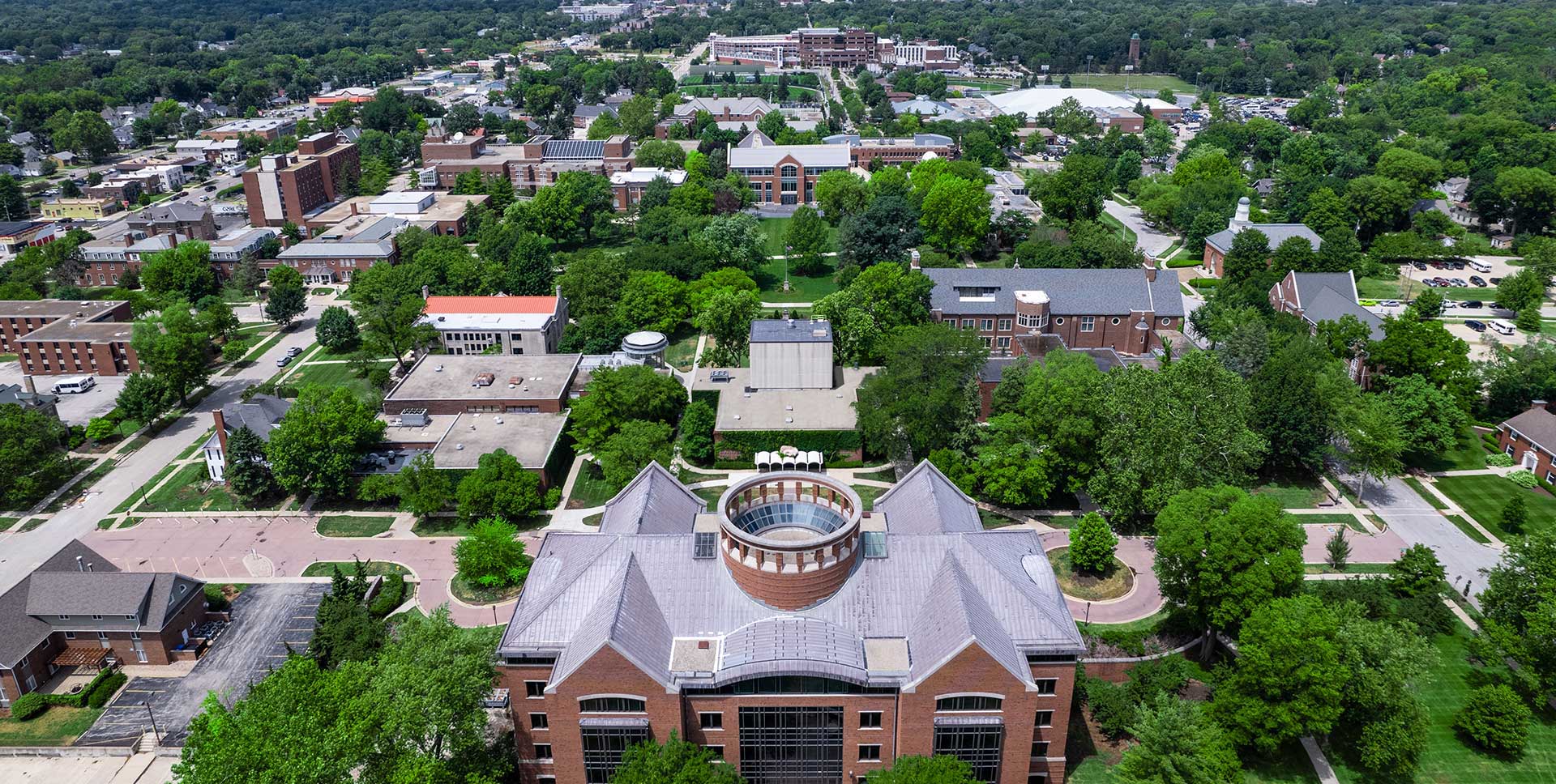
Illinois Wesleyan University carves out a distinctive niche as a small, private liberal arts college in the heart of Illinois, where a 39% acceptance rate signals a selective but accessible gateway to a highly personalized education. With an average class size of 18 and a faculty where 88% hold terminal degrees, IWU delivers the close-knit, mentorship-rich experience that defines the best liberal arts colleges. Its identity is rooted in a vibrant, on-campus community of over 100 student organizations and a pragmatic focus on outcomes, boasting that nearly 99% of recent grads are employed or in graduate school.
Admission requirements
Test-optional — scores considered if submitted
Required
High school transcript
Letters of recommendation
Demonstrated competencies
TOEFL (non-native English)
Considered (not required)
Grade point average
Class rank
Test scores (SAT/ACT)
College-prep program
Source: IPEDS Admissions survey (2022) via Urban Institute. Covers formal factors only — it does not reflect essays, extracurriculars, or other holistic criteria.
More details
Undergrad enrollment
1,582
In-state tuition
$57,704
Out-of-state tuition
$57,704
No-Loan Policy
No
Meets Full Need
No policy stated
Average Class Size
18
Average Aid Package
$51,231
Demonstrated Interest
Not considered
Median Earnings (10yr)
$70,871
First-Year Retention Rate
83%
Students Receiving Financial Aid
>90%
Full-time Faculty with Terminal Degree
Outcomes & value
Outcomes & value
Median earnings (10 yr)
$70,871
Value (earnings ÷ net price)
2.5×
Median debt at graduation
$27,000
Graduation rate
75%
First-year retention
80%
Reducing loan balance (3 yr)
84%
Pell (lower-income) share
26%
First-gen share (among federal-aid recipients)
18%
Earnings = median of students working ~10 years after entry; debt = median of graduates. divides 10-yr earnings by net price — read it as earnings per dollar of annual cost, not a full lifetime ROI; it favors lower-cost schools. Source: U.S. Dept. of Education College Scorecard. Figures lag ~2 years and reflect all students, not your intended major.
Financial health
2.6 / 3.0Meets the federal financial-responsibility standard
U.S. Dept. of Education Financial Responsibility Composite Score (FY2022-23). Scale −1.0 to 3.0; ≥1.5 meets the standard. Reported for private nonprofit & for-profit institutions only — public universities are state-backed and not scored, so this is a stability signal, not a ranking.
Top-earning majors
Median earnings by field of study (highest credential), ~2 years after completion.
Accounting and Related Services$62,792
Registered Nursing, Nursing Administration, Nursing Research and Clinical Nursing$62,775
Economics$61,516
Finance and Financial Management Services$53,358
Business Administration, Management and Operations$50,356
Mathematics
Campus & location
Campus safety
On-campus violent crimes (2024)
3
On-campus criminal offenses classed as violent (murder/non-negligent manslaughter, rape, robbery, aggravated assault) for the most recent reported year. Source: U.S. Dept. of Education Campus Safety and Security (Clery Act). Counts reflect what’s reported to the school, and urban campuses often report more partly due to non-student incidents nearby — read alongside campus size and setting, not as a standalone safety verdict.
Climate
Pleasant days / yr
90
Summer high
83°F
Winter low
23°F
Annual rain
41.6"
Annual snow
22.3"
Natural-hazard risk
Relatively Moderate
Pleasant days counts days per year with a mean temperature of 55–75°F, a high at or below 90°F, a low at or above 45°F, and little precipitation — a transparent comfort measure, not a weighting we invented. Computed from Open-Meteo ERA5 daily history (2019–2023). Natural-hazard risk is the county’s composite rating from the FEMA National Risk Index.
Deep dive — research, future-scholar output & economic mobility▾
Research output
Institutional h-index
110
Scholarly works
7,639
Institutional research volume and impact from OpenAlex. The h-index reflects large research universities and will be low for teaching-focused liberal-arts colleges — not a measure of undergraduate quality.
Economic mobility
Mobility rate
1.1%
Bottom → top quintile
54%
From bottom quintile
2%
Mobility rate = the share of students who both start in the bottom household-income quintile and reach the top quintile; bottom → top is that chance conditional on starting at the bottom. Source: Opportunity Insights Mobility Report Cards (Chetty, Friedman, Saez, Turner & Yagan). Reflects 1980–82 birth cohorts, so it’s directional, not current.
Quick answers
What is the acceptance rate at Illinois Wesleyan University?
Illinois Wesleyan University's acceptance rate is approximately 39% (Bloomington, IL), based on the most recent figures we compiled from public and primary sources.
What SAT score do you need for Illinois Wesleyan University?
Admitted students at Illinois Wesleyan University typically score 1120–1340 on the SAT (the middle-50% range). Scores outside this band are still admitted, especially with strong applications.
How much does Illinois Wesleyan University cost?
At Illinois Wesleyan University, the average net price (after aid) is about $28,199 per year. Actual cost varies with financial aid and residency.
How many undergraduates attend Illinois Wesleyan University?
Illinois Wesleyan University enrolls approximately 1,582 undergraduate students.
Where is Illinois Wesleyan University located?
Illinois Wesleyan University is located in Bloomington, IL.
Admissions
Illinois Wesleyan operates with a selective but not hyper-competitive admissions process, accepting roughly 39% of applicants. The middle 50% SAT range for admitted students is 1120–1340, with an ACT range of 25–30, and the average high school GPA is a strong 3.82 on a 4.0 scale. The university received 11,195 applications for a recent cycle, accepting 5,434. While the overall is 39%, there is a notable early acceptance advantage: the early acceptance rate is reported as 69.6%. IWU offers Early Action deadlines (with a December 15 deadline for an admission decision by January 15) but does not appear to have a binding Early Decision program. Demonstrated interest is not considered in the admissions process, as indicated by its reporting. The rate—the percentage of admitted students who enroll—is a modest 12%, suggesting admitted students often weigh IWU against other options.
Natural Resources Conservation and Research$42,682
Source: U.S. Dept. of Education College Scorecard (field-of-study earnings). Figures cover graduates who received federal aid and lag ~2 years; not all programs report data.
The academic experience at IWU is defined by intimate scale and faculty engagement. With an average class size of 18 and 88% of full-time faculty holding the highest degree in their field, students are guaranteed close interaction with experts. The university offers over 100 majors, minors, and concentrations, spanning traditional liberal arts to pre-professional tracks. Popular majors include Social Sciences, Education, Computer and Information Sciences, and Physical Sciences. Specific programs like Actuarial Science, Marketing, and Kinesiology and Allied Health (formerly Health Promotion & Fitness Management) highlight the blend of theoretical and applied learning. This environment fosters significant academic achievement, as evidenced by the university's proud tally of 176 Academic All-Americans. The culture is one of personalized support, where professors are noted for being eager to help students understand material and succeed.
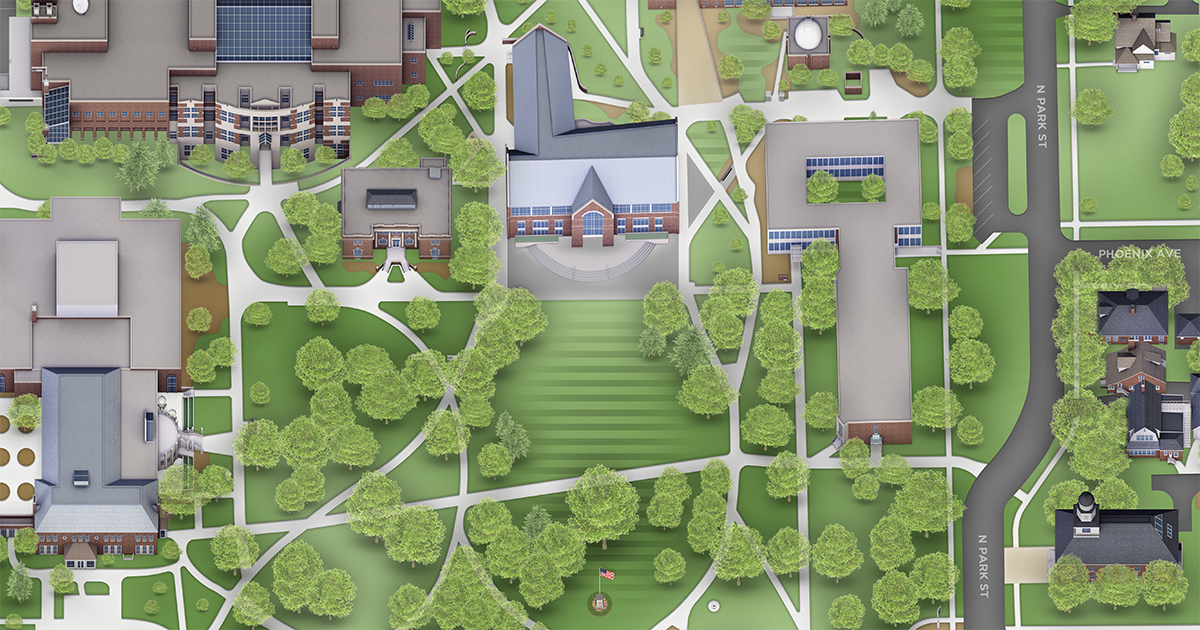
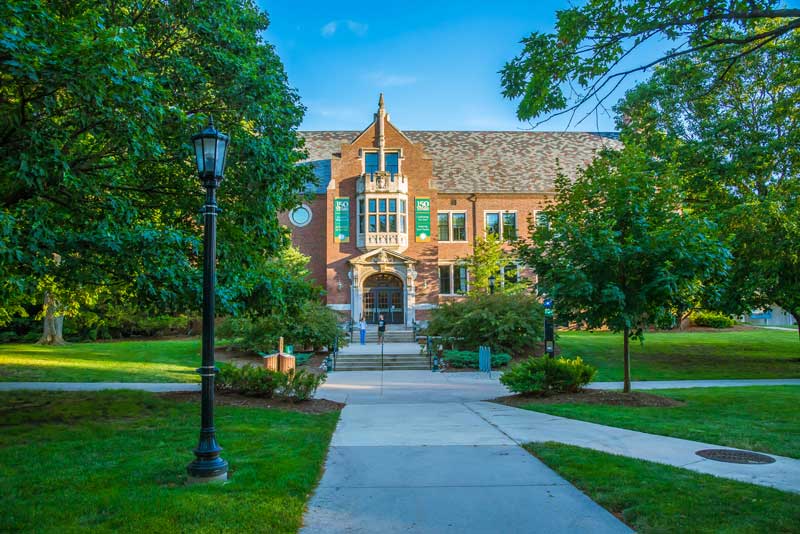
Life at IWU revolves around a vibrant, self-contained campus community in Bloomington, Illinois. With over 100 student organizations, there are ample avenues for leadership, friendship, and personal growth outside the classroom. The campus culture is intentionally designed to foster a sense of belonging and connection among peers, faculty, and staff, encouraging students to express themselves authentically. Students describe the environment as friendly and intimate, making it easy to find one's group through orientation activities and shared experiences. The university frames itself as a place that provides space for students to 'go above and beyond,' suggesting an ethos that encourages ambition within a supportive framework. While the transition to college brings natural excitement and uncertainty, the structured community aims to provide a stable foundation for that journey.
IWU's value proposition is powerfully validated by its outcomes data. The university reports that 93% of students who complete four years at IWU graduate on time—a rate well above national averages. The first-to-second-year retention rate is a solid 83%. For the class of 2025, based on an 88% survey response rate, nearly 99% of graduates were employed or continuing their education within six months of graduation. Of those employed, 72% were in full-time positions with an average starting salary of $58,132. The median earnings of graduates ten years after entry are $70,871. These figures paint a picture of a college that effectively prepares students for immediate entry into the workforce or advanced study, with a strong return on investment.
The published tuition and fees at Illinois Wesleyan are substantial, but the university is aggressive with financial aid to improve accessibility. The average after aid is $28,199. More than 90% of IWU students receive some form of financial aid. The average aid package awarded is $51,231, with the average need-based scholarship or grant award being $44,963. The university emphasizes that its largest source of gift aid comes from friends and donors. It provides a net price calculator for families to estimate their actual cost. It's important to note that IWU does not have a 'no-loan' policy that replaces loans with grants for low-income students; federal Direct Unsubsidized Loans are available to all students regardless of need, and the university's aid packages can include loans. The focus is on meeting a portion of demonstrated need through a combination of grants, scholarships, and self-help options like work-study and loans.
Illinois Wesleyan stands out for delivering a high-caliber, intimate liberal arts education with a Midwestern pragmatism focused on tangible results. It avoids the crushing selectivity of its East Coast namesakes while preserving the core benefits: small classes, accessible professors, and a tight-knit community. The statistic that 93% of students who stay four years graduate on time speaks to a supportive academic infrastructure that shepherds students to completion. Its crowning bragging point—that nearly 99% of graduates are employed or in grad school—isn't just marketing; it's a documented outcome that validates the entire enterprise. IWU is for the student who wants the close mentorship and intellectual exploration of a liberal arts college but also desires a clear, supported pathway to a first job or professional school, all within a friendly, unpretentious campus culture.