Admit rate has ranged 43%–57% over the last 5 years — notably volatile, though the latest figure above (42%) falls outside that window. Source: IPEDS via Urban Institute.
Acceptance & SAT from Common Data Set / IPEDS; net price, earnings & graduation from the U.S. Dept. of Education College Scorecard. Figures lag ~1–2 years — verify with the school.
Inter American University of Puerto Rico-Aguadilla offers a practical, career-focused education in northwest Puerto Rico, providing accessible pathways in fields like accounting and animal science. With a 42% acceptance rate and an average net price of $8,742, it serves as a vital local institution, though its 43% graduation rate indicates significant challenges in student completion. The campus environment is collaborative and culturally immersive, but post-graduate financial outcomes are modest, with median earnings a decade after entry at $24,776.
Admission requirements
Test-blind — scores not considered
Required
High school transcript
Grade point average
Source: IPEDS Admissions survey (2022) via Urban Institute. Covers formal factors only — it does not reflect essays, extracurriculars, or other holistic criteria.
More details
Undergrad enrollment
2,906
In-state tuition
$5,742
Out-of-state tuition
$5,742
Student-Faculty Ratio
27:1
4-Year Graduation Rate
8%
Overall Graduation Rate
31%
Median Early-Career Earnings
$36,427
Outcomes & value
Outcomes & value
Median earnings (10 yr)
$24,776
Value (earnings ÷ net price)
2.8×
Median debt at graduation
$6,250
Graduation rate
43%
First-year retention
81%
Pell (lower-income) share
83%
First-gen share (among federal-aid recipients)
43%
Earnings = median of students working ~10 years after entry; debt = median of graduates. Value divides 10-yr earnings by one year’s net price — read it as earnings per dollar of annual cost, not a full lifetime ROI; it favors lower-cost schools. Source: U.S. Dept. of Education College Scorecard. Figures lag ~2 years and reflect all students, not your intended major.
Top-earning majors
Median earnings by field of study (highest credential), ~2 years after completion.
Computer Systems Networking and Telecommunications$29,685
Criminal Justice and Corrections$24,035
Entrepreneurial and Small Business Operations$20,824
Registered Nursing, Nursing Administration, Nursing Research and Clinical Nursing$16,786
Security Science and Technology$13,702
Psychology, General
Campus & location
Campus safety
On-campus violent crimes (2024)
0
Per 1,000 students
0.00
On-campus criminal offenses classed as violent (murder/non-negligent manslaughter, rape, robbery, aggravated assault) for the most recent reported year. Source: U.S. Dept. of Education Campus Safety and Security (Clery Act). Counts reflect what’s reported to the school, and urban campuses often report more partly due to non-student incidents nearby — read alongside campus size and setting, not as a standalone safety verdict.
Climate
Pleasant days / yr
35
Summer high
86°F
Winter low
71°F
Annual rain
48.9"
Pleasant days counts days per year with a mean temperature of 55–75°F, a high at or below 90°F, a low at or above 45°F, and little precipitation — a transparent comfort measure, not a weighting we invented. Computed from Open-Meteo ERA5 daily history (2019–2023).
Quick answers
What is the acceptance rate at Inter American University of Puerto Rico-Aguadilla?
Inter American University of Puerto Rico-Aguadilla's acceptance rate is approximately 42% (Aguadilla, PR), based on the most recent figures we compiled from public and primary sources.
How much does Inter American University of Puerto Rico-Aguadilla cost?
At Inter American University of Puerto Rico-Aguadilla, the average net price (after aid) is about $8,742 per year. Actual cost varies with financial aid and residency.
How many undergraduates attend Inter American University of Puerto Rico-Aguadilla?
Inter American University of Puerto Rico-Aguadilla enrolls approximately 2,906 undergraduate students.
Where is Inter American University of Puerto Rico-Aguadilla located?
Inter American University of Puerto Rico-Aguadilla is located in Aguadilla, PR.
Admissions
Inter American University of Puerto Rico-Aguadilla maintains a moderately selective admissions process, with hovering between 42-46% across sources. While standardized test scores (SAT/ACT) aren't consistently reported as requirements, the institution prioritizes academic preparedness—32.4% of admitted students hold GPAs of 3.75 or higher, and another 20.1% fall in the 3.50-3.74 range. The student body is overwhelmingly Hispanic/Latino (73.1% female, 26.1% male in graduate programs), reflecting Puerto Rico's demographic makeup. Notably, the factors suggest a process, though specific application requirements like essays aren't detailed in available sources.
Source: U.S. Dept. of Education College Scorecard (field-of-study earnings). Figures cover graduates who received federal aid and lag ~2 years; not all programs report data.
The university offers 68 undergraduate majors through associate and bachelor's programs, with a strong vocational tilt in fields like Accounting (AAS/BBA), Agronomy (BAS), and Animal Science with Pre-Veterinary tracks. A 27:1 student-faculty ratio suggests larger class sizes, though specific data on small-class prevalence is unavailable. The institution emphasizes humanistic, social, and scientific education—a century-old mission—but faces academic challenges: just 31% of students graduate, and the 4-year graduation rate sits at a stark 8%. Programs appear structured for career readiness rather than research intensity, with no mention of graduate-level offerings.
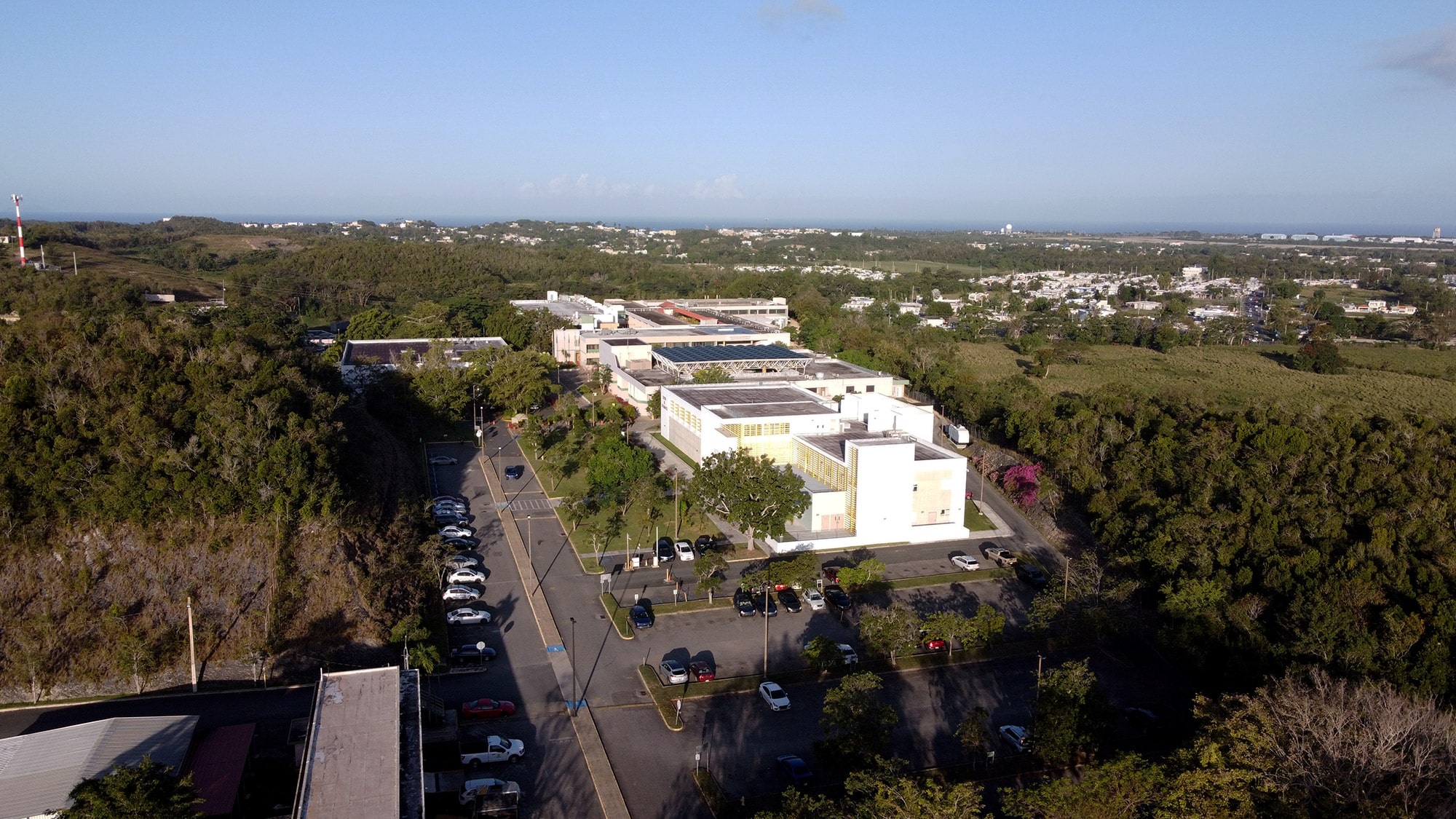
Life at Aguadilla's campus blends academic rigor with Puerto Rican cultural vibrancy. Described as fostering 'collaboration and mutual respect,' the environment serves a diverse Hispanic student population. While specific clubs or traditions aren't detailed in sources, the setting encourages integration of study routines with local hangouts—typical of commuter-friendly institutions. The campus's northwest Puerto Rico location likely influences its casual, community-oriented vibe, though on-campus housing data is conspicuously absent from available materials.
Post-graduation metrics paint a mixed picture: alumni earn a median $36,427 one year after completing their degrees—a respectable figure given Puerto Rico's economic context—but the university struggles with retention. The overall 31-32% graduation rate ranks in the bottom decile nationally, with male students faring particularly poorly at 23%. These outcomes suggest the institution serves many or non-traditional students who may face systemic barriers, though specific support programs aren't documented in available sources.
Affordability is a clear strength—the average after aid is just $7,909, with aid packages averaging $5,836-$7,061. This positions the university as a budget-conscious choice, especially for Puerto Rican residents (though in-state/out-of-state distinctions aren't specified). The net price calculator hints at transparency in cost breakdowns, covering tuition, fees, books, and living expenses. Notably, 73% of graduate students receive financial assistance, underscoring the institution's commitment to accessibility despite its academic challenges.
Inter American University-Aguadilla carves its niche as an unpretentious, career-focused institution deeply rooted in Puerto Rico's cultural and economic landscape. Its high and low make it a gateway to higher education for local students, particularly women pursuing vocational paths in business and agriculture. While graduation rates lag, the $36K+ early-career earnings suggest its programs deliver tangible ROI—a trade-off that may appeal to pragmatic students prioritizing affordability and job readiness over prestige. The campus's collaborative vibe and Hispanic majority create a distinctive environment where Puerto Rican identity shapes both academics and daily life.
Inter American University of Puerto Rico-Aguadilla logo · sourceAguadilla - Interamerican University of Puerto Rico · sourceInter Aguadilla - Estudia Presencial y Online · sourceInter American University of Puerto Rico-Aguadilla Employees, Location, Alumni | LinkedIn · source