Loading…
← All schools
Inter American University of Puerto Rico-San German
San German, PRprivate nonprofitwww.sg.inter.edu/
Acceptance
42%
Avg net price
$9,148
Earnings (10 yr)
$25,416
Graduation rate
43%
Admit rate has ranged 40%–55% over the last 5 years — notably volatile. Source: IPEDS via Urban Institute.
Acceptance & SAT from Common Data Set / IPEDS; net price, earnings & graduation from the U.S. Dept. of Education College Scorecard. Figures lag ~1–2 years — verify with the school.
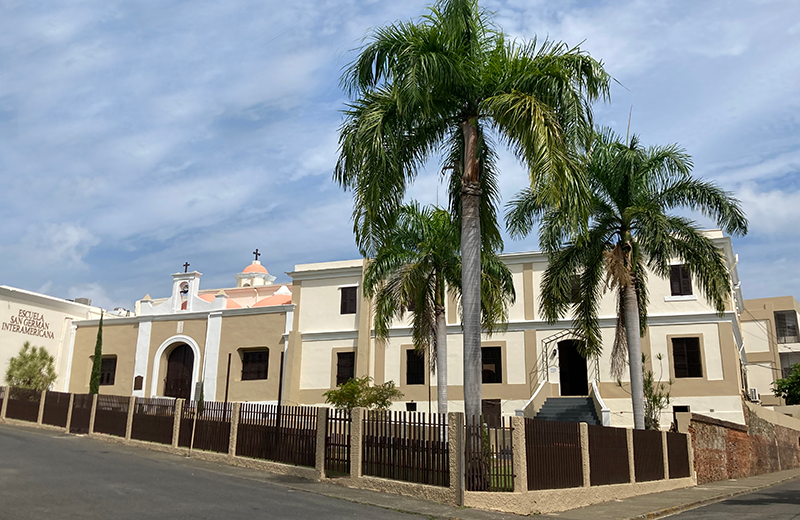
Inter American University of Puerto Rico-San Germán is the oldest private university on the island, a Christian-rooted institution that functions as a cultural and academic bridge for its students. It operates with a distinctive, cradle-to-career model, offering everything from kindergarten to doctoral programs on a single campus. While its admissions are selective, its defining characteristic is a deeply practical, accessible education that serves the local community, reflected in its graduation rates and post-graduate earnings.
Admission requirements
Test-blind — scores not considered
Required
- High school transcript
- Grade point average
Source: IPEDS Admissions survey (2022) via Urban Institute. Covers formal factors only — it does not reflect essays, extracurriculars, or other holistic criteria.
More details
- Undergrad enrollment
- 2,569
- In-state tuition
- $5,780
- Out-of-state tuition
- $5,780
- Graduation Rate
- 43%
- First-Year Retention
- 78.7%
- Regular App Deadline
- August 15
- Median Earnings (10yr)
- $25,416
- Students Receiving Aid
- 94%
Outcomes & value
Outcomes & value
- Median earnings (10 yr)
- $25,416
- Value (earnings ÷ net price)
- 2.8×
- Median debt at graduation
- $8,500
- Graduation rate
- 43%
- First-year retention
- 80%
- Pell (lower-income) share
- 83%
- First-gen share (among federal-aid recipients)
- 36%
Earnings = median of students working ~10 years after entry; debt = median of graduates. Value divides 10-yr earnings by one year’s net price — read it as earnings per dollar of annual cost, not a full lifetime ROI; it favors lower-cost schools. Source: U.S. Dept. of Education College Scorecard. Figures lag ~2 years and reflect all students, not your intended major.
Top-earning majors
Median earnings by field of study (highest credential), ~2 years after completion.
- Teacher Education and Professional Development, Specific Subject Areas$13,702
- Registered Nursing, Nursing Administration, Nursing Research and Clinical Nursing$12,644
- Biology, General$11,234
- Entrepreneurial and Small Business Operations$10,509
Source: U.S. Dept. of Education College Scorecard (field-of-study earnings). Figures cover graduates who received federal aid and lag ~2 years; not all programs report data.
Compare on earnings: best colleges for Nursing · best colleges for Biology
Campus & location
Campus safety
- On-campus violent crimes (2024)
- 0
- Per 1,000 students
- 0.00
On-campus criminal offenses classed as violent (murder/non-negligent manslaughter, rape, robbery, aggravated assault) for the most recent reported year. Source: U.S. Dept. of Education Campus Safety and Security (Clery Act). Counts reflect what’s reported to the school, and urban campuses often report more partly due to non-student incidents nearby — read alongside campus size and setting, not as a standalone safety verdict.
Climate
- Pleasant days / yr
- 72
- Summer high
- 88°F
- Winter low
- 66°F
- Annual rain
- 45.3"
Pleasant days counts days per year with a mean temperature of 55–75°F, a high at or below 90°F, a low at or above 45°F, and little precipitation — a transparent comfort measure, not a weighting we invented. Computed from Open-Meteo ERA5 daily history (2019–2023).
Quick answers
- What is the acceptance rate at Inter American University of Puerto Rico-San German?
- Inter American University of Puerto Rico-San German's acceptance rate is approximately 42% (San German, PR), based on the most recent figures we compiled from public and primary sources.
- How much does Inter American University of Puerto Rico-San German cost?
- At Inter American University of Puerto Rico-San German, the average net price (after aid) is about $9,148 per year. Actual cost varies with financial aid and residency.
- How many undergraduates attend Inter American University of Puerto Rico-San German?
- Inter American University of Puerto Rico-San German enrolls approximately 2,569 undergraduate students.
- Where is Inter American University of Puerto Rico-San German located?
- Inter American University of Puerto Rico-San German is located in San German, PR.
Admissions
Admissions at Inter American University of Puerto Rico-San Germán are selective, with an that varies across reporting sources but is officially set at 42%. The process is test-flexible, meaning SAT or ACT scores are not rigidly required. Application deadlines are notably late, with a regular decision deadline of August 15, providing flexibility for students. The university does not have an open admissions policy, and admissions data applies specifically to first-time, degree- or certificate-seeking undergraduates.
Compare Inter American University of Puerto Rico-San German
vs Inter American University of Puerto Rico-Aguadillavs Inter American University of Puerto Rico-Arecibovs Inter American University of Puerto Rico-Guayamavs Inter American University of Puerto Rico-Ponce
See colleges similar to Inter American University of Puerto Rico-San German →Sources
- Inter American University of Puerto Rico-San German - Data USA
- Inter American University of Puerto Rico--San German - USNews.com
- Inter American University of Puerto Rico-San German
- Inter American University of Puerto Rico - San German Campus ...
- Inter American University of Puerto Rico - San German Campus ...
- Inter American University of Puerto Rico-San German
- Inter American University Of Puerto Rico San German Admissions
- Inter American University of Puerto Rico - San German - Niche