Loading…
← All schools
Jefferson Community and Technical College
Louisville, KYpublicjefferson.kctcs.edu
Avg net price
$6,376
Earnings (10 yr)
$38,171
Acceptance & SAT from Common Data Set / IPEDS; net price, earnings & graduation from the U.S. Dept. of Education College Scorecard. Figures lag ~1–2 years — verify with the school.
Jefferson Community and Technical College is Louisville's sprawling, open-access engine of workforce development and academic transfer, enrolling over 12,500 students across six campuses and online. It operates with a distinctly practical, no-frills ethos, where the majority of students are credential-seekers or high schoolers earning dual credit, and success is measured in job placements, licensure pass rates, and transfers to four-year schools. This is a college built for immediacy—whether that's a fast-track certificate, an associate degree, or a low-cost launchpad to a bachelor's.
More details
- Undergrad enrollment
- 7,744
- In-state tuition
- $4,808
- Out-of-state tuition
- $6,512
- Campuses
- 6 campuses + online
- Student Population
- ~12,500
- Median Earnings (10yr)
- $38,171
- Credential-Seeking Students
- 58% of population
- Fall-to-Fall Retention Rate
- 56% (Record High)
- Graduation Rate (150% IPEDS)
- 35.5% (2023-24)
- High School/Dual Credit Students
- 38% of population
Outcomes & value
Outcomes & value
- Median earnings (10 yr)
- $38,171
- Value (earnings ÷ net price)
- 6.0×
- Median debt at graduation
- $11,651
- Reducing loan balance (3 yr)
- 27%
- Pell (lower-income) share
- 29%
- First-gen share (among federal-aid recipients)
- 48%
Earnings = median of students working ~10 years after entry; debt = median of graduates. Value divides 10-yr earnings by one year’s net price — read it as earnings per dollar of annual cost, not a full lifetime ROI; it favors lower-cost schools. Source: U.S. Dept. of Education College Scorecard. Figures lag ~2 years and reflect all students, not your intended major.
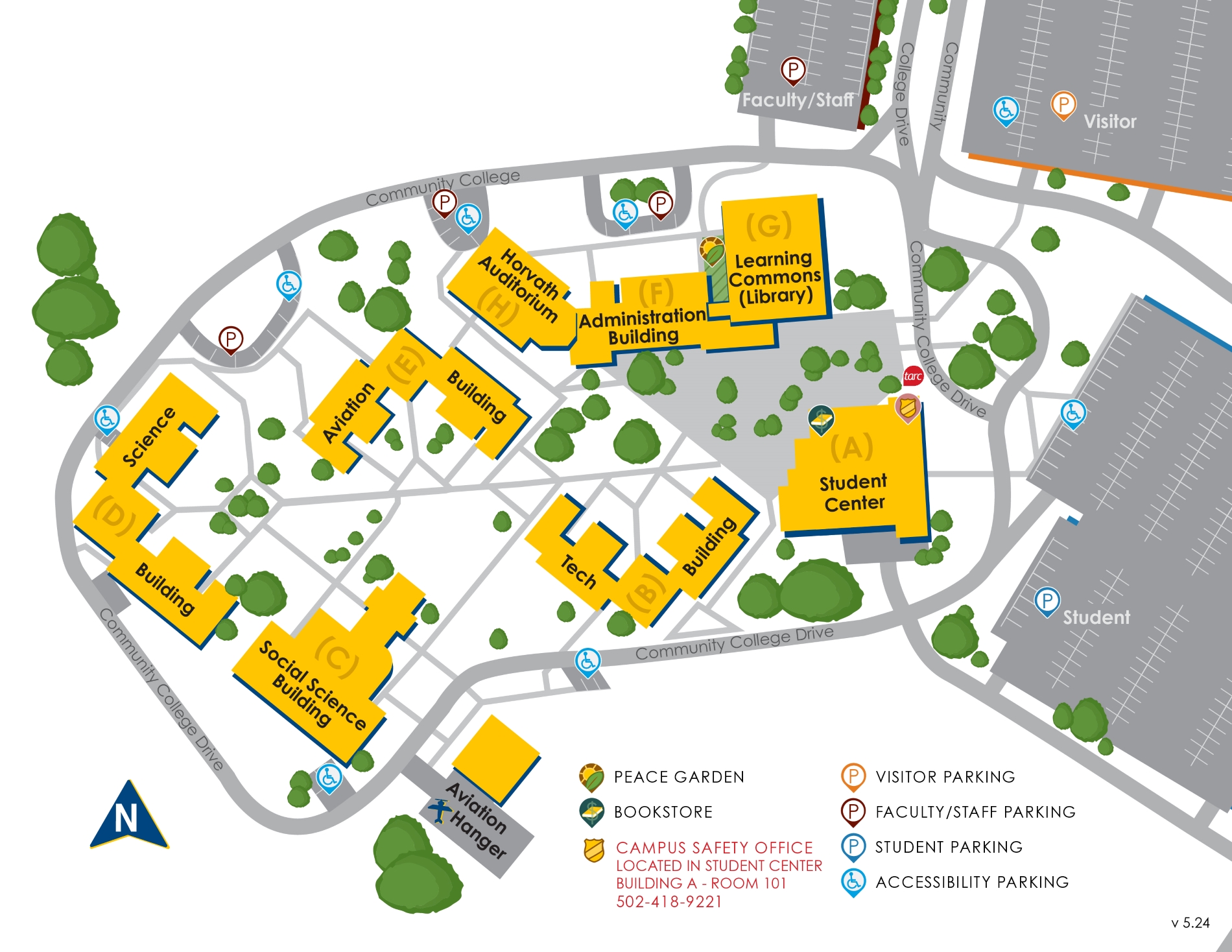
Campus & location
Campus safety
- On-campus violent crimes (2024)
- 0
On-campus criminal offenses classed as violent (murder/non-negligent manslaughter, rape, robbery, aggravated assault) for the most recent reported year. Source: U.S. Dept. of Education Campus Safety and Security (Clery Act). Counts reflect what’s reported to the school, and urban campuses often report more partly due to non-student incidents nearby — read alongside campus size and setting, not as a standalone safety verdict.
Climate
- Pleasant days / yr
- 93
- Summer high
- 86°F
- Winter low
- 31°F
- Annual rain
- 38.8"
- Annual snow
- 8.4"
- Natural-hazard risk
- Relatively High
Pleasant days counts days per year with a mean temperature of 55–75°F, a high at or below 90°F, a low at or above 45°F, and little precipitation — a transparent comfort measure, not a weighting we invented. Computed from Open-Meteo ERA5 daily history (2019–2023). Natural-hazard risk is the county’s composite rating from the FEMA National Risk Index.
Deep dive — research, future-scholar output & economic mobility
Research output
- Institutional h-index
- 22
- Scholarly works
- 169
Institutional research volume and impact from OpenAlex. The h-index reflects large research universities and will be low for teaching-focused liberal-arts colleges — not a measure of undergraduate quality.
Economic mobility
- Mobility rate
- 1.0%
- Bottom → top quintile
- 9%
- From bottom quintile
- 11%
Mobility rate = the share of students who both start in the bottom household-income quintile and reach the top quintile; bottom → top is that chance conditional on starting at the bottom. Source: Opportunity Insights Mobility Report Cards (Chetty, Friedman, Saez, Turner & Yagan). Reflects 1980–82 birth cohorts, so it’s directional, not current.
Quick answers
- How much does Jefferson Community and Technical College cost?
- At Jefferson Community and Technical College, the average net price (after aid) is about $6,376 per year. Actual cost varies with financial aid and residency.
- How many undergraduates attend Jefferson Community and Technical College?
- Jefferson Community and Technical College enrolls approximately 7,744 undergraduate students.
- Where is Jefferson Community and Technical College located?
- Jefferson Community and Technical College is located in Louisville, KY.
Admissions
Jefferson Community and Technical College maintains an open admissions policy, meaning it accepts all applicants with a high school diploma or equivalent. The is widely reported as 100%. The process is designed for accessibility: first-time freshmen are those who have never taken a college class or who only took dual-credit, SEEK, or dual-enrolled classes in high school. The student body is a mix of traditional and non-traditional learners; as of the latest snapshot, 58% are credential-seeking students, 38% are high school/dual credit students, and 4% are non-credential seeking (such as workforce or personal enrichment students). There is no indication that the college tracks or considers demonstrated interest in its admissions decisions. The admissions office can be reached via a toll-free number (800-951-7287), email ([email protected]), or its website.
Compare Jefferson Community and Technical College
vs Alabama A & M Universityvs University of Puerto Rico-Rio Piedrasvs North Carolina A & T State Universityvs Southern University and A & M College
See colleges similar to Jefferson Community and Technical College →Sources
- Download: Common Data Set 2023-2024 (.XLS)
- Jefferson Community and Technical College - IPEDS
- Fast Facts on Jefferson's Student Population
- Common Data Set: Home
- HEDS-CDS_2024-2025 Final.xlsx - Read-Only
- IR Data Request | JCTC
- First Time Freshman | JCTC - KCTCS
- Jefferson Community & Technical College - Niche
- Jefferson Community and Technical College - Peterson's
- Jefferson Community and Technical College Admission - Testbook