Admit rate has ranged 74%–80% over the last 5 years. Source: IPEDS via Urban Institute.
Acceptance & SAT from Common Data Set / IPEDS; net price, earnings & graduation from the U.S. Dept. of Education College Scorecard. Figures lag ~1–2 years — verify with the school.
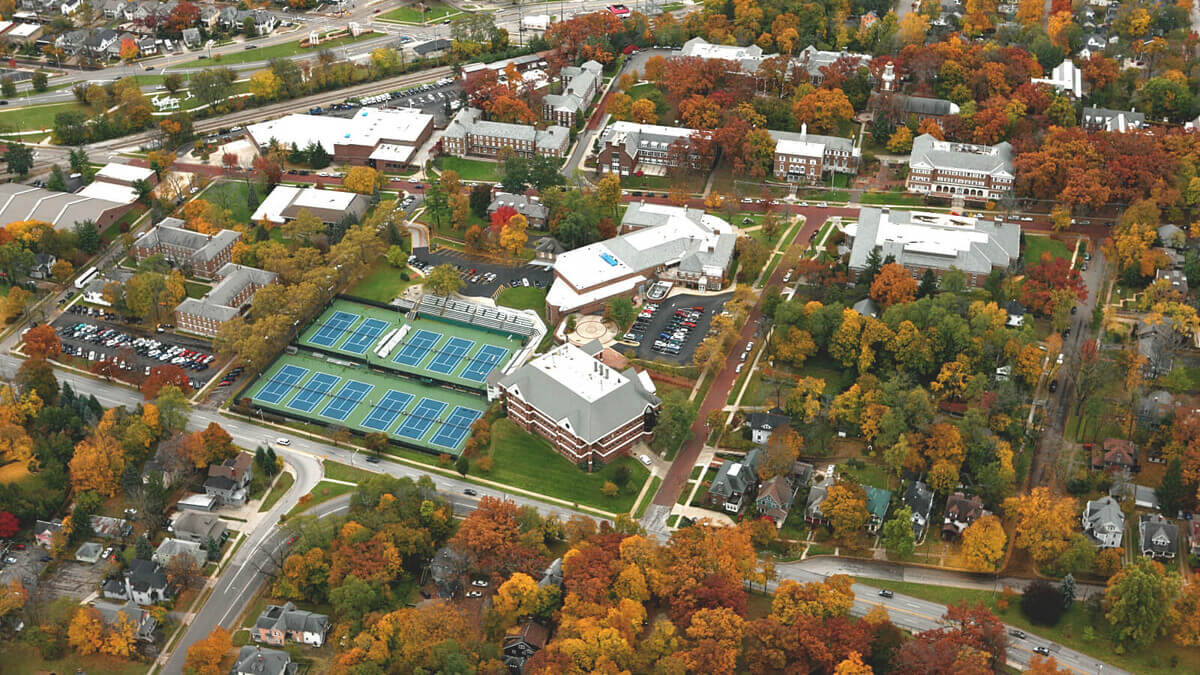
Kalamazoo College, or 'K,' is a small, fiercely independent liberal arts college in Michigan that operates less like a traditional campus and more like a launchpad. Its defining feature is the 'K-Plan,' a bold, flexible academic structure built around study abroad, career development internships, and a senior capstone project—a curriculum designed to produce graduates who are globally savvy and professionally ready from day one. The vibe is intensely close-knit, with a majority of students living on or immediately around campus, and an academic culture that prizes hands-on, personalized exploration over rigid requirements.
Admission requirements
Test-optional — scores considered if submitted
Required
High school transcript
Grade point average
Letters of recommendation
College-prep program
TOEFL (non-native English)
Considered (not required)
Test scores (SAT/ACT)
Demonstrated competencies
Source: IPEDS Admissions survey (2022) via Urban Institute. Covers formal factors only — it does not reflect essays, extracurriculars, or other holistic criteria.
More details
Undergrad enrollment
1,149
In-state tuition
$61,050
Out-of-state tuition
$61,050
Graduation Rate
76%
On-Campus Students
64%
Merit Aid Recipients
100% of admitted students
Study Abroad Ranking
#4 in U.S. (U.S. News)
Demonstrated Interest
Special consideration given
Student Organizations
80+
Student-Faculty Ratio
10:1
Median Earnings (10yr)
$65,590
Average Financial Aid Package
Outcomes & value
Outcomes & value
Median earnings (10 yr)
$65,590
Value (earnings ÷ net price)
3.4×
Median debt at graduation
$26,077
Graduation rate
76%
First-year retention
85%
Reducing loan balance (3 yr)
83%
Pell (lower-income) share
26%
First-gen share (among federal-aid recipients)
14%
Financial health
3.0 / 3.0Meets the federal financial-responsibility standard
U.S. Dept. of Education Financial Responsibility Composite Score (FY2022-23). Scale −1.0 to 3.0; ≥1.5 meets the standard. Reported for private nonprofit & for-profit institutions only — public universities are state-backed and not scored, so this is a stability signal, not a ranking.
Top-earning majors
Median earnings by field of study (highest credential), ~2 years after completion.
Economics$55,964
Business/Commerce, General$47,729
Chemistry$41,565
Social Sciences, Other$31,038
Psychology, General$22,920
English Language and Literature, General$20,140
Biology, General
Campus & location
Campus safety
On-campus violent crimes (2024)
1
On-campus criminal offenses classed as violent (murder/non-negligent manslaughter, rape, robbery, aggravated assault) for the most recent reported year. Source: U.S. Dept. of Education Campus Safety and Security (Clery Act). Counts reflect what’s reported to the school, and urban campuses often report more partly due to non-student incidents nearby — read alongside campus size and setting, not as a standalone safety verdict.
Climate
Pleasant days / yr
92
Summer high
81°F
Winter low
23°F
Annual rain
41"
Annual snow
38"
Natural-hazard risk
Relatively Moderate
Pleasant days counts days per year with a mean temperature of 55–75°F, a high at or below 90°F, a low at or above 45°F, and little precipitation — a transparent comfort measure, not a weighting we invented. Computed from Open-Meteo ERA5 daily history (2019–2023). Natural-hazard risk is the county’s composite rating from the FEMA National Risk Index.
Deep dive — research, future-scholar output & economic mobility▾
Research output
Institutional h-index
104
Scholarly works
2,390
Institutional research volume and impact from OpenAlex. The h-index reflects large research universities and will be low for teaching-focused liberal-arts colleges — not a measure of undergraduate quality.
Share of this school’s graduates who go on to earn research doctorates (2010–20), by national rank and per-capita yield (NSF institutional-yield ratio). A signal of a research-oriented student culture — not a causal promise, since it partly reflects who enrolls. Only top producers appear. Source: NSF NCSES, Baccalaureate Origins of U.S. Research Doctorate Recipients.
Economic mobility
Quick answers
What is the acceptance rate at Kalamazoo College?
Kalamazoo College's acceptance rate is approximately 75% (Kalamazoo, MI), based on the most recent figures we compiled from public and primary sources.
What SAT score do you need for Kalamazoo College?
Admitted students at Kalamazoo College typically score 1170–1380 on the SAT (the middle-50% range). Scores outside this band are still admitted, especially with strong applications.
How much does Kalamazoo College cost?
At Kalamazoo College, the average net price (after aid) is about $19,072 per year. Actual cost varies with financial aid and residency.
How many undergraduates attend Kalamazoo College?
Kalamazoo College enrolls approximately 1,149 undergraduate students.
Where is Kalamazoo College located?
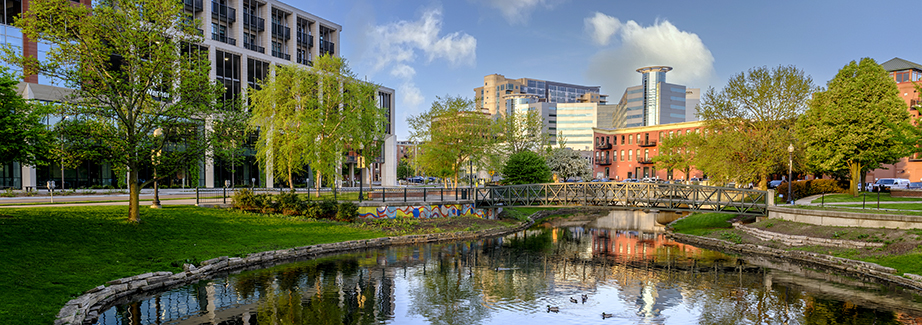
Kalamazoo College is located in Kalamazoo, MI.
Admissions
Kalamazoo College is a notably accessible liberal arts institution, with an admissions process that is more holistic and less gatekept than many of its peers. The is 75%, positioning it as a 'less selective' school where a strong application has a very real chance. The college offers an Early Decision program, which is open to all incoming first-year students, including international applicants. Notably, the acceptance rate for Early Decision applicants is significantly higher than the overall rate, reported at 87.3%. This suggests that students who identify K as their clear first choice can substantially improve their odds by applying early and bindingly.
The middle 50% SAT range for admitted students is 1170–1380, with an ACT range of 26–30, and the average GPA of accepted applicants is 3.7. The indicates that the college gives 'special consideration' in the admissions process for participation in both school and non-school-related activities of interest to the institution. This implies that demonstrated interest—through visits, engagement, and extracurricular alignment—is a factor that can positively influence an application, moving beyond just grades and test scores.
Earnings = median of students working ~10 years after entry; debt = median of graduates. Value divides 10-yr earnings by one year’s net price — read it as earnings per dollar of annual cost, not a full lifetime ROI; it favors lower-cost schools. Source: U.S. Dept. of Education College Scorecard. Figures lag ~2 years and reflect all students, not your intended major.
$19,045
Source: U.S. Dept. of Education College Scorecard (field-of-study earnings). Figures cover graduates who received federal aid and lag ~2 years; not all programs report data.
Mobility rate = the share of students who both start in the bottom household-income quintile and reach the top quintile; bottom → top is that chance conditional on starting at the bottom. Source: Opportunity Insights Mobility Report Cards (Chetty, Friedman, Saez, Turner & Yagan). Reflects 1980–82 birth cohorts, so it’s directional, not current.
The academic engine of Kalamazoo College is the 'K-Plan,' a distinctive and integrated liberal arts experience built on four pillars: a liberal arts education, study abroad, career development (through its Center for Career and Professional Development), and a senior individualized project (SIP). This structure provides a remarkable degree of flexibility with minimal general education requirements, allowing students to deeply customize their path across 30 majors, 21 minors, and 12 concentrations.
Study abroad isn't just encouraged; it's a central, defining component of the K experience. The college is ranked #4 in the nation for study abroad participation by U.S. News & World Report, with the expectation that most students will spend at least one term off-campus. Academically, the college has developed particular strengths in several areas. The natural sciences are cited as 'exceptional,' and other key strengths include international and area studies, community and global health, psychology, and business. The ten most popular majors for the 2024 graduating class reflect this blend: Biological and Biomedical Sciences (17%), Foreign Languages, Literatures, and Linguistics (13%), Psychology (13%), and Business, Management, Marketing, and Related Support Services. The student-faculty ratio is an intimate 10:1, facilitating the personalized, hands-on learning that defines the K culture.
Life at K is defined by its tight-knit, residential community. A full 64% of students live on campus, and the majority of those who live off-campus reside within four blocks, creating a concentrated, walkable college village atmosphere. This proximity fosters a strong sense of belonging and makes the campus feel active and engaged. Students have over 80 student organizations to choose from, providing countless avenues to explore interests, meet people, and build community.
The college places a significant emphasis on fostering an inclusive and interculturally competent campus. The Office of Intercultural Student Life organizes programs, initiatives, and dialogues that center the lived experiences and voices of minoritized students, aiming to develop a campus culture that celebrates differences while affirming shared interconnections. This focus helps shape a student body described by external reviewers as 'welcoming, inclusive, and tight-knit.' The small size of the college means students often find a strong sense of camaraderie and support, knowing their peers and professors well.
Kalamazoo College produces graduates who are well-prepared for next steps, whether in the workforce or graduate school. The six-year graduation rate for recent entering cohorts has fluctuated between the mid-70s and mid-80s percent. Career outcomes are strong, with the college's Office of Career & Professional Development reporting a median starting salary of $52,000 for the Class of 2022 just six months after graduation. Longer-term earnings data shows solid growth, with median earnings five years after graduation reported at $57,449.
The college's integrated approach—combining rigorous academics with mandatory career development and immersive study abroad—has earned external recognition for delivering strong return on investment. Kalamazoo College received a four-star rating in Money's 'Best Colleges in America 2026' list, a recognition of its overall value proposition and outcomes. The senior individualized project (SIP) serves as a powerful capstone, giving students a substantial, self-directed research or creative endeavor to showcase to future employers or graduate programs.
Kalamazoo College employs a robust dual-strategy financial aid model centered on universal merit scholarships and need-based support. Crucially, 100% of admitted students receive a merit scholarship based on academic achievements, with these awards ranging from $44,000 to $52,000 over four years. This makes the published sticker price—$66,308 for tuition and fees, plus $13,803 for housing and food—far more accessible for most families.
On top of this , the college provides need-based financial aid and encourages all families to file the FAFSA, noting that ' is available at more income levels than you might expect.' A very high percentage (99%) of full-time beginning undergraduates receive grant or scholarship aid. The result is a significantly reduced . The average cost after scholarships and grants is reported as $26,050, with an average financial aid package of $61,080. It is important to note that while the college participates in federal and state grant programs (like Pell Grants and SEOG), there is no indication in the provided sources that Kalamazoo College has a formal 'no-loan' policy where 100% of need is met with grants alone. Families should use the college's net price calculator and consult directly with the Office of Financial Aid for a personalized estimate.
Kalamazoo College stands out not for prestige or exclusivity, but for the radical intentionality of its educational design. The 'K-Plan' is a complete, integrated system, not a menu of options. It assumes that a meaningful liberal arts education in the 21st century must be experiential, global, and professionally engaged. The expectation that nearly every student will study abroad (backed by its #4 national ranking in that category) creates a shared baseline of global perspective that permeates campus culture. The required career development component and the monumental senior project ensure students don't just learn theory—they apply it, reflect on it, and build a portfolio with it.
This creates a specific type of student: one who is self-directed, comfortable with ambiguity, and ready to connect learning across contexts. The small size and residential nature (with 64% on campus) mean this happens within an intensely supportive community. You're not just getting a degree; you're following a deliberately constructed path meant to build confidence, skills, and a worldview. For students who thrive on autonomy within a structured framework and who want college to feel like a cohesive, transformative journey rather than a series of checked boxes, K offers a singular and powerful model.
Kalamazoo College seal · sourceOur Location, Kalamazoo Michigan | About K | Kalamazoo College · sourceKalamazoo College — Admissions, Tuition & Acceptance Rate | Appily · sourceKalamazoo College Residential Living · source