Admit rate has ranged 57%–60% over the last 5 years, though the latest figure above (55%) falls outside that window. Source: IPEDS via Urban Institute.
Acceptance & SAT from Common Data Set / IPEDS; net price, earnings & graduation from the U.S. Dept. of Education College Scorecard. Figures lag ~1–2 years — verify with the school.
The Kansas City Art Institute is a small, private college of art and design that operates with the intensity of a professional studio. It’s a place where the portfolio matters more than the GPA, where 13 tightly focused BFA programs are taught by working artists, and where the campus culture is defined by a shared, all-consuming creative drive. This is not a liberal arts college with an art department; it’s a conservatory for visual artists and designers, offering a deeply immersive, hands-on education that comes with both significant financial aid and a candid conversation about post-graduation earnings in the arts.
Admission requirements
Test-blind — scores not considered
Required
High school transcript
Grade point average
Demonstrated competencies
TOEFL (non-native English)
Considered (not required)
Letters of recommendation
Source: IPEDS Admissions survey (2022) via Urban Institute. Covers formal factors only — it does not reflect essays, extracurriculars, or other holistic criteria.
More details
Undergrad enrollment
812
In-state tuition
$44,550
Out-of-state tuition
$44,550
Faculty
Working artists & designers
Aid Reach
99% of students receive institutional aid
Studio Majors
13 BFA programs
Graduation Rate
58%
Median Earnings (10yr)
$37,032
Outcomes & value
Outcomes & value
Median earnings (10 yr)
$37,032
Value (earnings ÷ net price)
1.3×
Median debt at graduation
$27,000
Graduation rate
58%
First-year retention
78%
Reducing loan balance (3 yr)
61%
Pell (lower-income) share
44%
First-gen share (among federal-aid recipients)
21%
Financial health
2.5 / 3.0Meets the federal financial-responsibility standard
U.S. Dept. of Education Financial Responsibility Composite Score (FY2022-23). Scale −1.0 to 3.0; ≥1.5 meets the standard. Reported for private nonprofit & for-profit institutions only — public universities are state-backed and not scored, so this is a stability signal, not a ranking.
Top-earning majors
Median earnings by field of study (highest credential), ~2 years after completion.
Design and Applied Arts$27,947
Film/Video and Photographic Arts$27,476
Rhetoric and Composition/Writing Studies$25,580
Fine and Studio Arts$22,715
Graphic Communications$20,140
Source: U.S. Dept. of Education College Scorecard (field-of-study earnings). Figures cover graduates who received federal aid and lag ~2 years; not all programs report data.
On-campus criminal offenses classed as violent (murder/non-negligent manslaughter, rape, robbery, aggravated assault) for the most recent reported year. Source: U.S. Dept. of Education Campus Safety and Security (Clery Act). Counts reflect what’s reported to the school, and urban campuses often report more partly due to non-student incidents nearby — read alongside campus size and setting, not as a standalone safety verdict.
Climate
Pleasant days / yr
73
Summer high
88°F
Winter low
26°F
Annual rain
48.2"
Annual snow
18.9"
Natural-hazard risk
Relatively High
Pleasant days counts days per year with a mean temperature of 55–75°F, a high at or below 90°F, a low at or above 45°F, and little precipitation — a transparent comfort measure, not a weighting we invented. Computed from Open-Meteo ERA5 daily history (2019–2023). Natural-hazard risk is the county’s composite rating from the FEMA National Risk Index.
Deep dive — research, future-scholar output & economic mobility▾
Research output
Institutional h-index
7
Scholarly works
61
Institutional research volume and impact from OpenAlex. The h-index reflects large research universities and will be low for teaching-focused liberal-arts colleges — not a measure of undergraduate quality.
Economic mobility
Mobility rate
0.0%
Bottom → top quintile
0%
From bottom quintile
6%
Mobility rate = the share of students who both start in the bottom household-income quintile and reach the top quintile; bottom → top is that chance conditional on starting at the bottom. Source: Opportunity Insights Mobility Report Cards (Chetty, Friedman, Saez, Turner & Yagan). Reflects 1980–82 birth cohorts, so it’s directional, not current.
Quick answers
What is the acceptance rate at Kansas City Art Institute?
Kansas City Art Institute's acceptance rate is approximately 55% (Kansas City, MO), based on the most recent figures we compiled from public and primary sources.
How much does Kansas City Art Institute cost?
At Kansas City Art Institute, the average net price (after aid) is about $27,650 per year. Actual cost varies with financial aid and residency.
How many undergraduates attend Kansas City Art Institute?
Kansas City Art Institute enrolls approximately 812 undergraduate students.
Where is Kansas City Art Institute located?
Kansas City Art Institute is located in Kansas City, MO.
Admissions
Admissions at KCAI are selective but not prohibitively so, with a focus squarely on artistic potential over standardized metrics. The institute reports an of 55%, a figure supported by multiple external sources. Crucially, KCAI is ; the school does not require ACT or SAT scores for admission, though scores may appear on transcripts. The admitted student profile suggests a middle-50% academic range, with sources citing an average high school GPA of 3.26 and average SAT scores around 1000 (or an ACT of 25). The process is holistic, evaluating the all-important portfolio alongside academic records. There is no indication from the provided sources that KCAI tracks or considers demonstrated interest as a formal factor in admissions decisions.
Earnings = median of students working ~10 years after entry; debt = median of graduates. Value divides 10-yr earnings by one year’s net price — read it as earnings per dollar of annual cost, not a full lifetime ROI; it favors lower-cost schools. Source: U.S. Dept. of Education College Scorecard. Figures lag ~2 years and reflect all students, not your intended major.
The academic experience is an unapologetically focused, studio-intensive pursuit of a Bachelor of Fine Arts degree across 13 majors. The curriculum is not about sampling disciplines; it’s about deep immersion in a chosen field, guided by faculty who are themselves "professional artists, designers, and scholars." The majors span traditional fine arts and contemporary design fields, including Ceramic Arts, Painting, Sculpture, Animation, Graphic Design, and Illustration, among others. The pedagogy is built on critique and individualized attention, with students noting the constructive, supportive environment professors create to help them grow. This is a professional training ground—as one online commenter bluntly put it, "It's an art school, not a scam school. It teaches students art and will help to develop skills as an artist." The entire ecosystem is designed to turn creative passion into professional practice.
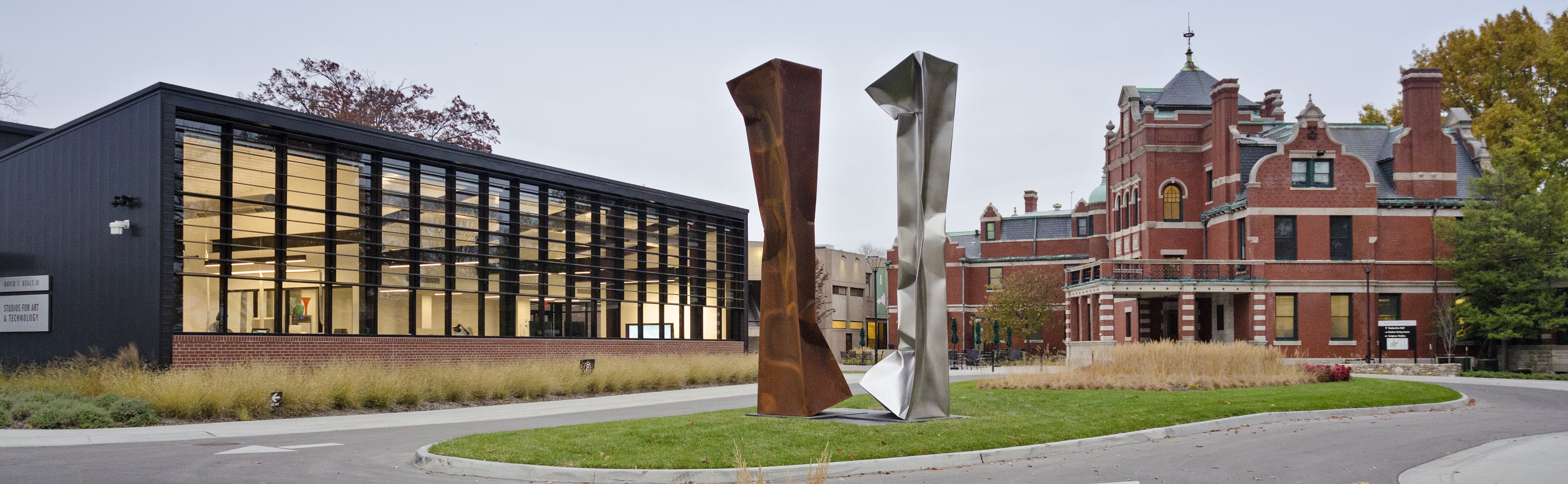
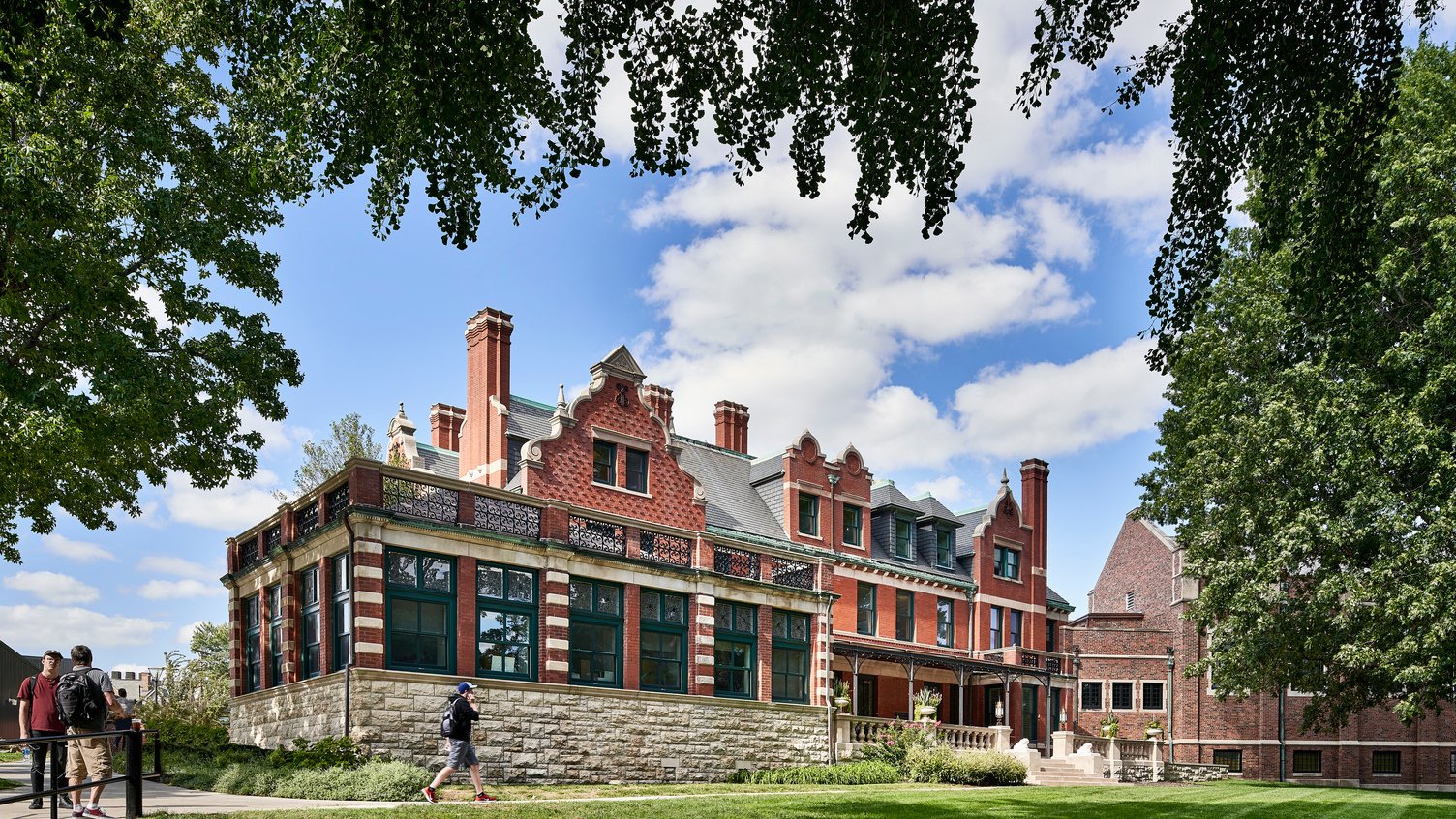
Life at KCAI is lived within a compact, creative enclave. The campus culture is described as collaborative and socially engaged, where students work on projects together, get involved with causes, and participate in a variety of student clubs and campus activities. The Barbara Marshall Residence Hall is a hub for incoming students. The institute actively welcomes community engagement, hosting public events and maintaining two on-campus galleries that present innovative exhibitions, blurring the line between campus and the broader Kansas City arts scene. Traditions include alumni weekends featuring workshops, panels, and creative activities, fostering a tight-knit network that extends beyond graduation. It’s a life centered on making things, surrounded by peers who share that singular focus.
Outcomes for KCAI graduates reflect the economic realities of building a career in the arts. The four-year graduation rate is 53%, with a six-year median salary for graduates reported at $25,529. Other sources cite average early-career earnings around $26,000, noting this is below expectations for the mix of majors. Data suggests earnings vary by discipline, with graduates in Design and Applied Arts historically achieving higher average annual incomes than those in Fine and Studio Arts. The path is often entrepreneurial and portfolio-dependent; success is measured as much by creative fulfillment and professional practice as by starting salary. The institute’s alumni network and career support aim to help graduates navigate this challenging but rewarding landscape.
KCAI is a private institution with a high sticker price, but it counters this with exceptionally broad and generous financial aid. The school states that it helps over 99% of its students with some form of institutional aid, offering $22.1 million in such aid for Fall 2025 alone. This aid brings the average down significantly. The average institutional aid award is $29,760, resulting in an average net cost of $27,650 per year. One source notes that 100% of full-time beginning undergraduates receive grant or scholarship aid. The aid package is a critical component of accessibility, though it's important to note that federal loans are still a common part of the financial picture for many students; the average annual federal loan amount is reported at $6,596. The institute encourages all students to file the FAFSA to be considered for alongside merit scholarships.
KCAI stands out for its pure, undiluted commitment to professional arts education. It offers neither the distraction nor the breadth of a university—instead, it provides the focused intensity of an atelier scaled to a college campus. Its identity is defined by a faculty of practicing artists, a curriculum of 13 deep-dive studio majors, and a culture where every student is a working creative from day one. The school is remarkably transparent about both its support (with aid reaching 99% of students) and the pragmatic challenges its graduates face, presenting a clear-eyed view of the financial trade-offs of an arts career. For a student certain of their path in art or design, KCAI offers a rare environment: a total immersion in craft, surrounded by a collaborative community, in a city with a growing arts scene, all without the pretense of being anything other than what it is—a serious school for making art.
Kansas City Art Institute seal · sourceAbout KCAI - Kansas City Art Institute · sourceKansas City Art Institute - Wikipedia · sourceContact Us - Kansas City Art Institute · source