Loading…
← All schools
KC's School of Hair Design
Pontotoc, MSprivate forprofitwww.kcsschoolofhair.com/
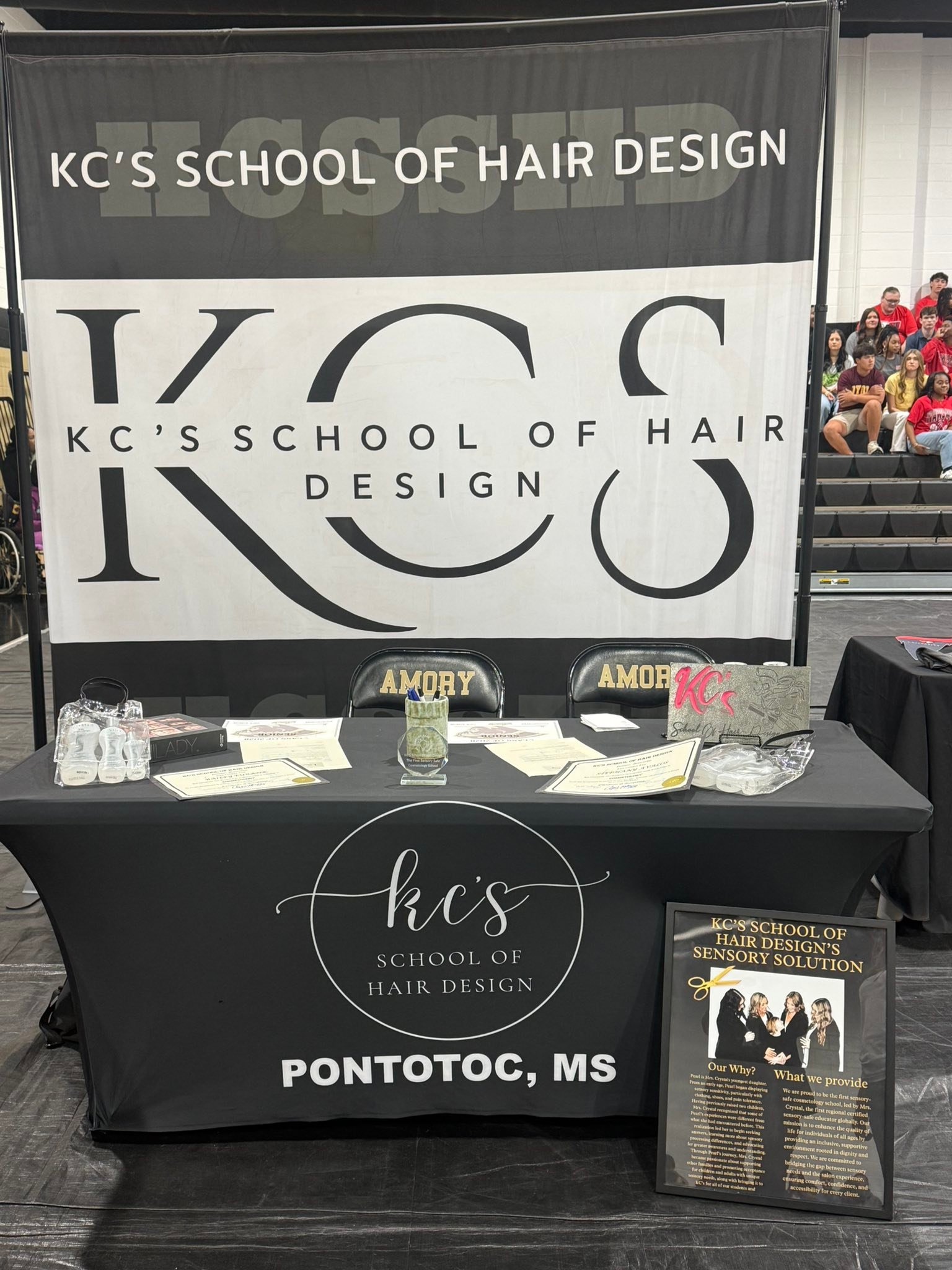
KC's School of Hair Design isn't a traditional college; it's a hyper-focused, single-purpose trade school that has been training cosmetologists in Pontotoc, Mississippi, since 1988. With an open-door admissions policy, it serves a predominantly local, white student body and delivers a practical, hands-on education aimed squarely at passing the state board exam and launching a career in the beauty industry. This is a place where the mission is clear, the path is direct, and success is measured in licensure and job placement, not in campus life or academic exploration.
More details
- Undergrad enrollment
- 58
- Founded
- 1988
- Graduation Rate
- 73.7%
- Average Grant Aid
- $5,792
- Only Major Offered
- Cosmetology/Cosmetologist, General
- Student Body (White)
- 94.8%
- Average Debt at Graduation
- $7,978
- % Students Receiving Grant Aid
- 82%
Outcomes & value
Outcomes & value
- Median debt at graduation
- $7,978
- Reducing loan balance (3 yr)
- 33%
- Pell (lower-income) share
- 68%
Earnings = median of students working ~10 years after entry; debt = median of graduates. Value divides 10-yr earnings by one year’s net price — read it as earnings per dollar of annual cost, not a full lifetime ROI; it favors lower-cost schools. Source: U.S. Dept. of Education College Scorecard. Figures lag ~2 years and reflect all students, not your intended major.
Financial health
2.8 / 3.0Meets the federal financial-responsibility standard
U.S. Dept. of Education Financial Responsibility Composite Score (FY2022-23). Scale −1.0 to 3.0; ≥1.5 meets the standard. Reported for private nonprofit & for-profit institutions only — public universities are state-backed and not scored, so this is a stability signal, not a ranking.
Campus & location
Campus safety
- On-campus violent crimes (2024)
- 0
On-campus criminal offenses classed as violent (murder/non-negligent manslaughter, rape, robbery, aggravated assault) for the most recent reported year. Source: U.S. Dept. of Education Campus Safety and Security (Clery Act). Counts reflect what’s reported to the school, and urban campuses often report more partly due to non-student incidents nearby — read alongside campus size and setting, not as a standalone safety verdict.
Climate
- Pleasant days / yr
- 99
- Summer high
- 89°F
- Winter low
- 39°F
- Annual rain
- 42.3"
- Annual snow
- 2"
- Natural-hazard risk
- Relatively Low
Pleasant days counts days per year with a mean temperature of 55–75°F, a high at or below 90°F, a low at or above 45°F, and little precipitation — a transparent comfort measure, not a weighting we invented. Computed from Open-Meteo ERA5 daily history (2019–2023). Natural-hazard risk is the county’s composite rating from the FEMA National Risk Index.
Quick answers
- How much does KC's School of Hair Design cost?
- At KC's School of Hair Design, the average net price (after aid) is about $10,214 per year. Actual cost varies with financial aid and residency.
- How many undergraduates attend KC's School of Hair Design?
- KC's School of Hair Design enrolls approximately 58 undergraduate students.
- Where is KC's School of Hair Design located?
- KC's School of Hair Design is located in Pontotoc, MS.
Admissions
Admissions at KC's School of Hair Design operates on a fundamentally different principle than selective colleges: it has an open admission policy. This means that, barring any basic capacity constraints, all applicants who apply are accepted. There is no SAT or ACT requirement, and the school does not engage in the of extracurriculars or essays common at four-year institutions. The process is designed for accessibility, serving students who have decided on a career in cosmetology.
The enrolled student body reflects its regional setting in Pontotoc, Mississippi, with demographics showing 94.8% White, 3.45% Hispanic or Latino, and 1.72% Asian students. With a total enrollment of around 54 students, it's a small, intimate environment where cohorts move through the program together. Because of the open admissions model, concepts like 'demonstrated interest,' rates, and early decision—critical at selective colleges—are simply not applicable here. The barrier to entry is a commitment to the trade, not a competitive application.
Compare KC's School of Hair Design
vs Livingstone Collegevs West Virginia University Institute of Technologyvs University of Science and Arts of Oklahomavs University of Virginia's College at Wise
See colleges similar to KC's School of Hair Design →Sources
- KC's School of Hair Design - Sallie
- KC's School of Hair Design - Data USA
- KC's School of Hair Design Statistics - Overgrad
- KC's School of Hair Design | College Scorecard
- KC's School of Hair Design - Niche
- [PDF] Common Data Set 2021-2022 - Colorado Department of Education
- KC's School of Hair Design — Acceptance Rate, Costs & ...
- KC's School of Hair Design
- Beauty School | KC's School Of Hair Design | Pontotoc, MS
- KC's School of Hair Design | EDsmart College Rankings 2025
- College Majors Details for KC's School of Hair Design