Admit rate has ranged 21%–83% over the last 5 years — notably volatile. Source: IPEDS via Urban Institute.
Acceptance & SAT from Common Data Set / IPEDS; net price, earnings & graduation from the U.S. Dept. of Education College Scorecard. Figures lag ~1–2 years — verify with the school.
Kettering College is a small, faith-based institution in Ohio that operates with the quiet intensity of a healthcare training ground. It’s not a sprawling university campus; it’s a focused, accelerated environment where students train for specific clinical roles—think sonography, nursing, physician assistant studies—in small classrooms where they 'can't fall through the cracks.' The vibe is supportive and service-oriented, grounded in its Seventh-day Adventist heritage, and the outcomes are pragmatic: solid graduation rates leading directly into the healthcare workforce.
Admission requirements
Test-optional — scores considered if submitted
Required
High school transcript
Grade point average
TOEFL (non-native English)
Considered (not required)
Class rank
Letters of recommendation
Test scores (SAT/ACT)
College-prep program
Demonstrated competencies
Source: IPEDS Admissions survey (2022) via Urban Institute. Covers formal factors only — it does not reflect essays, extracurriculars, or other holistic criteria.
More details
Undergrad enrollment
549
In-state tuition
$16,320
Out-of-state tuition
$16,320
Graduation Rate
65%
Median Earnings (10yr)
$67,492
Student-to-Faculty Ratio
9:1
First-Year Retention Rate
81%
Outcomes & value
Outcomes & value
Median earnings (10 yr)
$67,492
Value (earnings ÷ net price)
3.1×
Median debt at graduation
$23,500
Graduation rate
65%
First-year retention
74%
Reducing loan balance (3 yr)
58%
Pell (lower-income) share
24%
First-gen share (among federal-aid recipients)
40%
Financial health
2.2 / 3.0Meets the federal financial-responsibility standard
U.S. Dept. of Education Financial Responsibility Composite Score (FY2022-23). Scale −1.0 to 3.0; ≥1.5 meets the standard. Reported for private nonprofit & for-profit institutions only — public universities are state-backed and not scored, so this is a stability signal, not a ranking.
Top-earning majors
Median earnings by field of study (highest credential), ~2 years after completion.
Registered Nursing, Nursing Administration, Nursing Research and Clinical Nursing$57,955
Allied Health Diagnostic, Intervention, and Treatment Professions$56,415
Health Professions and Related Clinical Sciences, Other$52,941
Source: U.S. Dept. of Education College Scorecard (field-of-study earnings). Figures cover graduates who received federal aid and lag ~2 years; not all programs report data.
On-campus criminal offenses classed as violent (murder/non-negligent manslaughter, rape, robbery, aggravated assault) for the most recent reported year. Source: U.S. Dept. of Education Campus Safety and Security (Clery Act). Counts reflect what’s reported to the school, and urban campuses often report more partly due to non-student incidents nearby — read alongside campus size and setting, not as a standalone safety verdict.
Climate
Pleasant days / yr
88
Summer high
83°F
Winter low
27°F
Annual rain
42.2"
Annual snow
17.8"
Natural-hazard risk
Relatively Moderate
Pleasant days counts days per year with a mean temperature of 55–75°F, a high at or below 90°F, a low at or above 45°F, and little precipitation — a transparent comfort measure, not a weighting we invented. Computed from Open-Meteo ERA5 daily history (2019–2023). Natural-hazard risk is the county’s composite rating from the FEMA National Risk Index.
Deep dive — research, future-scholar output & economic mobility▾
Research output
Institutional h-index
23
Scholarly works
256
Institutional research volume and impact from OpenAlex. The h-index reflects large research universities and will be low for teaching-focused liberal-arts colleges — not a measure of undergraduate quality.
Quick answers
What is the acceptance rate at Kettering College?
Kettering College's acceptance rate is approximately 77% (Kettering, OH), based on the most recent figures we compiled from public and primary sources.
How much does Kettering College cost?
At Kettering College, the average net price (after aid) is about $21,650 per year. Actual cost varies with financial aid and residency.
How many undergraduates attend Kettering College?
Kettering College enrolls approximately 549 undergraduate students.
Where is Kettering College located?
Kettering College is located in Kettering, OH.
Admissions
Admissions at Kettering College are moderately selective, with a focus on meeting baseline academic thresholds for its healthcare programs. The college reports an of 77%. For standardized tests, the stated admission requirement is an ACT composite score of 19 or above (with a math subscore of at least 17) or an SAT combined score of 995. Third-party sources suggest typical admitted student ranges are slightly higher, with SAT scores between 1140-1200 or ACT scores of 19-24. The process appears to be rolling, with no binding Early Decision program mentioned in the provided sources for Kettering College itself (though general articles discuss Early Decision as a concept elsewhere). Demonstrated interest is a factor many colleges consider, but the provided sources do not specify Kettering College's specific policy regarding its importance in admissions decisions.
Earnings = median of students working ~10 years after entry; debt = median of graduates. Value divides 10-yr earnings by one year’s net price — read it as earnings per dollar of annual cost, not a full lifetime ROI; it favors lower-cost schools. Source: U.S. Dept. of Education College Scorecard. Figures lag ~2 years and reflect all students, not your intended major.
Academics
Academics are the engine of Kettering College. The institution describes its offerings as 'award-winning, career-focused, and accelerated healthcare degrees,' available online or on-site. The classroom experience is defined by its scale: a 9:1 student-to-faculty ratio fosters an 'intimate learning atmosphere.' The college offers 15 majors, all channeled directly into healthcare fields such as nursing, sonography, and respiratory care. This is not a liberal arts college with a broad distribution of majors; it is a specialized professional school. The model is designed for efficiency and direct career preparation, with a reported first-year retention rate of 81%.
Student life revolves around a close-knit, faith-based community. The college actively promotes a 'culture of service' and walks alongside students 'to be their best, both personally and professionally.' Campus resources and student affairs offices organize a calendar of 'activities, programs, events, trips, and games' to foster engagement. The small size is a defining feature—it creates 'connectedness' and ensures students are known. While the provided sources for Kettering College don't detail an extensive club system like a large university, the emphasis is on purposeful community within a healthcare-education context.
Outcomes are the proof of concept for Kettering College's focused model. The institution reports an overall graduation rate of 65%, which it notes places it 'within the top 35% of comparable institutions.' For many students, the finish line is a direct entry into the healthcare field. While the provided sources do not give a specific job placement rate, the career-oriented nature of all programs suggests a strong alignment with employment. Earnings data from the sources varies; one report notes a median salary of $60,692 six years after graduation, while another cites earnings of $68,846 per year five years out. The canonical figure for median earnings 10 years after entry is $67,492.
The —what families actually pay after grants and scholarships—is a critical metric. Kettering College's average net price after aid is $21,650. The college provides a net price calculator for families to estimate their individual cost and highlights scholarships and grants as key tools to reduce the total . It notes that students must demonstrate financial need to qualify for subsidized federal loans and encourages meeting a priority deadline of March 31st for full financial aid consideration. The provided sources do not indicate that Kettering College has a 'no-loan' policy or a commitment to meet 100% of demonstrated financial need without loans.
Kettering College stands out for its singular, unwavering focus. It is not trying to be everything to every student. It is a faith-based, healthcare-specific training ground that operates with the efficiency of a professional school. The small size (9:1 student-faculty ratio) isn't an aesthetic choice; it's a pedagogical necessity for hands-on clinical training where students 'can't fall through the cracks.' The culture is deliberately built on service and personal development alongside professional skill. This creates a distinct profile: a college that measures its success not in broad rankings, but in solid graduation rates and the steady pipeline of its graduates into essential healthcare roles. It's for the student who knows exactly what they want to do and wants a direct, supportive, and values-aligned path to doing it.
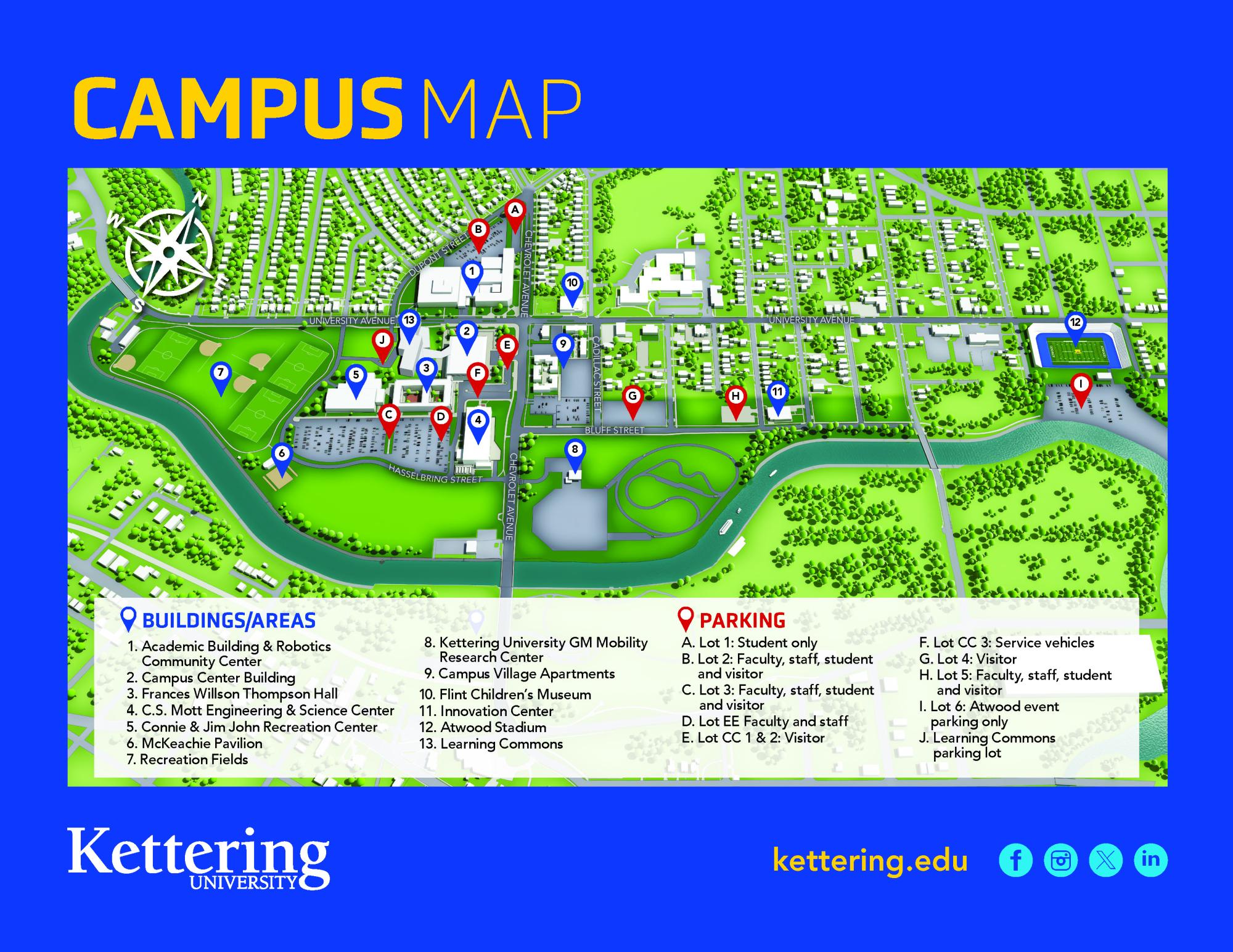
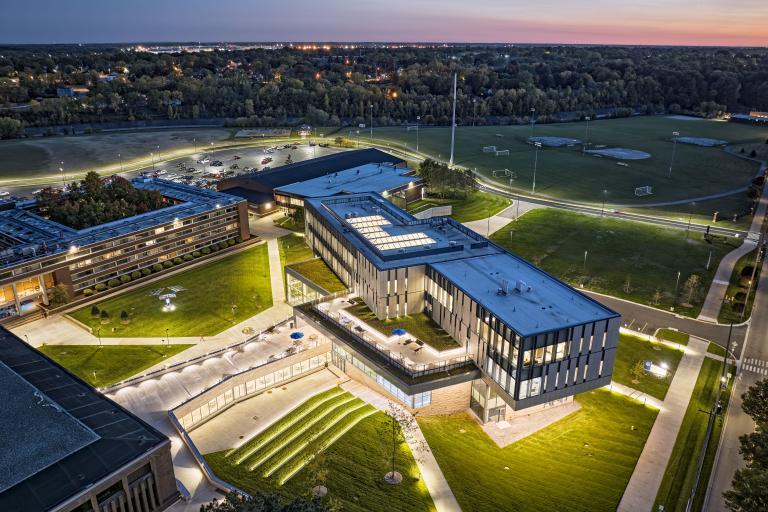
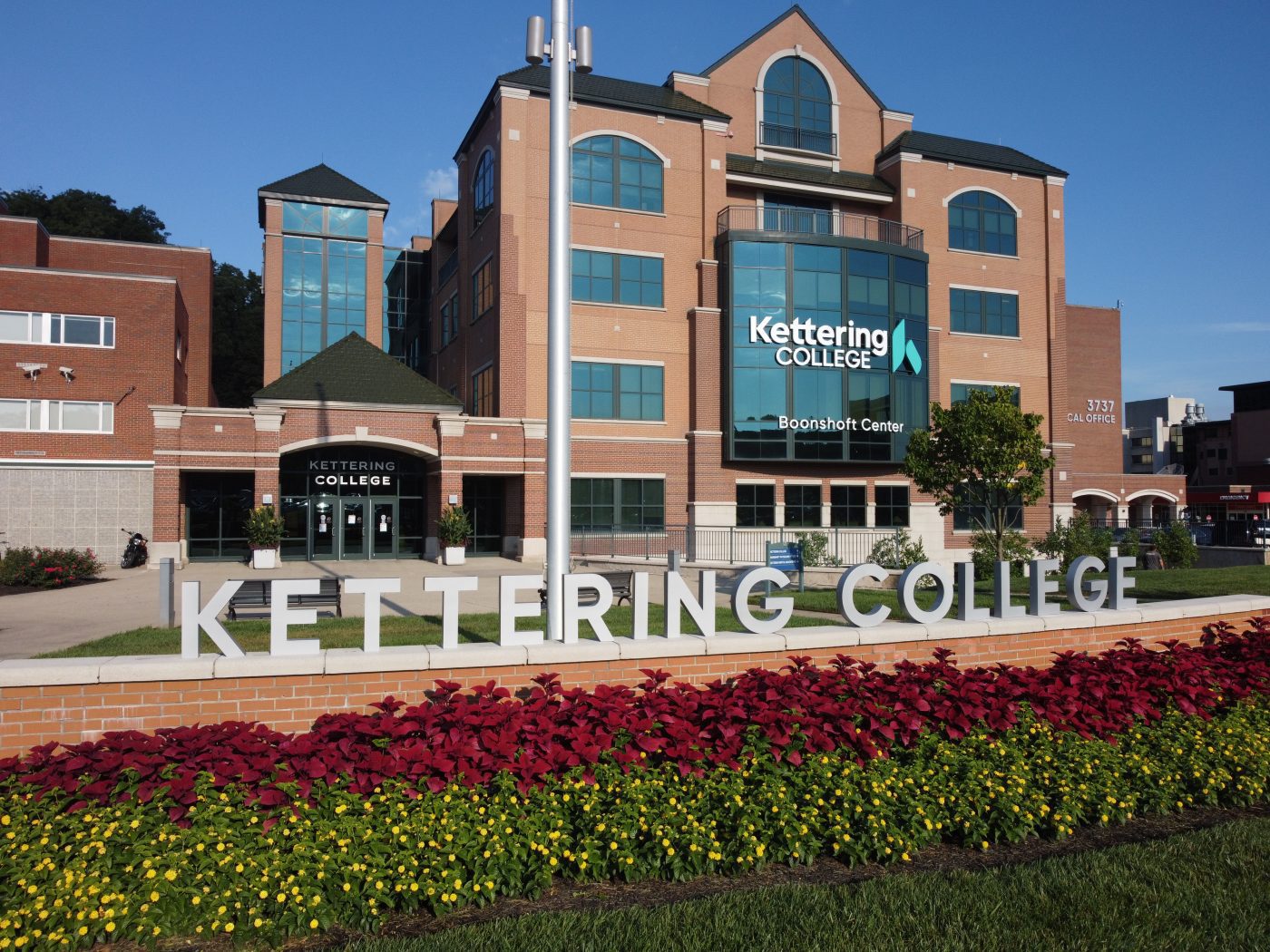
Kettering College seal · sourceDirections to Campus | Kettering University · sourceDaily Campus Tours and Group Tours | Kettering University · sourceKettering College: Higher Education on Kettering Health Main Campus | Kettering College · source
_(cropped).jpg?width=1600)