Admit rate has ranged 34%–76% over the last 5 years — notably volatile. Source: IPEDS via Urban Institute.
Acceptance & SAT from Common Data Set / IPEDS; net price, earnings & graduation from the U.S. Dept. of Education College Scorecard. Figures lag ~1–2 years — verify with the school.
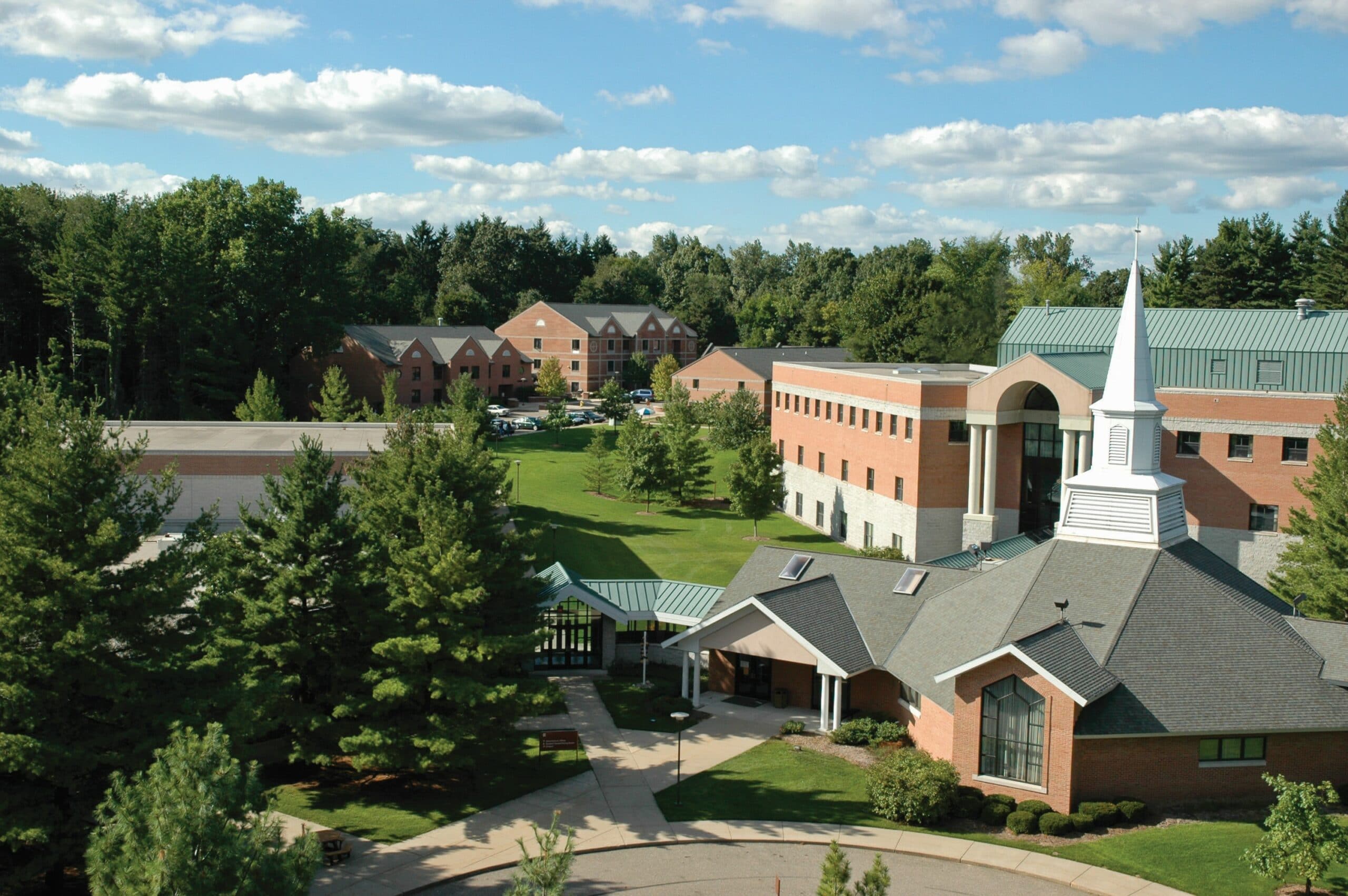
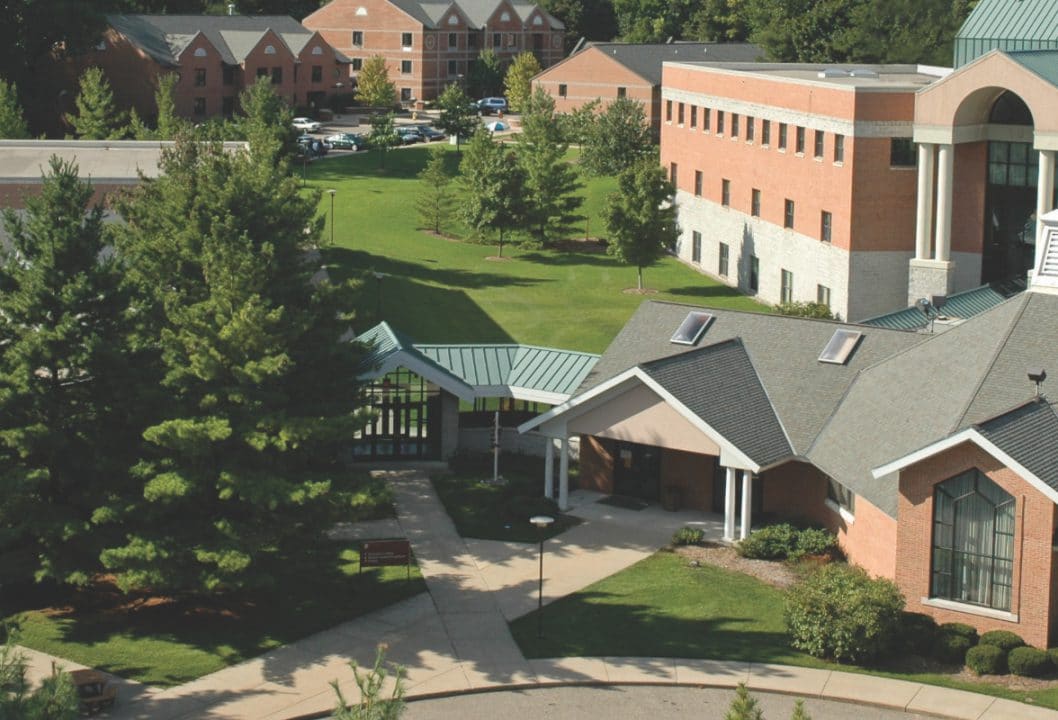
Kuyper College is a tiny, fiercely Christian liberal arts school in Grand Rapids, Michigan, where the mission is as explicit as the community is tight-knit. With an undergraduate enrollment hovering around 150 students, it operates more like an intensive discipleship cohort than a traditional college, weaving spiritual formation directly into every academic program, from Social Work to Business Leadership. Its defining characteristics—a 69% acceptance rate, a 50% graduation rate, and a focus on sending graduates into ministry and service—paint a clear picture of a niche institution for students seeking a specific, all-encompassing faith-based education above all else.
Admission requirements
Test-optional — scores considered if submitted
Required
High school transcript
Grade point average
TOEFL (non-native English)
Considered (not required)
Letters of recommendation
Test scores (SAT/ACT)
Source: IPEDS Admissions survey (2022) via Urban Institute. Covers formal factors only — it does not reflect essays, extracurriculars, or other holistic criteria.
More details
Undergrad enrollment
145
In-state tuition
$27,660
Out-of-state tuition
$27,660
Top Majors
Social Work, Theological Studies, Business
Campus Setting
Suburban (Grand Rapids, MI)
Graduation Rate
50%
Average Aid Package
$19,671
Median Earnings (10yr)
$41,066
Students Receiving Financial Aid
82.43%
Outcomes & value
Outcomes & value
Median earnings (10 yr)
$41,066
Value (earnings ÷ net price)
2.6×
Median debt at graduation
$21,389
Graduation rate
50%
First-year retention
59%
Reducing loan balance (3 yr)
68%
Pell (lower-income) share
43%
Earnings = median of students working ~10 years after entry; debt = median of graduates. Value divides 10-yr earnings by one year’s net price — read it as earnings per dollar of annual cost, not a full lifetime ROI; it favors lower-cost schools. Source: U.S. Dept. of Education College Scorecard. Figures lag ~2 years and reflect all students, not your intended major.
Financial health
2.2 / 3.0Meets the federal financial-responsibility standard
U.S. Dept. of Education Financial Responsibility Composite Score (FY2022-23). Scale −1.0 to 3.0; ≥1.5 meets the standard. Reported for private nonprofit & for-profit institutions only — public universities are state-backed and not scored, so this is a stability signal, not a ranking.
Top-earning majors
Median earnings by field of study (highest credential), ~2 years after completion.
Theological and Ministerial Studies$29,685
Pastoral Counseling and Specialized Ministries$29,685
Social Work$21,508
Source: U.S. Dept. of Education College Scorecard (field-of-study earnings). Figures cover graduates who received federal aid and lag ~2 years; not all programs report data.
Campus & location
Campus safety
On-campus violent crimes (2024)
0
On-campus criminal offenses classed as violent (murder/non-negligent manslaughter, rape, robbery, aggravated assault) for the most recent reported year. Source: U.S. Dept. of Education Campus Safety and Security (Clery Act). Counts reflect what’s reported to the school, and urban campuses often report more partly due to non-student incidents nearby — read alongside campus size and setting, not as a standalone safety verdict.
Climate
Pleasant days / yr
90
Summer high
81°F
Winter low
22°F
Annual rain
40.7"
Annual snow
38.7"
Natural-hazard risk
Relatively Moderate
Pleasant days counts days per year with a mean temperature of 55–75°F, a high at or below 90°F, a low at or above 45°F, and little precipitation — a transparent comfort measure, not a weighting we invented. Computed from Open-Meteo ERA5 daily history (2019–2023). Natural-hazard risk is the county’s composite rating from the FEMA National Risk Index.
Deep dive — research, future-scholar output & economic mobility▾
Research output
Institutional h-index
12
Scholarly works
119
Institutional research volume and impact from OpenAlex. The h-index reflects large research universities and will be low for teaching-focused liberal-arts colleges — not a measure of undergraduate quality.
Quick answers
What is the acceptance rate at Kuyper College?
Kuyper College's acceptance rate is approximately 69% (Grand Rapids, MI), based on the most recent figures we compiled from public and primary sources.
How much does Kuyper College cost?
At Kuyper College, the average net price (after aid) is about $15,644 per year. Actual cost varies with financial aid and residency.
How many undergraduates attend Kuyper College?
Kuyper College enrolls approximately 145 undergraduate students.
Where is Kuyper College located?
Kuyper College is located in Grand Rapids, MI.
Admissions
Kuyper College is a less selective institution with an acceptance rate of 69%, admitting the majority of its applicants. The admissions process is straightforward and prompt once a student's file is complete. For the 2024 cycle, the college received 178 undergraduate applications. A significant majority (79%) of first-time enrollees submitted SAT scores with their applications, with the middle 50% SAT range reported as 850–1080. There is no mention of an Early Decision program in the provided sources; admissions appears to operate on a regular decision timeline. The college's yield rate—the percentage of admitted students who enroll—is 36.6%. Demonstrated interest is a factor commonly evaluated in admissions via the (Section C7), though Kuyper's specific rating (e.g., 'very important,' 'considered') is not detailed in the provided snippets.
Academics at Kuyper are explicitly and uniformly Christ-centered, with every program taught by professors aimed at helping students mature "academically, but spiritually and personally as well." The curriculum is built around a core of Christian foundations, including required coursework in Biblical Greek. The college offers a focused set of undergraduate majors, with the most popular being Social Work and Youth Services, followed by Theological and Ministerial Studies, Business, and Liberal Arts and Humanities. Specific programs highlighted include:
Business Leadership (Associate and Bachelor's levels)
Elementary Education
Interdisciplinary Studies
Bible & Ministry
Secondary Education (listed as an academic major)
The social work program has been recognized, ranked among the top 10 in Michigan based on outcomes metrics like career earnings. The intimate scale means class sizes are small, fostering close faculty mentorship within a cohesive intellectual and spiritual framework.
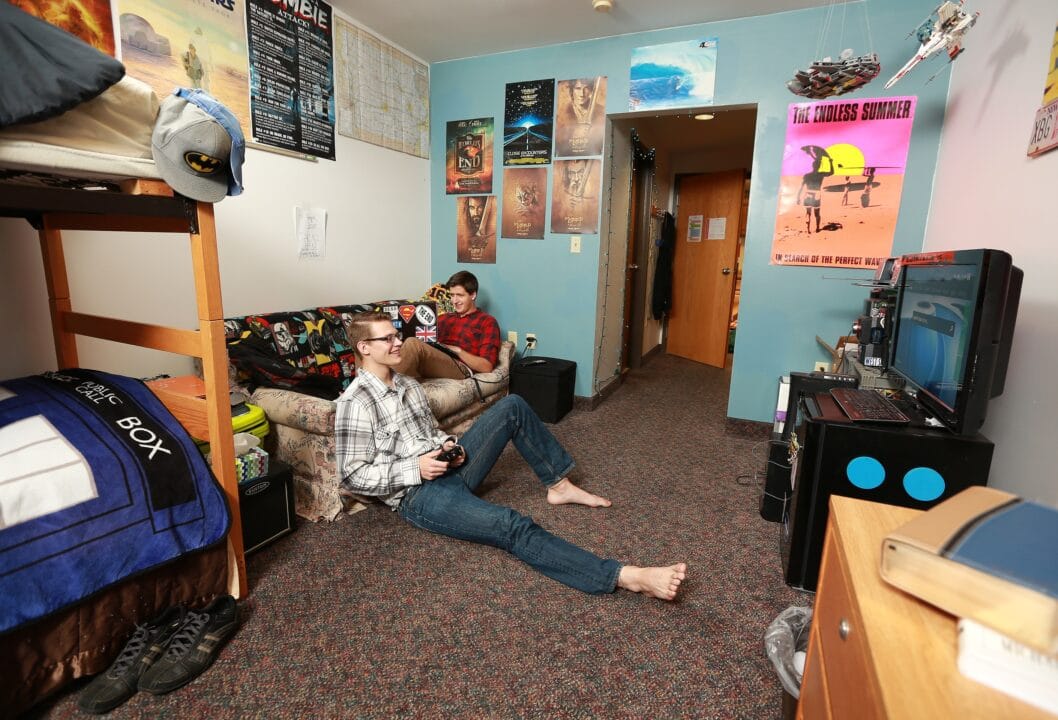
Life at Kuyper is defined by its small, close-knit, and intentionally Christ-centered community. With a total undergraduate enrollment of just 153 students (as of Fall 2023), the campus experience is highly relational. Student life is characterized by a "strong sense of community and close relationships among students, who share similar goals and passions." The college promotes this through residence life, campus involvement, and a focus on spiritual growth. The setting is suburban, located in Grand Rapids, Michigan. Campus housing costs an average of $11,608 per year. The vibe, as reflected in social media, is one of students enjoying a vibrant, sun-soaked campus energy together. This is not a school with a sprawling Greek life or massive athletic programs; the primary social fabric is the shared commitment to faith and service within a very small student body.
Outcomes data reveals the challenges and pathways typical of a small, niche institution. The six-year graduation rate is 50%. Post-graduation, early career earnings are modest. Reported figures include earnings one year after graduation of $39,194 and earnings five years after graduation of $39,224. The median earnings ten years after entry are $41,066. The social work program's ranking suggests stronger outcomes within that specific field. The rate of 36.6% and the graduation rate indicate that a significant number of students who enroll either transfer or do not persist to degree completion at Kuyper, which is consistent with the college's role as a specific faith-based launching pad rather than a destination for a broad population.
Kuyper College is relatively affordable, especially after aid. The average net price after aid is $15,644. A very high percentage of students—82.43%—receive financial aid, with an average aid package of $19,671. The college offers a range of GPA-based scholarships up to $8,000 per year, plus additional scholarships from $500 to $5,000 per year. The college states that 100% of students receive financial aid. For students who need to borrow, Federal Direct loans are available and are based on financial need as determined by the FAFSA. The provided sources do not indicate that Kuyper College has a "no-loan" policy or a policy of meeting 100% of demonstrated financial need without loans; such policies are described in the sources as being offered by other, typically more elite, institutions.
Kuyper College stands out for its unapologetic, all-in commitment to Reformed Christian education on an intensely personal scale. This is not a university with a divinity school attached; it is a divinity school ethos applied to every major, from Business to Social Work. Its singularity lies in its combination of extreme smallness (~150 undergraduates) and extreme focus. The community is its chief asset—a place where everyone knows everyone, shares a core worldview, and is taught by professors dedicated to holistic, spiritual mentorship. This creates a powerful incubator for students certain of their calling to ministry or faith-based service. However, this same focus defines its limitations: the low graduation rate and modest earnings outcomes reflect its niche appeal and the reality that it serves a specific student on a specific path. For that student, Kuyper offers a unique, immersive environment unmatched by larger Christian colleges. For others, its narrow scope and outcomes may be a poor fit. It is a classic example of a college that must be chosen for its mission, not in spite of it.