Admit rate has ranged 49%–75% over the last 5 years — notably volatile. Source: IPEDS via Urban Institute.
Acceptance & SAT from Common Data Set / IPEDS; net price, earnings & graduation from the U.S. Dept. of Education College Scorecard. Figures lag ~1–2 years — verify with the school.
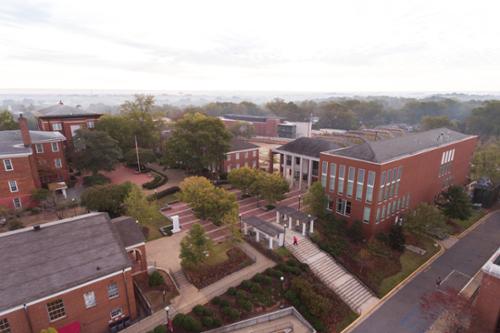
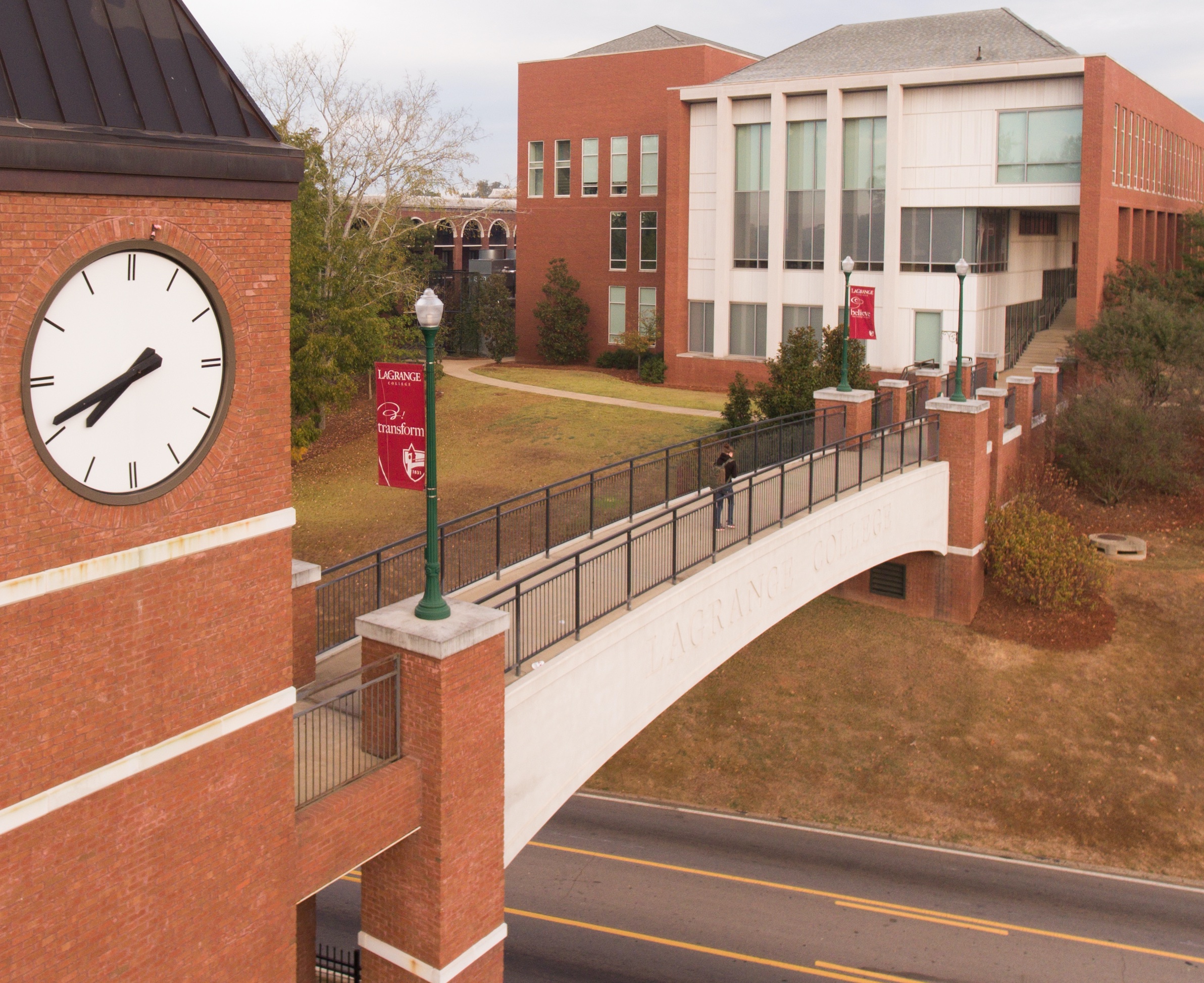
LaGrange College is a small, private liberal arts college in Georgia that operates on a human scale, where a 62% acceptance rate opens the door to a tight-knit, residential community on a peaceful hilltop. Its identity is rooted in a classical liberal arts model, offering more than 50 areas of study, with business, education, and the arts as notable strengths. The experience is defined by high-touch support—evident in a 67% first-year retention rate—and near-universal financial aid, though graduation rates and post-college earnings reflect the challenges faced by its student body.
Admission requirements
Test-blind — scores not considered
Required
High school transcript
Grade point average
TOEFL (non-native English)
Considered (not required)
Class rank
Letters of recommendation
College-prep program
Source: IPEDS Admissions survey (2022) via Urban Institute. Covers formal factors only — it does not reflect essays, extracurriculars, or other holistic criteria.
More details
Undergrad enrollment
636
In-state tuition
$35,400
Out-of-state tuition
$35,400
Housing
73% live on campus
Graduation Rate
47%
Financial Aid Reach
>99% of students receive aid
Application Deadline
August 1
First-Year Retention
67%
Median Earnings (10yr)
$51,745
Outcomes & value
Outcomes & value
Median earnings (10 yr)
$51,745
Value (earnings ÷ net price)
2.5×
Median debt at graduation
$25,730
Graduation rate
47%
First-year retention
67%
Reducing loan balance (3 yr)
58%
Pell (lower-income) share
43%
First-gen share (among federal-aid recipients)
25%
Financial health
2.2 / 3.0Meets the federal financial-responsibility standard
U.S. Dept. of Education Financial Responsibility Composite Score (FY2022-23). Scale −1.0 to 3.0; ≥1.5 meets the standard. Reported for private nonprofit & for-profit institutions only — public universities are state-backed and not scored, so this is a stability signal, not a ranking.
Top-earning majors
Median earnings by field of study (highest credential), ~2 years after completion.
Registered Nursing, Nursing Administration, Nursing Research and Clinical Nursing$59,180
Business Administration, Management and Operations$40,188
Source: U.S. Dept. of Education College Scorecard (field-of-study earnings). Figures cover graduates who received federal aid and lag ~2 years; not all programs report data.
On-campus criminal offenses classed as violent (murder/non-negligent manslaughter, rape, robbery, aggravated assault) for the most recent reported year. Source: U.S. Dept. of Education Campus Safety and Security (Clery Act). Counts reflect what’s reported to the school, and urban campuses often report more partly due to non-student incidents nearby — read alongside campus size and setting, not as a standalone safety verdict.
Climate
Pleasant days / yr
108
Summer high
88°F
Winter low
41°F
Annual rain
53.3"
Natural-hazard risk
Relatively Low
Pleasant days counts days per year with a mean temperature of 55–75°F, a high at or below 90°F, a low at or above 45°F, and little precipitation — a transparent comfort measure, not a weighting we invented. Computed from Open-Meteo ERA5 daily history (2019–2023). Natural-hazard risk is the county’s composite rating from the FEMA National Risk Index.
Deep dive — research, future-scholar output & economic mobility▾
Research output
Institutional h-index
49
Scholarly works
747
Institutional research volume and impact from OpenAlex. The h-index reflects large research universities and will be low for teaching-focused liberal-arts colleges — not a measure of undergraduate quality.
Economic mobility
Mobility rate
0.3%
Bottom → top quintile
6%
From bottom quintile
5%
Mobility rate = the share of students who both start in the bottom household-income quintile and reach the top quintile; bottom → top is that chance conditional on starting at the bottom. Source: Opportunity Insights Mobility Report Cards (Chetty, Friedman, Saez, Turner & Yagan). Reflects 1980–82 birth cohorts, so it’s directional, not current.
Quick answers
What is the acceptance rate at LaGrange College?
LaGrange College's acceptance rate is approximately 62% (Lagrange, GA), based on the most recent figures we compiled from public and primary sources.
How much does LaGrange College cost?
At LaGrange College, the average net price (after aid) is about $20,875 per year. Actual cost varies with financial aid and residency.
How many undergraduates attend LaGrange College?
LaGrange College enrolls approximately 636 undergraduate students.
Where is LaGrange College located?
LaGrange College is located in Lagrange, GA.
Admissions
LaGrange College's admissions process is accessible, with an of 62%. The school is , as sources do not list SAT or ACT ranges, instead highlighting GPA as a key metric: 20.8% of enrolled freshmen had a GPA of 3.75 or higher, and 17.5% had a GPA between 3.50 and 3.74. The college accepts the Common Application and has a regular application deadline of August 1. A critical number for understanding the student experience isn't just the admit rate but the retention rate: 67% of freshmen return for their sophomore year, suggesting those who enroll find a supportive environment. The admissions office can be contacted for general undergraduate and graduate information.
Academics at LaGrange are firmly rooted in a liberal arts education model with classical origins, designed to provide a broad general education. The college offers more than 50 areas of study, from accounting and the arts to exercise science. Popular majors include Elementary Education and Teaching (5% of degrees), English Language and Literature (4%), History (4%), and Drama and Dramatics/Theatre Arts (3%). The business program is a highlighted pathway, promoted as preparing students for a wide range of professional paths including cybersecurity, entrepreneurship, and human resources. The academic structure emphasizes this liberal arts foundation across all disciplines.
Earnings = median of students working ~10 years after entry; debt = median of graduates. Value divides 10-yr earnings by one year’s net price — read it as earnings per dollar of annual cost, not a full lifetime ROI; it favors lower-cost schools. Source: U.S. Dept. of Education College Scorecard. Figures lag ~2 years and reflect all students, not your intended major.
Life at LaGrange is intensely residential and communal, with 73% of students living in college-owned, -operated, or -affiliated housing. The campus culture is described as a supportive daily collaboration where faculty, staff, and students "work, study, practice and play" together in a peaceful hilltop setting. Greek life is a significant social force, with three fraternities and three sororities active on campus. The overall vibe is one of a close-knit community where the residential experience is central to the college's identity.
Student outcomes at LaGrange present a mixed picture that underscores the institution's mission and challenges. The first-year retention rate is 67%, a signal that most students who start choose to stay. The graduation rate is 47% (four-year). Post-graduation, median earnings ten years after entry are $51,745. Other sources cite an average of $36,427 one year after graduation and a six-year graduation rate that has ranged between 66% and 69% over a recent four-year period. These figures collectively sketch a profile of a college serving a population where persistence to degree and early career earnings are areas of focus.
Affordability is a central pillar of LaGrange's appeal, with financial aid reaching virtually the entire student body. More than 99% of LaGrange students receive some form of financial assistance, and the college awards over $26 million in total financial aid annually. The —the average cost after aid and scholarships—is a critical figure for families. Aid comes in the form of grants (need-based), scholarships (both need and merit-based), loans, and work-study. The college uses the FAFSA to determine financial need and states that its Office of Financial Aid & Affordability attempts to meet that demonstrated need. Families are directed to use the net price calculator for a personalized estimate.
LaGrange College stands out as a specific type of Southern liberal arts experience: small, personal, and unpretentiously supportive. It’s not a highly selective powerhouse, but a place where a high is matched by an intense focus on community and accessibility. The college leans into its identity as a classical liberal arts institution on a hilltop, fostering a residential environment where Greek life and campus housing create a cohesive social fabric. Its near-universal financial aid distribution is remarkable, making private college education a tangible possibility for most of its students. The defining trade-off is clear: you gain intimate support and a high likelihood of aid, but you navigate the graduation and earnings outcomes typical of a regional institution serving a broad cross-section of students. It’s a college built on relationships, not rankings.
LaGrange College seal · sourceLaGrange College - Profile, Rankings and Data | US News Best Colleges · sourceNew master plan to set stage for future of campus · sourceVISIT LAGRANGE · source