Admit rate has ranged 55%–64% over the last 5 years — notably volatile. Source: IPEDS via Urban Institute.
Acceptance & SAT from Common Data Set / IPEDS; net price, earnings & graduation from the U.S. Dept. of Education College Scorecard. Figures lag ~1–2 years — verify with the school.
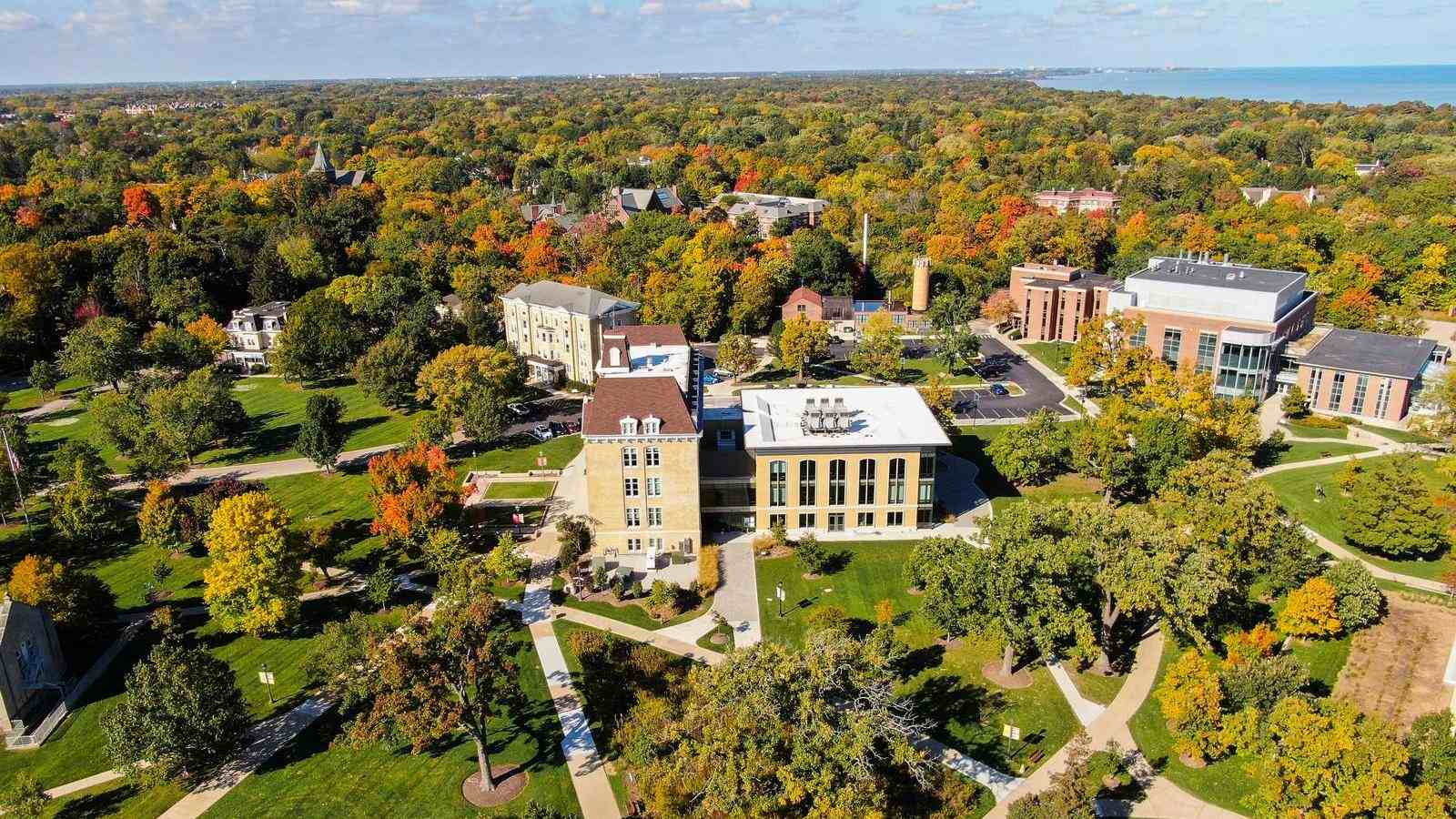
Lake Forest College is a small, private liberal arts college in a wealthy Chicago suburb that has carved out a distinctive niche by blending rigorous academics with a pragmatic, career-focused ethos. Its identity is defined by intimate, professor-led classes, a surprisingly high level of student diversity for its setting, and a laser focus on post-graduate outcomes, boasting near-perfect placement rates. The vibe is less about ivy-covered seclusion and more about a tight-knit community of ambitious students who leverage the college's proximity to Chicago for internships and jobs.
Admission requirements
Test-optional — scores considered if submitted
Required
High school transcript
Grade point average
Letters of recommendation
College-prep program
TOEFL (non-native English)
Considered (not required)
Class rank
Test scores (SAT/ACT)
Source: IPEDS Admissions survey (2022) via Urban Institute. Covers formal factors only — it does not reflect essays, extracurriculars, or other holistic criteria.
More details
Undergrad enrollment
1,813
In-state tuition
$56,402
Out-of-state tuition
$56,402
No-Loan Policy
No
Graduation Rate
78%
Meets Full Need
Data not in provided sources
ED Share of Class
Data not in provided sources
First-Year Retention
Data not in provided sources
Demonstrated Interest
Not considered
Median Earnings (10yr)
$61,825
Students Receiving Aid
100%
Outcomes & value
Outcomes & value
Median earnings (10 yr)
$61,825
Value (earnings ÷ net price)
2.2×
Median debt at graduation
$26,158
Graduation rate
78%
First-year retention
90%
Reducing loan balance (3 yr)
77%
Pell (lower-income) share
32%
First-gen share (among federal-aid recipients)
25%
Top-earning majors
Median earnings by field of study (highest credential), ~2 years after completion.
Economics$46,087
Finance and Financial Management Services$44,468
Communication and Media Studies$41,007
Business/Commerce, General$40,647
Political Science and Government$30,409
Biology, General$29,832
Campus & location
Campus safety
On-campus violent crimes (2024)
4
Per 1,000 students
2.18
On-campus criminal offenses classed as violent (murder/non-negligent manslaughter, rape, robbery, aggravated assault) for the most recent reported year. Source: U.S. Dept. of Education Campus Safety and Security (Clery Act). Counts reflect what’s reported to the school, and urban campuses often report more partly due to non-student incidents nearby — read alongside campus size and setting, not as a standalone safety verdict.
Climate
Pleasant days / yr
94
Summer high
79°F
Winter low
21°F
Annual rain
40.3"
Annual snow
34.8"
Natural-hazard risk
Relatively High
Pleasant days counts days per year with a mean temperature of 55–75°F, a high at or below 90°F, a low at or above 45°F, and little precipitation — a transparent comfort measure, not a weighting we invented. Computed from Open-Meteo ERA5 daily history (2019–2023). Natural-hazard risk is the county’s composite rating from the FEMA National Risk Index.
Deep dive — research, future-scholar output & economic mobility▾
Research output
Institutional h-index
120
Scholarly works
2,359
Institutional research volume and impact from OpenAlex. The h-index reflects large research universities and will be low for teaching-focused liberal-arts colleges — not a measure of undergraduate quality.
Economic mobility
Mobility rate
1.8%
Bottom → top quintile
48%
From bottom quintile
4%
Mobility rate = the share of students who both start in the bottom household-income quintile and reach the top quintile; bottom → top is that chance conditional on starting at the bottom. Source: Opportunity Insights Mobility Report Cards (Chetty, Friedman, Saez, Turner & Yagan). Reflects 1980–82 birth cohorts, so it’s directional, not current.
Quick answers
What is the acceptance rate at Lake Forest College?
Lake Forest College's acceptance rate is approximately 57% (Lake Forest, IL), based on the most recent figures we compiled from public and primary sources.
What SAT score do you need for Lake Forest College?
Admitted students at Lake Forest College typically score 1190–1393 on the SAT (the middle-50% range). Scores outside this band are still admitted, especially with strong applications.
How much does Lake Forest College cost?
At Lake Forest College, the average net price (after aid) is about $28,673 per year. Actual cost varies with financial aid and residency.
How many undergraduates attend Lake Forest College?
Lake Forest College enrolls approximately 1,813 undergraduate students.
Where is Lake Forest College located?
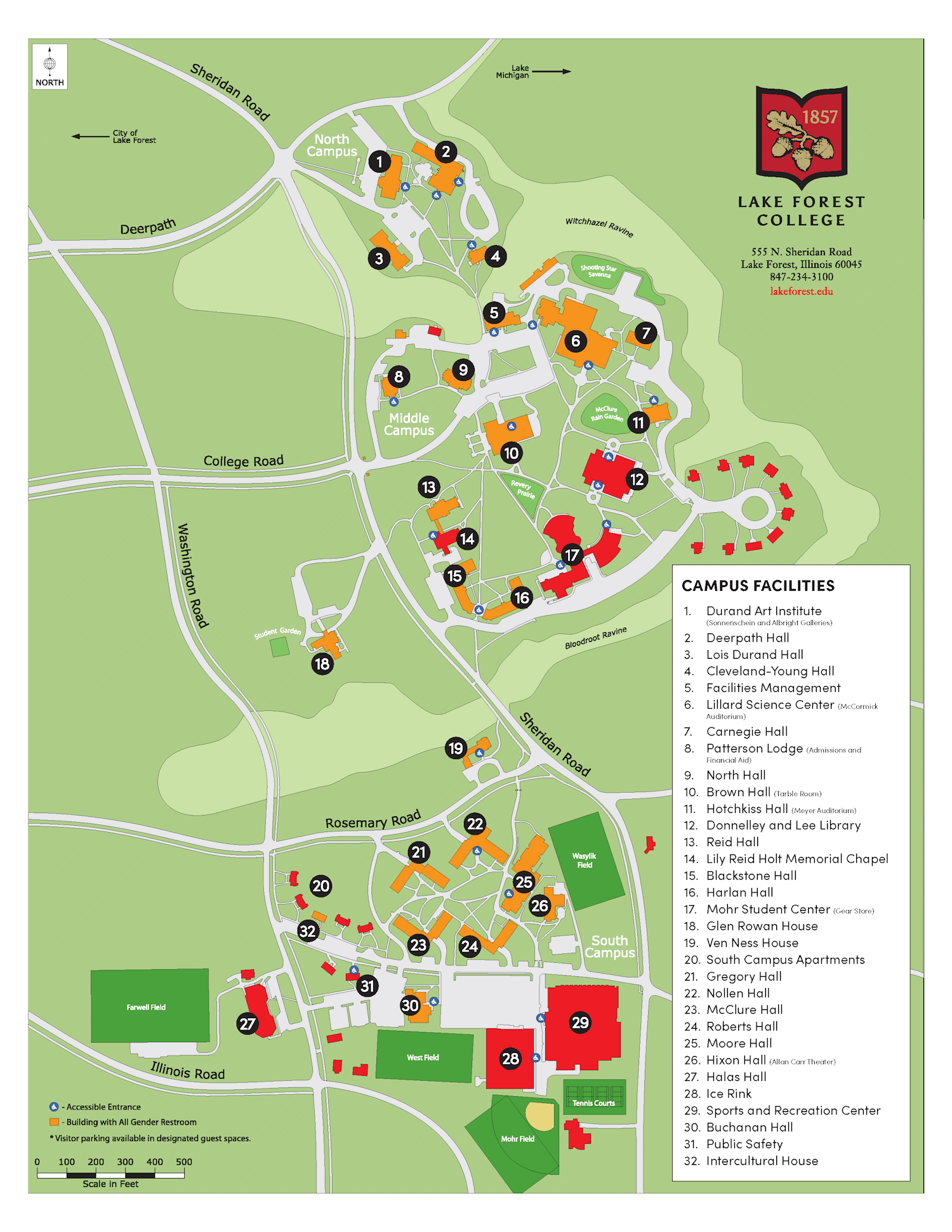
Lake Forest College is located in Lake Forest, IL.
Admissions
Lake Forest operates with a moderately selective admissions process, where applying early can offer a significant advantage. The college is , meaning SAT or ACT scores are not required for all applicants. For those who do submit, the middle 50% SAT range is 1190–1393, and the middle 50% ACT range is 26–31. The average GPA of incoming students is a 3.7. The admissions office considers several factors in its review. According to the framework, the college rates the rigor of a student's secondary school record, class rank, GPA, and application essay as "very important." Standardized test scores, recommendations, extracurricular activities, talent/ability, character/personal qualities, and status are rated as "important." Factors like an applicant's racial/ethnic status, volunteer work, and work experience are "considered," while residency, alumni relation, and level of interest are "not considered." This indicates that demonstrated interest—such as campus visits or contact with admissions—is not a formal part of their evaluation. The rate, or the percentage of admitted students who enroll, is reported at 13.64%. Early Decision applicants see a notably higher , reported at around 66%, compared to the overall rate. Lake Forest offers both Early Decision I and Early Decision II options, with the ED II deadline on January 15.
Earnings = median of students working ~10 years after entry; debt = median of graduates. Value divides 10-yr earnings by one year’s net price — read it as earnings per dollar of annual cost, not a full lifetime ROI; it favors lower-cost schools. Source: U.S. Dept. of Education College Scorecard. Figures lag ~2 years and reflect all students, not your intended major.
Romance Languages, Literatures, and Linguistics
$29,685
Fine and Studio Arts$25,967
Source: U.S. Dept. of Education College Scorecard (field-of-study earnings). Figures cover graduates who received federal aid and lag ~2 years; not all programs report data.
The academic experience at Lake Forest is built on the classic liberal arts model of small, discussion-based classes and close faculty mentorship, but with a distinctly pre-professional bent. Professors handle all teaching and also serve as academic advisors, creating a highly personalized educational environment. The college offers a standard array of majors and minors in the arts, humanities, sciences, and social sciences, with particular strength noted in fields like neuroscience, biology, environmental science, and economics. The most popular majors among students are Business/Commerce (General), Research and Experimental Psychology, and other related fields, reflecting the student body's career-oriented focus. A notable feature is the emphasis on double majors, which the college actively promotes as a path to a deeper, more integrated understanding. Beyond the classroom, the college stresses experiential learning, encouraging students to apply their knowledge through internships, research, and study abroad. This practical focus is a cornerstone of the academic philosophy, aiming to bridge the gap between theoretical study and real-world application.
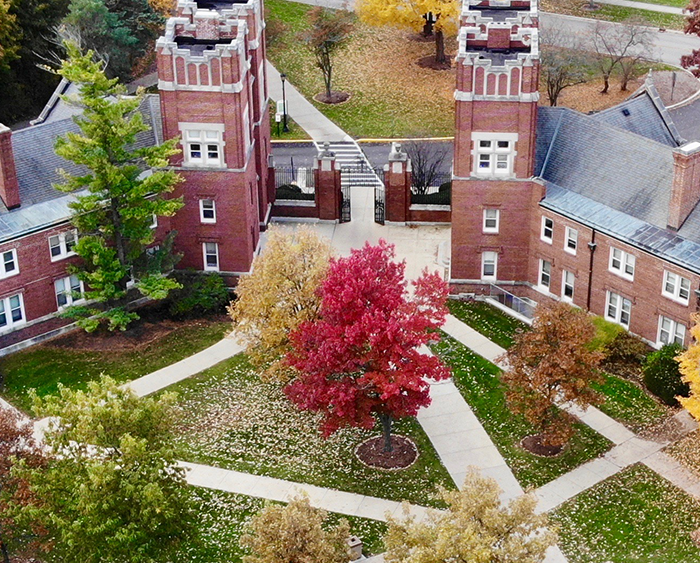
Life on campus is defined by its residential, close-knit community situated in the affluent North Shore suburb of Lake Forest. The majority of students (71%) live in college-owned, -operated, or -affiliated housing, fostering a strong on-campus culture. The college prides itself on a student body composed of people from "nearly every socioeconomic and cultural background," creating a campus that celebrates diversity within a traditionally homogenous region. Reviews suggest students feel extremely safe and secure on campus. Student life is managed by a dedicated Campus Life office focused on helping students develop as thinkers, leaders, and community members. The suburban location offers a quieter, more focused environment than an urban campus, but students readily access Chicago—just a train ride away—for cultural outings, entertainment, and the critical internships that feed into the college's strong outcomes. The social scene revolves heavily around campus organizations, events, and the residential halls.
This is where Lake Forest College truly distinguishes itself. The institution reports exceptionally strong post-graduation success, framing it as a core measure of its value. For the most recent graduating class, the college reported a 97% placement rate, meaning nearly all graduates had secured employment, enrolled in graduate school, or were pursuing other planned activities within a short time after graduation. Of that group, 73.9% were employed and 21.8% were enrolled in graduate or professional school. The graduation rate is a solid 78%. The median earnings for graduates ten years after entry are $61,825. These figures collectively paint a picture of a college that effectively prepares its graduates for immediate and sustained career success, fulfilling its promise of a liberal arts education with tangible professional returns.
Lake Forest College is a private institution with a corresponding tuition, but it mitigates the cost with a robust financial aid program. Critically, 100% of full-time, first-year undergraduates receive some form of grant or scholarship aid. The average financial aid package is reported to be $57,630. The —the average cost after grants and scholarships are applied—is $28,673. The college states that it prioritizes transparency in its financial aid letters, with "no hidden fees or loans disguised" as other forms of aid. It offers both need-based and . However, the available sources do not indicate that Lake Forest College has a "no-loan" policy or that it meets 100% of demonstrated financial need solely with grants. Students may still need to utilize federal loans as part of their financial aid package, and the college also provides information on private student loan options for families who choose to borrow beyond federal limits.
Lake Forest College stands out for its potent, almost deliberate, fusion of two often-separate worlds: the intimate, intellectually expansive liberal arts college and the pragmatic, outcomes-driven institution. It doesn't just hope its graduates do well; it structures the entire experience—from required internships to promoting double majors—to ensure they do. The 97% placement rate is not a happy accident but a stated goal. This happens within a classic small-college framework of professor-led seminars and close advising, set against the backdrop of a quiet, wealthy suburb that belies the remarkable socioeconomic diversity of its student body. For a student who wants the personal attention and intellectual foundation of a liberal arts school but is unequivocally focused on career readiness and leveraging the opportunities of a major city, Lake Forest offers a compelling, unique proposition. It’s a college that measures its success not just in diplomas conferred, but in jobs landed and graduate schools entered.
Lake Forest College seal · sourceAbout Us | Lake Forest College · sourceCampus Map | Lake Forest College · sourceResidence Life | Lake Forest College · source