Loading…
← All schools
Lake Technical College
Eustis, FLpublicwww.laketech.org/
Avg net price
$16,252
Earnings (10 yr)
$32,793
Acceptance & SAT from Common Data Set / IPEDS; net price, earnings & graduation from the U.S. Dept. of Education College Scorecard. Figures lag ~1–2 years — verify with the school.
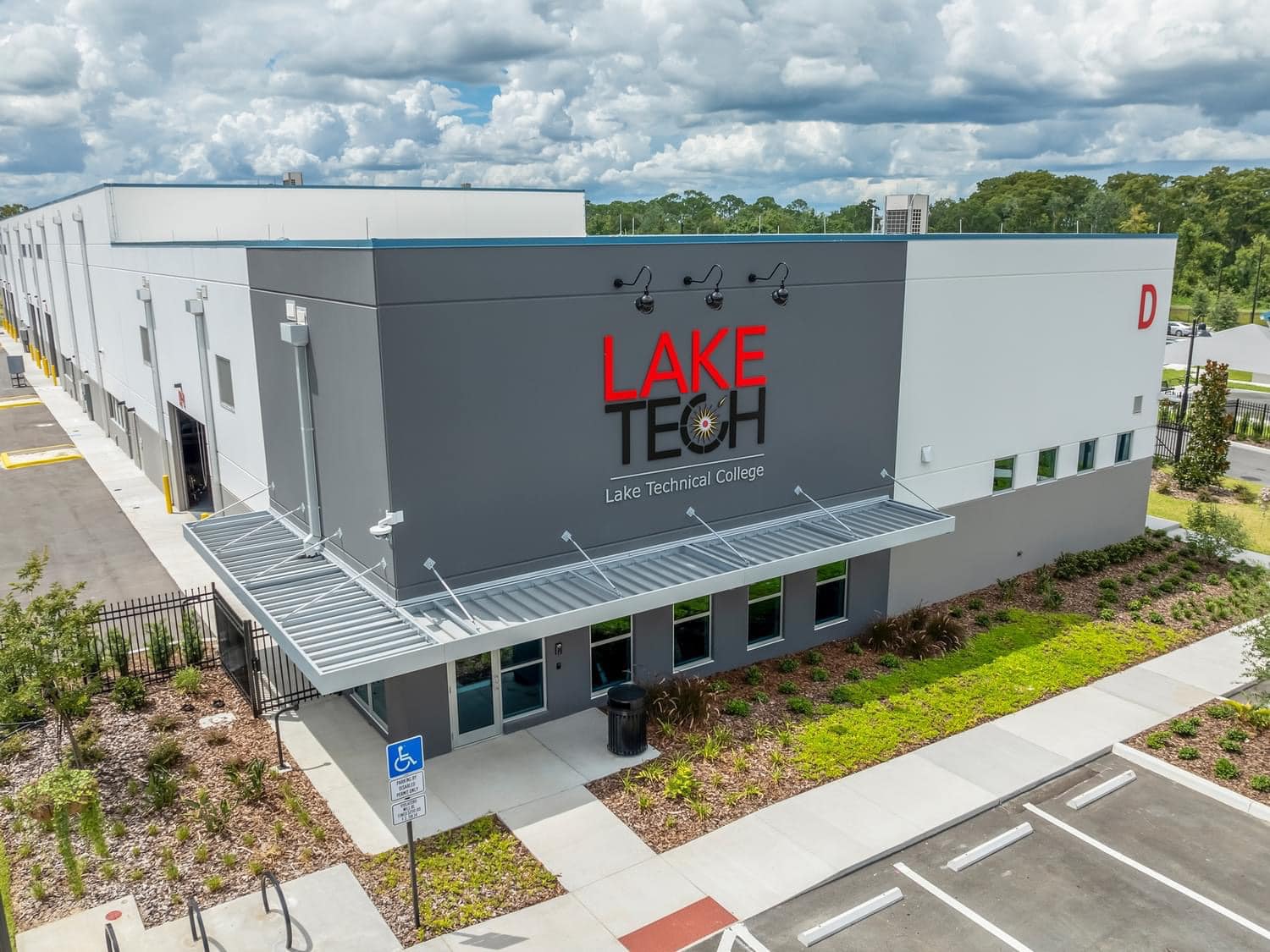
Lake Technical College is a public, open-admission career and technical college in Eustis, Florida, that operates on a fundamentally different model than a traditional four-year university. It’s a direct pipeline to the workforce, offering 28 hands-on certificate programs—from Cosmetology to Practical Nursing—with a 100% acceptance rate and a focus on getting students job-ready, fast. This is a school for doers, not deliberators, where the campus life revolves around program competitions and career fairs, and success is measured by a graduate's first paycheck.
More details
- Undergrad enrollment
- 799
- No-Loan Policy
- Yes (No federal student loans processed)
- Programs Offered
- 28 career-technical certificates
- Demonstrated Interest
- Not considered (Open Admission policy)
- Median Earnings (1yr after graduation)
- $36,427
Outcomes & value
Outcomes & value
- Median earnings (10 yr)
- $32,793
- Value (earnings ÷ net price)
- 2.0×
- Pell (lower-income) share
- 32%
- First-gen share (among federal-aid recipients)
- 52%
Earnings = median of students working ~10 years after entry; debt = median of graduates. Value divides 10-yr earnings by one year’s net price — read it as earnings per dollar of annual cost, not a full lifetime ROI; it favors lower-cost schools. Source: U.S. Dept. of Education College Scorecard. Figures lag ~2 years and reflect all students, not your intended major.
Campus & location
Campus safety
- On-campus violent crimes (2024)
- 0
On-campus criminal offenses classed as violent (murder/non-negligent manslaughter, rape, robbery, aggravated assault) for the most recent reported year. Source: U.S. Dept. of Education Campus Safety and Security (Clery Act). Counts reflect what’s reported to the school, and urban campuses often report more partly due to non-student incidents nearby — read alongside campus size and setting, not as a standalone safety verdict.
Climate
- Pleasant days / yr
- 136
- Summer high
- 89°F
- Winter low
- 55°F
- Annual rain
- 51.9"
- Natural-hazard risk
- Relatively Moderate
Pleasant days counts days per year with a mean temperature of 55–75°F, a high at or below 90°F, a low at or above 45°F, and little precipitation — a transparent comfort measure, not a weighting we invented. Computed from Open-Meteo ERA5 daily history (2019–2023). Natural-hazard risk is the county’s composite rating from the FEMA National Risk Index.
Quick answers
- How much does Lake Technical College cost?
- At Lake Technical College, the average net price (after aid) is about $16,252 per year. Actual cost varies with financial aid and residency.
- How many undergraduates attend Lake Technical College?
- Lake Technical College enrolls approximately 799 undergraduate students.
- Where is Lake Technical College located?
- Lake Technical College is located in Eustis, FL.
Admissions
Admission to Lake Technical College is not a competitive, ; it's an open door for anyone ready to train for a career. The school has a 100% acceptance rate, meaning all applicants who meet the basic requirements are admitted. The process is straightforward: applicants must be at least 16 years old and be academically, physically, and emotionally capable of meeting the demands of their chosen program. For dual-enrollment students, the school may require scores from assessments like the PERT, ACT, or SAT. There is no mention of Early Decision, Restrictive Early Action, or any form of binding early admission—this is a rolling-admissions institution focused on accessibility. Similarly, there is no indication that the college tracks or considers 'demonstrated interest' in the way selective liberal arts colleges do; the primary interest demonstrated is the application itself.
- Open Admission Policy: The college admits virtually all secondary school graduates or students with GED equivalency diplomas.
- 100% Acceptance Rate: Multiple independent sources confirm the institution's open admissions stance.
- Basic Requirements: Age (16+) and capability to handle program essentials are the primary gates.
Compare Lake Technical College
vs Florida Polytechnic Universityvs University of Arkansas at Pine Bluffvs United States Coast Guard Academyvs University of Science and Arts of Oklahoma
See colleges similar to Lake Technical College →Sources
- [PDF] Common Data Set 2024-2025 - Lake Forest College
- Common Data Set: Home
- Common Data Set | Lake Superior State University
- Decoding the Common Data Set What You Need to Know for Your ...
- What is the Common Data Set? | College Raptor
- Common Data Set Ultimate Guide: Use It to Find the Right College
- Lake Technical College - Niche
- Lake Technical College Statistics - Overgrad
- [PDF] Dual-Enrollment-Application-25.26.pdf - Lake Technical College
- Lake Technical College - Unigo.com