Admit rate has ranged 44%–55% over the last 5 years — notably volatile. Source: IPEDS via Urban Institute.
Acceptance & SAT from Common Data Set / IPEDS; net price, earnings & graduation from the U.S. Dept. of Education College Scorecard. Figures lag ~1–2 years — verify with the school.
Landmark College is not just another liberal arts school in Vermont; it is the nation's first and only accredited institution designed exclusively for neurodivergent learners—students with learning disabilities, ADHD, and autism. This singular mission shapes everything from its admissions process, which prioritizes fit over conventional metrics, to its intensive, skill-based curriculum and highly structured campus life. The result is a profoundly supportive, if exceptionally expensive, environment where students who have often struggled in traditional academic settings can finally find their footing.
Admission requirements
Test-optional — scores considered if submitted
Required
High school transcript
Letters of recommendation
College-prep program
TOEFL (non-native English)
Considered (not required)
Grade point average
Test scores (SAT/ACT)
Demonstrated competencies
Source: IPEDS Admissions survey (2022) via Urban Institute. Covers formal factors only — it does not reflect essays, extracurriculars, or other holistic criteria.
More details
Undergrad enrollment
455
In-state tuition
$66,540
Out-of-state tuition
$66,540
Graduation Rate
43%
Most Popular Major
Liberal Arts and Humanities
Median Earnings (10yr)
$29,813
First-Year Retention Rate
63%
Outcomes & value
Outcomes & value
Median earnings (10 yr)
$29,813
Value (earnings ÷ net price)
0.5×
Median debt at graduation
$17,500
Graduation rate
43%
First-year retention
63%
Reducing loan balance (3 yr)
63%
Pell (lower-income) share
16%
Endowment / student
$60,880
Earnings = median of students working ~10 years after entry; debt = median of graduates. Value divides 10-yr earnings by net price — read it as earnings per dollar of annual cost, not a full lifetime ROI; it favors lower-cost schools. Source: U.S. Dept. of Education College Scorecard. Figures lag ~2 years and reflect all students, not your intended major.
Financial health
3.0 / 3.0Meets the federal financial-responsibility standard
U.S. Dept. of Education Financial Responsibility Composite Score (FY2022-23). Scale −1.0 to 3.0; ≥1.5 meets the standard. Reported for private nonprofit & for-profit institutions only — public universities are state-backed and not scored, so this is a stability signal, not a ranking.
Campus & location
Campus safety
On-campus violent crimes (2024)
0
Per 1,000 students
0.00
On-campus criminal offenses classed as violent (murder/non-negligent manslaughter, rape, robbery, aggravated assault) for the most recent reported year. Source: U.S. Dept. of Education Campus Safety and Security (Clery Act). Counts reflect what’s reported to the school, and urban campuses often report more partly due to non-student incidents nearby — read alongside campus size and setting, not as a standalone safety verdict.
Climate
Pleasant days / yr
90
Summer high
80°F
Winter low
18°F
Annual rain
49.6"
Annual snow
52.8"
Natural-hazard risk
Relatively Low
Pleasant days counts days per year with a mean temperature of 55–75°F, a high at or below 90°F, a low at or above 45°F, and little precipitation — a transparent comfort measure, not a weighting we invented. Computed from Open-Meteo ERA5 daily history (2019–2023). Natural-hazard risk is the county’s composite rating from the FEMA National Risk Index.
Deep dive — research, future-scholar output & economic mobility▾
Research output
Institutional h-index
46
Scholarly works
414
Institutional research volume and impact from OpenAlex. The h-index reflects large research universities and will be low for teaching-focused liberal-arts colleges — not a measure of undergraduate quality.
Economic mobility
Mobility rate
0.0%
Bottom → top quintile
0%
From bottom quintile
3%
Mobility rate = the share of students who both start in the bottom household-income quintile and reach the top quintile; bottom → top is that chance conditional on starting at the bottom. Source: Opportunity Insights Mobility Report Cards (Chetty, Friedman, Saez, Turner & Yagan). Reflects 1980–82 birth cohorts, so it’s directional, not current.
Quick answers
What is the acceptance rate at Landmark College?
Landmark College's acceptance rate is approximately 49% (Putney, VT), based on the most recent figures we compiled from public and primary sources.
How much does Landmark College cost?
At Landmark College, the average net price (after aid) is about $56,954 per year. Actual cost varies with financial aid and residency.
How many undergraduates attend Landmark College?
Landmark College enrolls approximately 455 undergraduate students.
Where is Landmark College located?
Landmark College is located in Putney, VT.
Admissions
Landmark College operates on a rolling admissions basis, but recommends applicants submit documentation within a suggested timeframe for full consideration. The admissions process is inherently selective, but its criteria are uniquely tailored to its mission. With an of 49%, it is significantly more selective than the average Vermont college (state average 82%). In a recent cycle, 447 applicants resulted in 221 admits and 107 enrolled students, indicating a rate of roughly 48%. Standardized test scores are considered, with a typical admitted student scoring between 930-1210 on the SAT or 17-25 on the ACT. However, given the college's specialized focus, the evaluation undoubtedly extends far beyond these numbers to assess a student's specific learning profile and fit for the institution's distinctive support model. The college does not appear to offer a binding Early Decision plan.
Academics at Landmark are built on a 'strength-based' model explicitly designed for students with learning differences. The curriculum is intensely focused on developing essential executive function, self-advocacy, and learning skills alongside traditional coursework. The college offers bachelor's degrees within an 'inclusive academic community tailored for neurodivergent learners.'
The most popular major by a significant margin is Liberal Arts and Humanities, which accounted for 57 graduates in a recent profile. Other notable programs include Psychology (12 graduates), Communications (11), Biology (10), and Computer Science. The college awards approximately 14 degrees annually in the Liberal Arts and Sciences, General Studies and Humanities category. Class sizes are kept small to facilitate the highly individualized, hands-on instruction that is the cornerstone of the Landmark experience.
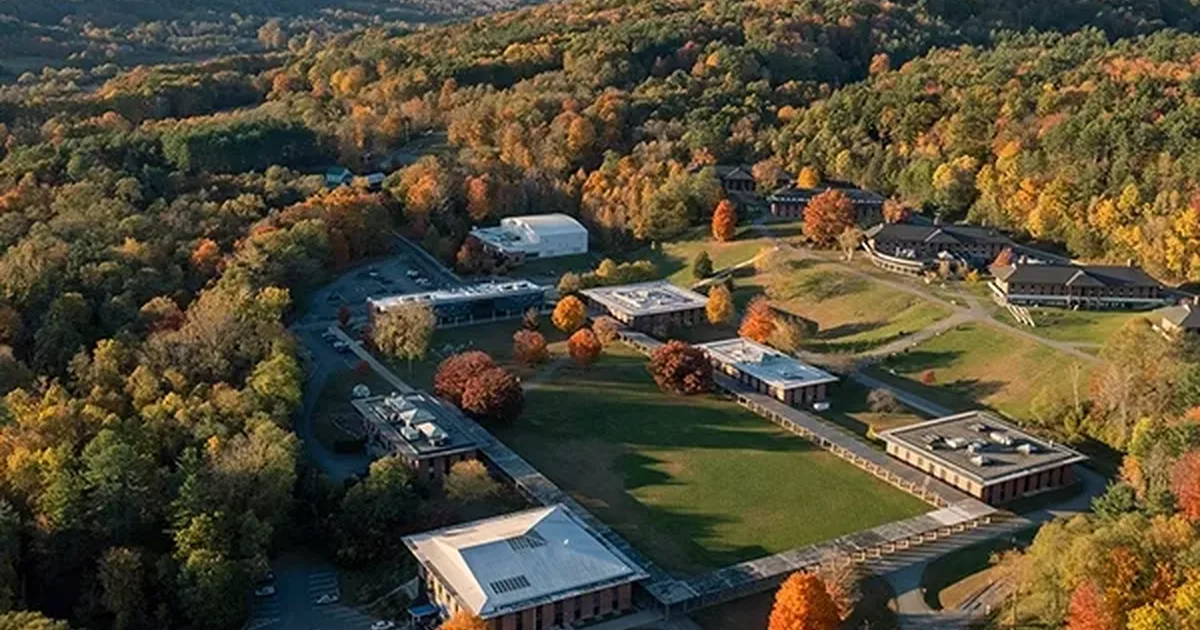
Campus life is structured, supportive, and intentionally designed to reduce anxiety and build community for neurodivergent students. The total undergraduate enrollment is approximately 598 students, creating a small, close-knit environment. Residential life is central, with residence halls, a dining hall, student center, and sports and fitness centers serving as hubs for living and socializing.
A robust Office of Student Life organizes clubs, sports, and a calendar of events including theater productions, coffeehouse performances, open mic nights, and dance parties. Student safety is a noted priority, with well-trained Resident Assistants (RAs) and Resident Deans (RDs) providing guidance and support. The Centers for Diversity & Inclusion work to foster a culture that celebrates differences, challenges stereotypes, and engages the community in discussions around power, privilege, and equity.
Outcome metrics for Landmark College must be viewed through the lens of its unique student population, many of whom have faced significant academic challenges before enrollment. The six-year graduation rate is 43%. A separate four-year average for the federal Student Right-to-Know calculation shows a completion rate of 35% and a transfer-out rate that is also reported.
The first-year retention rate is 63%. For graduates, median earnings ten years after entry are $29,813. Other sources report average earnings one year after graduation at $20,196 and five years after at $31,720, or an alumni median of approximately $30,033 six years out. In 2021, 100% of students graduating did so within 200% of 'normal time' for their program.
Landmark College is among the most expensive colleges in the country, with a comprehensive for the 2025-2026 academic year listed at $89,880 ($68,204 in tuition and fees plus $16,576 for room and board). The average after aid—what families actually pay—is $56,954. Approximately 52% of students receive financial aid, with an average aid package of $31,350.
The college awarded more than $12.1 million in grants and scholarships in the 2025-2026 year. These institutional awards can range from $2,000 to $24,500. Landmark offers both need-based and non-need-based financial aid, all awarded on a yearly basis. To be considered, students must complete the Free Application for Federal Student Aid (FAFSA). The college does not advertise a 'no-loan' policy or a guarantee to meet 100% of demonstrated financial need without loans.
Landmark College stands alone. It is not a college with a strong learning support program; it is a college built as a learning support program. Its entire existence—from faculty training and curriculum design to campus architecture and student activities—is engineered for neurodivergent learners. This creates an environment of profound understanding and targeted empowerment that simply cannot be replicated at a traditional institution. The trade-off is a premium price tag and outcome metrics that, while meaningful for its population, differ from conventional benchmarks. For students with learning disabilities, ADHD, or autism who have been underserved by mainstream education, Landmark offers something priceless: a chance to be the typical student, in a world finally designed for how their minds work.
Landmark College seal · sourceLandmark College | About · sourceLandmark College | New Building Addition Expands Space for Student… · sourceLandmark College - Profile, Rankings and Data | US News Best Colleges · source