Loading…
← All schools.gif)
Lane Community College
Eugene, ORpubliclanecc.edu
Avg net price
$9,123
Earnings (10 yr)
$38,075
Graduation rate
20%
Acceptance & SAT from Common Data Set / IPEDS; net price, earnings & graduation from the U.S. Dept. of Education College Scorecard. Figures lag ~1–2 years — verify with the school.
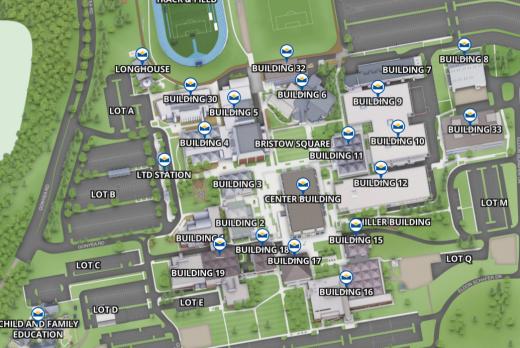
Lane Community College is the pragmatic, open-door heart of Oregon's Willamette Valley, built for career pivots, academic resets, and first-generation college-goers. It’s a place where you can train as a welder in the morning and study for a transfer degree in the afternoon, all on a campus that feels more like a sprawling, no-frills professional training ground than a traditional college quad. While its graduation rate reflects the real-world challenges of its commuter student body, Lane’s value proposition is undeniable: low-cost, high-flexibility education with a clear line to the local workforce or a four-year university.
More details
- Undergrad enrollment
- 6,064
- In-state tuition
- $6,202
- Out-of-state tuition
- $13,078
- Transfer Rate
- 32.65%
- Early Decision
- Not offered
- Graduation Rate
- 20%
- SAP Requirement
- 2.0 GPA, 67% completion rate
- Most Popular Major
- Liberal Arts and Humanities
- Demonstrated Interest
- Not considered
- Student-Faculty Ratio
- 19:1
- Median Earnings (10yr)
- $38,075
- Financial Aid App Deadline
- January 31
Outcomes & value
Outcomes & value
- Median earnings (10 yr)
- $38,075
- Value (earnings ÷ net price)
- 4.2×
- Median debt at graduation
- $14,761
- Graduation rate
- 20%
- Reducing loan balance (3 yr)
- 29%
- Pell (lower-income) share
- 32%
- First-gen share (among federal-aid recipients)
- 42%
Earnings = median of students working ~10 years after entry; debt = median of graduates. Value divides 10-yr earnings by one year’s net price — read it as earnings per dollar of annual cost, not a full lifetime ROI; it favors lower-cost schools. Source: U.S. Dept. of Education College Scorecard. Figures lag ~2 years and reflect all students, not your intended major.
Campus & location
Campus safety
- On-campus violent crimes (2024)
- 0
On-campus criminal offenses classed as violent (murder/non-negligent manslaughter, rape, robbery, aggravated assault) for the most recent reported year. Source: U.S. Dept. of Education Campus Safety and Security (Clery Act). Counts reflect what’s reported to the school, and urban campuses often report more partly due to non-student incidents nearby — read alongside campus size and setting, not as a standalone safety verdict.
Climate
- Pleasant days / yr
- 110
- Summer high
- 80°F
- Winter low
- 34°F
- Annual rain
- 49.3"
- Annual snow
- 18.5"
- Natural-hazard risk
- Relatively High
Pleasant days counts days per year with a mean temperature of 55–75°F, a high at or below 90°F, a low at or above 45°F, and little precipitation — a transparent comfort measure, not a weighting we invented. Computed from Open-Meteo ERA5 daily history (2019–2023). Natural-hazard risk is the county’s composite rating from the FEMA National Risk Index.
Deep dive — research, future-scholar output & economic mobility
Research output
- Institutional h-index
- 19
- Scholarly works
- 137
Institutional research volume and impact from OpenAlex. The h-index reflects large research universities and will be low for teaching-focused liberal-arts colleges — not a measure of undergraduate quality.
Economic mobility
- Mobility rate
- 1.1%
- Bottom → top quintile
- 9%
- From bottom quintile
- 12%
Mobility rate = the share of students who both start in the bottom household-income quintile and reach the top quintile; bottom → top is that chance conditional on starting at the bottom. Source: Opportunity Insights Mobility Report Cards (Chetty, Friedman, Saez, Turner & Yagan). Reflects 1980–82 birth cohorts, so it’s directional, not current.
Quick answers
- How much does Lane Community College cost?
- At Lane Community College, the average net price (after aid) is about $9,123 per year. Actual cost varies with financial aid and residency.
- How many undergraduates attend Lane Community College?
- Lane Community College enrolls approximately 6,064 undergraduate students.
- Where is Lane Community College located?
- Lane Community College is located in Eugene, OR.
Admissions
Lane operates on an open-admission policy, meaning anyone with a high school diploma or GED can enroll. The college does not require SAT or ACT scores for admission, and figures, when reported, are consistently 100%. The process is designed to be a low-barrier gateway, not a selective filter. Recent data shows a positive enrollment trend, with the college reporting a significant 18% increase in continuing students and a 7% increase in new students year-over-year. The focus is on getting students in the door and connected to support, not on turning them away. There is no early decision plan, and demonstrated interest is not a factor in the admissions process.
Academics
Compare Lane Community College
vs Alabama A & M Universityvs Southern University and A & M Collegevs United States Air Force Academyvs SUNY Buffalo State University
See colleges similar to Lane Community College →Sources
- Data Packages & Reports | Inside Lane
- Student Demographics, Enrollment, and Achievement - Inside Lane
- Lane Community College - DFR Report HTML
- Common Data Set Explorer 2026: Compare 100 Colleges
- Lane Community College reports significant increase in enrollment
- Institutional Research | Inside Lane
- Lane Community College Admission, Acceptance Rate, SAT, ACT & GPA
- Lane Community College
- Lane Community College Admissions - BigFuture
- Lane College SAT Scores and GPA
- Lane College Admissions: ACT Scores, Financial Aid...