Loading…
← All schools
Lansdale School of Business
North Wales, PAprivate forprofitwww.lsb.edu/
Avg net price
$27,483
Earnings (10 yr)
$37,442
Acceptance & SAT from Common Data Set / IPEDS; net price, earnings & graduation from the U.S. Dept. of Education College Scorecard. Figures lag ~1–2 years — verify with the school.
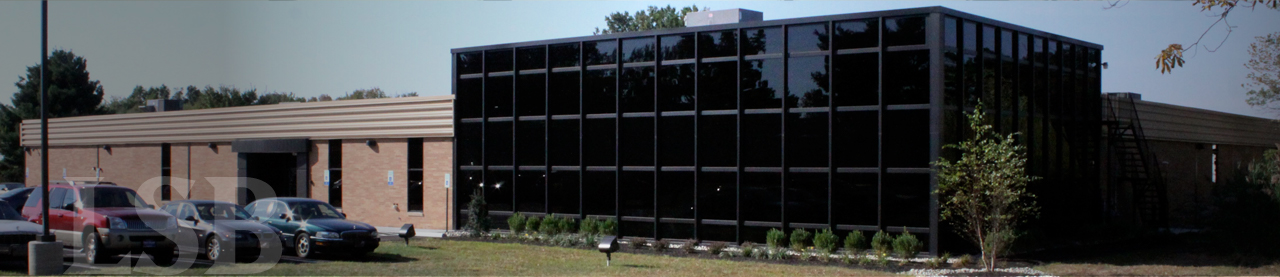
Lansdale School of Business is a small, for-profit career college in North Wales, Pennsylvania, that operates with a fundamentally different logic than a traditional liberal arts institution. It's a direct, no-frills pipeline into specific technical and office-support roles, offering focused diplomas and associate degrees in fields like medical assisting, paralegal studies, and business administration. The school's identity is built on open admissions, practical training, and a commuter-student body, positioning itself as an accessible, if costly, springboard into the workforce for those seeking a quick credential.
More details
- Undergrad enrollment
- 93
- In-state tuition
- $12,150
- Out-of-state tuition
- $12,150
- Accreditation
- Accrediting Commission of Career Schools and Colleges (ACCSC)
- Popular Majors
- Medical/Clinical Assistant, Legal Assistant/Paralegal, Business Administration
- Degrees Offered
- Certificates, Diplomas, Associate Degrees
- 150% Completion Rate
- 84.62%
- First-Year Retention
- 55.6%
- Median Earnings (10yr)
- $37,442
Outcomes & value
Outcomes & value
- Median earnings (10 yr)
- $37,442
- Value (earnings ÷ net price)
- 1.4×
- Median debt at graduation
- $13,492
- Reducing loan balance (3 yr)
- 53%
- Pell (lower-income) share
- 60%
- First-gen share (among federal-aid recipients)
- 46%
Earnings = median of students working ~10 years after entry; debt = median of graduates. Value divides 10-yr earnings by one year’s net price — read it as earnings per dollar of annual cost, not a full lifetime ROI; it favors lower-cost schools. Source: U.S. Dept. of Education College Scorecard. Figures lag ~2 years and reflect all students, not your intended major.
Financial health
1.6 / 3.0Meets the federal financial-responsibility standard
U.S. Dept. of Education Financial Responsibility Composite Score (FY2022-23). Scale −1.0 to 3.0; ≥1.5 meets the standard. Reported for private nonprofit & for-profit institutions only — public universities are state-backed and not scored, so this is a stability signal, not a ranking.
Campus & location
Campus safety
- On-campus violent crimes (2024)
- 0
On-campus criminal offenses classed as violent (murder/non-negligent manslaughter, rape, robbery, aggravated assault) for the most recent reported year. Source: U.S. Dept. of Education Campus Safety and Security (Clery Act). Counts reflect what’s reported to the school, and urban campuses often report more partly due to non-student incidents nearby — read alongside campus size and setting, not as a standalone safety verdict.
Climate
- Pleasant days / yr
- 98
- Summer high
- 84°F
- Winter low
- 29°F
- Annual rain
- 38.9"
- Annual snow
- 16.2"
- Natural-hazard risk
- Relatively High
Pleasant days counts days per year with a mean temperature of 55–75°F, a high at or below 90°F, a low at or above 45°F, and little precipitation — a transparent comfort measure, not a weighting we invented. Computed from Open-Meteo ERA5 daily history (2019–2023). Natural-hazard risk is the county’s composite rating from the FEMA National Risk Index.
Quick answers
- How much does Lansdale School of Business cost?
- At Lansdale School of Business, the average net price (after aid) is about $27,483 per year. Actual cost varies with financial aid and residency.
- How many undergraduates attend Lansdale School of Business?
- Lansdale School of Business enrolls approximately 93 undergraduate students.
- Where is Lansdale School of Business located?
- Lansdale School of Business is located in North Wales, PA.
Admissions
Lansdale School of Business practices an open admissions policy, making it accessible to virtually all applicants with a high school diploma or GED. The process is non-selective, with sources reporting at or near 100%. One source notes that for a recent class, 376 out of 395 applicants were accepted, resulting in a 95% acceptance rate, while another explicitly states the acceptance rate is 100%. There is no indication of Early Decision or Early Action programs, and the admissions process does not involve the competitive, common at four-year colleges. The school's focus is on career training readiness rather than academic pedigree or extracurricular achievement.
- Open Admission: The school admits virtually all secondary school graduates or students with GED equivalency diplomas.
- High Acceptance Rate: Reported rates are 95% or 100%, reflecting a non-selective process.
- No Competitive Holistic Review: The admissions priorities and factors considered in a (like rigor of secondary school record, class rank, standardized test scores, essays, recommendations, extracurriculars, character, talent, and status) are not part of LSB's admissions paradigm. Demonstrated interest is not a factor in this type of institution's process.
Compare Lansdale School of Business
See colleges similar to Lansdale School of Business →Sources
- Common Data Set: Home
- Common Data Set | Office of Planning, Assessment, and ...
- Common Data Set | Office of Institutional Research
- Common Data Set 2024-2025
- The Discount Data That Some Colleges Still Won't Publish
- Common Data Set
- Lansdale School of Business - Niche
- Lansdale School of Business Admissions - BigFuture College Search
- Lansdale School of Business - Tuition and Acceptance Rate
- Lansdale School of Business Admissions - (2025-2026) - Orbit AI
- Lansdale School Of Business Acceptance Rate, SAT, GPA & ACT ...