Loading…
← All schools
Leech Lake Tribal College
Cass Lake, MNpublicwww.lltc.edu/
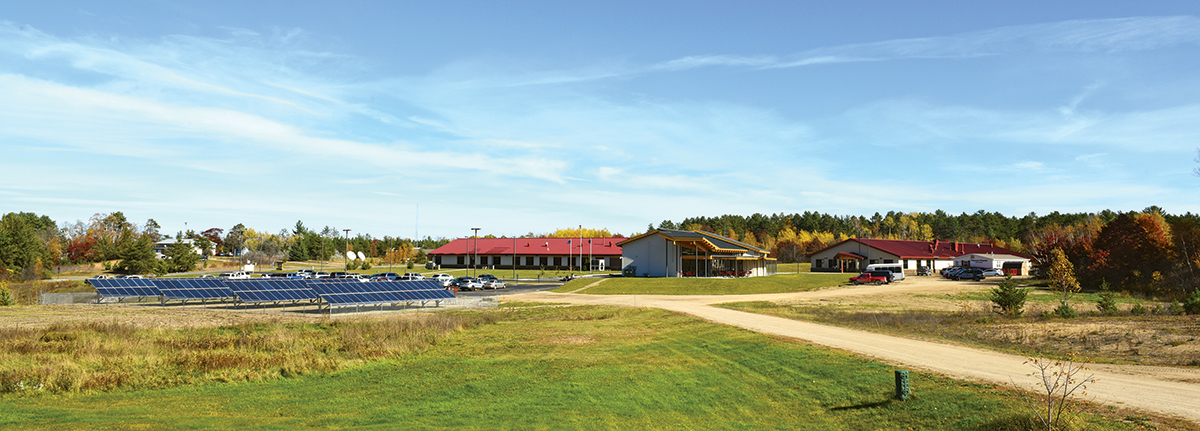
Leech Lake Tribal College is not just a community college; it's a vital cultural and educational anchor for the Anishinaabe people and a public tribal land-grant institution. With an open-admission policy and a mission deeply rooted in Indigenous values, it serves a small, dedicated student body of around 225 per semester, offering a unique academic path grounded in Ojibwe language, traditional arts, and Indigenous leadership. Its identity is defined by accessibility, cultural preservation, and a commitment to student support over selectivity.
More details
- Undergrad enrollment
- 197
- In-state tuition
- $4,850
- Out-of-state tuition
- $4,850
- No-Loan Policy
- No
- Graduation Rate
- 27%
- Meets Full Need
- No policy indicated
- Student Body Size
- ~225 students (semester average)
- First-Year Retention
- Not stated in sources
- Demonstrated Interest
- Not considered (implied by open enrollment)
- Early Decision Policy
- Not mentioned / Not applicable
- Student-Faculty Ratio
- 10:1
- Median Earnings (10yr)
Outcomes & value
Outcomes & value
- Pell (lower-income) share
- 76%
- First-gen share (among federal-aid recipients)
- 46%
Earnings = median of students working ~10 years after entry; debt = median of graduates. Value divides 10-yr earnings by one year’s net price — read it as earnings per dollar of annual cost, not a full lifetime ROI; it favors lower-cost schools. Source: U.S. Dept. of Education College Scorecard. Figures lag ~2 years and reflect all students, not your intended major.
Campus & location
Campus safety
- On-campus violent crimes (2024)
- 0
On-campus criminal offenses classed as violent (murder/non-negligent manslaughter, rape, robbery, aggravated assault) for the most recent reported year. Source: U.S. Dept. of Education Campus Safety and Security (Clery Act). Counts reflect what’s reported to the school, and urban campuses often report more partly due to non-student incidents nearby — read alongside campus size and setting, not as a standalone safety verdict.
Climate
- Pleasant days / yr
- 98
- Summer high
- 77°F
- Winter low
- 7°F
- Annual rain
- 22.4"
- Annual snow
- 46"
- Natural-hazard risk
- Relatively Low
Pleasant days counts days per year with a mean temperature of 55–75°F, a high at or below 90°F, a low at or above 45°F, and little precipitation — a transparent comfort measure, not a weighting we invented. Computed from Open-Meteo ERA5 daily history (2019–2023). Natural-hazard risk is the county’s composite rating from the FEMA National Risk Index.
Deep dive — research, future-scholar output & economic mobility
Research output
- Institutional h-index
- 13
- Scholarly works
- 187
Institutional research volume and impact from OpenAlex. The h-index reflects large research universities and will be low for teaching-focused liberal-arts colleges — not a measure of undergraduate quality.
Quick answers
- How much does Leech Lake Tribal College cost?
- At Leech Lake Tribal College, the average net price (after aid) is about $13,115 per year. Actual cost varies with financial aid and residency.
- How many undergraduates attend Leech Lake Tribal College?
- Leech Lake Tribal College enrolls approximately 197 undergraduate students.
- Where is Leech Lake Tribal College located?
- Leech Lake Tribal College is located in Cass Lake, MN.
Admissions
Leech Lake Tribal College operates on a principle of radical accessibility with an open-enrollment policy. The college states directly that "You can enroll if you have a high school diploma or GED" and that "Your High School grades and class rank are not considered when accepting students." This is reflected in its reported 100% . The process is designed to remove traditional barriers to higher education, focusing on providing an entry point rather than selecting from a pool of applicants. The student body is intimate, with a semester average of approximately 225 students. The institution has actively worked to improve student engagement, reporting that attendance increased from 49% of students attending regularly in 2021 to 66% in 2022. There is no mention of an Early Decision program or a policy of considering demonstrated interest, aligning with its open-access mission.
Academics
Academic life at LLTC is explicitly framed by its mission "to be recognized as a center of academic excellence that advances the Anishinaabe worldview and empowers life-long learners." The college provides "quality higher education grounded in Anishinaabe values," often delivered by Native faculty and staff. It is a small-scale operation with about 65 total instructors, staff, and administrators supporting its programs.
The curriculum offers a focused set of nine degree programs. A signature offering is the A.A. in Indigenous Leadership, which integrates "Indigenous American studies, contemporary and traditional arts, and leadership development." Cultural preservation is a core academic component, with classes in Ojibwemowin (the Ojibwe language) and Traditional Arts. This creates a learning environment where academic study and cultural identity are inextricably linked, distinguishing it from a conventional community college curriculum.
Compare Leech Lake Tribal College
vs Dickinson State Universityvs University of Minnesota-Morrisvs Minot State Universityvs Chicago State University
See colleges similar to Leech Lake Tribal College →Sources
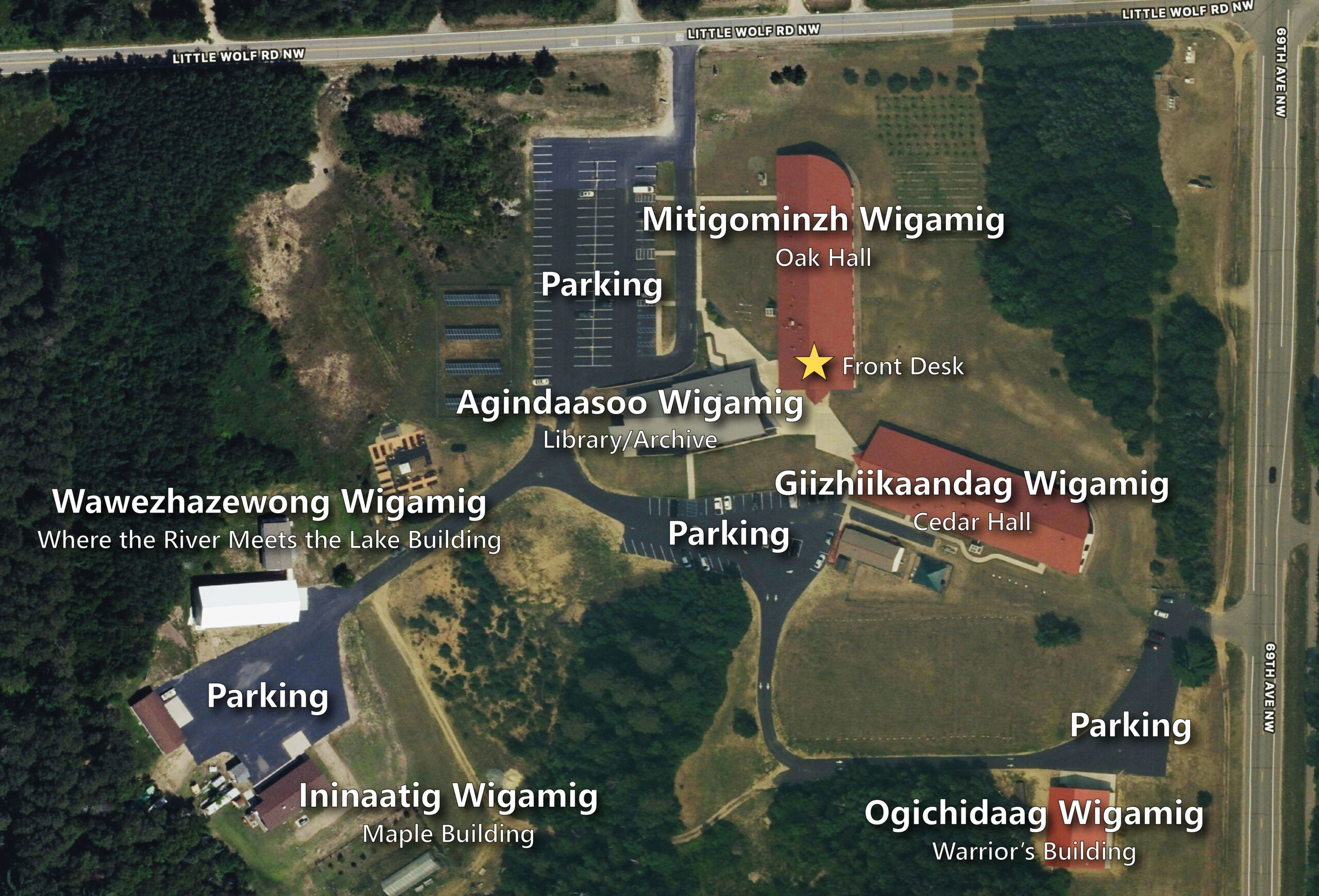
- 6945 Little Wolf Rd. NW Cass Lake, MN 56633 (218) 335-4200 www.lltc.edu
- Common Data Set: Home
- Leech Lake Tribal College - DFR Report HTML
- Leech Lake Tribal College - Sallie
- Common Data Set Repository
- Leech Lake Tribal College leverages the ICAT to spur institutional change
- Leech Lake Tribal College
- Leech Lake Tribal College Admission, Acceptance Rate, SAT, ACT & GPA
- Leech Lake Tribal College | University Profile, Admissions & Rankings
- Leech Lake Tribal College: Home
- Leech Lake Tribal College: Acceptance Rate, Tuition & Rankings