Loading…
← All schools
Lehigh Career & Technical Institute
Schnecksville, PApubliclcti.org
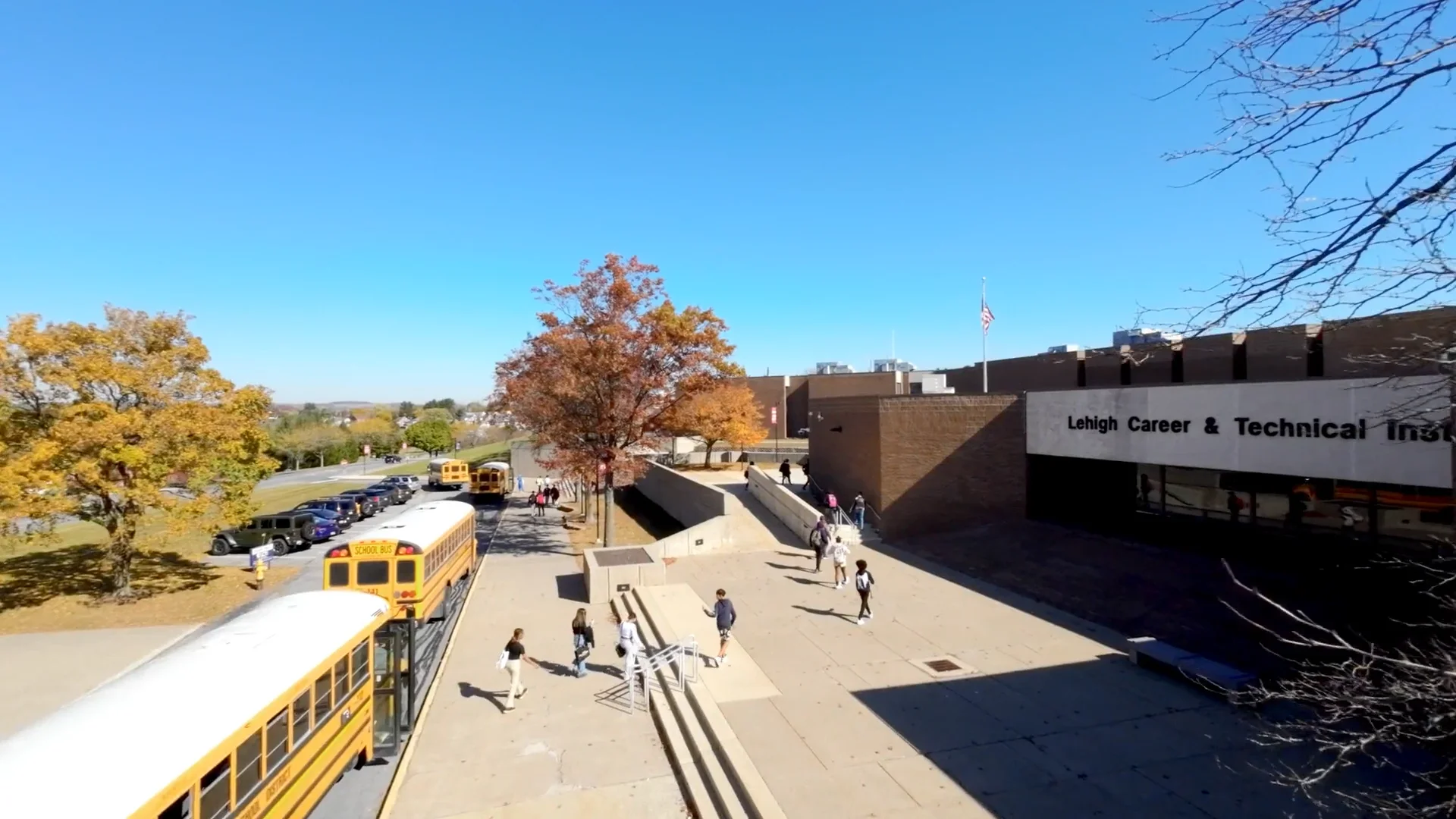
Lehigh Career & Technical Institute is not a traditional university but a public magnet high school and adult education center in Schnecksville, Pennsylvania, offering a radically different educational model. It functions as a career launchpad, providing over 50 hands-on, industry-aligned technical programs to high school students and adult learners from across the Lehigh Valley. The focus is singular: moving students from instruction to action, preparing them for immediate entry into skilled trades, healthcare, technology, and manufacturing careers.
More details
- Undergrad enrollment
- 14
- Programs Offered
- 50+ career & technical programs
- Student-Teacher Ratio
- Data not provided in sources
- Students Receiving Grant Aid
- 73%
- High School Student Body Size
- 22 students (grades 9-12)
- Scholarship Coverage (Adult Ed)
- Up to 90% of tuition for approved applicants
- Economically Disadvantaged Students
- 92.6%
Outcomes & value
Outcomes & value
- Pell (lower-income) share
- 29%
Earnings = median of students working ~10 years after entry; debt = median of graduates. Value divides 10-yr earnings by one year’s net price — read it as earnings per dollar of annual cost, not a full lifetime ROI; it favors lower-cost schools. Source: U.S. Dept. of Education College Scorecard. Figures lag ~2 years and reflect all students, not your intended major.
Campus & location
Campus safety
- On-campus violent crimes (2024)
- 0
On-campus criminal offenses classed as violent (murder/non-negligent manslaughter, rape, robbery, aggravated assault) for the most recent reported year. Source: U.S. Dept. of Education Campus Safety and Security (Clery Act). Counts reflect what’s reported to the school, and urban campuses often report more partly due to non-student incidents nearby — read alongside campus size and setting, not as a standalone safety verdict.
Climate
- Pleasant days / yr
- 96
- Summer high
- 83°F
- Winter low
- 26°F
- Annual rain
- 39.9"
- Annual snow
- 21.9"
- Natural-hazard risk
- Relatively Moderate
Pleasant days counts days per year with a mean temperature of 55–75°F, a high at or below 90°F, a low at or above 45°F, and little precipitation — a transparent comfort measure, not a weighting we invented. Computed from Open-Meteo ERA5 daily history (2019–2023). Natural-hazard risk is the county’s composite rating from the FEMA National Risk Index.
Quick answers
- How much does Lehigh Career & Technical Institute cost?
- At Lehigh Career & Technical Institute, the average net price (after aid) is about $23,735 per year. Actual cost varies with financial aid and residency.
- How many undergraduates attend Lehigh Career & Technical Institute?
- Lehigh Career & Technical Institute enrolls approximately 14 undergraduate students.
- Where is Lehigh Career & Technical Institute located?
- Lehigh Career & Technical Institute is located in Schnecksville, PA.
Admissions
As a public magnet school and adult education provider, Lehigh Career & Technical Institute (LCTI) operates on a fundamentally different admissions model than a selective university. For its high school programs, it serves students from multiple sending school districts within the Lehigh Valley. The institute has a total minority enrollment of 46%, and a significant 92.6% of its high school students are classified as economically disadvantaged, indicating it serves a diverse and high-need population. The admissions process for its adult education programs is geared toward career-changers and skill-seekers, with a focus on connecting applicants to programs that match evolving local industry needs. There is no mention of standardized test requirements like the SAT or ACT, nor is there data on , as these traditional collegiate metrics do not apply to its open-access, career-focused mission.
Academics
Academics at LCTI are defined by applied, project-based learning designed to mirror real-world work. The institute offers more than 50 career and technical education programs across several key industry clusters. The curriculum is intensely hands-on; teachers guide students from instruction to action, having them tackle projects that replicate on-the-job tasks.
Programs are organized into major career pathways:
- Arts & Humanities: Includes Advertising Design and Commercial Art.
- Business & Communication Technology: Includes Administrative Office Technology and Accounting.
- Includes fields like Auto Body, Carpentry, Electrical occupations, and Computer Network Technology.
Compare Lehigh Career & Technical Institute
vs Maine Maritime Academyvs United States Coast Guard Academyvs SUNY Maritime Collegevs United States Merchant Marine Academy
See colleges similar to Lehigh Career & Technical Institute →Sources
- Common Data Set 2024-2025 - Institutional Data @ Lehigh
- Common Data Set - Institutional Data @ Lehigh
- Common Data Set: Home
- How To Use a Common Data Set
- Common Data Set 2025-2026 - Institutional Data @ Lehigh
- The Common Data Set: What It Is & How to Use It In College Applications
- Admission Statistics
- Lehigh Career & Technical Institute in Schnecksville, PA
- Lehigh University Admissions - BigFuture College Search
- Lehigh Career & Technical Institute in Schnecksville, PA