Loading…
← All schools
Lincoln College of Technology-East Point
East Point, GAprivate forprofitlincolntech.edu
Avg net price
$45,567
Earnings (10 yr)
$38,683
Acceptance & SAT from Common Data Set / IPEDS; net price, earnings & graduation from the U.S. Dept. of Education College Scorecard. Figures lag ~1–2 years — verify with the school.
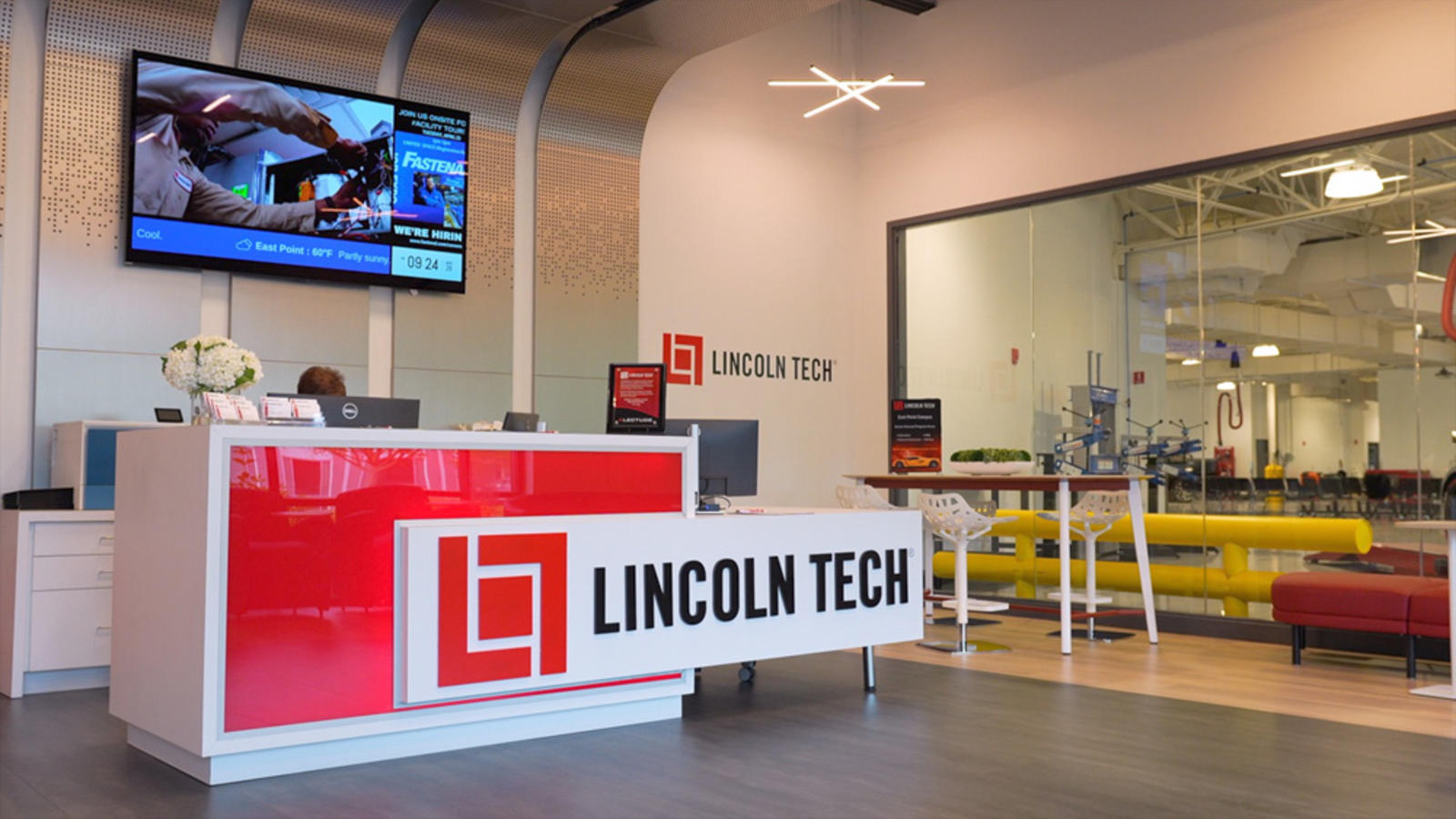
Lincoln College of Technology-East Point is a for-profit trade school that operates with the brisk, no-frills efficiency of a technical training center. Located just 15 miles from downtown Atlanta, its identity is built entirely around fast-track, hands-on programs for specific skilled trades like automotive, HVAC, and welding. The culture is pragmatic and career-focused, with student life revolving around the shop floor and outcomes measured by entry-level job placement rather than traditional collegiate milestones.
More details
- Undergrad enrollment
- 627
- Location
- East Point, GA (15 miles from downtown Atlanta)
- Core Programs
- Automotive, Electrical, HVAC, Welding Technology
- Institution Type
- Private, for-profit trade school
- Student-Faculty Ratio
- 20:1
- Median Earnings (10yr)
- $39,000
- Median Debt at Graduation
- $11,250
- 5-Year Loan Repayment Rate
- 26.6%
Outcomes & value
Outcomes & value
- Median earnings (10 yr)
- $38,683
- Value (earnings ÷ net price)
- 0.8×
- Median debt at graduation
- $11,250
- Reducing loan balance (3 yr)
- 37%
- Pell (lower-income) share
- 27%
- First-gen share (among federal-aid recipients)
- 55%
Earnings = median of students working ~10 years after entry; debt = median of graduates. Value divides 10-yr earnings by one year’s net price — read it as earnings per dollar of annual cost, not a full lifetime ROI; it favors lower-cost schools. Source: U.S. Dept. of Education College Scorecard. Figures lag ~2 years and reflect all students, not your intended major.
Campus & location
Climate
- Pleasant days / yr
- 114
- Summer high
- 87°F
- Winter low
- 40°F
- Annual rain
- 47.9"
- Annual snow
- 0.7"
- Natural-hazard risk
- Relatively High
Pleasant days counts days per year with a mean temperature of 55–75°F, a high at or below 90°F, a low at or above 45°F, and little precipitation — a transparent comfort measure, not a weighting we invented. Computed from Open-Meteo ERA5 daily history (2019–2023). Natural-hazard risk is the county’s composite rating from the FEMA National Risk Index.
Quick answers
- How much does Lincoln College of Technology-East Point cost?
- At Lincoln College of Technology-East Point, the average net price (after aid) is about $45,567 per year. Actual cost varies with financial aid and residency.
- How many undergraduates attend Lincoln College of Technology-East Point?
- Lincoln College of Technology-East Point enrolls approximately 627 undergraduate students.
- Where is Lincoln College of Technology-East Point located?
- Lincoln College of Technology-East Point is located in East Point, GA.
Admissions
Admissions at Lincoln Tech-East Point reflect its mission as an open-access, career-focused trade school. The process appears to be non-selective and geared toward vocational readiness rather than . While a specific for the East Point campus is not reported in the provided sources, data for a sister campus, Lincoln College of Technology-Marietta, shows an acceptance rate of 53%, and another source lists an acceptance rate of 77% for that campus. This suggests a generally accessible admissions policy. The institution does not appear to participate in binding Early Decision plans, and factors like 'demonstrated interest'—a common consideration at traditional four-year colleges—are not relevant in this context. The student body is exclusively full-time, with a total enrollment of 627 students, indicating a focused cohort all pursuing intensive, hands-on training programs.
Academics
Academics are laser-focused on practical, employer-driven skills. The East Point campus offers training in four core trade areas: Automotive Technology, Electrical & Electronic Systems Technology, HVAC (Heating, Ventilation, and Air Conditioning) Technology, and Welding Technology. The pedagogy is explicitly 'hands-on,' as highlighted in its campus marketing. The student-faculty ratio is reported at 20:1, though the instructional model likely involves significant time in labs and shops under direct supervision. The tone of discussion around the school's value is mixed; while official materials promote 'quality career training for in-demand careers,' some industry forums, like a Reddit thread for diesel technicians, contain critical opinions, with one user stating that 'Lincoln Tech general starter programs are a waste of time and money.' This underscores the importance for prospective students to deeply research specific program outcomes and employer reputations in their chosen trade.
Compare Lincoln College of Technology-East Point
See colleges similar to Lincoln College of Technology-East Point →Sources
- [PDF] Common Data Set 2022-2023 | Lincoln University
- Lincoln College of Technology-East Point - DFR Report HTML
- [PDF] A. General Information - Lincoln University
- Common Data Set: Home
- 2025–2026 Common Data Set Now Available
- Decoding the Common Data Set What You Need to Know for Your ...
- Lincoln College of Technology - Marietta - Niche
- Programs Available in East Point, GA - Lincoln Tech
- Lincoln College of Technology-East Point - EDsmart
- Lincoln College of Technology-Grand Prairie Overview