Loading…
← All schools
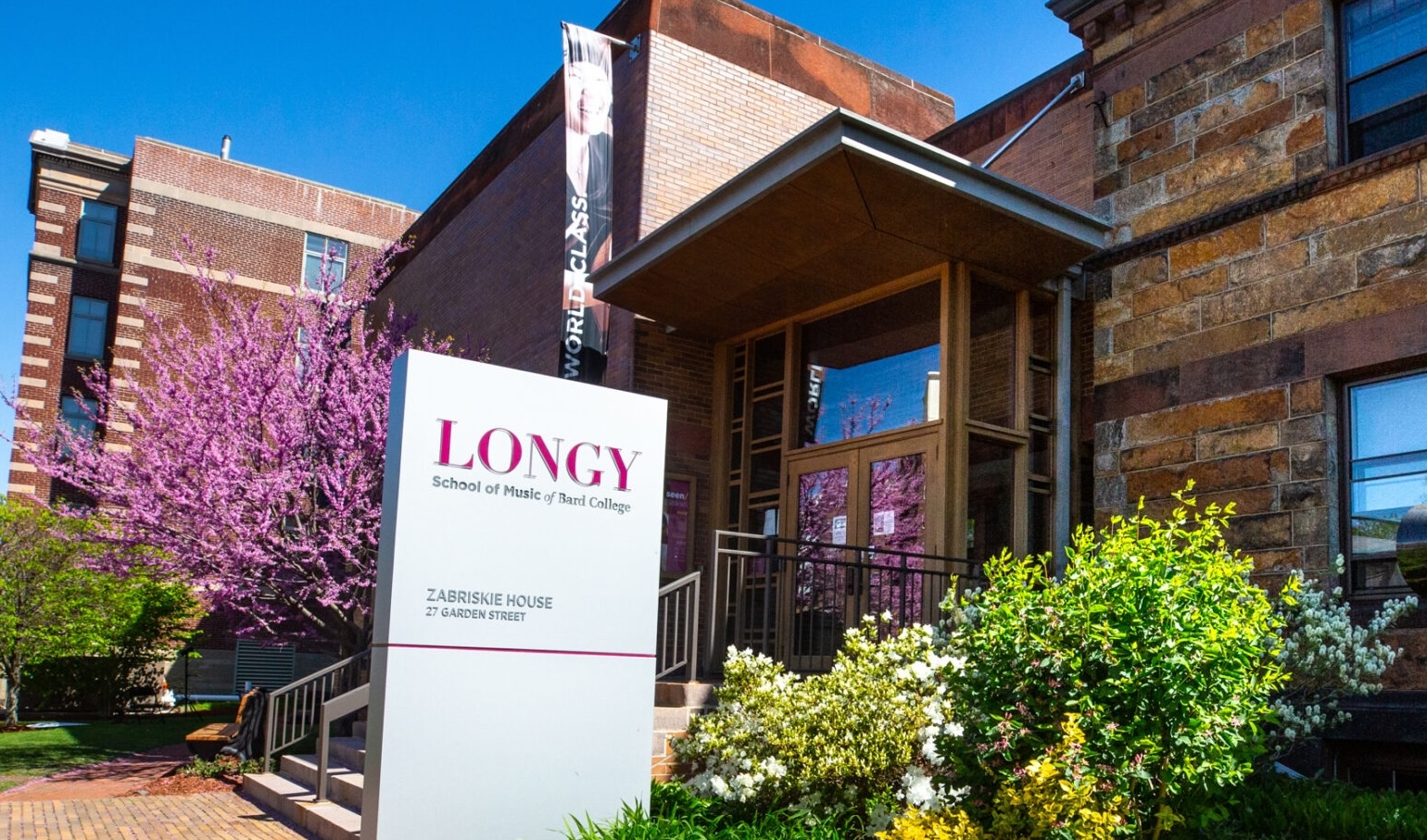
Longy School of Music of Bard College
Cambridge, MAprivate nonprofitlongy.edu/
Avg net price
$38,530
Earnings (10 yr)
$46,543
Graduation rate
78%
Admit rate has ranged 73%–90% over the last 5 years — notably volatile. Source: IPEDS via Urban Institute.
Acceptance & SAT from Common Data Set / IPEDS; net price, earnings & graduation from the U.S. Dept. of Education College Scorecard. Figures lag ~1–2 years — verify with the school.
Longy School of Music of Bard College is a fiercely specialized, graduate-heavy conservatory embedded in the intellectual and artistic ferment of Cambridge. It's a place where the audition is the true gatekeeper, attracting a small, dedicated cohort of musicians who thrive on intensive mentorship from a faculty of GRAMMY-winning performers and innovators. This isn't a traditional undergraduate college with dorms and football games; it's a professional proving ground where the mission is to train 'musicians who make a difference,' a philosophy that extends from the practice room to community engagement.
Admission requirements
Test-blind — scores not considered
Required
- High school transcript
- Grade point average
- Letters of recommendation
- Demonstrated competencies
- TOEFL (non-native English)
Source: IPEDS Admissions survey (2022) via Urban Institute. Covers formal factors only — it does not reflect essays, extracurriculars, or other holistic criteria.
More details
- Undergrad enrollment
- 10
- In-state tuition
- $55,275
- Out-of-state tuition
- $55,275
- Campus Setting
- Urban, Cambridge, MA (no on-campus housing)
- Popular Majors
- Musical Instruments, Music Theory and Composition, Music Performance
- Graduation Rate
- 78%
- Parent Institution
- Bard College (affiliated since 2012)
- Student Population
- Very small (e.g., ~34 total enrollment)
- Median Earnings (10yr)
- $46,543
- First-Year Retention Rate
- 86%
Outcomes & value
Outcomes & value
- Median earnings (10 yr)
- $46,543
- Value (earnings ÷ net price)
- 1.2×
- Median debt at graduation
- $24,254
- Graduation rate
- 78%
- First-year retention
- 86%
- Reducing loan balance (3 yr)
- 79%
- Pell (lower-income) share
- 6%
- First-gen share (among federal-aid recipients)
- 12%
Campus & location
Campus safety
- On-campus violent crimes (2024)
- 0
- Per 1,000 students
- 0.00
On-campus criminal offenses classed as violent (murder/non-negligent manslaughter, rape, robbery, aggravated assault) for the most recent reported year. Source: U.S. Dept. of Education Campus Safety and Security (Clery Act). Counts reflect what’s reported to the school, and urban campuses often report more partly due to non-student incidents nearby — read alongside campus size and setting, not as a standalone safety verdict.
Climate
- Pleasant days / yr
- 100
- Summer high
- 80°F
- Winter low
- 26°F
- Annual rain
- 39.6"
- Annual snow
- 31.4"
- Natural-hazard risk
- Relatively High
Pleasant days counts days per year with a mean temperature of 55–75°F, a high at or below 90°F, a low at or above 45°F, and little precipitation — a transparent comfort measure, not a weighting we invented. Computed from Open-Meteo ERA5 daily history (2019–2023). Natural-hazard risk is the county’s composite rating from the FEMA National Risk Index.
Deep dive — research, future-scholar output & economic mobility
Research output
- Institutional h-index
- 4
- Scholarly works
- 25
Institutional research volume and impact from OpenAlex. The h-index reflects large research universities and will be low for teaching-focused liberal-arts colleges — not a measure of undergraduate quality.
Quick answers
- How much does Longy School of Music of Bard College cost?
- At Longy School of Music of Bard College, the average net price (after aid) is about $38,530 per year. Actual cost varies with financial aid and residency.
- How many undergraduates attend Longy School of Music of Bard College?
- Longy School of Music of Bard College enrolls approximately 10 undergraduate students.
- Where is Longy School of Music of Bard College located?
- Longy School of Music of Bard College is located in Cambridge, MA.
Admissions
The admissions process at Longy is described as 'easy, flexible, and transparent,' but its defining characteristic is its distinctive, holistic approach. The school explicitly looks beyond pure technical skill, seeking students who demonstrate musical skill, creativity, leadership, resilience, and community engagement. While the undergraduate is reported at a high 84.4% (92 admissions from 109 applications in 2023), this figure is somewhat misleading for a conservatory. The real selectivity happens at the audition stage, which is the core of the application for performance-focused programs. The applicant pool is small and highly self-selected, growing by 32.9% in the most recent cycle. The process is designed to be accessible, with all applicants automatically considered for merit-based financial aid. There is no mention of Early Decision policies specific to Longy in the provided sources, nor is there information on whether the school tracks 'demonstrated interest' in the traditional undergraduate sense—the primary demonstration of interest here is the application and audition itself.
Compare Longy School of Music of Bard College
See colleges similar to Longy School of Music of Bard College →Sources
- Admissions
- Longy School of Music of Bard College - Sallie
- Longy School of Music of Bard College Statistics
- Longy School of Music of Bard College
- Longy School of Music of Bard College
- Student Handbook
- Longy School of Music of Bard College - EDsmart
- Longy School of Music of Bard College - Admissions
- Mission & Values
- Longy School of Music of Bard College Academics
- Longy School of Music of Bard College