Loading…
← All schools
Los Angeles Film School
Hollywood, CAprivate forprofitwww.lafilm.edu/
Avg net price
$30,980
Earnings (10 yr)
$31,632
Graduation rate
41%
Acceptance & SAT from Common Data Set / IPEDS; net price, earnings & graduation from the U.S. Dept. of Education College Scorecard. Figures lag ~1–2 years — verify with the school.
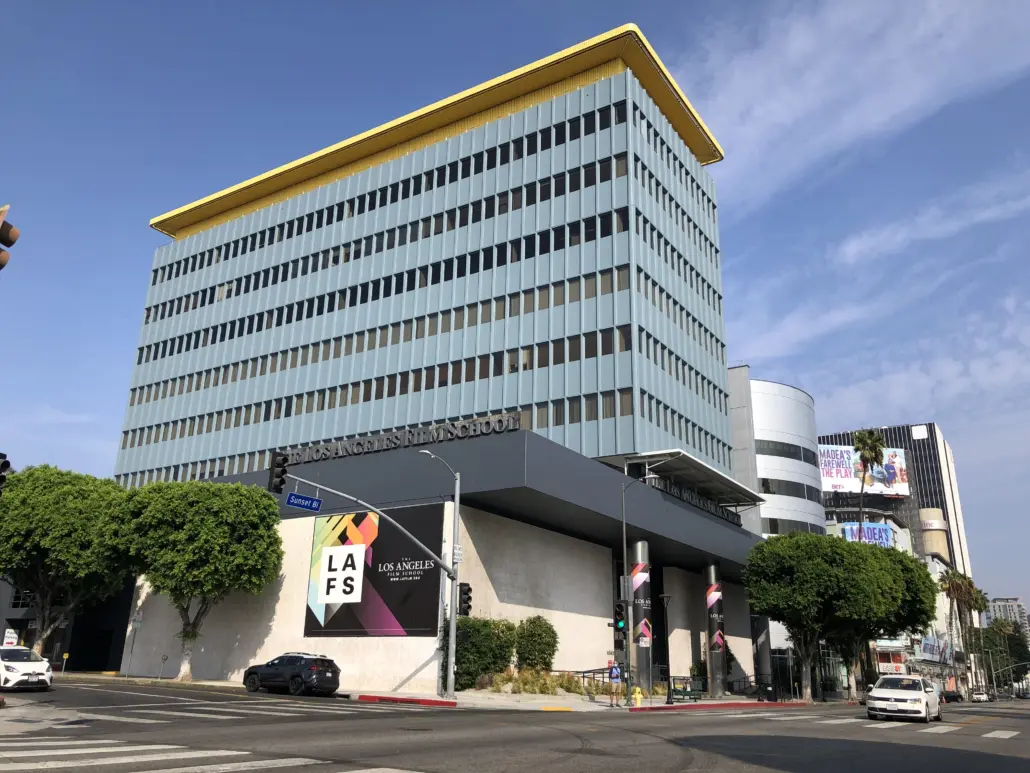
The Los Angeles Film School is not a traditional university, but a for-profit trade school planted directly on Hollywood's Sunset Boulevard. It operates on an open-access model with a 100% acceptance rate, offering intensely hands-on, career-focused training in film, animation, music, and entertainment production. While its immersive, industry-geared environment and location are major draws, prospective students must weigh the significant cost against sobering graduation and employment rates, making it a high-stakes, high-tuition gamble for those seeking a fast track into the entertainment industry.
More details
- Undergrad enrollment
- 5,472
- Early Decision
- Not offered
- No-Loan Policy
- No
- Graduation Rate
- 51%
- Meets Full Need
- No
- Student Demographics
- 33.5% Black, 28.1% White, 7.82% Two or More Races
- Median Earnings (1yr)
- $36,427
- Pell Grant Recipients
- 65%
- Median Earnings (10yr)
- $31,632
- Employment Rate (Post-Grad)
- 48%
- Students Receiving Financial Aid
- 86%
Outcomes & value
Outcomes & value
- Median earnings (10 yr)
- $31,632
- Value (earnings ÷ net price)
- 1.0×
- Median debt at graduation
- $25,250
- Graduation rate
- 41%
- First-year retention
- 51%
- Reducing loan balance (3 yr)
- 27%
- Pell (lower-income) share
- 63%
- First-gen share (among federal-aid recipients)
- 42%
Top-earning majors
Median earnings by field of study (highest credential), ~2 years after completion.
- Arts, Entertainment, and Media Management$22,986
Source: U.S. Dept. of Education College Scorecard (field-of-study earnings). Figures cover graduates who received federal aid and lag ~2 years; not all programs report data.
Campus & location
Campus safety
- On-campus violent crimes (2024)
- 0
On-campus criminal offenses classed as violent (murder/non-negligent manslaughter, rape, robbery, aggravated assault) for the most recent reported year. Source: U.S. Dept. of Education Campus Safety and Security (Clery Act). Counts reflect what’s reported to the school, and urban campuses often report more partly due to non-student incidents nearby — read alongside campus size and setting, not as a standalone safety verdict.
Climate
- Pleasant days / yr
- 234
- Summer high
- 84°F
- Winter low
- 45°F
- Annual rain
- 18.7"
- Natural-hazard risk
- Very High
Pleasant days counts days per year with a mean temperature of 55–75°F, a high at or below 90°F, a low at or above 45°F, and little precipitation — a transparent comfort measure, not a weighting we invented. Computed from Open-Meteo ERA5 daily history (2019–2023). Natural-hazard risk is the county’s composite rating from the FEMA National Risk Index.
Quick answers
- How much does Los Angeles Film School cost?
- At Los Angeles Film School, the average net price (after aid) is about $30,980 per year. Actual cost varies with financial aid and residency.
- How many undergraduates attend Los Angeles Film School?
- Los Angeles Film School enrolls approximately 5,472 undergraduate students.
- Where is Los Angeles Film School located?
- Los Angeles Film School is located in Hollywood, CA.
Admissions
The Los Angeles Film School (LAFS) operates on an open-access, non-selective admissions model. Its is universally reported as 100%, placing it "among the 23% of the easiest universities to gain admission to in the United States." The school does not participate in competitive, selective admissions cycles like Early Decision or waitlists. The process is straightforward: applicants must have a high school diploma or equivalent credential. Crucially, LAFS does not require or recommend SAT or ACT scores, GPA, class rank, or letters of recommendation. The admissions focus is on eligibility, not academic competition. The enrolled student body is notably diverse, with a population that is 33.5% Black or African American, 28.1% White, 7.82% Two or More Races, 5.81% Hispanic or Latino, and includes smaller percentages of other ethnicities.
Compare Los Angeles Film School
vs United States Air Force Academyvs Southeastern Universityvs Biola Universityvs Fort Lewis College
See colleges similar to Los Angeles Film School →Sources
- Common Data Set & Undergraduate Profile
- Common Data Set 2023-2024 - Office of Institutional Research
- Common Data Set 2024-2025
- Los Angeles College of Music - DFR Report HTML
- Los Angeles Film School
- Common Data Set | Office of Institutional Research
- Admissions Requirements | The Los Angeles Film School
- Los Angeles Film School - Sallie
- Los Angeles Film School Statistics - Overgrad
- Los Angeles Film School - Tuition and Acceptance Rate - Peterson's
- High School Students | The Los Angeles Film School