Loading…
← All schools
Los Angeles Pacific College
Los Angeles, CAprivate forprofitwww.lapacific.edu/
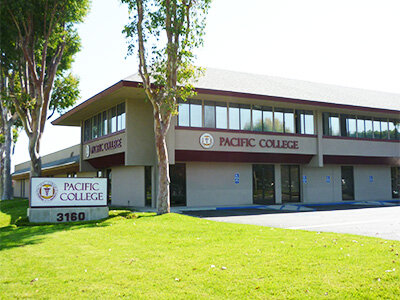
Los Angeles Pacific College is a tiny, for-profit vocational school in the heart of Los Angeles that operates with the straightforward pragmatism of a trade school. It strips away the traditional college experience—no dorms, no sprawling campus, no football team—to focus on short, career-specific programs in accounting, graphic/web design, and ESL for a student body of fewer than 80. This is a place for adults seeking a direct, unadorned path to a technical skill, not a residential liberal arts journey.
Admission requirements
Test-blind — scores not considered
Required
- High school transcript
- TOEFL (non-native English)
Considered (not required)
- Grade point average
Source: IPEDS Admissions survey (2022) via Urban Institute. Covers formal factors only — it does not reflect essays, extracurriculars, or other holistic criteria.
More details
- Undergrad enrollment
- 78
- In-state tuition
- $7,260
- Out-of-state tuition
- $7,260
- Top Programs
- Accounting, Graphic/Web Design, ESL
- Sticker Price
- $7k
- Campus Setting
- City
- Institution Type
- Private, For-Profit
- Application Deadline
- Rolling
- Demonstrated Interest
- Not considered
Outcomes & value
Outcomes & value
- Pell (lower-income) share
- —
Earnings = median of students working ~10 years after entry; debt = median of graduates. Value divides 10-yr earnings by one year’s net price — read it as earnings per dollar of annual cost, not a full lifetime ROI; it favors lower-cost schools. Source: U.S. Dept. of Education College Scorecard. Figures lag ~2 years and reflect all students, not your intended major.
Financial health
1.1 / 3.0Passing, but in the added-oversight zone
U.S. Dept. of Education Financial Responsibility Composite Score (FY2022-23). Scale −1.0 to 3.0; ≥1.5 meets the standard. Reported for private nonprofit & for-profit institutions only — public universities are state-backed and not scored, so this is a stability signal, not a ranking.
Campus & location
Campus safety
- On-campus violent crimes (2024)
- 0
On-campus criminal offenses classed as violent (murder/non-negligent manslaughter, rape, robbery, aggravated assault) for the most recent reported year. Source: U.S. Dept. of Education Campus Safety and Security (Clery Act). Counts reflect what’s reported to the school, and urban campuses often report more partly due to non-student incidents nearby — read alongside campus size and setting, not as a standalone safety verdict.
Climate
- Pleasant days / yr
- 240
- Summer high
- 84°F
- Winter low
- 46°F
- Annual rain
- 15.8"
- Natural-hazard risk
- Very High
Pleasant days counts days per year with a mean temperature of 55–75°F, a high at or below 90°F, a low at or above 45°F, and little precipitation — a transparent comfort measure, not a weighting we invented. Computed from Open-Meteo ERA5 daily history (2019–2023). Natural-hazard risk is the county’s composite rating from the FEMA National Risk Index.
Quick answers
- How many undergraduates attend Los Angeles Pacific College?
- Los Angeles Pacific College enrolls approximately 78 undergraduate students.
- Where is Los Angeles Pacific College located?
- Los Angeles Pacific College is located in Los Angeles, CA.
Admissions
Admissions at Los Angeles Pacific College is an open, rolling process with a 100% , reflecting its mission as a vocational post-secondary institution rather than a selective university. The process is utilitarian: applicants complete a three-page application, email it along with supporting documents like a passport and Form I-94, and await a decision. There is no mention of standardized test requirements like the SAT or ACT, and the school does not appear to consider demonstrated interest as a factor in its admissions decisions. With a total enrollment of just 38 students, the applicant pool is inherently small and the barrier to entry is low, designed to provide access to career training.
Academics
The academic model is tightly focused and explicitly vocational. Los Angeles Pacific College describes itself as a "post-secondary vocational college" with programs specializing in Accounting, Graphic/Web Design, and English as a Second Language (ESL). The goal is to prepare students for "gainful employment in various fields including business data processing, accounting, computer graphic design, and web design." It is known for its top major in Computer Software and Media Applications. The curriculum appears hands-on and directly tied to specific job skills, with no indication of broader general education requirements typical of associate or bachelor's degree programs. Instruction likely occurs in a single campus location in Los Angeles, catering to a local, career-minded student population.
Compare Los Angeles Pacific College
See colleges similar to Los Angeles Pacific College →Sources
- Common Data Set (CDS)
- Common Data Set 2023-2024 - Office of Institutional Research
- Common Data Set 2021-2022 - Institutional Research Office
- Common Data Set
- Common Data Set 2018-2019
- Common Data Set & Undergraduate Profile
- Admissions
- Pacific University SAT Scores and GPA
- University of the Pacific Admissions - BigFuture College Search
- Los Angeles Pacific College Overview