Loading…
← All schools
Lotus Professional College
Richmond, VAprivate forprofitlotus.edu/
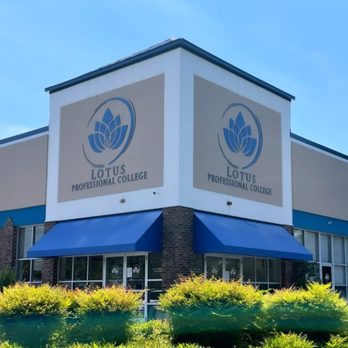
Lotus Professional College is not your typical liberal arts campus; it's a tightly focused, for-profit trade school in Richmond, Virginia, built entirely around the practical arts of holistic wellness. For over three decades, it has operated as a direct pipeline into careers in massage therapy, esthetics, and acupuncture, emphasizing hands-on, professional training over traditional undergraduate exploration. With an open admission policy and a curriculum designed for career-changers and credential-seekers, it represents a starkly utilitarian—and for some, essential—path into the growing wellness industry.
More details
- Undergrad enrollment
- 171
- Student Body
- 157 Full-Time, 91.1% Part-Time
- Financial Aid
- 50% receive grants/scholarships (Avg: $2,247)
- Academic Focus
- Massage Therapy, Esthetics, Acupuncture
- Institution Type
- Private, For-Profit
- Experience Required
- 60 College Credits (30 semester hrs min)
Outcomes & value
Outcomes & value
- Pell (lower-income) share
- 50%
Earnings = median of students working ~10 years after entry; debt = median of graduates. Value divides 10-yr earnings by one year’s net price — read it as earnings per dollar of annual cost, not a full lifetime ROI; it favors lower-cost schools. Source: U.S. Dept. of Education College Scorecard. Figures lag ~2 years and reflect all students, not your intended major.
Financial health
2.1 / 3.0Meets the federal financial-responsibility standard
U.S. Dept. of Education Financial Responsibility Composite Score (FY2022-23). Scale −1.0 to 3.0; ≥1.5 meets the standard. Reported for private nonprofit & for-profit institutions only — public universities are state-backed and not scored, so this is a stability signal, not a ranking.
Campus & location
Campus safety
- On-campus violent crimes (2024)
- 0
- Per 1,000 students
- 0.00
On-campus criminal offenses classed as violent (murder/non-negligent manslaughter, rape, robbery, aggravated assault) for the most recent reported year. Source: U.S. Dept. of Education Campus Safety and Security (Clery Act). Counts reflect what’s reported to the school, and urban campuses often report more partly due to non-student incidents nearby — read alongside campus size and setting, not as a standalone safety verdict.
Climate
- Pleasant days / yr
- 103
- Summer high
- 88°F
- Winter low
- 35°F
- Annual rain
- 32.4"
- Annual snow
- 5.7"
- Natural-hazard risk
- Relatively Moderate
Pleasant days counts days per year with a mean temperature of 55–75°F, a high at or below 90°F, a low at or above 45°F, and little precipitation — a transparent comfort measure, not a weighting we invented. Computed from Open-Meteo ERA5 daily history (2019–2023). Natural-hazard risk is the county’s composite rating from the FEMA National Risk Index.
Quick answers
- How many undergraduates attend Lotus Professional College?
- Lotus Professional College enrolls approximately 171 undergraduate students.
- Where is Lotus Professional College located?
- Lotus Professional College is located in Richmond, VA.
Admissions
Admissions at Lotus Professional College are defined by accessibility, not selectivity. The institution has an open admission policy, meaning all applicants who meet the basic requirements are accepted, resulting in a reported 100% acceptance rate. The primary academic gatekeeper is not GPA or test scores, but a significant amount of prior college experience: applicants must have 60 college credits with a minimum of 30 semester credit hours before they can enroll. This requirement positions the college as a destination for students who already have substantial undergraduate coursework, likely targeting career-changers or those seeking a specific professional certification on top of a previous education.
The process appears straightforward, with no indication of Early Decision programs or a competitive selection process. While sources discuss the as a standard tool for understanding admissions factors at colleges, no Lotus-specific CDS data is provided in the sources to detail the relative importance of factors like class rank, essays, or recommendations. Similarly, while demonstrated interest is a factor measured in the CDS (Section C7), the provided sources do not specify whether Lotus Professional College considers it.
Compare Lotus Professional College
vs Livingstone Collegevs Emory University-Oxford Collegevs Hampden-Sydney Collegevs Huston-Tillotson University
See colleges similar to Lotus Professional College →Sources
- Admissions – Contact Information - Lotus Professional College
- [PDF] Common Data Set 2024-2025 - Fashion Institute of Technology
- Common Data Set: Home
- Decoding the Common Data Set What You Need to Know for Your ...
- The Common Data Set: What It Is & How to Use It In College ...
- How To Use a Common Data Set - The College Solution
- Lotus Professional College — Acceptance Rate, Costs & ...
- Lotus Professional College - Sallie
- Lotus Professional College
- Lotus Professional College
- Lotus Professional College - Admissions, Rankings, and ...
- Massage – Contact Information - Lotus Professional College