Admit rate has ranged 32%–86% over the last 5 years — notably volatile. Source: IPEDS via Urban Institute.
Acceptance & SAT from Common Data Set / IPEDS; net price, earnings & graduation from the U.S. Dept. of Education College Scorecard. Figures lag ~1–2 years — verify with the school.
Louisburg College is a small, private two-year institution in rural North Carolina that functions as a deliberate stepping stone. It’s built for students who need a structured, supportive environment to solidify their academic footing before transferring to a four-year university, offering a tight-knit community, a focused set of associate degree programs, and a significant amount of hands-on coaching. The vibe is less about ivory-tower prestige and more about practical preparation and personal attention, with a campus life that actively works to foster connection.
Admission requirements
Test-blind — scores not considered
Required
Grade point average
Considered (not required)
High school transcript
College-prep program
TOEFL (non-native English)
Source: IPEDS Admissions survey (2022) via Urban Institute. Covers formal factors only — it does not reflect essays, extracurriculars, or other holistic criteria.
More details
Undergrad enrollment
402
In-state tuition
$24,120
Out-of-state tuition
$24,120
Graduation Rate
33%
Early Decision Plan
Not reported
First-Year Retention
41%
Student-Faculty Ratio
15:1
Median Earnings (10yr)
$34,818
Full-Time Students Receiving Aid
100%
Outcomes & value
Outcomes & value
Median earnings (10 yr)
$34,818
Value (earnings ÷ net price)
1.5×
Median debt at graduation
$12,000
Reducing loan balance (3 yr)
22%
Pell (lower-income) share
70%
First-gen share (among federal-aid recipients)
33%
Earnings = median of students working ~10 years after entry; debt = median of graduates. Value divides 10-yr earnings by one year’s net price — read it as earnings per dollar of annual cost, not a full lifetime ROI; it favors lower-cost schools. Source: U.S. Dept. of Education College Scorecard. Figures lag ~2 years and reflect all students, not your intended major.
Financial health
2.2 / 3.0Meets the federal financial-responsibility standard
U.S. Dept. of Education Financial Responsibility Composite Score (FY2022-23). Scale −1.0 to 3.0; ≥1.5 meets the standard. Reported for private nonprofit & for-profit institutions only — public universities are state-backed and not scored, so this is a stability signal, not a ranking.
Campus & location
Campus safety
On-campus violent crimes (2024)
0
On-campus criminal offenses classed as violent (murder/non-negligent manslaughter, rape, robbery, aggravated assault) for the most recent reported year. Source: U.S. Dept. of Education Campus Safety and Security (Clery Act). Counts reflect what’s reported to the school, and urban campuses often report more partly due to non-student incidents nearby — read alongside campus size and setting, not as a standalone safety verdict.
Climate
Pleasant days / yr
104
Summer high
88°F
Winter low
37°F
Annual rain
49.6"
Annual snow
2.9"
Natural-hazard risk
Relatively Low
Pleasant days counts days per year with a mean temperature of 55–75°F, a high at or below 90°F, a low at or above 45°F, and little precipitation — a transparent comfort measure, not a weighting we invented. Computed from Open-Meteo ERA5 daily history (2019–2023). Natural-hazard risk is the county’s composite rating from the FEMA National Risk Index.
Deep dive — research, future-scholar output & economic mobility▾
Research output
Institutional h-index
8
Scholarly works
24
Institutional research volume and impact from OpenAlex. The h-index reflects large research universities and will be low for teaching-focused liberal-arts colleges — not a measure of undergraduate quality.
Quick answers
What is the acceptance rate at Louisburg College?
Louisburg College's acceptance rate is approximately 56% (Louisburg, NC), based on the most recent figures we compiled from public and primary sources.
How much does Louisburg College cost?
At Louisburg College, the average net price (after aid) is about $22,694 per year. Actual cost varies with financial aid and residency.
How many undergraduates attend Louisburg College?
Louisburg College enrolls approximately 402 undergraduate students.
Where is Louisburg College located?
Louisburg College is located in Louisburg, NC.
Admissions
Louisburg College operates with a moderately selective admissions process, acting as an accessible gateway for students aiming to begin their higher education journey. The is 56%, which is notably lower than the North Carolina state average of 75% for similar institutions, indicating a degree of selectivity beyond an open-door policy. The college does not appear to have a formal Early Decision plan, as one source explicitly states "early decision plan Not reported." There is no available information in the provided sources regarding whether the college considers demonstrated interest as a factor in admissions. The admitted student profile suggests the college serves a population that may benefit from additional academic support; for example, one source notes an average GPA of 2.34 for admitted students. The process is designed to be straightforward, with the college stating that an admission plan allows students to apply and be admitted year-round.
Academics at Louisburg are intensely focused on the first two years of a bachelor's degree, with a curriculum built around eight specific associate degree paths designed for transfer. The available programs are Agricultural Studies, Business, Environmental Science, General College, General Science, Health Science, and two others not explicitly named in the snippets. The most popular majors, by number of graduates, are Liberal Arts and Humanities, Business, and Biology. The "General College" degree is described as particularly strong in the humanities, with coursework available in sociology, psychology, English, journalism, language, religion, history, and humanities. This structure provides a broad foundational education while allowing for some early specialization. The college emphasizes support beyond the classroom, promoting its "academic coaching and strategy-based learning support program" to help students develop the skills necessary for success. The student-to-faculty ratio is reported as 15:1, which facilitates the close, personal attention that is a cornerstone of the Louisburg experience.
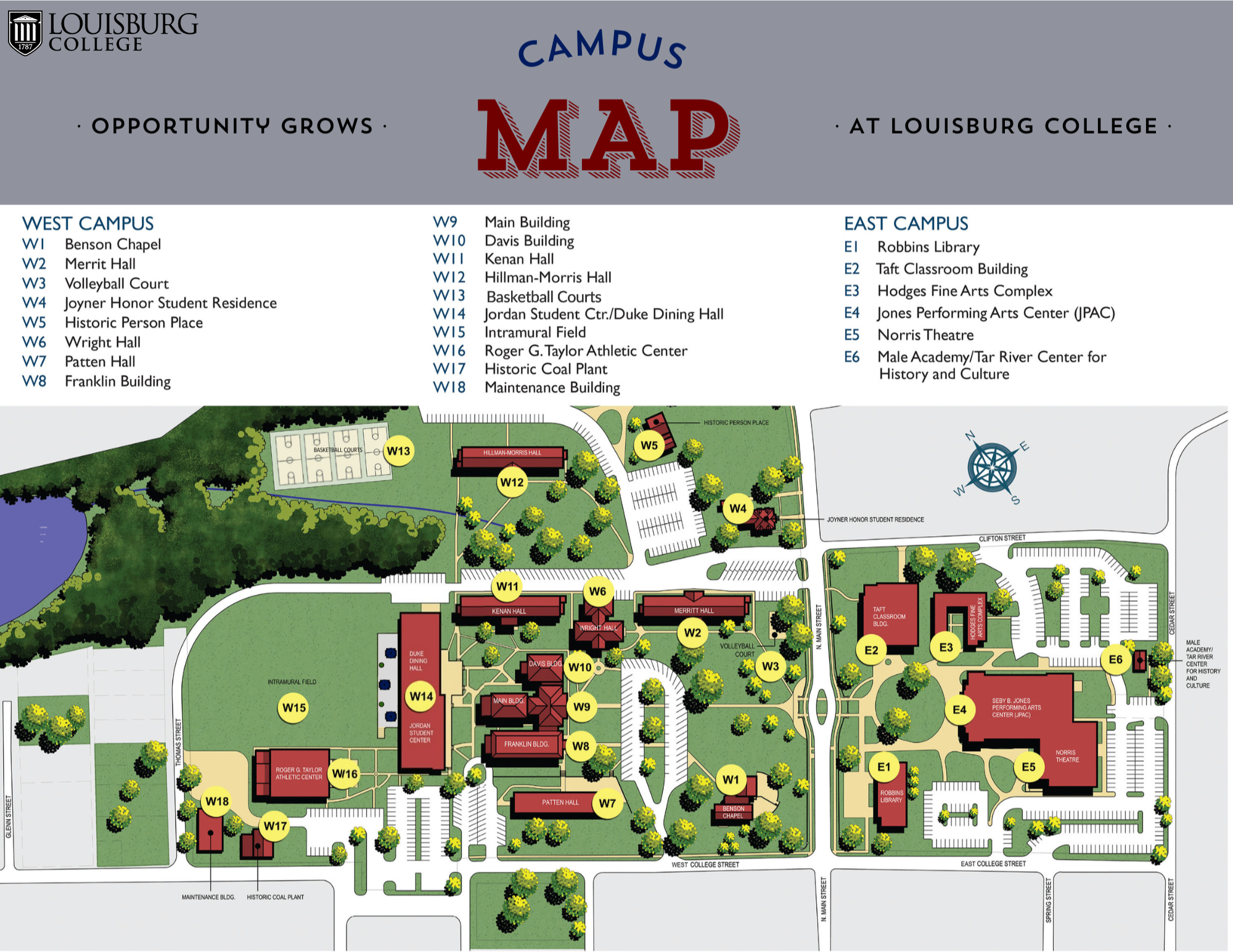
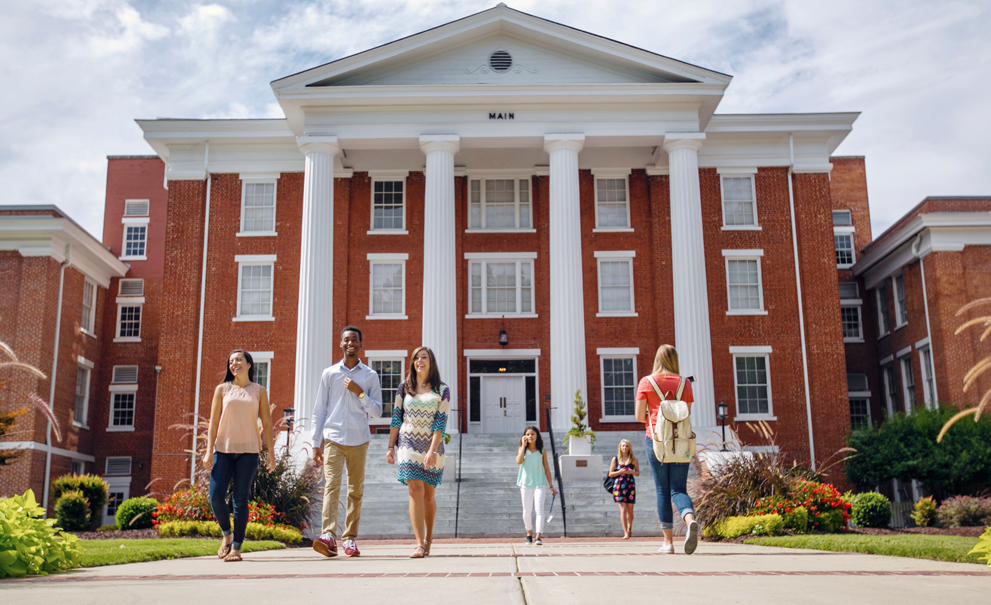
Life on the Louisburg campus is engineered to create a cohesive, all-in community, with the college strongly encouraging—and studies supporting—the benefits of on-campus residence. The administration describes campus life as "vibrant and engaging," offering a "variety of opportunities to get involved, grow academically and socially." This is not a commuter school; the intent is for students to live and learn together. The Office of Student Life organizes structured events like a "Week of Welcome" designed to help students "see familiar faces, and meet new people!" The overall atmosphere is repeatedly characterized as "supportive and close-knit," a direct function of the small size and low student-to-faculty ratio. While specific details on clubs or athletics are not provided in the sources, the emphasis is squarely on building relationships and a shared experience, with the physical campus serving as the hub for that community building.
As a two-year transfer institution, Louisburg's primary success metric is preparing students to move on to a bachelor's degree program, and its graduation rate reflects that mission. The college's reported graduation rate over a five-year period is 33%, which it notes is slightly above the midpoint (30%) for two-year schools. Other sources cite similar figures, ranging from 33% to 39%. For students who do graduate, earnings data shows a trajectory of growth: one year after graduation, median earnings are $12,821, which jumps to $32,810 five years after graduation. The College Scorecard reports a median earnings figure of $34,818 for students ten years after entry. The college actively tracks and reports this graduation data, underscoring its focus on student achievement as a core institutional priority.
Louisburg College is a private institution, and its cost reflects that, though it works to provide aid to a large portion of its students. The average —what students pay after scholarships and grants are applied—is $22,694 per year. Notably, 100% of Louisburg's full-time beginning undergraduates receive some form of grant or scholarship aid. Financial aid is presented as a critical component of financing an education, encompassing "scholarships, grants, and loans." The college offers its own academic scholarships, which are described as closely related to merit awards but often place "more weight on classroom performance and transcript strength." Importantly, the college states that students are "not required to accept" federal loans that may be offered in their financial aid package, giving families agency in their borrowing decisions. The college provides a Net Price Calculator to help families get an early estimate of their costs.
Louisburg College stands out for its unwavering, singular focus: it is a dedicated two-year transfer college that embraces its role as an academic launchpad. Unlike community colleges with vast vocational catalogs or four-year universities with sprawling research ambitions, Louisburg's entire ecosystem—from its eight specific associate degree paths to its emphasis on residential life and academic coaching—is engineered for one purpose: to successfully prepare a student to enter the junior year of a four-year university. It doesn't try to be all things to all people. Instead, it offers a structured, supportive, and intentionally small-scale environment for students who may need a more guided transition to college-level work. The 15:1 student-faculty ratio and the promotion of strategy-based learning support aren't just talking points; they are essential tools for fulfilling this mission. In a higher education landscape often obsessed with prestige and permanence, Louisburg carves out a distinct and valuable niche by being an expert in beginnings.
Louisburg College seal · sourceMap and Directions - Louisburg College · sourceAdmissions - Louisburg College · sourceAdmissions - Louisburg College · source