Admit rate has ranged 60%–78% over the last 5 years — notably volatile. Source: IPEDS via Urban Institute.
Acceptance & SAT from Common Data Set / IPEDS; net price, earnings & graduation from the U.S. Dept. of Education College Scorecard. Figures lag ~1–2 years — verify with the school.
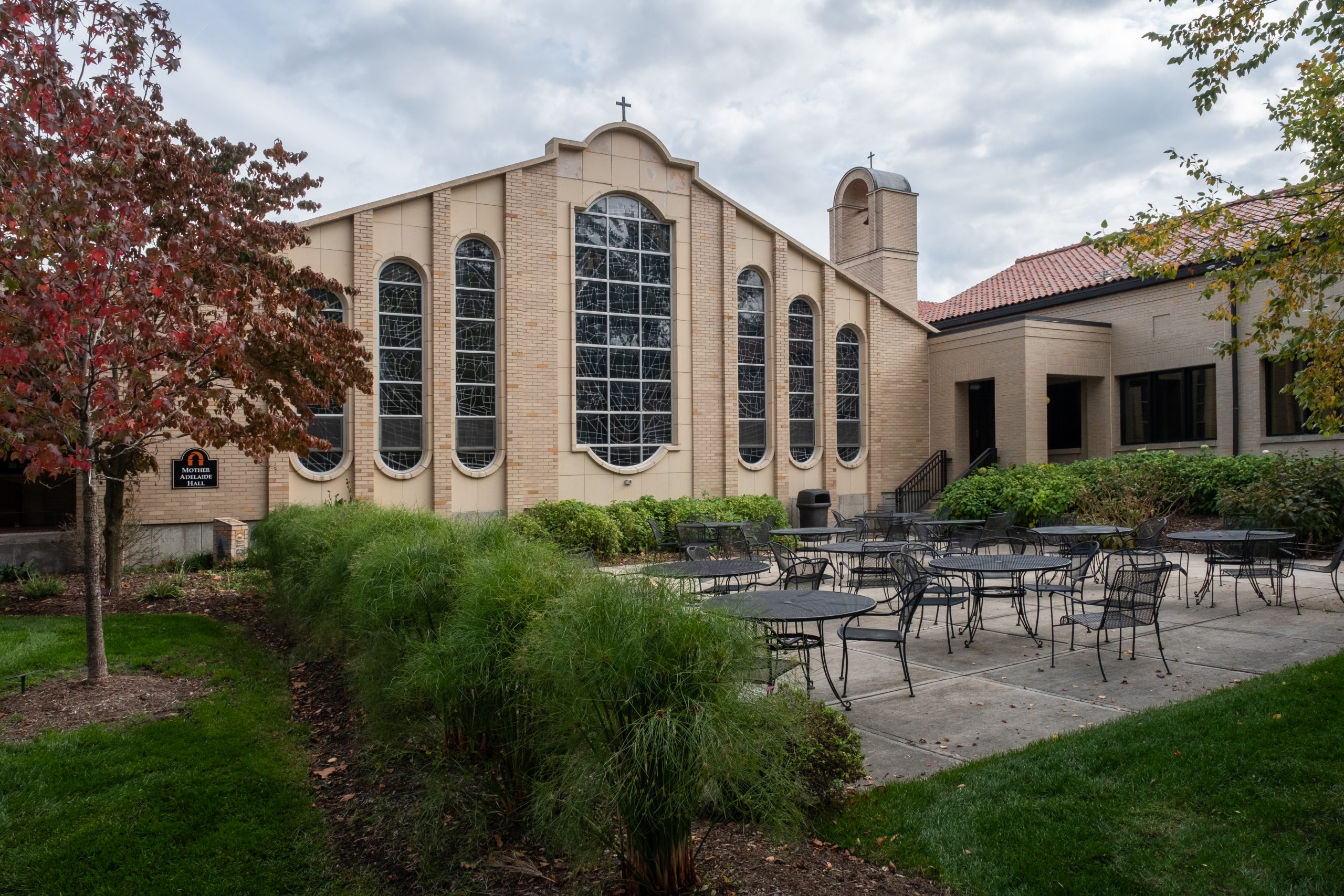
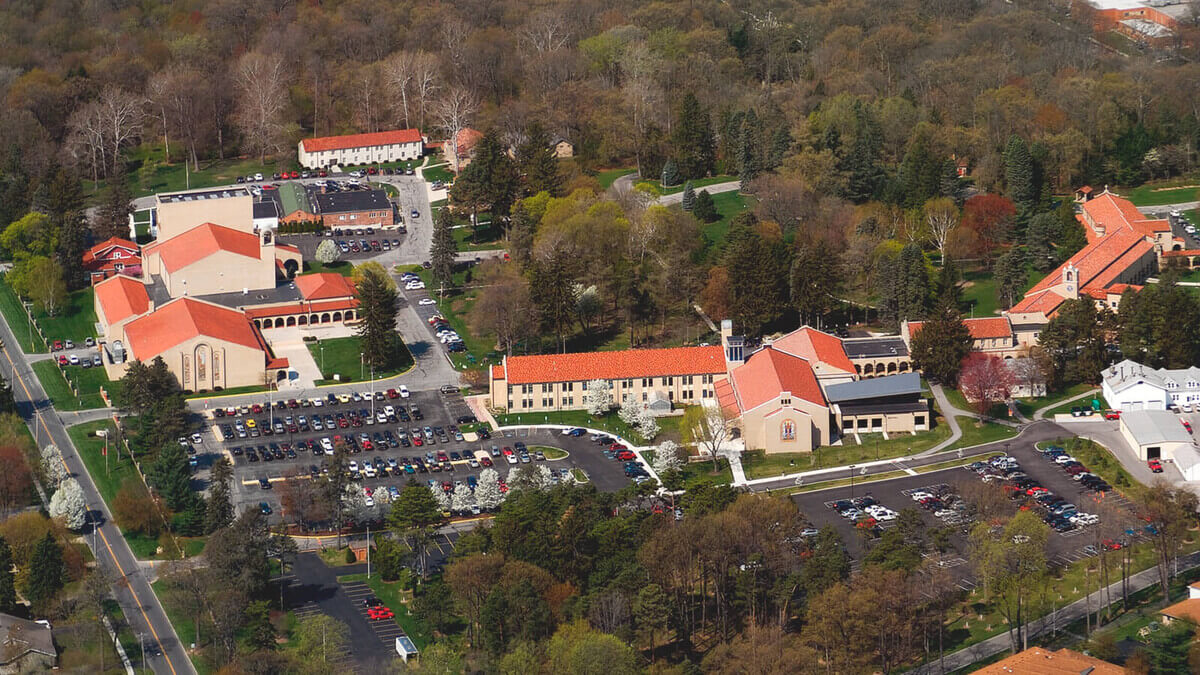
Lourdes University is a small, Catholic Franciscan university in Sylvania, Ohio, where the nursing program is the undisputed heart of campus life and academics. With a mission-driven, values-centered approach, it offers a close-knit, supportive environment for students, particularly those seeking a direct path into healthcare and service professions, though its academic reach extends into business, the arts, and newly launched STEM fields. The profile is one of a regional institution with accessible admissions, a focused career trajectory for many graduates, and a community identity deeply tied to its religious heritage.
Admission requirements
Test-optional — scores considered if submitted
Required
High school transcript
Grade point average
TOEFL (non-native English)
Considered (not required)
Test scores (SAT/ACT)
Source: IPEDS Admissions survey (2022) via Urban Institute. Covers formal factors only — it does not reflect essays, extracurriculars, or other holistic criteria.
More details
Undergrad enrollment
543
In-state tuition
$29,500
Out-of-state tuition
$29,500
Mission
Rooted in Catholic & Franciscan traditions
Graduation Rate
32%
Most Popular Major
Nursing
Student-Faculty Ratio
13:1
Median Earnings (10yr)
$48,150
Freshman Retention Rate
62%
Outcomes & value
Outcomes & value
Median earnings (10 yr)
$48,150
Value (earnings ÷ net price)
2.1×
Median debt at graduation
$27,000
Graduation rate
32%
First-year retention
87%
Reducing loan balance (3 yr)
35%
Pell (lower-income) share
30%
First-gen share (among federal-aid recipients)
34%
Financial health
1.5 / 3.0Meets the federal financial-responsibility standard
U.S. Dept. of Education Financial Responsibility Composite Score (FY2022-23). Scale −1.0 to 3.0; ≥1.5 meets the standard. Reported for private nonprofit & for-profit institutions only — public universities are state-backed and not scored, so this is a stability signal, not a ranking.
Top-earning majors
Median earnings by field of study (highest credential), ~2 years after completion.
Registered Nursing, Nursing Administration, Nursing Research and Clinical Nursing$58,249
Business Administration, Management and Operations$45,198
Human Resources Management and Services$44,384
Accounting and Related Services$41,937
Social Work$37,088
Management Sciences and Quantitative Methods
Campus & location
Campus safety
On-campus violent crimes (2024)
0
Per 1,000 students
0.00
On-campus criminal offenses classed as violent (murder/non-negligent manslaughter, rape, robbery, aggravated assault) for the most recent reported year. Source: U.S. Dept. of Education Campus Safety and Security (Clery Act). Counts reflect what’s reported to the school, and urban campuses often report more partly due to non-student incidents nearby — read alongside campus size and setting, not as a standalone safety verdict.
Climate
Pleasant days / yr
89
Summer high
82°F
Winter low
24°F
Annual rain
35.7"
Annual snow
24.7"
Natural-hazard risk
Relatively Moderate
Pleasant days counts days per year with a mean temperature of 55–75°F, a high at or below 90°F, a low at or above 45°F, and little precipitation — a transparent comfort measure, not a weighting we invented. Computed from Open-Meteo ERA5 daily history (2019–2023). Natural-hazard risk is the county’s composite rating from the FEMA National Risk Index.
Deep dive — research, future-scholar output & economic mobility▾
Research output
Institutional h-index
38
Scholarly works
702
Institutional research volume and impact from OpenAlex. The h-index reflects large research universities and will be low for teaching-focused liberal-arts colleges — not a measure of undergraduate quality.
Economic mobility
Mobility rate
0.2%
Bottom → top quintile
3%
From bottom quintile
5%
Mobility rate = the share of students who both start in the bottom household-income quintile and reach the top quintile; bottom → top is that chance conditional on starting at the bottom. Source: Opportunity Insights Mobility Report Cards (Chetty, Friedman, Saez, Turner & Yagan). Reflects 1980–82 birth cohorts, so it’s directional, not current.
Quick answers
What is the acceptance rate at Lourdes University?
Lourdes University's acceptance rate is approximately 74% (Sylvania, OH), based on the most recent figures we compiled from public and primary sources.
How much does Lourdes University cost?
At Lourdes University, the average net price (after aid) is about $23,206 per year. Actual cost varies with financial aid and residency.
How many undergraduates attend Lourdes University?
Lourdes University enrolls approximately 543 undergraduate students.
Where is Lourdes University located?
Lourdes University is located in Sylvania, OH.
Admissions
Lourdes University operates with a moderately selective, accessible admissions process. The is 74%, positioning it as a school where most applicants are admitted. Standardized testing is optional for most applicants; submission of ACT or SAT scores is only required for students with a high school GPA below 2.75. For those who do submit, middle 50% SAT scores typically range from 850 to 1080, and the average high school GPA of admitted students is 3.26. The admissions office emphasizes a , but the process is notably test-flexible for the majority of candidates. The university does not publish data on Early Decision programs or specific rates, and sources do not indicate that demonstrated interest is a formal factor in admissions decisions.
Key Admissions Details:
Test-Optional Policy: ACT/SAT scores are optional for applicants with a GPA of 2.75 or higher.
Academic Profile: The average admitted student has a 3.26 GPA.
Selectivity: With a 74% acceptance rate, the university is not highly selective, focusing on accessibility.
Earnings = median of students working ~10 years after entry; debt = median of graduates. Value divides 10-yr earnings by one year’s net price — read it as earnings per dollar of annual cost, not a full lifetime ROI; it favors lower-cost schools. Source: U.S. Dept. of Education College Scorecard. Figures lag ~2 years and reflect all students, not your intended major.
$35,060
Psychology, General$33,993
Criminal Justice and Corrections$31,305
Source: U.S. Dept. of Education College Scorecard (field-of-study earnings). Figures cover graduates who received federal aid and lag ~2 years; not all programs report data.
Academics at Lourdes are defined by a strong pre-professional focus, particularly in nursing, within a liberal arts framework rooted in Catholic and Franciscan traditions. The student-faculty ratio is a favorable 13:1, facilitating personal attention. The most popular and largest program by far is Nursing, which awards 37% of all bachelor's degrees. Other common majors include General Business Administration, Biology, Criminal Justice, and Liberal Arts and Humanities. The university is organized into colleges, including the College of Arts & Sciences, which offers programs across the arts, humanities, and sciences. In a recent expansion, Lourdes introduced new majors in Environmental Studies, Business Analytics, Cybersecurity, Data Science, and Supply Chain Management, signaling a push into growing STEM and business fields. However, student satisfaction indicators, such as the freshman retention rate, are reported at 62%, which is below the national average.
Life at Lourdes revolves around a small, close-knit community of just over 800 undergraduates. The university actively promotes a values-centered environment rooted in its Catholic and Franciscan identity, emphasizing that "everyone is valued." Campus involvement is managed through a Student Activities and Recreation Office, which oversees clubs and organizations. While specific club details are limited, mentions include ministries, dance, and an international student group. The residential experience includes campus housing, and athletics and recreation facilities are part of campus life, as highlighted in a campus tour video. The student body handbook serves as a guide for campus living, reflecting the institution's commitment to fostering a community that respects diverse "races, cultures and traditions." The overall vibe is that of a supportive, intimate campus where community is a central tenet.
Outcomes data for Lourdes graduates presents a mixed picture. The university boasts a very high short-term placement rate, reporting that from 2017 through 2022, 99% of graduates achieved career or graduate school placement within one year of graduation (based on a 93% knowledge rate for the most recent year). However, longer-term graduation metrics are more challenging. The six-year graduation rate is reported at 49%, and other sources cite an overall completion rate of 38%. Retention rates show variation, with one source indicating an 87% retention rate. For earnings, the median income ten years after entry is $48,150. Another source notes that graduates earn a median of $55,959 four years after graduation, which it claims is 7% above the national average. The data suggests that for those who persist to graduation, employment outcomes are strong, particularly in high-demand fields like nursing, but the institution faces significant challenges with student retention and completion.
The —the average cost after grants and scholarships—is a critical figure for families considering Lourdes. The average net price after aid is $23,206. Other reported figures are similar, with one source citing an average net price of $22,614 for students receiving aid. The university provides a Net Price Calculator tool to help families estimate their individual costs and financial aid options. Aid packages include scholarships and grants from both institutional and external sources. The university's financial aid guide states that all scholarships and grants not based on federal or state programs must be included in the financial aid package. There is no indication in the provided sources that Lourdes University meets 100% of demonstrated financial need or has a no-loan policy for low-income students; families should plan for a combination of grants, scholarships, and loans to cover costs.
Lourdes University stands out for its singular, mission-driven identity as a small Catholic Franciscan institution where healthcare education—specifically nursing—is the dominant academic and cultural force. It’s not a sprawling liberal arts college with equal emphasis across disciplines; it’s a place where nearly 4 in 10 bachelor's degrees are in nursing, creating a campus atmosphere geared toward professional preparation and service. This focus is coupled with a genuinely supportive, close-knit community (a 13:1 student-faculty ratio) that actively lives out its values-centered mission. While it grapples with retention and graduation rates common to many regional institutions, its outcomes data reveals a compelling trade-off: for those who graduate, job placement is virtually assured, with a 99% rate within a year. The recent addition of majors in cybersecurity, data science, and supply chain management shows an attempt to build similar career pathways in other high-demand fields without diluting its core identity. For a student seeking a direct, values-aligned route into healthcare or other professional studies within a supportive environment, Lourdes offers a distinct and purposeful alternative to larger, more impersonal universities.
Lourdes University seal · sourceAbout Lourdes – Lourdes University · sourceLourdes University — Admissions, Tuition & Acceptance Rate | Appily · sourceLourdes University Video Campus Tour - YouTube · source