Admit rate has ranged 67%–81% over the last 5 years — notably volatile. Source: IPEDS via Urban Institute.
Acceptance & SAT from Common Data Set / IPEDS; net price, earnings & graduation from the U.S. Dept. of Education College Scorecard. Figures lag ~1–2 years — verify with the school.
Loyola University Chicago is a large, urban Jesuit institution that trades the cloistered quad for the energy of Chicago's Rogers Park and Water Tower neighborhoods. It's a school for practical, service-minded students drawn to its powerhouse nursing and business programs, and for those who want a traditional campus experience without sacrificing the internships and cultural life of a major city. The vibe is friendly, moderately selective, and heavily pre-professional, with a Jesuit emphasis on social justice that manifests in both the curriculum and the staggering number of students who stay in Chicago after graduation.
Admission requirements
Test-optional — scores considered if submitted
Required
Grade point average
Letters of recommendation
TOEFL (non-native English)
Considered (not required)
High school transcript
Class rank
Test scores (SAT/ACT)
College-prep program
Source: IPEDS Admissions survey (2022) via Urban Institute. Covers formal factors only — it does not reflect essays, extracurriculars, or other holistic criteria.
More details
Undergrad enrollment
11,737
In-state tuition
$53,710
Out-of-state tuition
$53,710
No-Loan Policy
No
Graduation Rate
73%
Meets Full Need
No
On-Campus Housing
43%
Most Popular Majors
Business (20%), Health Professions (19%)
Graduates in Chicago
73.7%
Demonstrated Interest
Not considered
Student-Faculty Ratio
13:1
Median Earnings (10yr)
$71,530
Outcomes & value
Outcomes & value
Median earnings (10 yr)
$71,530
Value (earnings ÷ net price)
2.0×
Median debt at graduation
$24,157
Graduation rate
73%
First-year retention
82%
Reducing loan balance (3 yr)
75%
Pell (lower-income) share
24%
First-gen share (among federal-aid recipients)
28%
Financial health
3.0 / 3.0Meets the federal financial-responsibility standard
U.S. Dept. of Education Financial Responsibility Composite Score (FY2022-23). Scale −1.0 to 3.0; ≥1.5 meets the standard. Reported for private nonprofit & for-profit institutions only — public universities are state-backed and not scored, so this is a stability signal, not a ranking.
Top-earning majors
Median earnings by field of study (highest credential), ~2 years after completion.
Registered Nursing, Nursing Administration, Nursing Research and Clinical Nursing$66,195
Management Information Systems and Services$66,029
Accounting and Related Services$61,380
Finance and Financial Management Services$56,544
Business/Managerial Economics$55,061
Human Resources Management and Services
Applicants here also applied to
The schools that most often appear alongside Loyola University Chicago on applicants’ lists, from our self-reported outcomes corpus.
On-campus criminal offenses classed as violent (murder/non-negligent manslaughter, rape, robbery, aggravated assault) for the most recent reported year. Source: U.S. Dept. of Education Campus Safety and Security (Clery Act). Counts reflect what’s reported to the school, and urban campuses often report more partly due to non-student incidents nearby — read alongside campus size and setting, not as a standalone safety verdict.
Climate
Pleasant days / yr
91
Summer high
78°F
Winter low
23°F
Annual rain
46.1"
Annual snow
31.7"
Natural-hazard risk
Very High
Pleasant days counts days per year with a mean temperature of 55–75°F, a high at or below 90°F, a low at or above 45°F, and little precipitation — a transparent comfort measure, not a weighting we invented. Computed from Open-Meteo ERA5 daily history (2019–2023). Natural-hazard risk is the county’s composite rating from the FEMA National Risk Index.
Deep dive — research, future-scholar output & economic mobility▾
Research output
Institutional h-index
493
Scholarly works
48,732
Institutional research volume and impact from OpenAlex. The h-index reflects large research universities and will be low for teaching-focused liberal-arts colleges — not a measure of undergraduate quality.
Economic mobility
Mobility rate
3.1%
Bottom → top quintile
38%
From bottom quintile
8%
Mobility rate = the share of students who both start in the bottom household-income quintile and reach the top quintile; bottom → top is that chance conditional on starting at the bottom. Source: Opportunity Insights Mobility Report Cards (Chetty, Friedman, Saez, Turner & Yagan). Reflects 1980–82 birth cohorts, so it’s directional, not current.
Quick answers
What is the acceptance rate at Loyola University Chicago?
Loyola University Chicago's acceptance rate is approximately 82% (Chicago, IL), based on the most recent figures we compiled from public and primary sources.
What SAT score do you need for Loyola University Chicago?
Admitted students at Loyola University Chicago typically score 1170–1360 on the SAT (the middle-50% range). Scores outside this band are still admitted, especially with strong applications.
How much does Loyola University Chicago cost?
At Loyola University Chicago, the average net price (after aid) is about $36,079 per year. Actual cost varies with financial aid and residency.
How many undergraduates attend Loyola University Chicago?
Loyola University Chicago enrolls approximately 11,737 undergraduate students.
Where is Loyola University Chicago located?
Loyola University Chicago is located in Chicago, IL.
Admissions
Loyola's admissions process is moderately selective, with an of 82%. The university is , meaning ACT and SAT scores are not required for admission. For those who do submit, the middle 50% SAT range is 1170–1360. Academic preparation is the clear priority: the mean weighted cumulative high school GPA for admitted students is 3.82. The university does not consider demonstrated interest as a factor in admissions decisions. While Loyola offers an Early Decision option, specific acceptance rates and the share of the class filled through ED are not detailed in the provided sources. The rate—the percentage of admitted students who enroll—is notably low, sitting around 8.6%, indicating that many admitted students ultimately choose other institutions.
Earnings = median of students working ~10 years after entry; debt = median of graduates. Value divides 10-yr earnings by one year’s net price — read it as earnings per dollar of annual cost, not a full lifetime ROI; it favors lower-cost schools. Source: U.S. Dept. of Education College Scorecard. Figures lag ~2 years and reflect all students, not your intended major.
$53,358
International Business$53,358
Computer and Information Sciences, General$52,107
Source: U.S. Dept. of Education College Scorecard (field-of-study earnings). Figures cover graduates who received federal aid and lag ~2 years; not all programs report data.
Co-application frequency from self-reported results — directional peer discovery, not a recommendation.
Academics
Loyola offers over 90 undergraduate majors and minors, anchored by a pragmatic, pre-professional curriculum. The most popular fields are unmistakably career-oriented: Business, Management, Marketing, and Related Support Services (20%) and Health Professions and Related Programs (19%) lead the list for recent graduates. Nursing is the single most popular major, followed by Biology, Psychology, Political Science, and Marketing. The student-faculty ratio is 13:1, suggesting the potential for accessible instruction despite the university's size. The academic culture is described as "rigorous and fascinating," developing "intellectual and socially responsible students" in line with its Jesuit ideals. The university earns recognition in rankings for undergraduate teaching and value.
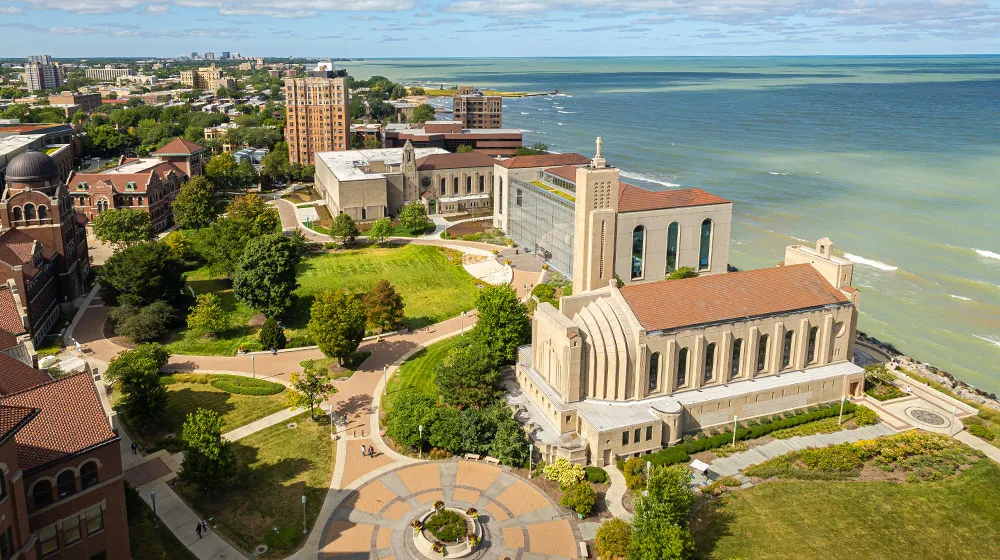
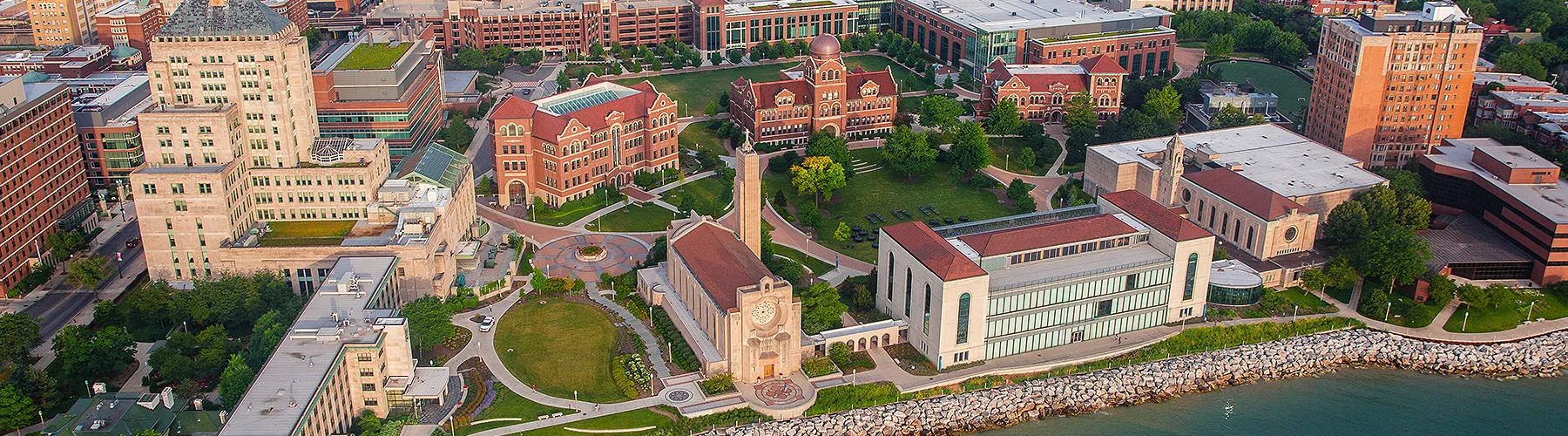
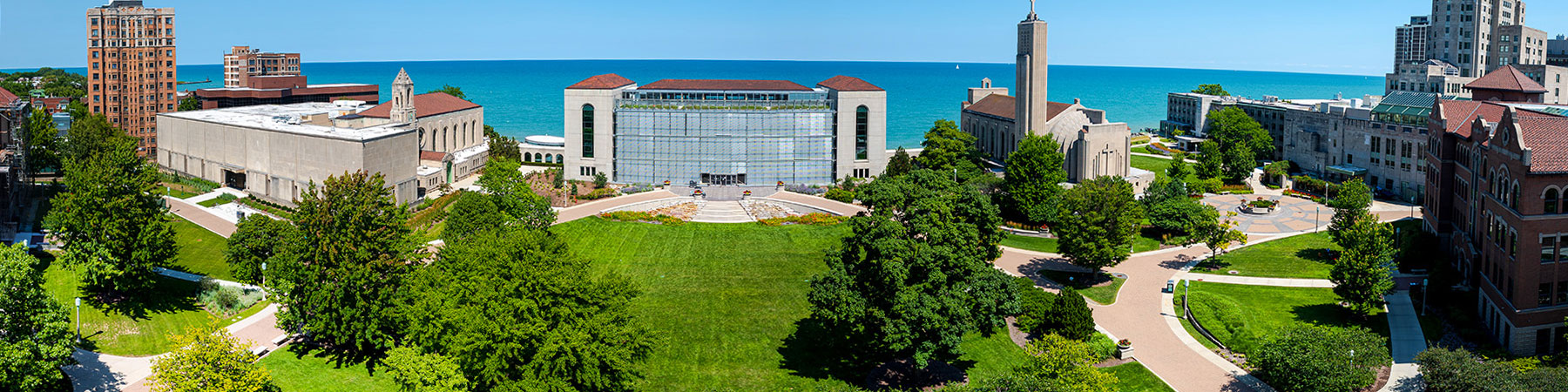
Life at Loyola is split between two primary campuses: the expansive, residential Lake Shore Campus in Rogers Park and the sleek, downtown Water Tower Campus near the Magnificent Mile. This duality defines the experience: students can enjoy a traditional quad and lakefront views while having easy access to Chicago's professional and cultural heart. About 43% of students live in college-owned, -operated, or -affiliated housing, meaning a slight majority lives off-campus. Student involvement is robust, with a wide array of clubs spanning professional fraternities, dance, a cappella, academic societies, and cultural groups. The overall atmosphere is described as vibrant, with campus life supporting students through dining, wellness, recreation, and community opportunities.
Loyola graduates see strong, tangible results, particularly in their immediate connection to the Chicago job market. A remarkable 99.5% of recent graduates reported being employed, continuing education, volunteering, or enlisted shortly after graduation. Of those employed, 73.7% remained in Chicago. The median salary across all reported employed graduates was $57,089. The six-year graduation rate is 76%, which places it in the top 20% of institutions. The four-year graduation rate is 69%. Early career earnings for graduates average around $45,000, aligning with expectations given the mix of majors.
The average after aid is $36,079. Loyola is not a "no-loan" institution and does not meet 100% of demonstrated financial need for all families; its financial aid awards may not cover the entire , leaving families responsible for securing additional financing. However, the university is generous with aid distribution: 98% of full-time beginning undergraduates receive grant or scholarship aid. The average financial aid package is $46,999. Students with high GPAs (3.8+), leadership roles, or unique talents are often awarded significant merit scholarships, ranging from $20,000 to $40,000.
Loyola University Chicago carves out a distinctive niche by seamlessly merging a classic, service-oriented Jesuit education with the immense opportunities of a world-class city. It's not just in Chicago; it's of Chicago, as evidenced by the overwhelming majority of graduates who launch their careers there. The university's identity is built on this practical partnership: you can study nursing in state-of-the-art facilities and complete clinicals in top-tier hospitals, or major in business and walk to internships on Michigan Avenue. This urban integration, combined with a sprawling residential campus on the lake, offers a 'best of both worlds' scenario. Furthermore, its focus on social justice—a pillar of Jesuit education—moves beyond the theoretical, driving community engagement and shaping graduates who are not only employable but ethically minded. For students seeking a supportive, values-driven community without sacrificing professional ambition and big-city access, Loyola is a compelling and unique choice.
Loyola University Chicago seal · sourceCampus Life | Loyola University Chicago · sourceHomepage | Loyola University Chicago · sourceVisit | Loyola University Chicago · source