Admit rate has ranged 74%–83% over the last 5 years — notably volatile. Source: IPEDS via Urban Institute.
Acceptance & SAT from Common Data Set / IPEDS; net price, earnings & graduation from the U.S. Dept. of Education College Scorecard. Figures lag ~1–2 years — verify with the school.
Lynn University is a small, private university in Boca Raton, Florida, where palm trees and proximity to the beach blur the line between campus life and vacation. With an acceptance rate of 73%, Lynn is accessible but punches above its weight in niche areas like sports management and international business. Its tight-knit classes (averaging 16-18 students) and emphasis on global perspectives give it a distinctly hands-on, personalized vibe—though its 53% graduation rate suggests some students struggle to cross the finish line.
Admission requirements
Test-optional — scores considered if submitted
Required
High school transcript
Grade point average
TOEFL (non-native English)
Considered (not required)
Letters of recommendation
Test scores (SAT/ACT)
College-prep program
Demonstrated competencies
Source: IPEDS Admissions survey (2022) via Urban Institute. Covers formal factors only — it does not reflect essays, extracurriculars, or other holistic criteria.
More details
Undergrad enrollment
2,859
In-state tuition
$44,480
Out-of-state tuition
$44,480
Location
Boca Raton, FL
Avg. Class Size
16–18 students
Graduation Rate
53% (6-year)
On-Campus Housing
52% of students
Most Popular Major
International Business/Trade
Median Earnings After 1 Year
$36,427
Outcomes & value
Outcomes & value
Median earnings (10 yr)
$49,006
Value (earnings ÷ net price)
1.1×
Median debt at graduation
$17,940
Graduation rate
52%
First-year retention
77%
Reducing loan balance (3 yr)
56%
Pell (lower-income) share
23%
First-gen share (among federal-aid recipients)
27%
Financial health
2.7 / 3.0Meets the federal financial-responsibility standard
U.S. Dept. of Education Financial Responsibility Composite Score (FY2022-23). Scale −1.0 to 3.0; ≥1.5 meets the standard. Reported for private nonprofit & for-profit institutions only — public universities are state-backed and not scored, so this is a stability signal, not a ranking.
Top-earning majors
Median earnings by field of study (highest credential), ~2 years after completion.
Criminal Justice and Corrections$45,198
Hospitality Administration/Management$44,942
Business Administration, Management and Operations$37,568
Public Relations, Advertising, and Applied Communication$33,459
Radio, Television, and Digital Communication$32,925
Psychology, General
Campus & location
Campus safety
On-campus violent crimes (2024)
1
Per 1,000 students
0.28
On-campus criminal offenses classed as violent (murder/non-negligent manslaughter, rape, robbery, aggravated assault) for the most recent reported year. Source: U.S. Dept. of Education Campus Safety and Security (Clery Act). Counts reflect what’s reported to the school, and urban campuses often report more partly due to non-student incidents nearby — read alongside campus size and setting, not as a standalone safety verdict.
Climate
Pleasant days / yr
97
Summer high
87°F
Winter low
64°F
Annual rain
68.3"
Natural-hazard risk
Relatively High
Pleasant days counts days per year with a mean temperature of 55–75°F, a high at or below 90°F, a low at or above 45°F, and little precipitation — a transparent comfort measure, not a weighting we invented. Computed from Open-Meteo ERA5 daily history (2019–2023). Natural-hazard risk is the county’s composite rating from the FEMA National Risk Index.
Deep dive — research, future-scholar output & economic mobility▾
Research output
Institutional h-index
155
Scholarly works
4,613
Institutional research volume and impact from OpenAlex. The h-index reflects large research universities and will be low for teaching-focused liberal-arts colleges — not a measure of undergraduate quality.
Economic mobility
Mobility rate
1.8%
Bottom → top quintile
24%
From bottom quintile
7%
Mobility rate = the share of students who both start in the bottom household-income quintile and reach the top quintile; bottom → top is that chance conditional on starting at the bottom. Source: Opportunity Insights Mobility Report Cards (Chetty, Friedman, Saez, Turner & Yagan). Reflects 1980–82 birth cohorts, so it’s directional, not current.
Quick answers
What is the acceptance rate at Lynn University?
Lynn University's acceptance rate is approximately 73% (Boca Raton, FL), based on the most recent figures we compiled from public and primary sources.
What SAT score do you need for Lynn University?
Admitted students at Lynn University typically score 1040–1200 on the SAT (the middle-50% range). Scores outside this band are still admitted, especially with strong applications.
How much does Lynn University cost?
At Lynn University, the average net price (after aid) is about $44,089 per year. Actual cost varies with financial aid and residency.
How many undergraduates attend Lynn University?
Lynn University enrolls approximately 2,859 undergraduate students.
Where is Lynn University located?
Lynn University is located in Boca Raton, FL.
Admissions
Lynn University is moderately selective, admitting 73% of applicants—a rate that has held steady in recent years. The middle 50% of admitted students score between 1038–1200 on the SAT or comparable ACT scores, though the school is test-optional. Notably, 75% of female applicants were admitted in recent data, slightly higher than the overall rate. Lynn offers early action but no binding early decision option. The admissions process emphasizes , with no requirement for demonstrated interest or interviews.
Earnings = median of students working ~10 years after entry; debt = median of graduates. Value divides 10-yr earnings by one year’s net price — read it as earnings per dollar of annual cost, not a full lifetime ROI; it favors lower-cost schools. Source: U.S. Dept. of Education College Scorecard. Figures lag ~2 years and reflect all students, not your intended major.
$20,140
Sports, Kinesiology, and Physical Education/Fitness$18,309
Source: U.S. Dept. of Education College Scorecard (field-of-study earnings). Figures cover graduates who received federal aid and lag ~2 years; not all programs report data.
Lynn’s academic identity revolves around small classes (averaging 16–18 students) and applied learning, with particular strength in business, psychology, and sports management. The most popular major is international business/trade, which awards about 61 degrees annually—nearly double the next closest program. The College of Business and Management offers hospitality-focused tracks, capitalizing on Florida’s tourism industry. Lynn’s core curriculum emphasizes critical thinking and communication, though the school lacks the breadth of larger universities. Notably, 52% of students graduate within 6 years, below the national average for private institutions.
Life at Lynn is sun-soaked and socially active, with 52% of students living on campus in Boca Raton’s resort-like setting. The university leans into its Florida location with beach outings and club sports, while cultural programming covers LGBTQ+ issues, race, and global awareness. Instagram posts from student affairs show a focus on wellness initiatives and small-group bonding. However, Niche reviews hint at a party scene that can distract from academics. With no football team, athletics center around soccer and basketball, and the lack of Greek life shifts social energy toward clubs and intramurals.
Lynn’s 53% graduation rate lags behind national benchmarks, but alumni who persist see strong returns: within five years, they earn 12% more than the national average. The median salary one year post-graduation is $36,427, though this varies widely by major (international business grads likely fare better). About 44% finish in four years, suggesting some students struggle with pacing or financial barriers. The university doesn’t publish detailed employment stats, but its Boca Raton location provides networking opportunities in hospitality and entrepreneurship.
At $39,582 net price (after aid), Lynn is pricey but negotiable: 45.57% of students receive financial aid, with an average package of $28,876. The sticker price includes tuition, housing, and fees, though off-campus living is common (48% of students). Scholarships target academics and talent, but the March 1 financial aid deadline catches some families off guard. The calculator suggests significant variability—some students pay far less, while others shoulder heavy debt. For context, Lynn’s costs align with similar private Florida schools but exceed state university benchmarks.
Lynn’s small size is its superpower: students rave about professors who know their names and projects tailored to their goals, especially in business and communications. The Boca Raton location means internships at resorts, startups, and multinational firms are a short drive away. But the university’s real edge is its flexibility— admissions, no core curriculum rigidity, and a chill Florida vibe that attracts students allergic to cutthroat competition. Just don’t mistake that ease for lack of rigor: Lynn’s best programs demand hustle, and the 12% earnings boost for grads proves it pays off for those who engage.
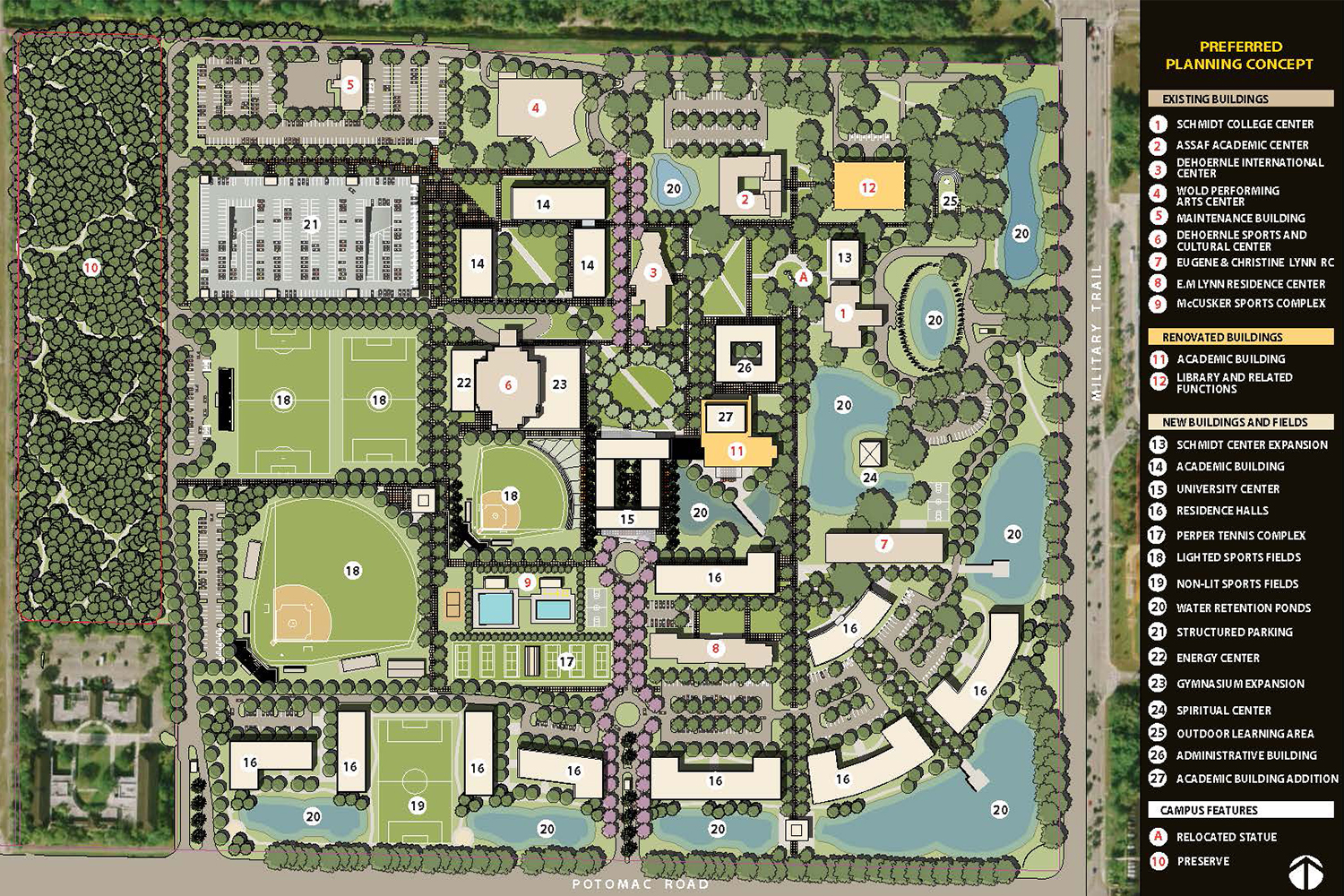
Lynn University logo · sourceUniversity Center | Lynn University · sourceLynn University Masterplan - Buro Happold · sourceApply to colleges in Florida | College Consultants · source