Admit rate has ranged 52%–93% over the last 5 years — notably volatile. Source: IPEDS via Urban Institute.
Acceptance & SAT from Common Data Set / IPEDS; net price, earnings & graduation from the U.S. Dept. of Education College Scorecard. Figures lag ~1–2 years — verify with the school.
Madonna University is a small, Catholic institution in suburban Livonia, Michigan, that operates less like a selective university and more like a practical, values-driven training ground for the regional workforce. Its identity is anchored in health professions and business, offering a close-knit, supportive environment where the vast majority of students commute and the focus is squarely on career readiness and service. This isn't a place for sprawling Greek life or cutthroat academic competition; it's for students seeking a direct, faith-infused path to a stable profession, particularly in nursing and management.
Admission requirements
Test-optional — scores considered if submitted
Required
Grade point average
Demonstrated competencies
TOEFL (non-native English)
Considered (not required)
Class rank
Letters of recommendation
Test scores (SAT/ACT)
College-prep program
Source: IPEDS Admissions survey (2022) via Urban Institute. Covers formal factors only — it does not reflect essays, extracurriculars, or other holistic criteria.
More details
Undergrad enrollment
1,632
In-state tuition
$28,440
Out-of-state tuition
$28,440
Graduation Rate
60%
On-Campus Housing
26%
Most Popular Majors
Health Professions, Business
Median Earnings (10yr)
$59,058
First-Year Aid Recipients
98%
Average Debt at Graduation
$26,754
Outcomes & value
Outcomes & value
Median earnings (10 yr)
$59,058
Value (earnings ÷ net price)
3.3×
Median debt at graduation
$23,000
Graduation rate
60%
First-year retention
72%
Reducing loan balance (3 yr)
48%
Pell (lower-income) share
30%
First-gen share (among federal-aid recipients)
42%
Financial health
2.2 / 3.0Meets the federal financial-responsibility standard
U.S. Dept. of Education Financial Responsibility Composite Score (FY2022-23). Scale −1.0 to 3.0; ≥1.5 meets the standard. Reported for private nonprofit & for-profit institutions only — public universities are state-backed and not scored, so this is a stability signal, not a ranking.
Top-earning majors
Median earnings by field of study (highest credential), ~2 years after completion.
Registered Nursing, Nursing Administration, Nursing Research and Clinical Nursing$59,066
Criminal Justice and Corrections$41,342
Business Administration, Management and Operations$38,289
Legal Support Services$27,439
Source: U.S. Dept. of Education College Scorecard (field-of-study earnings). Figures cover graduates who received federal aid and lag ~2 years; not all programs report data.
On-campus criminal offenses classed as violent (murder/non-negligent manslaughter, rape, robbery, aggravated assault) for the most recent reported year. Source: U.S. Dept. of Education Campus Safety and Security (Clery Act). Counts reflect what’s reported to the school, and urban campuses often report more partly due to non-student incidents nearby — read alongside campus size and setting, not as a standalone safety verdict.
Climate
Pleasant days / yr
91
Summer high
82°F
Winter low
23°F
Annual rain
37.6"
Annual snow
29.6"
Natural-hazard risk
Relatively High
Pleasant days counts days per year with a mean temperature of 55–75°F, a high at or below 90°F, a low at or above 45°F, and little precipitation — a transparent comfort measure, not a weighting we invented. Computed from Open-Meteo ERA5 daily history (2019–2023). Natural-hazard risk is the county’s composite rating from the FEMA National Risk Index.
Deep dive — research, future-scholar output & economic mobility▾
Research output
Institutional h-index
60
Scholarly works
561
Institutional research volume and impact from OpenAlex. The h-index reflects large research universities and will be low for teaching-focused liberal-arts colleges — not a measure of undergraduate quality.
Economic mobility
Mobility rate
1.6%
Bottom → top quintile
25%
From bottom quintile
7%
Mobility rate = the share of students who both start in the bottom household-income quintile and reach the top quintile; bottom → top is that chance conditional on starting at the bottom. Source: Opportunity Insights Mobility Report Cards (Chetty, Friedman, Saez, Turner & Yagan). Reflects 1980–82 birth cohorts, so it’s directional, not current.
Quick answers
What is the acceptance rate at Madonna University?
Madonna University's acceptance rate is approximately 63% (Livonia, MI), based on the most recent figures we compiled from public and primary sources.
What SAT score do you need for Madonna University?
Admitted students at Madonna University typically score 880–1080 on the SAT (the middle-50% range). Scores outside this band are still admitted, especially with strong applications.
How much does Madonna University cost?
At Madonna University, the average net price (after aid) is about $17,755 per year. Actual cost varies with financial aid and residency.
How many undergraduates attend Madonna University?
Madonna University enrolls approximately 1,632 undergraduate students.
Where is Madonna University located?
Madonna University is located in Livonia, MI.
Admissions
Madonna University's admissions process is best characterized as accessible and straightforward, prioritizing access over selectivity. The university admits a significant majority of its applicants, with recent reported around 63%. This approach aligns with its mission as a regional, career-focused institution. The middle 50% SAT range for admitted students who submit scores falls between 880 and 1080, indicating a broad academic profile among the incoming class. While the university provides an undergraduate catalog detailing requirements for admission and graduation, its process does not appear to hinge on the hyper-competitive factors like early decision or demonstrated interest that dominate admissions at more selective schools. The trend shows a recent decline in the number of admissions, suggesting potential shifts in applicant volume or institutional strategy.
The academic engine at Madonna is unmistakably geared toward practical, in-demand fields. Health professions and related programs, followed by business, management, marketing, and related support services, are the most popular majors. This focus is reflected in the specific popular programs identified as Registered Nursing and Business Administration and Management. The university offers a wide curricular range across over 60 bachelor's degrees, 70 certificates, and 30 master's and doctoral programs, providing numerous pathways for career advancement and specialization. Student reports describe a solid academic foundation with challenging and engaging coursework, particularly within these strong professional programs. The academic structure supports educational access and student success, with an emphasis on affordability and unique programs designed to meet regional needs.
Earnings = median of students working ~10 years after entry; debt = median of graduates. Value divides 10-yr earnings by one year’s net price — read it as earnings per dollar of annual cost, not a full lifetime ROI; it favors lower-cost schools. Source: U.S. Dept. of Education College Scorecard. Figures lag ~2 years and reflect all students, not your intended major.
Campus life at Madonna is defined by its commuter majority and close-knit, supportive atmosphere. Only about 26% of students live in college-owned, -operated, or -affiliated housing, with the overwhelming 74% living off-campus. This creates a campus vibe that is active during the day but less centered on traditional residential college experiences. The university fosters community through clubs and organizations, managed by a dedicated Campus Life office, and promotes a values-driven education grounded in its Catholic tradition. The environment is described as safe, positive, and nurturing, with a commitment to diversity and inclusion where individuals are free to explore their evolving self-identity. Student life includes opportunities for community engagement, such as urban garden outreach, reflecting the institution's service-oriented mission.
Outcomes for Madonna graduates tell a story of steady, middle-class career placement, heavily influenced by its popular majors. The overall graduation rate is approximately 60%, with a four-year graduation rate notably lower, around 41%, indicating many students take longer, likely due to factors like part-time attendance or balancing work and study common at commuter schools. Early career earnings for graduates average in the low $40,000s, which is described as about what might be expected given the mix of majors. Longer-term earnings data shows growth, with median earnings reaching into the mid-$50,000s to nearly $60,000 several years after graduation. A significant majority of graduating students (71%) have borrowed to finance their education, with the average debt at graduation reported as $26,754.
Madonna University is a private institution with a published tuition of $29,580, but the —the average cost after aid and scholarships—is significantly lower. The university emphasizes affordability and encourages all students to investigate scholarships, grants, and loans. An overwhelming 98% of full-time beginning undergraduates receive grant or scholarship aid. The average net cost after this aid is applied is $17,755 per year. The Financial Aid Office strongly recommends using the Net Price Calculator and submitting the FAFSA to determine individual eligibility, as the final net cost depends on each student's specific financial situation. The university offers a renewable financial award for students who continue to demonstrate financial need as confirmed by the FAFSA, provided they remain full-time.
Madonna University stands out for its unwavering, pragmatic focus on channeling students—particularly and commuter students—into stable, regional careers in healthcare and business. It doesn't aspire to be a prestigious liberal arts college or a research powerhouse; its distinctiveness lies in being a direct, values-explicit pipeline to the professional workforce. The campus culture is built on Catholic tradition and a supportive, close-knit community that actively engages with the surrounding area, a stark contrast to the insular “college town” model. Its academic portfolio of over 60 bachelor's and numerous graduate certificates is deliberately tailored to market demands. While graduation rates and earnings may not make headlines, they represent solid, achievable outcomes for the population it serves: students seeking a affordable, career-oriented education with a strong ethical foundation, not an ivory tower experience.
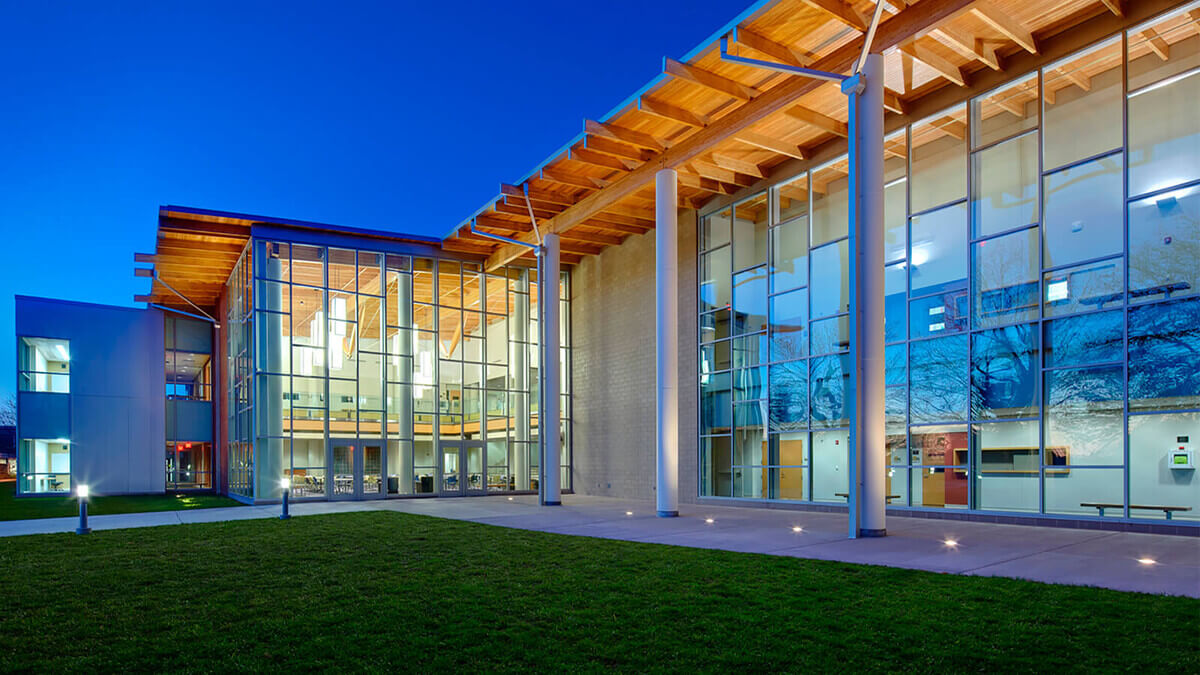
Madonna University seal · sourceMadonna University - Wikipedia · sourceMadonna University Campus Tour · sourceMadonna University — Admissions, Tuition & Acceptance Rate | Appily · source