Loading…
← All schools
Maharishi International University
Fairfield, IAprivate nonprofitmiu.edu
Acceptance
96%
Avg net price
$14,956
Earnings (10 yr)
$27,981
Graduation rate
50%
Admit rate has ranged 81%–100% over the last 5 years — notably volatile. Source: IPEDS via Urban Institute.
Acceptance & SAT from Common Data Set / IPEDS; net price, earnings & graduation from the U.S. Dept. of Education College Scorecard. Figures lag ~1–2 years — verify with the school.
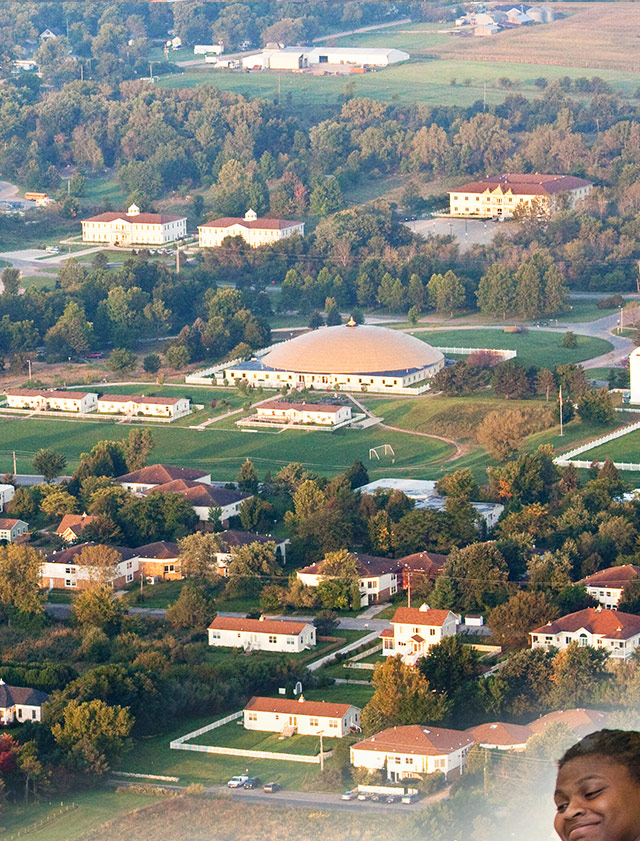
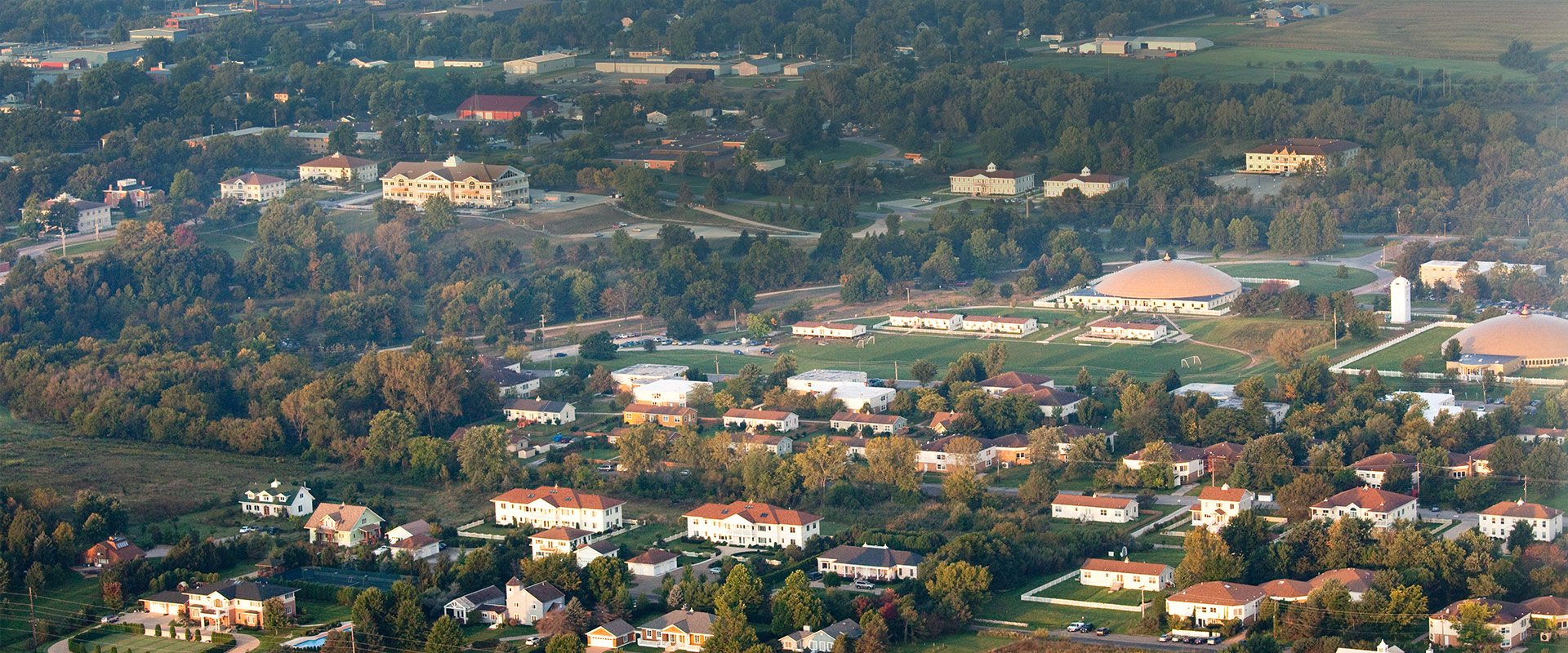
Maharishi International University is not just a university; it's a holistic experiment in consciousness-based education, built around the daily practice of Transcendental Meditation. In the cornfields of Fairfield, Iowa, it offers a deeply unconventional campus life defined by organic vegetarian meals, a focus on wellness, and academic programs that blend traditional disciplines with a unique spiritual philosophy. This is a place for students seeking a total immersion in a specific lifestyle, where the classroom and the meditation cushion are equally central to the experience.
Admission requirements
Test-blind — scores not considered
Required
- High school transcript
- Grade point average
- Letters of recommendation
- TOEFL (non-native English)
Source: IPEDS Admissions survey (2022) via Urban Institute. Covers formal factors only — it does not reflect essays, extracurriculars, or other holistic criteria.
More details
- Undergrad enrollment
- 922
- In-state tuition
- $16,530
- Out-of-state tuition
- $16,530
- Graduation Rate
- 50%
- Standardized Tests
- Not required or recommended
- Application Deadline
- Rolling
- Student-Faculty Ratio
- 13:1
- Median Earnings (10yr)
- $27,981
- Students Receiving Aid
- >90%
Outcomes & value
Outcomes & value
- Median earnings (10 yr)
- $27,981
- Value (earnings ÷ net price)
- 1.9×
- Median debt at graduation
- $24,781
- Graduation rate
- 50%
- First-year retention
- 61%
- Reducing loan balance (3 yr)
- 56%
- Pell (lower-income) share
- 57%
- First-gen share (among federal-aid recipients)
- 34%
Financial health
2.9 / 3.0Meets the federal financial-responsibility standard
U.S. Dept. of Education Financial Responsibility Composite Score (FY2022-23). Scale −1.0 to 3.0; ≥1.5 meets the standard. Reported for private nonprofit & for-profit institutions only — public universities are state-backed and not scored, so this is a stability signal, not a ranking.
Top-earning majors
Median earnings by field of study (highest credential), ~2 years after completion.
- Communication and Media Studies$18,498
Source: U.S. Dept. of Education College Scorecard (field-of-study earnings). Figures cover graduates who received federal aid and lag ~2 years; not all programs report data.
Compare on earnings: best colleges for Communications
Campus & location
Campus safety
- On-campus violent crimes (2024)
- 1
- Per 1,000 students
- 0.39
On-campus criminal offenses classed as violent (murder/non-negligent manslaughter, rape, robbery, aggravated assault) for the most recent reported year. Source: U.S. Dept. of Education Campus Safety and Security (Clery Act). Counts reflect what’s reported to the school, and urban campuses often report more partly due to non-student incidents nearby — read alongside campus size and setting, not as a standalone safety verdict.
Climate
- Pleasant days / yr
- 83
- Summer high
- 84°F
- Winter low
- 20°F
- Annual rain
- 37.4"
- Annual snow
- 25.8"
- Natural-hazard risk
- Very Low
Pleasant days counts days per year with a mean temperature of 55–75°F, a high at or below 90°F, a low at or above 45°F, and little precipitation — a transparent comfort measure, not a weighting we invented. Computed from Open-Meteo ERA5 daily history (2019–2023). Natural-hazard risk is the county’s composite rating from the FEMA National Risk Index.
Deep dive — research, future-scholar output & economic mobility
Research output
- Institutional h-index
- 117
- Scholarly works
- 2,144
Institutional research volume and impact from OpenAlex. The h-index reflects large research universities and will be low for teaching-focused liberal-arts colleges — not a measure of undergraduate quality.
Quick answers
- What is the acceptance rate at Maharishi International University?
- Maharishi International University's acceptance rate is approximately 96% (Fairfield, IA), based on the most recent figures we compiled from public and primary sources.
- How much does Maharishi International University cost?
- At Maharishi International University, the average net price (after aid) is about $14,956 per year. Actual cost varies with financial aid and residency.
- How many undergraduates attend Maharishi International University?
- Maharishi International University enrolls approximately 922 undergraduate students.
- Where is Maharishi International University located?
- Maharishi International University is located in Fairfield, IA.
Admissions
MIU's admissions process is defined by its exceptionally high , making it one of the least selective four-year institutions in the country. The university operates on a rolling admissions basis, meaning there is no fixed deadline for most applicants. Standardized test scores are neither required nor recommended, shifting the focus entirely to other components of the application. While specific data on the importance of factors like essays, recommendations, or class rank is not detailed in the provided sources, the overall profile suggests an open-door policy for qualified applicants seeking its unique educational model. The rate—the percentage of admitted students who choose to enroll—is reported to be around 50%, indicating that while many are admitted, only about half decide to commit to the MIU experience.
Academics
The academic structure at MIU is built upon a foundation it calls "Consciousness-Based Education," integrating the study of traditional disciplines with the practice of Transcendental Meditation. Undergraduate majors span fields including Art (with a concentration in Creative Musical Art), Business Administration, Computer Science, and Educational Foundations. The university is fully accredited and its programs are designed to emphasize experiential learning and core skills. Notably, MIU also runs a significant online education division; its online bachelor's programs are ranked, though not highly, coming in at No. 256 out of 348 by U.S. News. The curriculum is described as academically rigorous by students, with a structure that supports deep immersion in course material. The student-faculty ratio is reported to be 13:1, suggesting the potential for more personalized attention.
Compare Maharishi International University
vs Huntington Universityvs Marian Universityvs William Woods Universityvs Indiana Institute of Technology
See colleges similar to Maharishi International University →Sources
- Common Data Set: Home
- Common Data Set - FIU
- [PDF] Common Data Set 2022-2023
- Costs and Enrollment Data - Maharishi International University
- Common Data Set | Institutional Data | STAIR - Miami University
- [PDF] Common Data Set 2018-2019 - University of Florida
- Maharishi International University Admissions - BigFuture
- Maharishi International University - Sallie
- Maharishi International University Admissions
- Maharishi International University Admissions & Acceptance - Niche