Admit rate has ranged 62%–78% over the last 5 years — notably volatile. Source: IPEDS via Urban Institute.
Acceptance & SAT from Common Data Set / IPEDS; net price, earnings & graduation from the U.S. Dept. of Education College Scorecard. Figures lag ~1–2 years — verify with the school.
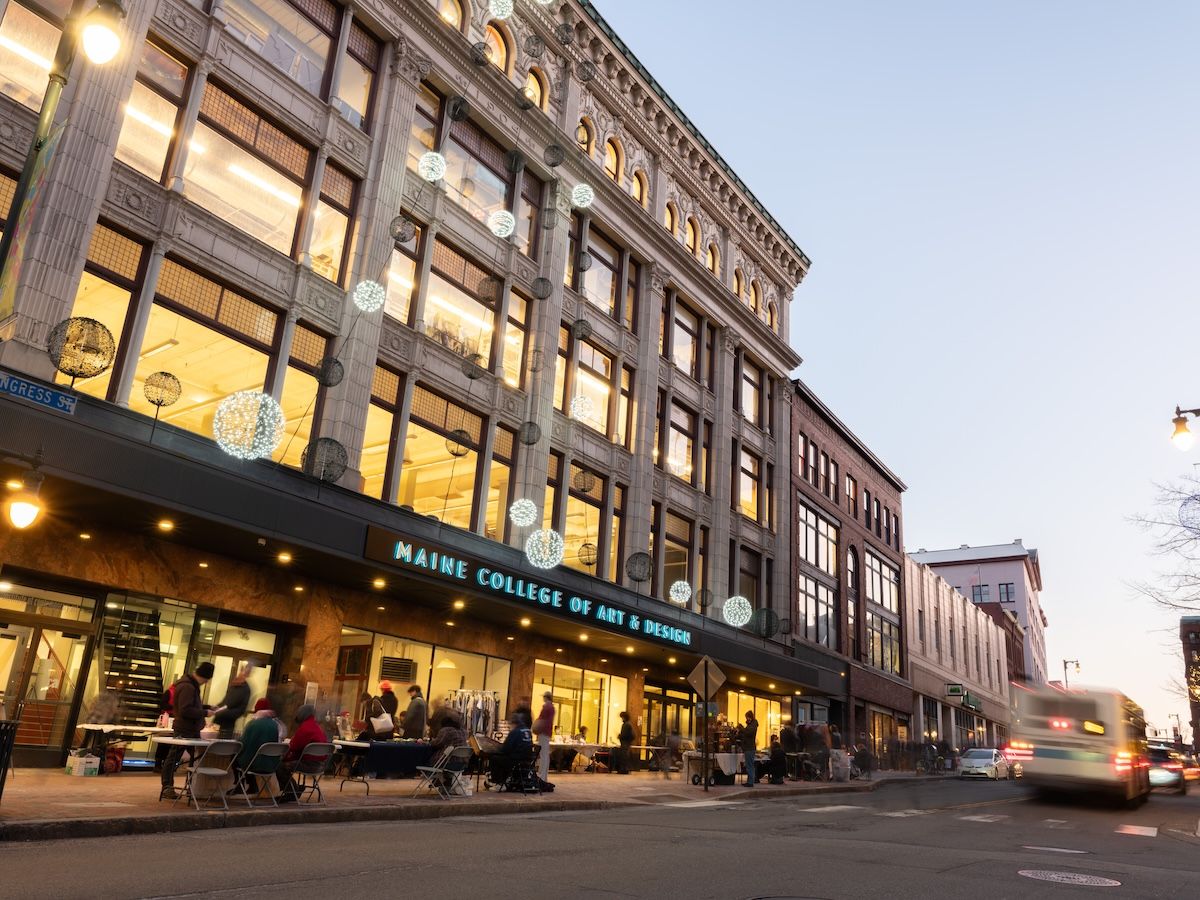
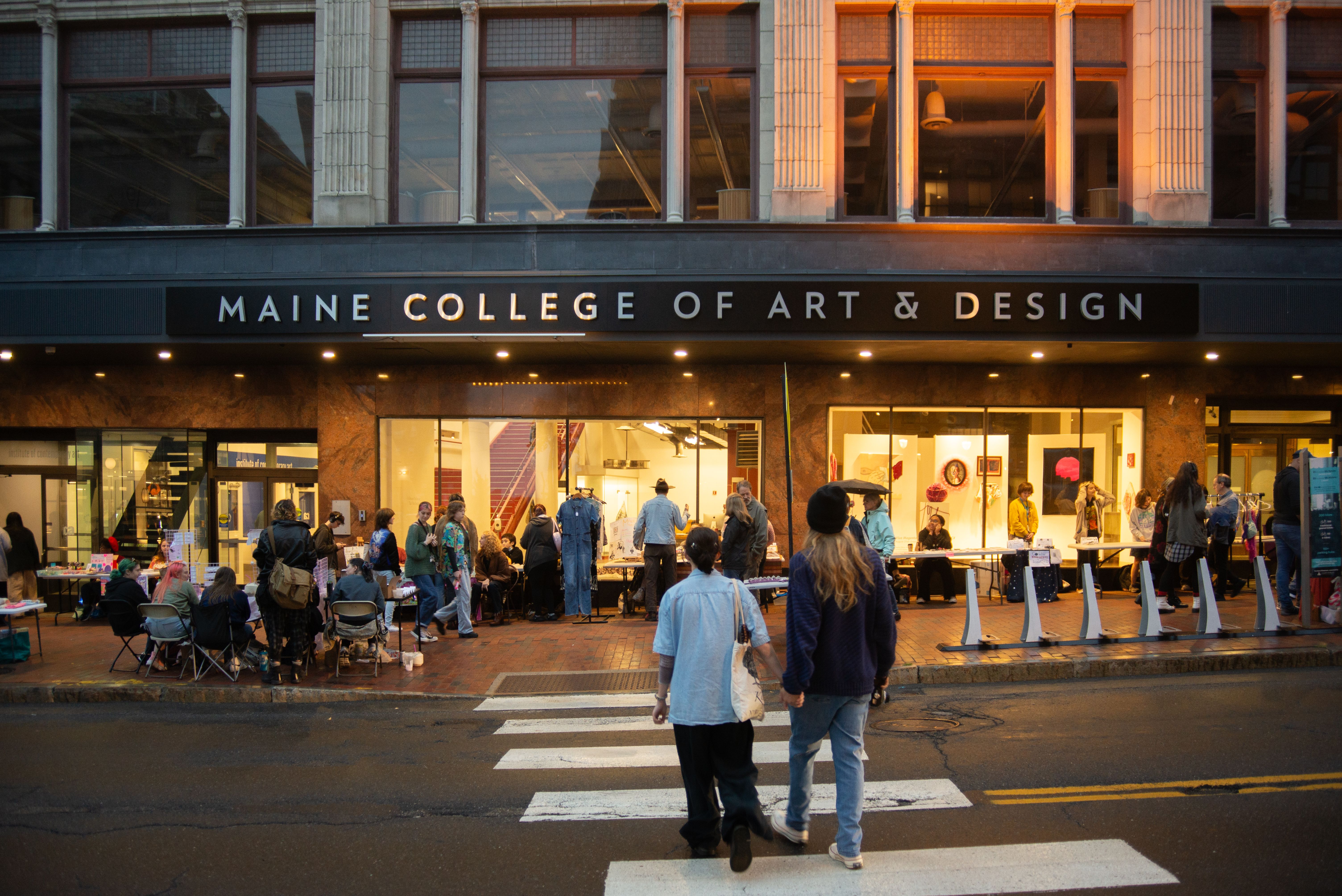
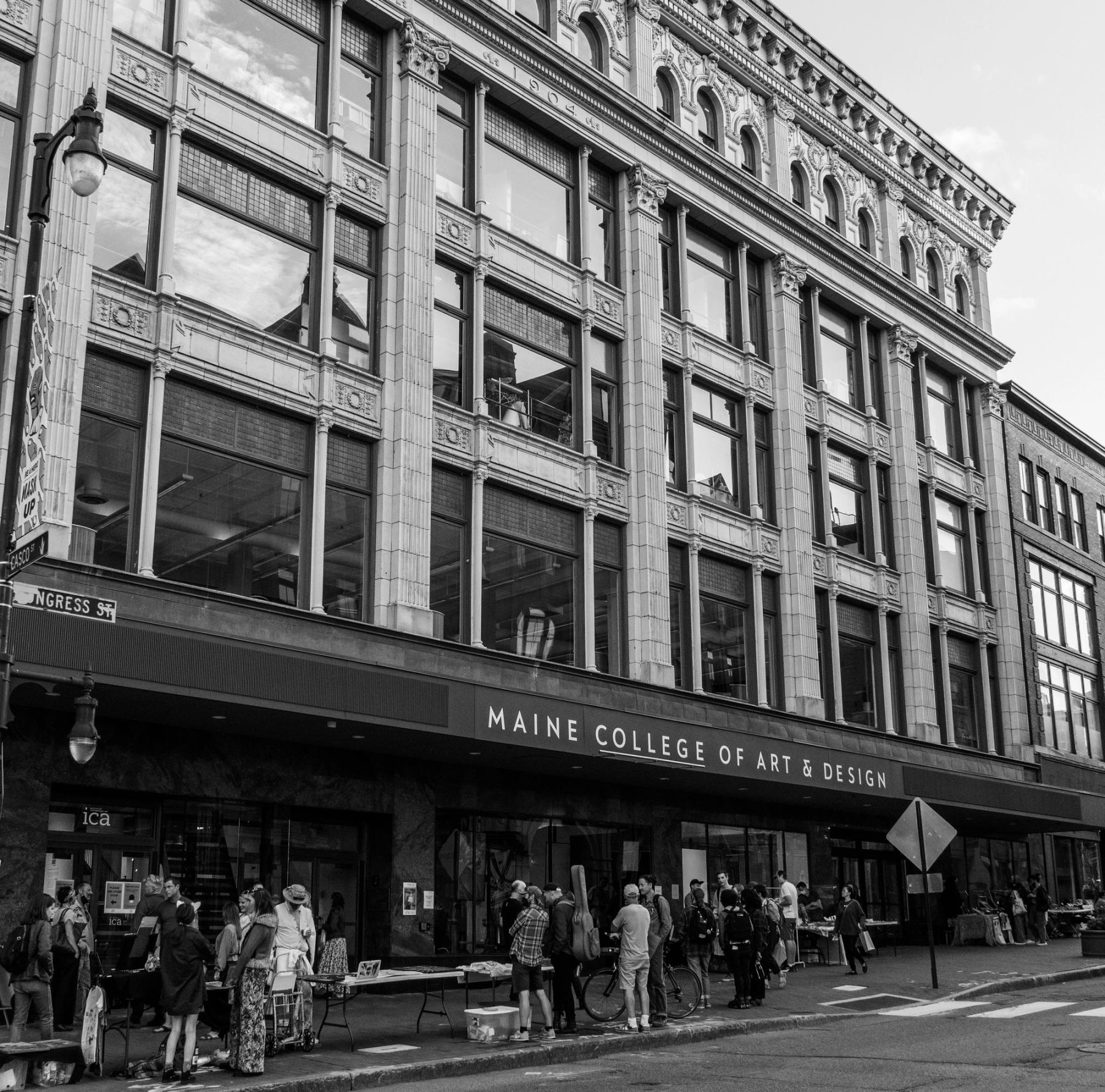
Maine College of Art & Design is a small, intensely focused private art school embedded in the creative heart of Portland, Maine. It operates less like a traditional liberal arts college and more like a professional studio guild, where every student is an artist-in-training from day one, navigating a curriculum built on foundational rigor and deep specialization. The experience is defined by hands-on making, intimate critiques, and a direct pipeline into the working art world—though its financial and graduation outcomes demand careful consideration from prospective students.
Admission requirements
Test-blind — scores not considered
Required
High school transcript
Grade point average
Letters of recommendation
Demonstrated competencies
TOEFL (non-native English)
Considered (not required)
Class rank
College-prep program
Source: IPEDS Admissions survey (2022) via Urban Institute. Covers formal factors only — it does not reflect essays, extracurriculars, or other holistic criteria.
More details
Undergrad enrollment
415
In-state tuition
$42,942
Out-of-state tuition
$42,942
Popular Majors
Animation, Video Graphics & Special Effects, Illustration, Painting
Graduation Rate
52%
Median Earnings (10yr)
$40,778
Financial Aid Recipients
100% of BFA students
Alumni Working as Professional Artists
67%
Outcomes & value
Outcomes & value
Median earnings (10 yr)
$40,778
Value (earnings ÷ net price)
1.1×
Median debt at graduation
$27,000
Graduation rate
52%
First-year retention
72%
Reducing loan balance (3 yr)
66%
Pell (lower-income) share
29%
First-gen share (among federal-aid recipients)
24%
Top-earning majors
Median earnings by field of study (highest credential), ~2 years after completion.
Design and Applied Arts$24,808
Film/Video and Photographic Arts$23,456
Fine and Studio Arts$21,736
Source: U.S. Dept. of Education College Scorecard (field-of-study earnings). Figures cover graduates who received federal aid and lag ~2 years; not all programs report data.
Campus & location
Campus safety
On-campus violent crimes (2024)
1
Per 1,000 students
2.11
On-campus criminal offenses classed as violent (murder/non-negligent manslaughter, rape, robbery, aggravated assault) for the most recent reported year. Source: U.S. Dept. of Education Campus Safety and Security (Clery Act). Counts reflect what’s reported to the school, and urban campuses often report more partly due to non-student incidents nearby — read alongside campus size and setting, not as a standalone safety verdict.
Climate
Pleasant days / yr
96
Summer high
76°F
Winter low
21°F
Annual rain
50.5"
Annual snow
48.3"
Natural-hazard risk
Relatively Low
Pleasant days counts days per year with a mean temperature of 55–75°F, a high at or below 90°F, a low at or above 45°F, and little precipitation — a transparent comfort measure, not a weighting we invented. Computed from Open-Meteo ERA5 daily history (2019–2023). Natural-hazard risk is the county’s composite rating from the FEMA National Risk Index.
Quick answers
What is the acceptance rate at Maine College of Art & Design?
Maine College of Art & Design's acceptance rate is approximately 76% (Portland, ME), based on the most recent figures we compiled from public and primary sources.
How much does Maine College of Art & Design cost?
At Maine College of Art & Design, the average net price (after aid) is about $38,338 per year. Actual cost varies with financial aid and residency.
How many undergraduates attend Maine College of Art & Design?
Maine College of Art & Design enrolls approximately 415 undergraduate students.
Where is Maine College of Art & Design located?
Maine College of Art & Design is located in Portland, ME.
Admissions
Admission to Maine College of Art & Design is described as "less selective" and "somewhat selective," with an that makes it a realistic goal for most serious art applicants. The college does not have an open admission policy. The process is centered on the art portfolio, application materials, and meeting standard deadlines for its BFA and graduate programs. While the school offers an Early Decision option, the specific acceptance rate for Early Decision and the share of the class filled via this plan are not detailed in the provided sources. Similarly, the sources do not specify whether demonstrated interest is a considered factor in admissions decisions. The admissions office provides support and outlines required application materials, including scholarships, on its website.
Earnings = median of students working ~10 years after entry; debt = median of graduates. Value divides 10-yr earnings by one year’s net price — read it as earnings per dollar of annual cost, not a full lifetime ROI; it favors lower-cost schools. Source: U.S. Dept. of Education College Scorecard. Figures lag ~2 years and reflect all students, not your intended major.
The academic engine at MECA&D is its studio-centric Bachelor of Fine Arts program. All undergraduates begin with a Foundation year designed to uniquely prepare them for advanced study across eight majors. The curriculum emphasizes research, experimentation, reflection, collaboration, and engaged problem-solving, both online and in-person. Popular majors, according to student reviews, include Animation, Video Graphics and Special Effects, Illustration, and Painting. The college also offers graduate programs. The academic culture is intensely practical, kicking off with Visiting Artist lectures and studio visits, and is built around in-depth critiques and dedicated studio practice. This is an environment for students who want to "use your head, heart, & hands, and become a working artist for life."
Life at MECA&D revolves almost entirely around the studio and the tight-knit community it fosters. The Student Life department is staffed with professionals and student leaders whose stated goal is to help students thrive. They offer support across various departments and actively seek new ways to connect with students and build the community. The vibe is that of a collective of makers, where developing a rigorous studio practice is the central, shared mission. Social and extracurricular life appears to be an extension of the creative work, rather than a separate sphere.
MECA&D frames its success by the professional paths of its graduates, not just by graduation rates. According to the college's own data, a significant majority of alumni work in art-related fields: 67% work as professional artists, 24% as graphic designers, 25% as art teachers, 21% as craft artists, and 35% in other art-related professions. Furthermore, 19% pursue an MFA after graduation. However, broader outcome data presents a more mixed picture. The six-year graduation rate is reported elsewhere as 44%, and the four-year graduation rate as low as 12%. Early-career earnings for graduates are modest; one source reports median earnings of approximately $27,601, while another cites a median salary of $24,333 six years after graduation. Earnings one year after graduation are reported as $25,999, rising to $34,439 after five years.
The cost of attending MECA&D is significant, though nearly every student receives some financial assistance. The college reports that 100% of its BFA students receive some type of financial aid each year, with students collectively receiving more than $17.6 million annually in scholarships and grants. The average aid package includes a substantial institutional grant aid component of $17,864, supplemented by federal grant aid averaging $6,858 and state grant aid averaging $2,562. The average Pell Grant amount is $5,977. Students are encouraged to apply for outside scholarships to help cover costs. The college provides a Calculator to help families estimate their actual cost. The sources do not indicate that MECA&D has a policy of meeting 100% of demonstrated financial need without loans.
MECA&D stands out for its unapologetic, all-in commitment to studio art education within the specific, gritty-yet-charming context of Portland, Maine. It's not a university with an art department; it's an art school, period. The culture is immersive and professionally oriented from the first Foundation course, supported by a direct pipeline of visiting artists and a curriculum built on hands-on making. Its outcome statistics are a study in contrasts: while graduation rates are low and early-career earnings are modest by broader college standards, an exceptionally high percentage of its graduates—67%—actually work as professional artists, fulfilling the school's core mission. This makes it a compelling, high-risk, high-reward proposition for students who are certain they want to build a life in the arts and are prepared for the financial and academic intensity that path requires. It's a place for the determined maker, not the undecided explorer.
Maine College of Art & Design seal · sourceAbout | Maine College of Art & Design · sourceVisit | Maine College of Art & Design · sourceMaine College of Art & Design · source