Admit rate has ranged 36%–55% over the last 5 years — notably volatile. Source: IPEDS via Urban Institute.
Acceptance & SAT from Common Data Set / IPEDS; net price, earnings & graduation from the U.S. Dept. of Education College Scorecard. Figures lag ~1–2 years — verify with the school.
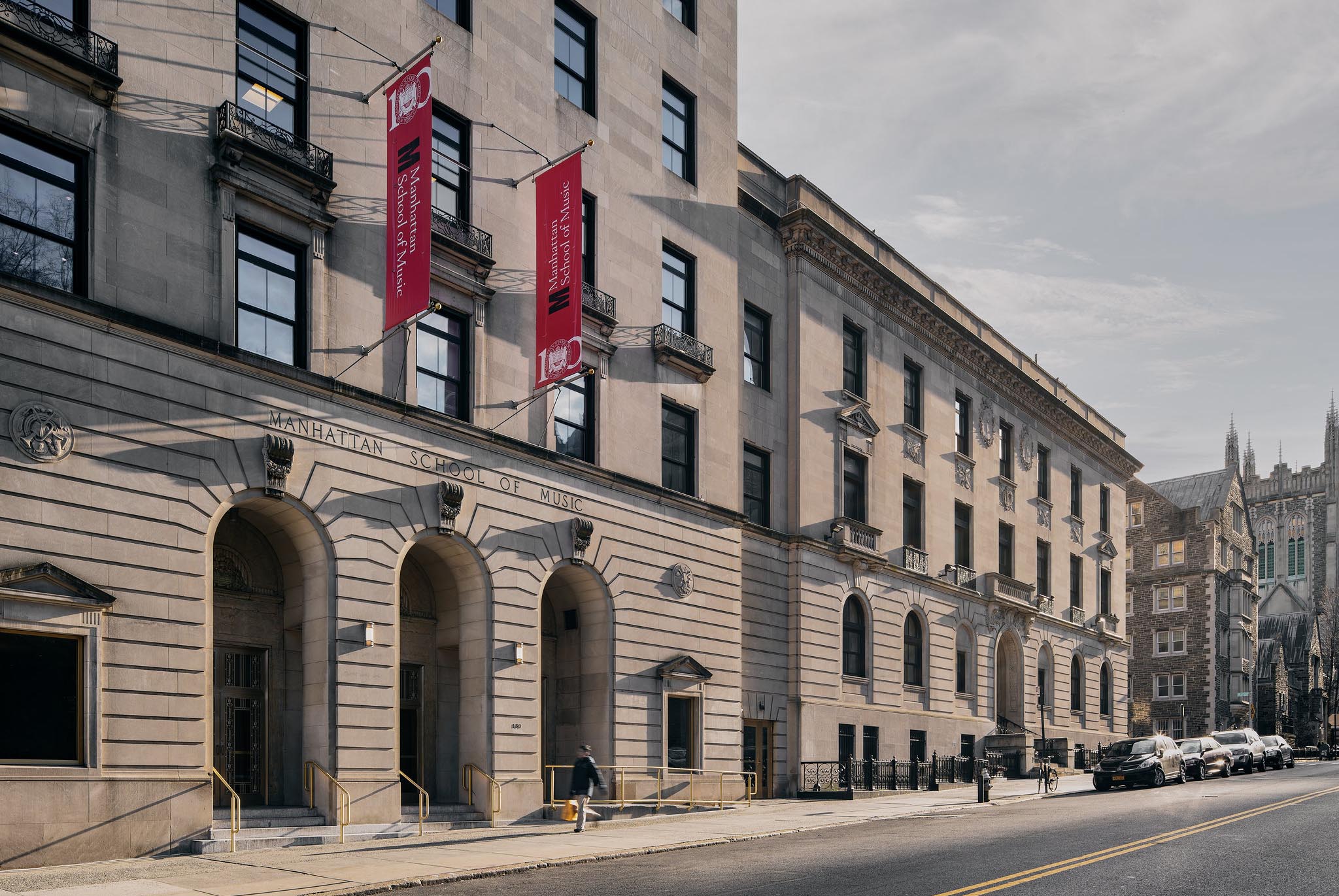
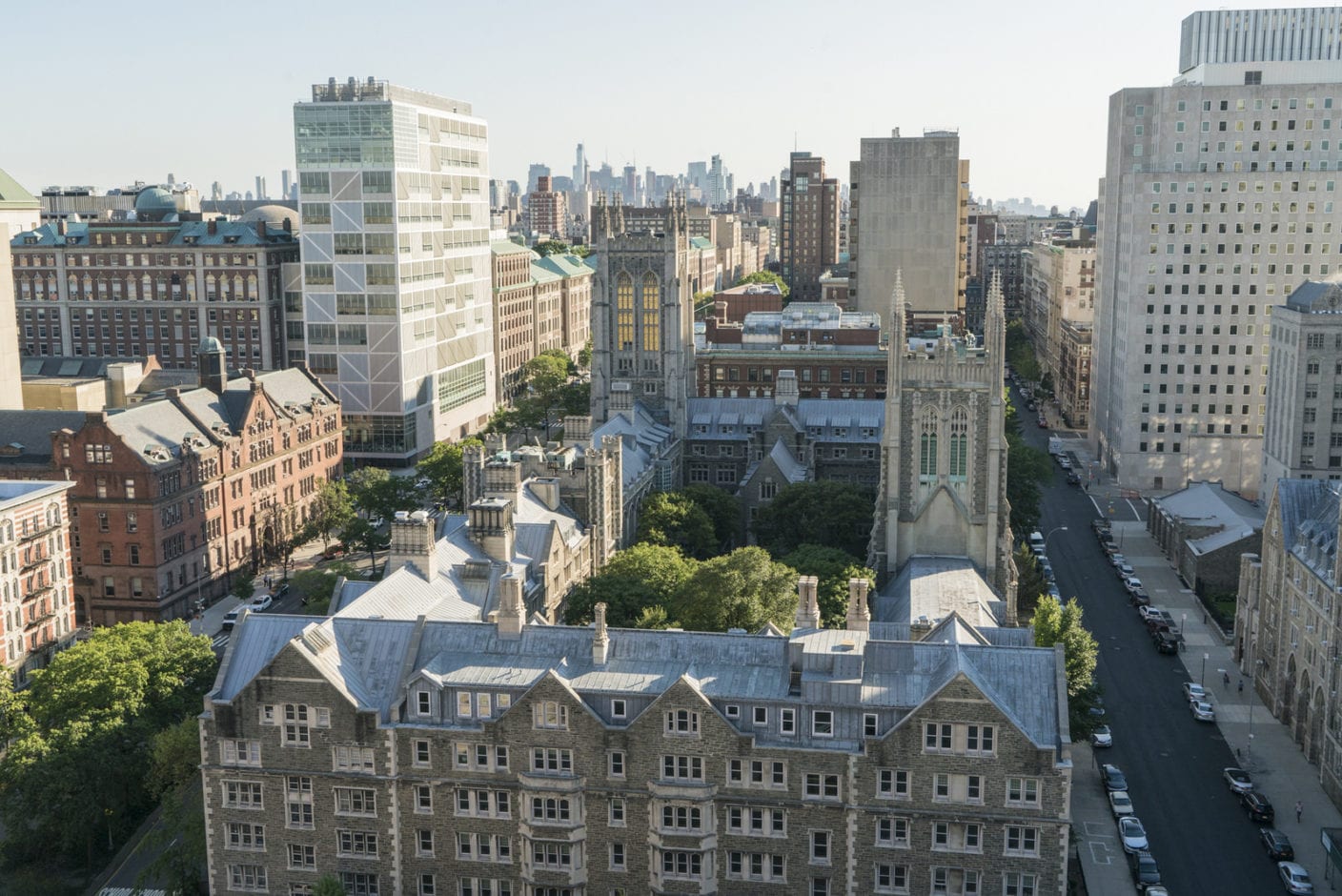
The Manhattan School of Music is not a typical college; it's a high-intensity, single-purpose conservatory where life is scored to a relentless metronome of practice, rehearsal, and performance. Nestled on Claremont Avenue near Columbia University, MSM immerses its nearly 1,000 students from around the globe in the demanding worlds of classical, jazz, and musical theatre, offering a hyper-focused, artist-centric education with New York City as its sprawling, unruly campus. The trade-off is stark: graduates enter a fiercely competitive field where early-career earnings are modest, making the decision to attend a profound bet on artistic passion over financial return.
Admission requirements
Test-blind — scores not considered
Required
High school transcript
Grade point average
Letters of recommendation
Demonstrated competencies
TOEFL (non-native English)
Considered (not required)
Class rank
College-prep program
Source: IPEDS Admissions survey (2022) via Urban Institute. Covers formal factors only — it does not reflect essays, extracurriculars, or other holistic criteria.
More details
Undergrad enrollment
539
In-state tuition
$57,050
Out-of-state tuition
$57,050
No-Loan Policy
No
Graduation Rate
78%
Meets Full Need
No
ED Share of Class
Not specified in sources
Student Body Size
~900 students
Application Deadline
December 1
First-Year Retention
93%
Demonstrated Interest
Not considered
Student-Faculty Ratio
6:1
Outcomes & value
Outcomes & value
Median earnings (10 yr)
$26,878
Value (earnings ÷ net price)
0.5×
Median debt at graduation
$26,994
Graduation rate
78%
First-year retention
93%
Reducing loan balance (3 yr)
66%
Pell (lower-income) share
12%
Endowment / student
$38,474
Earnings = median of students working ~10 years after entry; debt = median of graduates. Value divides 10-yr earnings by net price — read it as earnings per dollar of annual cost, not a full lifetime ROI; it favors lower-cost schools. Source: U.S. Dept. of Education College Scorecard. Figures lag ~2 years and reflect all students, not your intended major.
Financial health
2.2 / 3.0Meets the federal financial-responsibility standard
U.S. Dept. of Education Financial Responsibility Composite Score (FY2022-23). Scale −1.0 to 3.0; ≥1.5 meets the standard. Reported for private nonprofit & for-profit institutions only — public universities are state-backed and not scored, so this is a stability signal, not a ranking.
Top-earning majors
Median earnings by field of study (highest credential), ~2 years after completion.
Music$13,393
Source: U.S. Dept. of Education College Scorecard (field-of-study earnings). Figures cover graduates who received federal aid and lag ~2 years; not all programs report data.
Campus & location
Campus safety
On-campus violent crimes (2024)
0
Per 1,000 students
0.00
On-campus criminal offenses classed as violent (murder/non-negligent manslaughter, rape, robbery, aggravated assault) for the most recent reported year. Source: U.S. Dept. of Education Campus Safety and Security (Clery Act). Counts reflect what’s reported to the school, and urban campuses often report more partly due to non-student incidents nearby — read alongside campus size and setting, not as a standalone safety verdict.
Climate
Pleasant days / yr
90
Summer high
83°F
Winter low
29°F
Annual rain
54.3"
Annual snow
19.2"
Natural-hazard risk
Relatively High
Pleasant days counts days per year with a mean temperature of 55–75°F, a high at or below 90°F, a low at or above 45°F, and little precipitation — a transparent comfort measure, not a weighting we invented. Computed from Open-Meteo ERA5 daily history (2019–2023). Natural-hazard risk is the county’s composite rating from the FEMA National Risk Index.
Deep dive — research, future-scholar output & economic mobility▾
Research output
Institutional h-index
24
Scholarly works
184
Institutional research volume and impact from OpenAlex. The h-index reflects large research universities and will be low for teaching-focused liberal-arts colleges — not a measure of undergraduate quality.
Quick answers
What is the acceptance rate at Manhattan School of Music?
Manhattan School of Music's acceptance rate is approximately 41% (New York, NY), based on the most recent figures we compiled from public and primary sources.
How much does Manhattan School of Music cost?
At Manhattan School of Music, the average net price (after aid) is about $51,754 per year. Actual cost varies with financial aid and residency.
How many undergraduates attend Manhattan School of Music?
Manhattan School of Music enrolls approximately 539 undergraduate students.
Where is Manhattan School of Music located?
Manhattan School of Music is located in New York, NY.
Admissions
Gaining entry to MSM is a dual audition: one for artistic talent and another for academic readiness. The school reports an of 41%, a figure that masks the intense selectivity within specific instruments and voice types, where acceptance can vary sharply. All applicants must navigate a prescriptive December 1 deadline. The process is centered on the live or recorded audition, with academic records serving as a secondary checkpoint; the average GPA of admitted students is 3.55. Standardized test scores (SAT/ACT) are not reported as a factor. The school offers an Early Decision option, binding for admitted students, though the specific acceptance rate and share of the class filled via ED are not detailed in the provided sources. Demonstrated interest—such as campus visits or contact with admissions—is not a factor considered in admissions decisions, as indicated by the framework.
MSM's curriculum is a total immersion in music. The school structures its training into three core divisions: Classical, Jazz, and Musical Theatre. Degrees range from the Bachelor of Music to the Master of Music and the terminal Doctor of Musical Arts (DMA). The classical program, for instance, includes an advanced graduate track focused on contemporary music that aims to train artists as entrepreneurs. The environment is described as both exceptionally supportive and demanding of the highest standards of excellence. With a student-faculty ratio of 6:1, instruction is intensely personal, built around private lessons, ensemble work, and masterclasses with working professionals. The academic load is heavy and specific; a student's day is dominated by their instrument, theory, history, and performance classes, leaving little room for exploration outside the musical canon.
Life at MSM is insular and intense, a close-knit conservatory bubble of about 900 students hailing from nearly 50 countries, perched on the edge of Morningside Heights. The campus vibe is overwhelmingly centered on music and academics, with limited traditional college social events or nightlife. Students describe a schedule packed with rehearsals, practice room sessions, and performances, creating a powerful sense of shared purpose but also a certain social myopia. The school fosters community through student-led organizations like Fusion: One World at MSM, which celebrates the student body's diverse cultural backgrounds. The real student life, however, extends beyond the school's doors: New York City itself—with its unparalleled concerts, Broadway shows, and gig opportunities—becomes the laboratory and playground. The Office of Admission even publishes guides to help students navigate living in the city, acknowledging that survival and thrival in NYC is part of the MSM education.
An MSM degree is a passport into the precarious, passion-driven economy of the arts. The financial returns are modest, especially in the early years. The median earnings for graduates six years after entry are approximately $23,700, rising only to $26,878 ten years after starting. Early-career earnings (one year out) are reported around $18,578 to $36,427, highlighting the freelance and gig-based instability many face. Some analyses suggest these earnings are lower than expected given the student demographics. The trade-off is a professional-level training that opens doors to orchestral chairs, Broadway pits, jazz clubs, and teaching studios. The school reports a strong first-year retention rate of 93% and a graduation rate of 78%, indicating students who enroll are highly committed to seeing the rigorous program through.
Attending MSM requires a significant financial investment. The average —the cost after grants and scholarships are applied—is $51,754 per year. The school offers need-based and merit-based financial aid, with the average aid package reported at $25,243. MSM provides a Net Price Calculator to help families estimate their individual cost. It's important to note that MSM does not appear to have a "no-loan" policy that meets full need with grants alone. The financial aid office explicitly lists Unsubsidized Stafford Loans and Parent PLUS Loans as non-need-based options, indicating loans are a standard component of aid packages. Students are encouraged to apply for all available aid, but should expect to finance a portion of their education through federal and private loans.
Manhattan School of Music stands out for its unapologetic, all-consuming focus. It is not a liberal arts college with a strong music department; it is a conservatory where every resource, conversation, and hour of the day is dedicated to forging professional musicians. This creates an environment of unparalleled intensity and camaraderie among students who share a singular, often obsessive, goal. Its location is its other defining feature. MSM leverages New York City not as a backdrop, but as an essential faculty member—the source of teachers who are active performers, of masterclasses with legends, and of the brutal, inspiring reality of making a life in the arts. The school's identity is this potent, high-stakes combination: world-class, intimate conservatory training within the relentless, opportunity-rich ecosystem of the world's cultural capital. The decision to attend is a clear-eyed choice to prioritize artistic development and professional networks over a broad undergraduate education or a high-earning career trajectory.
Manhattan School of Music seal · sourceCampus Photo Tour - Manhattan School of Music · sourceVisit MSM - Manhattan School of Music · sourceManhattan School of Music - Wikipedia · source