Loading…
← All schools
Marian University
Indianapolis, INprivate nonprofitmarian.edu
Acceptance
95%
Avg net price
$24,018
Earnings (10 yr)
$58,759
Graduation rate
67%
Admit rate has ranged 62%–95% over the last 5 years — notably volatile. Source: IPEDS via Urban Institute.
Acceptance & SAT from Common Data Set / IPEDS; net price, earnings & graduation from the U.S. Dept. of Education College Scorecard. Figures lag ~1–2 years — verify with the school.
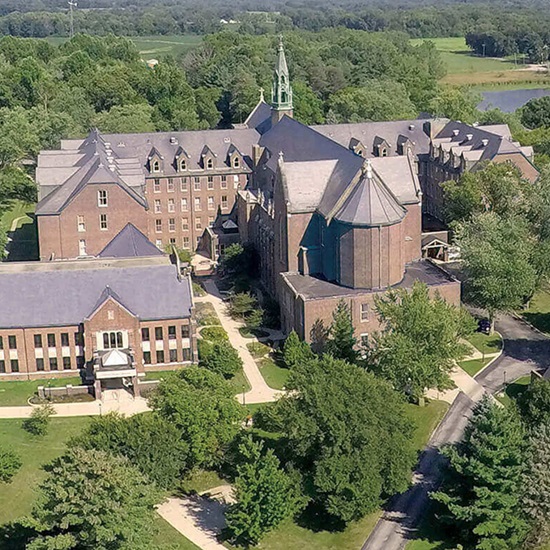
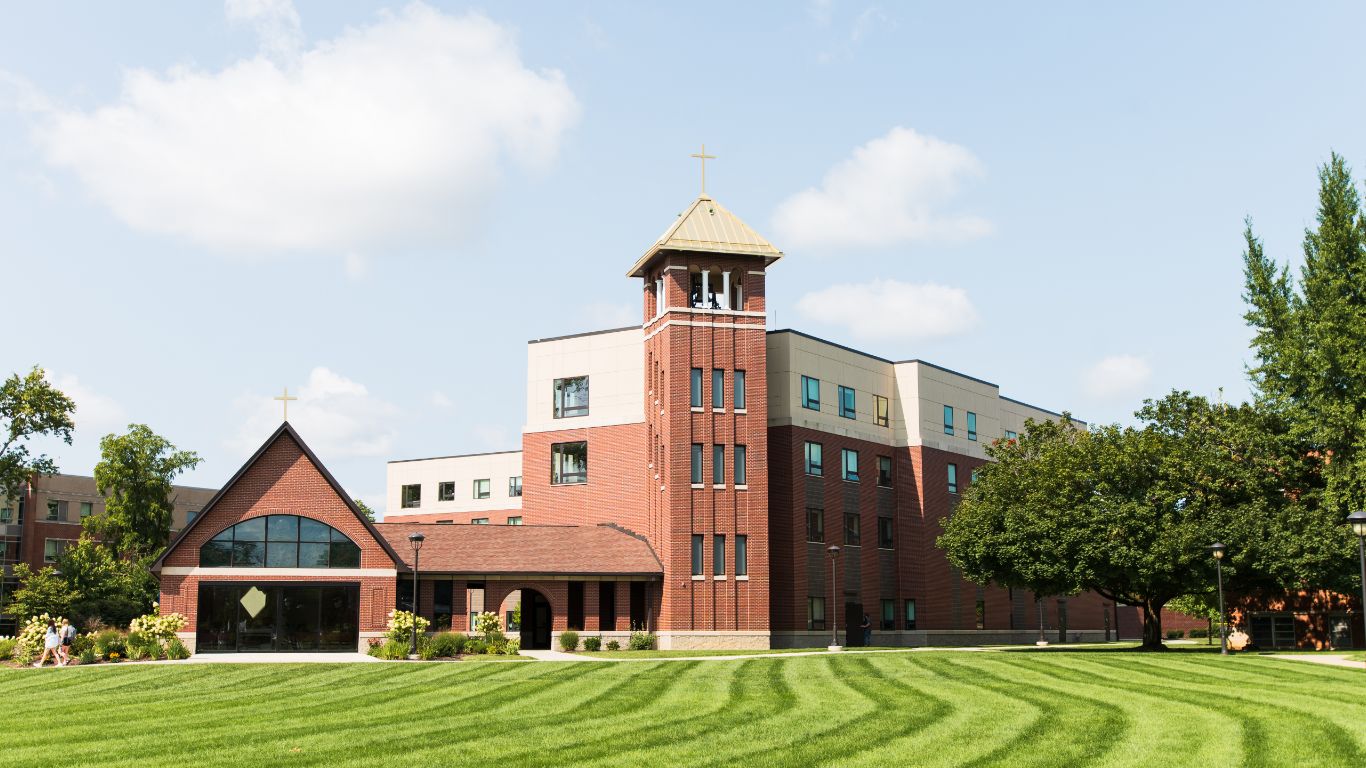
Marian University in Indianapolis is a Catholic liberal arts institution that operates less like a selective gatekeeper and more like an open-armed launchpad. With an admissions policy that welcomes nearly all applicants and a pragmatic focus on career-ready skills, it serves students who want a direct, supportive path from enrollment to employment. Its identity is split between a traditional undergraduate experience on a 75-acre campus and a growing portfolio of in-demand professional programs, from nursing to osteopathic medicine, all underscored by a commitment to keeping college accessible.
Admission requirements
Test-blind — scores not considered
Required
- High school transcript
- Grade point average
- TOEFL (non-native English)
Considered (not required)
- Class rank
- Letters of recommendation
- College-prep program
Source: IPEDS Admissions survey (2022) via Urban Institute. Covers formal factors only — it does not reflect essays, extracurriculars, or other holistic criteria.
More details
- Undergrad enrollment
- 2,266
- In-state tuition
- $40,664
- Out-of-state tuition
- $40,664
- Campus Size
- 75 acres
- Graduation Rate
- 67%
- Student Organizations
- Over 35
- Median Earnings (10yr)
- $58,759
- Business Grad Employment Rate (6 months)
- 98.9%
Outcomes & value
Outcomes & value
- Median earnings (10 yr)
- $58,759
- Value (earnings ÷ net price)
- 2.4×
- Median debt at graduation
- $27,000
- Graduation rate
- 67%
- First-year retention
- 76%
- Reducing loan balance (3 yr)
- 60%
- Pell (lower-income) share
- 29%
- First-gen share (among federal-aid recipients)
- 29%
Financial health
2.1 / 3.0Meets the federal financial-responsibility standard
U.S. Dept. of Education Financial Responsibility Composite Score (FY2022-23). Scale −1.0 to 3.0; ≥1.5 meets the standard. Reported for private nonprofit & for-profit institutions only — public universities are state-backed and not scored, so this is a stability signal, not a ranking.
Top-earning majors
Median earnings by field of study (highest credential), ~2 years after completion.
- Registered Nursing, Nursing Administration, Nursing Research and Clinical Nursing$58,464
- Business Administration, Management and Operations$47,595
- Accounting and Related Services$47,260
- Marketing$44,590
- Teacher Education and Professional Development, Specific Levels and Methods$37,808
- Psychology, General
Campus & location
Campus safety
- On-campus violent crimes (2024)
- 1
- Per 1,000 students
- 0.30
On-campus criminal offenses classed as violent (murder/non-negligent manslaughter, rape, robbery, aggravated assault) for the most recent reported year. Source: U.S. Dept. of Education Campus Safety and Security (Clery Act). Counts reflect what’s reported to the school, and urban campuses often report more partly due to non-student incidents nearby — read alongside campus size and setting, not as a standalone safety verdict.
Climate
- Pleasant days / yr
- 86
- Summer high
- 83°F
- Winter low
- 26°F
- Annual rain
- 44.2"
- Annual snow
- 18.4"
- Natural-hazard risk
- Relatively High
Pleasant days counts days per year with a mean temperature of 55–75°F, a high at or below 90°F, a low at or above 45°F, and little precipitation — a transparent comfort measure, not a weighting we invented. Computed from Open-Meteo ERA5 daily history (2019–2023). Natural-hazard risk is the county’s composite rating from the FEMA National Risk Index.
Quick answers
- What is the acceptance rate at Marian University?
- Marian University's acceptance rate is approximately 95% (Indianapolis, IN), based on the most recent figures we compiled from public and primary sources.
- How much does Marian University cost?
- At Marian University, the average net price (after aid) is about $24,018 per year. Actual cost varies with financial aid and residency.
- How many undergraduates attend Marian University?
- Marian University enrolls approximately 2,266 undergraduate students.
- Where is Marian University located?
- Marian University is located in Indianapolis, IN.
Admissions
Marian University's admissions process is defined by its accessibility. The university is not selective, with an that reflects an open-door philosophy for undergraduate applicants. For the class that entered in 2024, the university received 3,745 applications and admitted 3,575 of those applicants. The process is ; Marian University does not require SAT or ACT scores for admission. While sources show varying reported acceptance rates, the overwhelming consensus points to a highly inclusive process. The university's admissions office can be contacted directly for assistance.
Academics
Academics at Marian are built around a liberal arts core designed to produce 'thinkers, writers, confident speakers, and strong researchers,' with a practical overlay of more than 40 degree options aimed at the job market. The curriculum emphasizes skills that carry across career paths. Popular majors include Psychology, Multi/Interdisciplinary Studies, Philosophy and Religious Studies, Social Sciences, and Theology and Religious Studies. The university has launched new undergraduate degrees in high-demand fields, building on existing strengths in Criminal Justice, Data Science, Business Management, Nursing, Exercise and Sport Science, and Chemistry. The Klipsch Educators College houses programs like Secondary Education. This blend of foundational liberal arts and career-focused programming defines the academic experience.
Compare Marian University
See colleges similar to Marian University →Sources
- Consumer Information | Marian University
- Marian University Overview - CollegeData
- Marian University - IPEDS - Department of Education
- [PDF] Common Data Set 2025-2026
- [PDF] Undergraduate Catalog of Programs • 2026-2027 - Marian University
- [PDF] 2024-2025-Academic-Catalog.pdf - Marian University
- Marian University Admissions - BigFuture College Search
- Marian University SAT Scores and GPA - PrepScholar
- Marian University Admissions - US News Best Colleges
- Admissions | Marian University