Loading…
← All schools
Mariano Moreno Culinary Institute
Miami, FLprivate forprofitwww.mmci.edu/
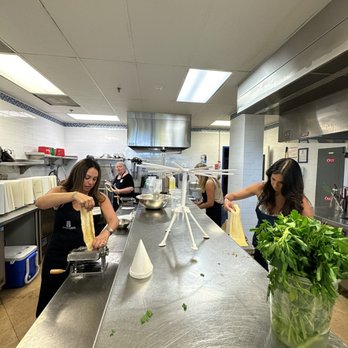
Mariano Moreno Culinary Institute is a private, for-profit culinary school in Miami that operates with the straightforward pragmatism of a trade school, not the selective anxiety of a liberal arts college. With a 100% acceptance rate and a sharp focus on just two majors—Culinary Arts and Baking & Pastry—it serves a predominantly Hispanic student body seeking a fast, practical track into the food industry. The vibe is less about ivy-covered quads and more about the heat of the kitchen, where a 64% graduation rate suggests a program that successfully launches most of its students into careers, albeit with modest early-career earnings.
More details
- Undergrad enrollment
- 108
- Graduation Rate
- 64%
- Top Demographic
- 72.2% Hispanic/Latino
- Student-Teacher Ratio
- 18:1
- Avg. Student Grant Aid
- $7,559
- Earnings 1yr After Graduation
- $36,427
- Earnings 5yr After Graduation
- $45,519
- % Students Receiving Grant Aid
- 74%
- Student Population Decline (5yr)
- 42%
Outcomes & value
Outcomes & value
- Pell (lower-income) share
- 42%
Earnings = median of students working ~10 years after entry; debt = median of graduates. Value divides 10-yr earnings by one year’s net price — read it as earnings per dollar of annual cost, not a full lifetime ROI; it favors lower-cost schools. Source: U.S. Dept. of Education College Scorecard. Figures lag ~2 years and reflect all students, not your intended major.
Campus & location
Campus safety
- On-campus violent crimes (2024)
- 0
On-campus criminal offenses classed as violent (murder/non-negligent manslaughter, rape, robbery, aggravated assault) for the most recent reported year. Source: U.S. Dept. of Education Campus Safety and Security (Clery Act). Counts reflect what’s reported to the school, and urban campuses often report more partly due to non-student incidents nearby — read alongside campus size and setting, not as a standalone safety verdict.
Climate
- Pleasant days / yr
- 80
- Summer high
- 87°F
- Winter low
- 66°F
- Annual rain
- 48.2"
- Natural-hazard risk
- Very High
Pleasant days counts days per year with a mean temperature of 55–75°F, a high at or below 90°F, a low at or above 45°F, and little precipitation — a transparent comfort measure, not a weighting we invented. Computed from Open-Meteo ERA5 daily history (2019–2023). Natural-hazard risk is the county’s composite rating from the FEMA National Risk Index.
Quick answers
- How much does Mariano Moreno Culinary Institute cost?
- At Mariano Moreno Culinary Institute, the average net price (after aid) is about $11,179 per year. Actual cost varies with financial aid and residency.
- How many undergraduates attend Mariano Moreno Culinary Institute?
- Mariano Moreno Culinary Institute enrolls approximately 108 undergraduate students.
- Where is Mariano Moreno Culinary Institute located?
- Mariano Moreno Culinary Institute is located in Miami, FL.
Admissions
Forget the anxiety—Mariano Moreno Culinary Institute's admissions process is refreshingly, almost radically, uncomplicated. The institute reports a 100% acceptance rate, positioning itself as an accessible gateway for aspiring chefs rather than a selective gatekeeper. The process is described as applying "as soon as possible in order to be accepted for a specific program and start date," emphasizing program availability over . There is no reported SAT, ACT, or GPA data for admitted students, underscoring a focus on professional intent over traditional academic metrics. The application fee is $50. The enrolled student population is overwhelmingly Hispanic, with 72.2% identifying as Hispanic or Latino, followed by 7.41% Black or African American and 5.56% White. This demographic profile reflects its Miami location and mission to serve its local community. There is no information on Early Decision policies or whether demonstrated interest is considered, aligning with its open-access approach.
Compare Mariano Moreno Culinary Institute
vs University of Science and Arts of Oklahomavs Livingstone Collegevs West Virginia University Institute of Technologyvs Maryville College
See colleges similar to Mariano Moreno Culinary Institute →Sources
- Common Data Set: Home
- Mariano Moreno Culinary Institute - Sallie
- Decoding the Common Data Set What You Need to Know for Your ...
- Mariano Moreno Culinary Institute | Data USA
- Mariano Moreno Culinary Institute | College Scorecard
- How To Use a Common Data Set - The College Solution
- Mariano Moreno Culinary Institute - Niche
- Mariano Moreno Culinary Institute — Acceptance Rate, Costs & More
- Mariano Moreno Culinary Institute Statistics - Overgrad
- Admissions - Mariano Moreno Culinary Institute | EN
- Mariano Moreno Culinary Institute | Class of 2030 Community