Admit rate has ranged 71%–83% over the last 5 years — notably volatile. Source: IPEDS via Urban Institute.
Acceptance & SAT from Common Data Set / IPEDS; net price, earnings & graduation from the U.S. Dept. of Education College Scorecard. Figures lag ~1–2 years — verify with the school.
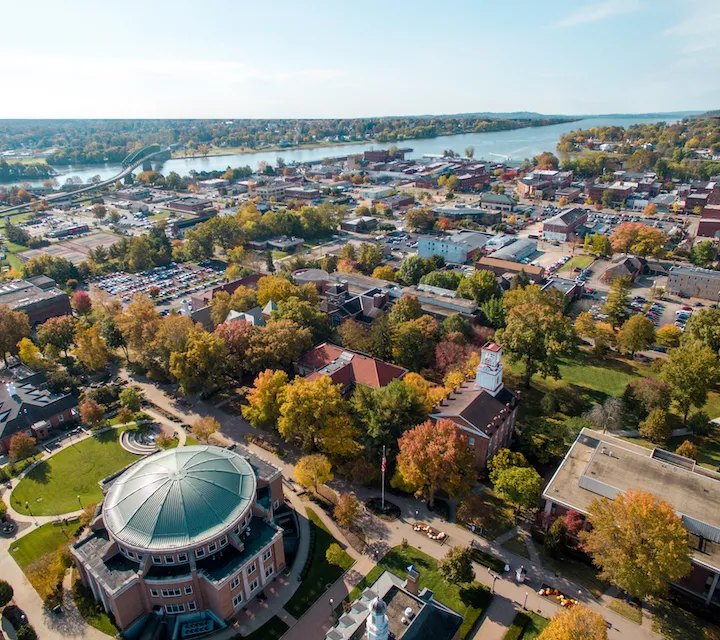
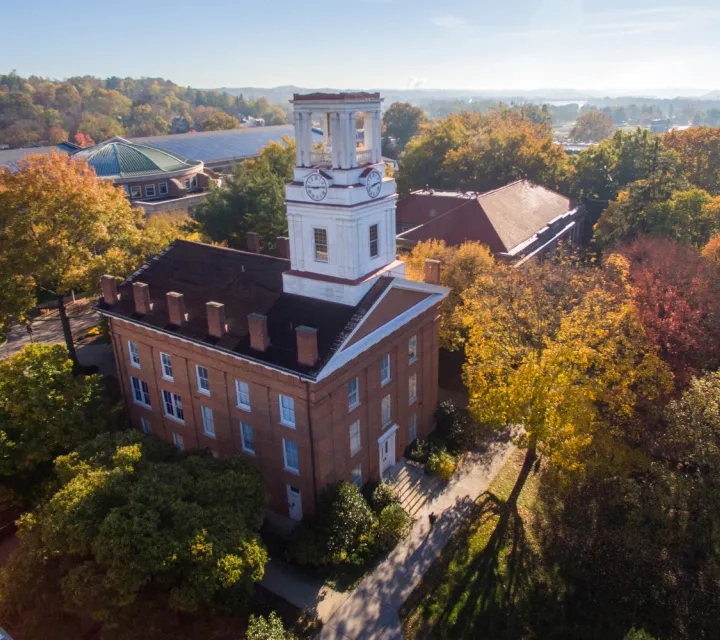
Marietta College is a small, private liberal arts institution in the historic river town of Marietta, Ohio, where a 10:1 student-faculty ratio fosters a tight-knit, 'family-like' campus culture. It operates with a pragmatic, accessible admissions philosophy—a 79% acceptance rate and a test-required policy—while anchoring its identity in hands-on, career-oriented programs in business, health, and education. The college commits over $26 million annually to financial aid, aiming to make its distinctive blend of liberal arts foundation and professional preparation a reality for a broad range of students.
Admission requirements
Test-optional — scores considered if submitted
Required
High school transcript
Grade point average
Letters of recommendation
College-prep program
TOEFL (non-native English)
Considered (not required)
Test scores (SAT/ACT)
Demonstrated competencies
Source: IPEDS Admissions survey (2022) via Urban Institute. Covers formal factors only — it does not reflect essays, extracurriculars, or other holistic criteria.
More details
Undergrad enrollment
952
In-state tuition
$39,652
Out-of-state tuition
$39,652
Graduation Rate
61%
Average Aid Package
$41,836
On-Campus Residence
86%
Student-Faculty Ratio
10:1
Median Earnings (10yr)
$57,180
Outcomes Rate (6 months)
92% employed/grad school
Institutional Aid Committed
>$26 million annually
Outcomes & value
Outcomes & value
Median earnings (10 yr)
$57,180
Value (earnings ÷ net price)
2.7×
Median debt at graduation
$27,000
Graduation rate
61%
First-year retention
69%
Reducing loan balance (3 yr)
71%
Pell (lower-income) share
34%
First-gen share (among federal-aid recipients)
26%
Financial health
0.6 / 3.0Below the federal standard — financial stress
U.S. Dept. of Education Financial Responsibility Composite Score (FY2022-23). Scale −1.0 to 3.0; ≥1.5 meets the standard. Reported for private nonprofit & for-profit institutions only — public universities are state-backed and not scored, so this is a stability signal, not a ranking.
Top-earning majors
Median earnings by field of study (highest credential), ~2 years after completion.
Petroleum Engineering$71,575
Marketing$36,134
Public Relations, Advertising, and Applied Communication$35,416
Teacher Education and Professional Development, Specific Levels and Methods$34,526
Journalism$29,685
Source: U.S. Dept. of Education College Scorecard (field-of-study earnings). Figures cover graduates who received federal aid and lag ~2 years; not all programs report data.
On-campus criminal offenses classed as violent (murder/non-negligent manslaughter, rape, robbery, aggravated assault) for the most recent reported year. Source: U.S. Dept. of Education Campus Safety and Security (Clery Act). Counts reflect what’s reported to the school, and urban campuses often report more partly due to non-student incidents nearby — read alongside campus size and setting, not as a standalone safety verdict.
Climate
Pleasant days / yr
91
Summer high
83°F
Winter low
29°F
Annual rain
46.7"
Annual snow
15.9"
Natural-hazard risk
Relatively Low
Pleasant days counts days per year with a mean temperature of 55–75°F, a high at or below 90°F, a low at or above 45°F, and little precipitation — a transparent comfort measure, not a weighting we invented. Computed from Open-Meteo ERA5 daily history (2019–2023). Natural-hazard risk is the county’s composite rating from the FEMA National Risk Index.
Deep dive — research, future-scholar output & economic mobility▾
Research output
Institutional h-index
102
Scholarly works
2,216
Institutional research volume and impact from OpenAlex. The h-index reflects large research universities and will be low for teaching-focused liberal-arts colleges — not a measure of undergraduate quality.
Economic mobility
Mobility rate
1.7%
Bottom → top quintile
35%
From bottom quintile
5%
Mobility rate = the share of students who both start in the bottom household-income quintile and reach the top quintile; bottom → top is that chance conditional on starting at the bottom. Source: Opportunity Insights Mobility Report Cards (Chetty, Friedman, Saez, Turner & Yagan). Reflects 1980–82 birth cohorts, so it’s directional, not current.
Quick answers
What is the acceptance rate at Marietta College?
Marietta College's acceptance rate is approximately 79% (Marietta, OH), based on the most recent figures we compiled from public and primary sources.
What SAT score do you need for Marietta College?
Admitted students at Marietta College typically score 1040–1200 on the SAT (the middle-50% range). Scores outside this band are still admitted, especially with strong applications.
How much does Marietta College cost?
At Marietta College, the average net price (after aid) is about $21,083 per year. Actual cost varies with financial aid and residency.
How many undergraduates attend Marietta College?
Marietta College enrolls approximately 952 undergraduate students.
Where is Marietta College located?
Marietta College is located in Marietta, OH.
Admissions
Marietta College's admissions process is characterized by high accessibility and a straightforward, test-required policy. With an of 79%, the college is realistically within reach for most prepared applicants, positioning itself as a less-selective institution where a student's full profile is considered. Admitted students who submit test scores typically present an SAT range between 1040 and 1200. The college reports a persistently low rate of just 15.9%, indicating that many admitted students are weighing multiple acceptances and that securing enrollment is a primary focus for the admissions team. While the college offers an early application option, it does not appear to publish distinct early decision or early action acceptance rates, suggesting the regular decision rate is representative of its overall selectivity. The role of demonstrated interest in the admissions process is not explicitly detailed in the provided sources, leaving its consideration unclear.
Earnings = median of students working ~10 years after entry; debt = median of graduates. Value divides 10-yr earnings by one year’s net price — read it as earnings per dollar of annual cost, not a full lifetime ROI; it favors lower-cost schools. Source: U.S. Dept. of Education College Scorecard. Figures lag ~2 years and reflect all students, not your intended major.
Academics at Marietta are built on a liberal arts foundation but are distinctly geared toward practical, career-launching experiences. The college boasts a 10:1 student-to-faculty ratio, enabling close mentorship. Its most popular majors reflect this professional orientation: Marketing/Marketing Management, Psychology, Health and Wellness, and Sport and Fitness Administration. The college organizes its offerings through dedicated academic departments, providing seven majors and multiple minors designed to build marketable skills. A standout metric is the 100% pass rate for its Middle and Secondary Education Licensure Exams, signaling exceptional preparation in that field. The academic approach emphasizes hands-on learning, with opportunities for internships and business immersion integrated directly into the curriculum.
Life at Marietta is overwhelmingly residential and intensely communal, creating what many students describe as a supportive, family-like, and inclusive campus culture. A significant 86% of students live on campus in a mix of traditional and apartment-style residence halls that feature 24/7 support and swipe-access security. This high residential percentage fuels a vibrant, self-contained community where involvement is the norm. The campus hub is the Office of Campus Involvement, which coordinates a wide array of extra- and co-curricular activities. Students can choose from more than 80 active student organizations, including fraternities and sororities, academic clubs, political groups, and community service organizations. This dense network of social and leadership opportunities, combined with the intimate scale of the campus, fosters a strong sense of belonging and makes it easy for students to connect, lead, and grow.
Marietta College promotes strong post-graduate outcomes, with a central claim that 92% of its graduates are employed, in graduate school, or participating in a fellowship or service commitment within six months of graduation. The college's graduation rate is 61%. For earnings, the median income for graduates ten years after entry is $57,180. These outcomes have earned the college external recognition; it has been included in Money's 'Best Colleges for Your Money' rankings and was noted as No. 3 in Ohio for salary impact and social mobility in one analysis. The college's focus on connecting academic work to professional pathways appears to pay dividends in early career placement.
Marietta College is proactive in using institutional aid to make attendance feasible. The college commits more than $26 million of its own funds to financial assistance annually. The aid program is extensive, comprising merit-based scholarships and need-based federal, state, and institutional grants. Notably, 78% of students receive financial aid, with the average aid package reported as $41,836. This substantial support brings the average after aid down to $21,083. The college states that students are eligible for up to two non-need-based Marietta College awards, but these may not exceed the cost of tuition. While the college provides significant grant aid, it does not advertise a 'no-loan' policy; instead, it notes that students may borrow up to the total minus other aid received, with additional loan options available based on need and grade level.
Marietta College carves out a distinctive niche by seamlessly merging the close-knit, mentorship-rich environment of a classic liberal arts college with the pragmatic, career-focused training of a professional school. Its singular character is defined by a palpable 'family-like' campus vibe, fueled by an 86% on-campus residency rate and over 80 student organizations, all operating at an intimate 10:1 student-faculty ratio. The college doesn't just talk about hands-on learning—it delivers, evidenced by a perfect 100% pass rate on teacher licensure exams and a curriculum built around internships and business immersion. Financially, it backs its mission with action, deploying over $26 million in institutional aid annually to bridge the gap for students. In essence, Marietta offers a compelling proposition: the personal attention and community of a small college, directly wired to tangible outcomes in fields like business, health, and education, all set in a historic river town that becomes a true home for four years.
Marietta College seal · sourceOur Facilities | Marietta College · sourceContact Marietta College · sourceMarietta College - Profile, Rankings and Data | US News Best Colleges · source