Admit rate has ranged 63%–80% over the last 5 years — notably volatile. Source: IPEDS via Urban Institute.
Acceptance & SAT from Common Data Set / IPEDS; net price, earnings & graduation from the U.S. Dept. of Education College Scorecard. Figures lag ~1–2 years — verify with the school.
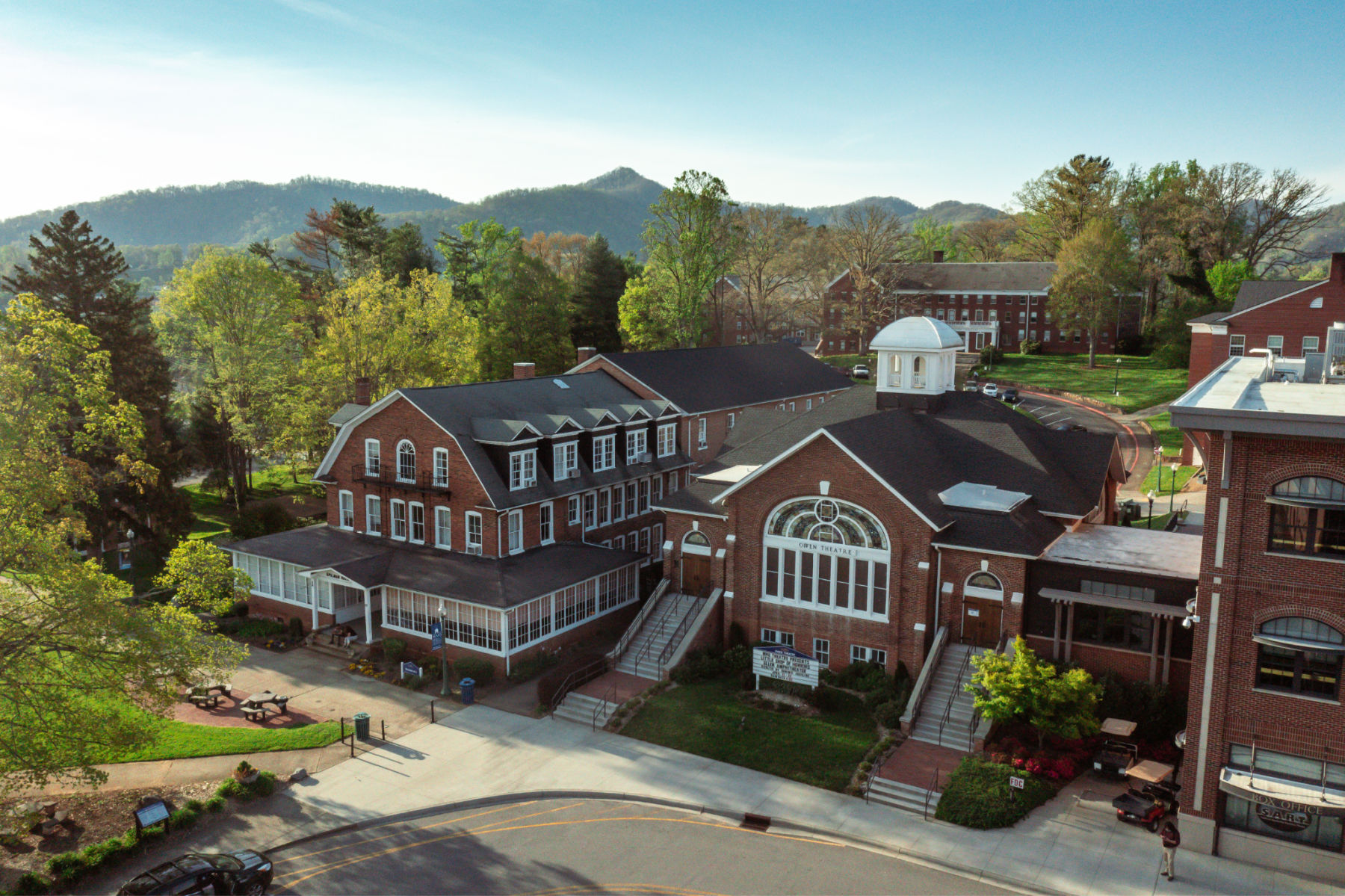
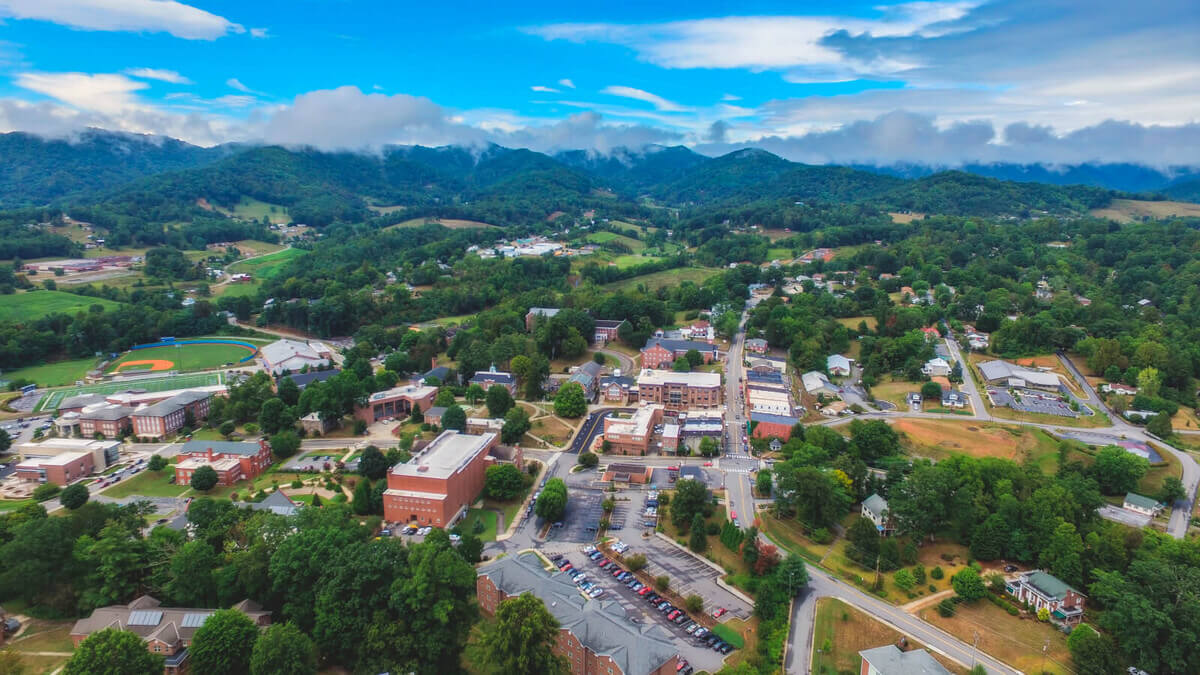
Mars Hill University is a small, private liberal arts college tucked into the mountains of western North Carolina, just a short drive from Asheville. It operates with a distinctly accessible, student-focused ethos, offering a test-optional admissions process and a curriculum that blends traditional majors like Business and Nursing with distinctive, place-based programs in Appalachian Studies and Zoology. The vibe is quiet and communal, centered around a residential campus where nearly all students receive financial aid, reflecting a mission to provide a personalized, character-focused education within a stunning natural setting.
Admission requirements
Test-blind — scores not considered
Required
High school transcript
Grade point average
Considered (not required)
Class rank
Letters of recommendation
Demonstrated competencies
TOEFL (non-native English)
Source: IPEDS Admissions survey (2022) via Urban Institute. Covers formal factors only — it does not reflect essays, extracurriculars, or other holistic criteria.
More details
Undergrad enrollment
1,044
In-state tuition
$37,736
Out-of-state tuition
$37,736
Graduation Rate
45%
First-Year Retention
69%
Median Earnings (10yr)
$44,781
Students Receiving Aid
98% of first-year students
Outcomes & value
Outcomes & value
Median earnings (10 yr)
$44,781
Value (earnings ÷ net price)
2.2×
Median debt at graduation
$26,000
Graduation rate
45%
First-year retention
69%
Reducing loan balance (3 yr)
49%
Pell (lower-income) share
46%
First-gen share (among federal-aid recipients)
34%
Financial health
2.4 / 3.0Meets the federal financial-responsibility standard
U.S. Dept. of Education Financial Responsibility Composite Score (FY2022-23). Scale −1.0 to 3.0; ≥1.5 meets the standard. Reported for private nonprofit & for-profit institutions only — public universities are state-backed and not scored, so this is a stability signal, not a ranking.
Top-earning majors
Median earnings by field of study (highest credential), ~2 years after completion.
Special Education and Teaching$38,289
Teacher Education and Professional Development, Specific Levels and Methods$36,437
Social Work$33,726
Business Administration, Management and Operations$32,391
Teacher Education and Professional Development, Specific Subject Areas$29,685
Biology, General
Campus & location
Campus safety
On-campus violent crimes (2024)
0
Per 1,000 students
0.00
On-campus criminal offenses classed as violent (murder/non-negligent manslaughter, rape, robbery, aggravated assault) for the most recent reported year. Source: U.S. Dept. of Education Campus Safety and Security (Clery Act). Counts reflect what’s reported to the school, and urban campuses often report more partly due to non-student incidents nearby — read alongside campus size and setting, not as a standalone safety verdict.
Climate
Pleasant days / yr
126
Summer high
82°F
Winter low
33°F
Annual rain
43"
Annual snow
8.6"
Natural-hazard risk
Very Low
Pleasant days counts days per year with a mean temperature of 55–75°F, a high at or below 90°F, a low at or above 45°F, and little precipitation — a transparent comfort measure, not a weighting we invented. Computed from Open-Meteo ERA5 daily history (2019–2023). Natural-hazard risk is the county’s composite rating from the FEMA National Risk Index.
Deep dive — research, future-scholar output & economic mobility▾
Research output
Institutional h-index
35
Scholarly works
236
Institutional research volume and impact from OpenAlex. The h-index reflects large research universities and will be low for teaching-focused liberal-arts colleges — not a measure of undergraduate quality.
Economic mobility
Mobility rate
1.4%
Bottom → top quintile
12%
From bottom quintile
12%
Mobility rate = the share of students who both start in the bottom household-income quintile and reach the top quintile; bottom → top is that chance conditional on starting at the bottom. Source: Opportunity Insights Mobility Report Cards (Chetty, Friedman, Saez, Turner & Yagan). Reflects 1980–82 birth cohorts, so it’s directional, not current.
Quick answers
What is the acceptance rate at Mars Hill University?
Mars Hill University's acceptance rate is approximately 68% (Mars Hill, NC), based on the most recent figures we compiled from public and primary sources.
How much does Mars Hill University cost?
At Mars Hill University, the average net price (after aid) is about $19,910 per year. Actual cost varies with financial aid and residency.
How many undergraduates attend Mars Hill University?
Mars Hill University enrolls approximately 1,044 undergraduate students.
Where is Mars Hill University located?
Mars Hill University is located in Mars Hill, NC.
Admissions
Mars Hill University maintains an accessible, student-centered admissions process designed to evaluate applicants holistically. The university is , allowing students to choose whether to submit SAT or ACT scores; if submitted, the middle 50% SAT range for admitted students historically falls between 940 and 1130. The admissions office does not enforce a strict regular decision deadline, instead operating on a rolling basis. While the university is broadly accessible, academic preparation remains a key factor, with the average high school GPA of admitted students reported to be around 3.6. The process emphasizes flexibility and individual consideration over high-stakes, ultra-selective gatekeeping.
Academic life at Mars Hill is built around a core of 35 undergraduate majors, with notable graduate programs in education, criminal justice, and management. The curriculum balances career-oriented fields with a liberal arts foundation. Business is the most popular major, followed by Criminal Justice and Law Enforcement Administration, Psychology, and Health Service Preparatory studies. The university distinguishes itself with several unique, interdisciplinary offerings that connect students to the region and beyond:
Earnings = median of students working ~10 years after entry; debt = median of graduates. Value divides 10-yr earnings by one year’s net price — read it as earnings per dollar of annual cost, not a full lifetime ROI; it favors lower-cost schools. Source: U.S. Dept. of Education College Scorecard. Figures lag ~2 years and reflect all students, not your intended major.
$26,739
Psychology, General$25,194
Source: U.S. Dept. of Education College Scorecard (field-of-study earnings). Figures cover graduates who received federal aid and lag ~2 years; not all programs report data.
Appalachian Studies: An interdisciplinary minor that roots learning in the local culture and environment.
Zoology: A hands-on science major that stands out among its peers.
Entrepreneurial Studies and Kinesiology are also highlighted as notable programs.
Recent Expansions: The university has added new majors in Interdisciplinary Studies and Community and Nonprofit Leadership, alongside minors in Community Leadership, Environmental Studies, International Studies, Regional Studies, and Women and Gender Studies. This expansion reflects a commitment to adaptable, relevant education that cultivates both character and practical skills.
Life on Mars Hill's campus is described as quiet and close-knit, with a social scene that is limited and not defined by frequent large parties or events. The university fosters community through a range of clubs, organizations, Greek life, athletics, and volunteer opportunities. A significant aspect of the experience is residential: the university provides twelve unique on-campus residence halls, with residential life programs aimed at creating safe, inclusive housing that encourages connection and belonging. The setting itself is a major draw—the campus is located in the mountains of western North Carolina, near the vibrant city of Asheville, offering a beautiful natural environment that shapes daily life and activities.
Student outcomes at Mars Hill present a mixed picture that reflects its mission of access and support. The first-year retention rate is reported at 69%, indicating the portion of students who return for a second year. The university has set an ambitious goal for post-graduation career outcomes, aiming for a 92% placement rate for undergraduate and graduate students from the class of May 2025. Earnings data shows progression, with reported median earnings reaching $44,781 ten years after entry. Alumni salary figures vary by field; for example, average earnings for Social Work graduates are reported around $31,048. The university's focus, as stated in its goals, is on improving graduation rates and ensuring graduates are successfully launched into careers or further education.
Mars Hill University is proactive in using financial aid to make attendance feasible. A striking 98% of full-time, first-year undergraduates receive grant or scholarship aid. The university encourages all prospective students to use its online Calculator to get a personalized estimate of costs after aid. is central to the process; for most scholarships and grants, students must demonstrate financial need as evidenced by the Free Application for Federal Student Aid (FAFSA). The financial aid office provides a variety of scholarships and grants, and while aid is widely distributed, maintaining eligibility often requires meeting academic standards, such as a 3.0 GPA for certain programs. The net price—the average cost after grants and scholarships—is a key figure the university highlights for families.
Mars Hill University carves out a distinctive niche by marrying the intimate, character-focused education of a small liberal arts college with a pragmatic, accessible approach. It doesn't try to compete with elite, highly selective institutions. Instead, it excels at providing a supportive, personalized pathway, particularly for students who thrive in a close community and a spectacular mountain setting. Its academic signature lies in programs like Appalachian Studies and Zoology, which offer unique, place-based learning opportunities rarely found at similar colleges. The combination of a , rolling admissions policy and a financial aid program that reaches 98% of incoming students underscores a fundamental commitment to removing barriers to entry. This is a college for students seeking a hands-on education where professors are likely to know their names, where the surrounding landscape is part of the curriculum, and where the goal is as much about cultivating resilience and purpose as it is about conferring a degree.
Mars Hill University seal · sourceMars Hill University Prepares To Open Fall 2021 Semester - Mars Hill University · sourceMars Hill University Jumps Ten Spots in Latest U.S. News Ranking - Mars Hill University · sourceMars Hill University — Admissions, Tuition & Acceptance Rate | Appily · source
%2C_Mars_Hill_University%2C_Mars_Hill%2C_NC_(45956973694).jpg?width=1600)