Loading…
← All schools
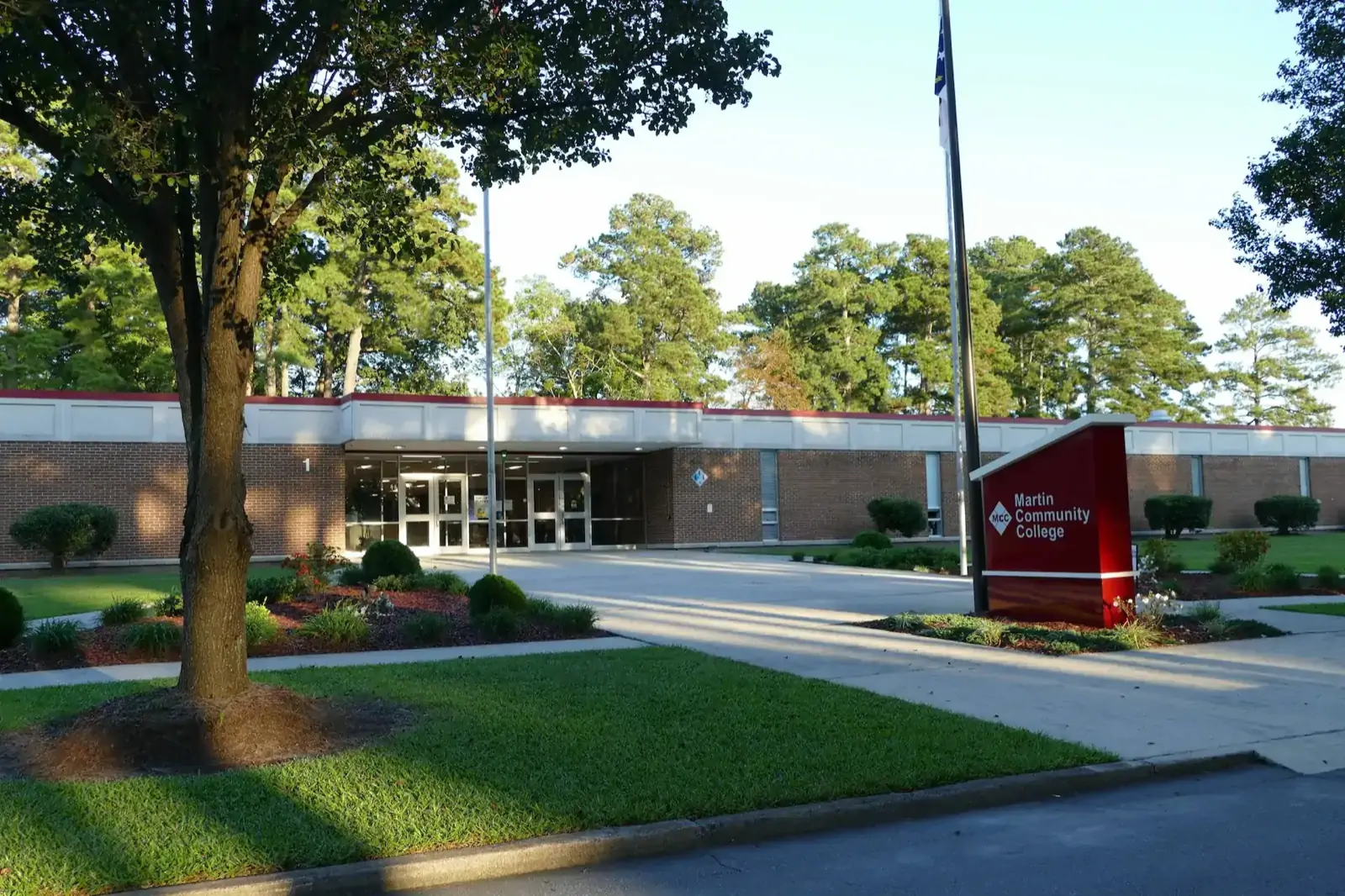
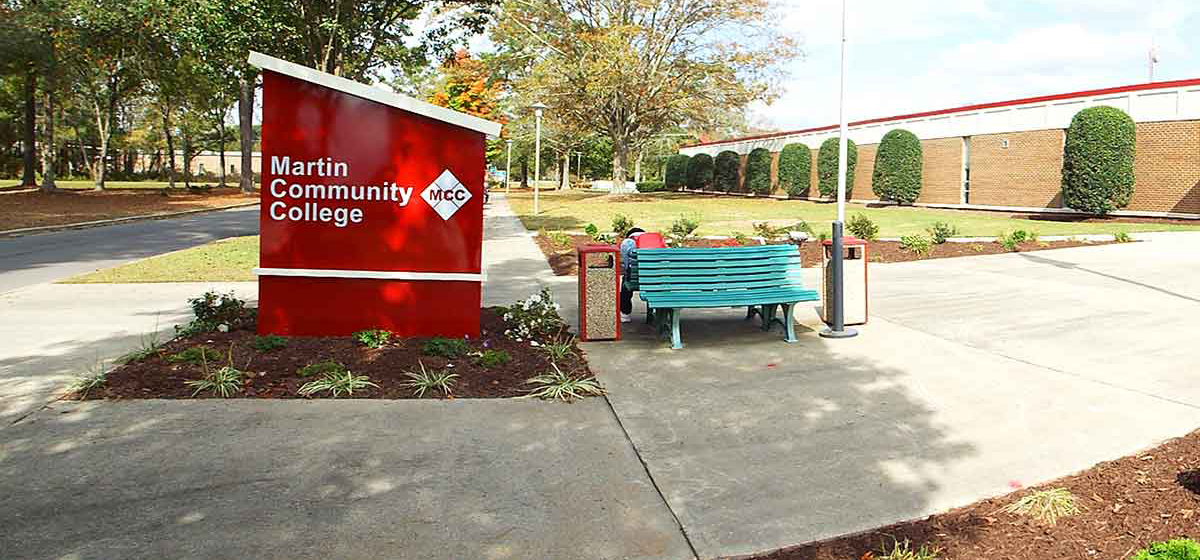
Martin Community College
Williamston, NCpublicwww.martincc.edu/
Avg net price
$2,676
Earnings (10 yr)
$26,016
Acceptance & SAT from Common Data Set / IPEDS; net price, earnings & graduation from the U.S. Dept. of Education College Scorecard. Figures lag ~1–2 years — verify with the school.
Martin Community College is the practical, unpretentious engine of eastern North Carolina's workforce. This is where you go to learn how to weld, manage a business, or farm the land, not to debate philosophy in a Gothic quad. With an open door, a focus on hands-on trades, and a price tag that feels more like a monthly utility bill than a college tuition, it serves as a critical launchpad for immediate careers and further education in a region that values skill over pedigree.
More details
- Undergrad enrollment
- 313
- In-state tuition
- $2,523
- Out-of-state tuition
- $8,667
- Graduation Rate
- 36%
- Special Program
- Career & College Promise (Free college courses for HS juniors/seniors)
- Top Specializations
- Precision Production, Mechanical Technologies, Agriculture
- Student-Faculty Ratio
- 11-to-1
- Highest Degree Offered
- Associate Degree
- Median Earnings (10yr)
- $26,016
Outcomes & value
Outcomes & value
- Median earnings (10 yr)
- $26,016
- Value (earnings ÷ net price)
- 9.7×
- Pell (lower-income) share
- 23%
- First-gen share (among federal-aid recipients)
- 54%
Earnings = median of students working ~10 years after entry; debt = median of graduates. Value divides 10-yr earnings by one year’s net price — read it as earnings per dollar of annual cost, not a full lifetime ROI; it favors lower-cost schools. Source: U.S. Dept. of Education College Scorecard. Figures lag ~2 years and reflect all students, not your intended major.
Campus & location
Campus safety
- On-campus violent crimes (2024)
- 0
On-campus criminal offenses classed as violent (murder/non-negligent manslaughter, rape, robbery, aggravated assault) for the most recent reported year. Source: U.S. Dept. of Education Campus Safety and Security (Clery Act). Counts reflect what’s reported to the school, and urban campuses often report more partly due to non-student incidents nearby — read alongside campus size and setting, not as a standalone safety verdict.
Climate
- Pleasant days / yr
- 124
- Summer high
- 88°F
- Winter low
- 39°F
- Annual rain
- 36.6"
- Annual snow
- 2"
- Natural-hazard risk
- Relatively Low
Pleasant days counts days per year with a mean temperature of 55–75°F, a high at or below 90°F, a low at or above 45°F, and little precipitation — a transparent comfort measure, not a weighting we invented. Computed from Open-Meteo ERA5 daily history (2019–2023). Natural-hazard risk is the county’s composite rating from the FEMA National Risk Index.
Deep dive — research, future-scholar output & economic mobility
Economic mobility
- Mobility rate
- 1.3%
- Bottom → top quintile
- 4%
- From bottom quintile
- 36%
Mobility rate = the share of students who both start in the bottom household-income quintile and reach the top quintile; bottom → top is that chance conditional on starting at the bottom. Source: Opportunity Insights Mobility Report Cards (Chetty, Friedman, Saez, Turner & Yagan). Reflects 1980–82 birth cohorts, so it’s directional, not current.
Quick answers
- How much does Martin Community College cost?
- At Martin Community College, the average net price (after aid) is about $2,676 per year. Actual cost varies with financial aid and residency.
- How many undergraduates attend Martin Community College?
- Martin Community College enrolls approximately 313 undergraduate students.
- Where is Martin Community College located?
- Martin Community College is located in Williamston, NC.
Admissions
Martin Community College operates on an open admissions policy, meaning the barrier to entry is intentionally low. The school reports an of 100%, reflecting its mission to provide accessible education to the region. One source notes that 1,393 students applied for a recent cycle, with 1,085 accepted and 891 enrolling, translating to an acceptance rate of approximately 78%. The college does not emphasize standardized testing in its admissions process; sources indicate acceptance rate information is sometimes listed as 'not available' and that the school does not publish typical SAT/ACT ranges for enrolled students, focusing instead on providing opportunity.
Academics
The academic profile of Martin CC is defined by direct, career-oriented training and foundational transfer programs. The highest degree offered is an associate degree. The curriculum is heavily specialized in technical and mechanical fields: data shows the most specialized majors are Precision Production (48 degrees awarded), Mechanical Technologies (52 degrees), and Agriculture (9 degrees). Programs like Business Administration prepare graduates for employment in government agencies, financial institutions, and businesses of all sizes. A significant feature is the Career & College Promise (CCP) program, which allows local high school juniors and seniors to enroll in college courses tuition-free, creating a pipeline from high school to workforce or further study. The student-faculty ratio is reported as 11-to-1, suggesting the potential for more direct instruction.
Compare Martin Community College
vs Florida Polytechnic Universityvs United States Coast Guard Academyvs University of Puerto Rico at Cayeyvs University of Puerto Rico-Arecibo
See colleges similar to Martin Community College →Sources
- Common Data Set: Home
- Decoding the Common Data Set What You Need to Know for Your College ...
- Common Data Set 2025-2026
- Common Data Set Repository
- Common Data Set Explorer 2026: Compare 100 Colleges
- College's Common Data Set
- Martin Community College
- Martin Community College SAT Scores, ACT ...
- Martin Community College - Tuition and Acceptance Rate
- Martin Community College in Williamston, NC
- Martin Community College Admissions - BigFuture