Admit rate has ranged 56%–70% over the last 5 years — notably volatile. Source: IPEDS via Urban Institute.
Acceptance & SAT from Common Data Set / IPEDS; net price, earnings & graduation from the U.S. Dept. of Education College Scorecard. Figures lag ~1–2 years — verify with the school.
Maryville College is a small, residential liberal arts college in the foothills of Tennessee that feels more like a tight-knit academic village than a sprawling campus. It’s a place where you can major in Appalachian Studies or sign up for a Scottish heritage club, where the 50% graduation rate signals a college still working to support every student to the finish line, and where the $19,360 average net price reflects a serious commitment to making a private education accessible. This is a college for students who want professors who know their name, a community that values tradition, and an education that tries to bridge the liberal arts with practical, career-ready skills.
Admission requirements
Test-optional — scores considered if submitted
Required
High school transcript
Grade point average
College-prep program
Considered (not required)
Class rank
Letters of recommendation
Test scores (SAT/ACT)
TOEFL (non-native English)
Source: IPEDS Admissions survey (2022) via Urban Institute. Covers formal factors only — it does not reflect essays, extracurriculars, or other holistic criteria.
More details
Undergrad enrollment
1,005
In-state tuition
$39,284
Out-of-state tuition
$39,284
Graduation Rate
50%
First-Year Retention
71%
Demonstrated Interest
Not Considered
Early Action/Decision
Early Action offered
Median Earnings (10yr)
$49,279
On-Campus Scholarship Range
$16,000 to full-tuition
Student Receiving Financial Aid
100%
Outcomes & value
Outcomes & value
Median earnings (10 yr)
$49,279
Value (earnings ÷ net price)
2.5×
Median debt at graduation
$25,375
Graduation rate
50%
First-year retention
71%
Reducing loan balance (3 yr)
70%
Pell (lower-income) share
38%
First-gen share (among federal-aid recipients)
32%
Financial health
2.5 / 3.0Meets the federal financial-responsibility standard
U.S. Dept. of Education Financial Responsibility Composite Score (FY2022-23). Scale −1.0 to 3.0; ≥1.5 meets the standard. Reported for private nonprofit & for-profit institutions only — public universities are state-backed and not scored, so this is a stability signal, not a ranking.
Top-earning majors
Median earnings by field of study (highest credential), ~2 years after completion.
Teacher Education and Professional Development, Specific Subject Areas$37,568
Business Administration, Management and Operations$32,711
Source: U.S. Dept. of Education College Scorecard (field-of-study earnings). Figures cover graduates who received federal aid and lag ~2 years; not all programs report data.
On-campus criminal offenses classed as violent (murder/non-negligent manslaughter, rape, robbery, aggravated assault) for the most recent reported year. Source: U.S. Dept. of Education Campus Safety and Security (Clery Act). Counts reflect what’s reported to the school, and urban campuses often report more partly due to non-student incidents nearby — read alongside campus size and setting, not as a standalone safety verdict.
Climate
Pleasant days / yr
90
Summer high
87°F
Winter low
36°F
Annual rain
55.4"
Annual snow
5.9"
Natural-hazard risk
Relatively Low
Pleasant days counts days per year with a mean temperature of 55–75°F, a high at or below 90°F, a low at or above 45°F, and little precipitation — a transparent comfort measure, not a weighting we invented. Computed from Open-Meteo ERA5 daily history (2019–2023). Natural-hazard risk is the county’s composite rating from the FEMA National Risk Index.
Deep dive — research, future-scholar output & economic mobility▾
Research output
Institutional h-index
63
Scholarly works
795
Institutional research volume and impact from OpenAlex. The h-index reflects large research universities and will be low for teaching-focused liberal-arts colleges — not a measure of undergraduate quality.
Economic mobility
Mobility rate
1.3%
Bottom → top quintile
16%
From bottom quintile
8%
Mobility rate = the share of students who both start in the bottom household-income quintile and reach the top quintile; bottom → top is that chance conditional on starting at the bottom. Source: Opportunity Insights Mobility Report Cards (Chetty, Friedman, Saez, Turner & Yagan). Reflects 1980–82 birth cohorts, so it’s directional, not current.
Quick answers
What is the acceptance rate at Maryville College?
Maryville College's acceptance rate is approximately 61% (Maryville, TN), based on the most recent figures we compiled from public and primary sources.
How much does Maryville College cost?
At Maryville College, the average net price (after aid) is about $19,360 per year. Actual cost varies with financial aid and residency.
How many undergraduates attend Maryville College?
Maryville College enrolls approximately 1,005 undergraduate students.
Where is Maryville College located?
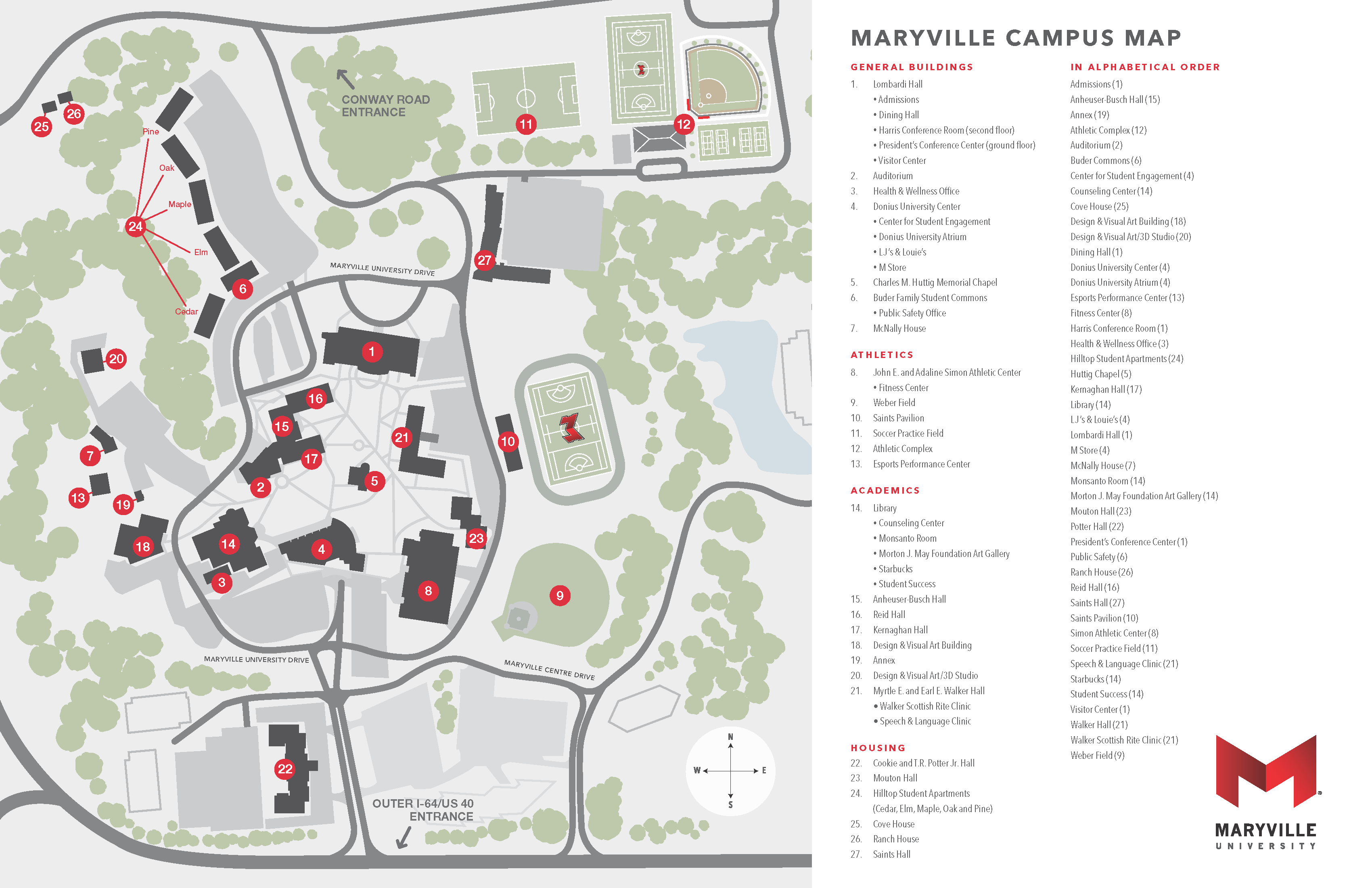
Maryville College is located in Maryville, TN.
Admissions
Maryville College operates with a moderately selective admissions process, accepting a majority of its applicants. The admissions office offers both Early Action and Regular Decision options, with Early Action applicants receiving earlier notification on decisions, scholarships, and financial aid. While the college considers a range of factors, demonstrated interest is reportedly not a considered factor in admissions decisions, according to analysis of practices. The rate—the percentage of admitted students who choose to enroll—has been reported as low, around 13-21%, indicating that many admitted students ultimately select other institutions. Admitted students typically present solid academic credentials, with middle-50% SAT scores ranging from 1018–1188 or 1020–1190, and ACT scores between 20–28. The average GPA of admitted students is around 3.49 to 3.6.
Earnings = median of students working ~10 years after entry; debt = median of graduates. Value divides 10-yr earnings by one year’s net price — read it as earnings per dollar of annual cost, not a full lifetime ROI; it favors lower-cost schools. Source: U.S. Dept. of Education College Scorecard. Figures lag ~2 years and reflect all students, not your intended major.
The academic experience at Maryville is defined by its liberal arts core, now explicitly elevated to combine rigorous, well-rounded study with professional preparation. Students choose from over 70 majors and pre-professional tracks, including a new Master of Arts in Teaching (M.A.T.) degree. The curriculum emphasizes critical thinking and problem-solving. Recent expansions to the course catalog have introduced new majors and minors designed to be interdisciplinary and responsive to both student interests and employer needs. Popular majors, as indicated by recent data, include Social Sciences, Foreign Languages, Literatures, and Linguistics, Psychology, and Natural Resources and Conservation. The college frames its academic mission as moving beyond the traditional liberal arts model to actively prepare students for careers.
Life at Maryville College is intensely residential and communal, described as a "true residential campus where students live, work, and play together (and where lifelong bonds are formed)." With over 40 student clubs and organizations, the campus ministry program that supports students on their spiritual paths, and a Division of Student Affairs focused on fostering inclusive communities, the college actively builds a specific kind of campus culture. The college promotes this through immersive introduction programs that cover academics, campus culture, and student life. Reviews highlight aspects of housing, food, athletics, and clubs. The overall vibe is one of a close-knit, all-in community where involvement is encouraged and expected.
Graduation and career outcomes present a mixed picture that the college is actively working to improve. The four-year graduation rate is reported at 39%, while the six-year rate is higher. Alumni earnings data shows variation: one source reports a median salary of $39,305 six years after graduation, while another cites an average starting salary of $45,800. Early career income has been reported around $33,308. The college's retention rate for first-year students is 71%. These figures are part of the public data the college reports to agencies like the Department of Education's College Navigator. The college has been recognized by external rankings like Money's 'Best Colleges in America' list, which cited its graduation rate and starting salaries as positive metrics.
Maryville College positions affordability as a key priority, stating that 100% of its students receive financial aid. The institution offers a range of on-campus scholarships from $16,000 up to full-tuition awards, which can be combined with and outside awards. Students are encouraged to use the Calculator to get an early estimate of their aid package. Reported net prices—the cost after aid and scholarships—vary by source: one lists it at $25,224, while another cites a cost of $20,990 after scholarships and grants, with 78.56% of students receiving aid and an average aid package of $40,432. Financial aid includes grants, loans, scholarships, and work-study programs, with both merit-based and need-based options available. The college also has specific aid policies for situations like withdrawal, including details on Direct Loan grace periods.
Maryville College stands out for its deliberate, almost anachronistic commitment to being a small, all-in residential community in an era of commuter campuses and online learning. It’s not trying to be a massive research university or a sleek professional school; it’s betting on the power of a shared, immersive experience in the Tennessee foothills. The academic pitch is a specific blend: honoring the liberal arts tradition while forcefully bending it toward "professional preparation" and "employer needs," as seen in its new interdisciplinary majors. This is a college with a clear identity—Scottish heritage, campus ministry, over 40 clubs—that it leans into heavily. The outcomes data shows a school with room to grow in supporting all students to graduation, but the 100% financial aid claim and range of scholarships signal an understanding that accessibility is key to that mission. For a certain student—one who wants a traditional college town feel, close faculty relationships, and a community that becomes a central part of their life—Maryville offers a distinct, focused alternative to larger or more anonymous institutions.
Maryville College seal · sourceQuick Facts - Maryville College · sourceMaryville College - Profile, Rankings and Data | US News Best Colleges · sourceCampus Map · source
_1913-1914_(1914)_(14773925522).jpg?width=1600)