Admit rate has ranged 30%–64% over the last 5 years — notably volatile. Source: IPEDS via Urban Institute.
Acceptance & SAT from Common Data Set / IPEDS; net price, earnings & graduation from the U.S. Dept. of Education College Scorecard. Figures lag ~1–2 years — verify with the school.
Mayo Clinic College of Medicine and Science is not a typical university; it is the academic engine of the world-renowned Mayo Clinic, offering an education that is less about campus life and more about immediate, profound immersion in a top-tier healthcare ecosystem. With a hyper-focused curriculum spanning over 200 allied health programs and a premier medical school, its defining characteristic is a 5:1 student-faculty ratio that translates into an apprenticeship-style learning model directly alongside physicians and researchers. This creates graduates who are not just credentialed, but exceptionally prepared, reflected in a near-perfect graduation rate and strong early-career earnings.
Admission requirements
Test-blind — scores not considered
Required
Letters of recommendation
College-prep program
Considered (not required)
Grade point average
Source: IPEDS Admissions survey (2022) via Urban Institute. Covers formal factors only — it does not reflect essays, extracurriculars, or other holistic criteria.
More details
Undergrad enrollment
309
In-state tuition
$3,257
Out-of-state tuition
$3,257
Graduation Rate
93%
Student Organizations
100+
Student-Faculty Ratio
5:1
Median Earnings (10yr)
$79,652
Health Science Programs
200+
Outcomes & value
Outcomes & value
Median earnings (10 yr)
$79,652
Median debt at graduation
$10,500
Pell (lower-income) share
2%
Endowment / student
$727,857
Earnings = median of students working ~10 years after entry; debt = median of graduates. Value divides 10-yr earnings by one year’s net price — read it as earnings per dollar of annual cost, not a full lifetime ROI; it favors lower-cost schools. Source: U.S. Dept. of Education College Scorecard. Figures lag ~2 years and reflect all students, not your intended major.
Financial health
3.0 / 3.0Meets the federal financial-responsibility standard
U.S. Dept. of Education Financial Responsibility Composite Score (FY2022-23). Scale −1.0 to 3.0; ≥1.5 meets the standard. Reported for private nonprofit & for-profit institutions only — public universities are state-backed and not scored, so this is a stability signal, not a ranking.
Top-earning majors
Median earnings by field of study (highest credential), ~2 years after completion.
Clinical/Medical Laboratory Science/Research and Allied Professions$62,463
Source: U.S. Dept. of Education College Scorecard (field-of-study earnings). Figures cover graduates who received federal aid and lag ~2 years; not all programs report data.
Campus & location
Campus safety
On-campus violent crimes (2024)
51
Per 1,000 students
35.44
On-campus criminal offenses classed as violent (murder/non-negligent manslaughter, rape, robbery, aggravated assault) for the most recent reported year. Source: U.S. Dept. of Education Campus Safety and Security (Clery Act). Counts reflect what’s reported to the school, and urban campuses often report more partly due to non-student incidents nearby — read alongside campus size and setting, not as a standalone safety verdict.
Climate
Pleasant days / yr
93
Summer high
80°F
Winter low
11°F
Annual rain
37.8"
Annual snow
41.6"
Natural-hazard risk
Relatively Moderate
Pleasant days counts days per year with a mean temperature of 55–75°F, a high at or below 90°F, a low at or above 45°F, and little precipitation — a transparent comfort measure, not a weighting we invented. Computed from Open-Meteo ERA5 daily history (2019–2023). Natural-hazard risk is the county’s composite rating from the FEMA National Risk Index.
Quick answers
What is the acceptance rate at Mayo Clinic College of Medicine and Science?
Mayo Clinic College of Medicine and Science's acceptance rate is approximately 39% (Rochester, MN), based on the most recent figures we compiled from public and primary sources.
How many undergraduates attend Mayo Clinic College of Medicine and Science?
Mayo Clinic College of Medicine and Science enrolls approximately 309 undergraduate students.
Where is Mayo Clinic College of Medicine and Science located?
Mayo Clinic College of Medicine and Science is located in Rochester, MN.
Admissions
Admissions at Mayo Clinic College of Medicine and Science is a tale of two tiers, defined by the specific program. For the institution as a whole, which includes many certificate and allied health programs, the is selective but accessible, reported at 39% by multiple sources. However, gaining entry to its crown jewel, the Mayo Clinic Alix School of Medicine, is an entirely different and fiercely competitive endeavor. The medical school's acceptance rate is a scant 3.4%, based on 5,921 applications for the class of 2025. Another source cites an even more competitive rate of 1.84%. This stark contrast underscores the college's mission: it is a gateway to specialized health professions, with the bar for its flagship M.D. program set among the nation's highest. The rate—the percentage of admitted students who enroll—is reported at an astonishing 100%, indicating that an offer of admission is almost universally accepted, a testament to the institution's powerful reputation. While specific SAT/ACT ranges or a detailed breakdown for the undergraduate offerings are not provided in the sources, the selectivity metrics clearly paint a picture of a pragmatic, program-driven admissions process where your destination within the Mayo ecosystem is the critical factor.
The academic experience here is singularly vocational and immersive, built on direct access to the Mayo Clinic's vast clinical and research resources. This is not a liberal arts college; it is a professional training ground. The college is organized into several schools, most notably the Mayo Clinic School of Health Sciences, which offers more than 200 academic programs preparing students for allied health careers. Popular majors, as indicated by graduation numbers, include Phlebotomy Technician, Radiologic Technician, and Sonographer and Ultrasound Technician. The pinnacle of its offerings is the Mayo Clinic Alix School of Medicine, consistently ranked as a top national medical school for research by U.S. News & World Report. The school's philosophy is encapsulated in its pursuit of "meritorious learners of diverse backgrounds," aiming to open its doors to talented students from all communities. The most defining feature of the academic culture is the exceptionally supportive and intimate scale of instruction. The student-faculty ratio is reported as low as 5:1, with another source citing 11:1—both figures point to an environment where personalized mentorship is the norm, not the exception. Education is rigorous and happens in a context of "selective research experiences" and unique clinical rotations, where theory is constantly applied in real-world, high-stakes medical settings from day one.
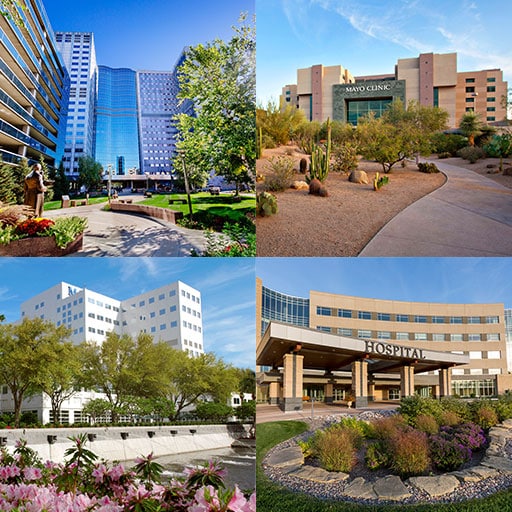
Student life is deeply integrated with the professional environment of the Mayo Clinic campuses in Rochester, Minnesota, and Phoenix/Scottsdale, Arizona. This is not a traditional residential college experience with sprawling quads and dormitories; it is the life of a trainee in a world-class medical center. The Rochester campus itself is a clinical facility, housing 794 beds and 37 operating rooms. Despite this professional focus, there is a concerted effort to foster community and a supportive environment. The school intentionally cultivates a culture where students can thrive, with over 100 student organizations and activities available across campuses for involvement. These range from special interest groups to social activities, providing outlets for connection and respite. The institution states a clear commitment to fostering "a culture of safety and belonging for all staff, students and patients." The dominant social and intellectual experience is one of collaboration with peers who are equally dedicated to healthcare, often working directly alongside Mayo Clinic physicians, researchers, and healthcare professionals. Life revolves around building practical skills, strengthening critical thinking, and participating in the daily rhythm of a major hospital system, with cultural events, lectures, and leisure activities woven into the fabric of this demanding but rewarding environment.
The outcomes for graduates are a direct reflection of the institution's targeted, high-quality professional training. The graduation rate is exceptionally high at 93%, far exceeding the midpoint for certificate-granting colleges. This near-universal completion rate speaks to the supportive environment and the clear, focused career pathways of its programs. For earnings, the median salary for graduates 10 years after entry is strong, though the sources present slightly varying figures: one federal scorecard reports $77,244, while another source notes early career earnings for medical school graduates averaging about $60,000. The high graduation rate and robust earnings potential underscore the value proposition of a Mayo Clinic credential. Furthermore, the outcomes for the most advanced trainees are particularly impressive. The Mayo Clinic Alix School of Medicine is repeatedly recognized as a top school for medical residency training, meaning its graduates are highly sought after for the next stage of their careers. For graduates of the elite Medical Scientist Training Program (MD-PhD), the institution publishes detailed outcome statistics tracking their placements over 23 years, showcasing trajectories into prestigious residencies, fellowships, and research positions. In a recent year, the college awarded 573 degrees across all levels, with the majority (66.7%) going to graduate and professional students, highlighting its advanced, post-baccalaureate focus.
Financial aid is handled through the individual schools, with the Mayo Clinic Alix School of Medicine maintaining a dedicated financial aid office. Aid packages for medical students are typically composed of a combination of scholarships, grants, and Federal Direct Loans. A key data point for the broader college is that 100% of full-time beginning undergraduates receive grant or scholarship aid. However, the average total aid awarded per year is reported to be relatively modest at $2,018, suggesting that many students in certificate and associate programs may have lower direct costs or rely on other funding mechanisms. The average —what students pay after grants and scholarships—is calculated based on various factors, but a specific dollar figure is not provided in the available sources. There is no indication in the provided materials that Mayo Clinic College of Medicine and Science has a institution-wide "no-loan" policy or a commitment to meet 100% of demonstrated financial need for all students. Financial support appears to be program-specific, with the medical school offering its own set of scholarships and aid options, which students are directed to discuss directly with the financial aid office.
Mayo Clinic College of Medicine and Science stands apart because it erases the boundary between school and workplace. It is less an independent academic institution and more an integral educational limb of the Mayo Clinic itself. This creates several unique advantages:
Unmatched Clinical Integration: From the first day, students are not just learning about healthcare; they are participating in it within one of the most respected hospital systems on the planet. The campus is the clinic, with 37 operating rooms and hundreds of patient beds as the backdrop for education.
Apprenticeship-Scale Learning: With student-faculty ratios as low as 5:1, instruction is intensely personal. This is not lecture-hall learning; it's side-by-side training with practicing experts, offering a level of mentorship and hands-on experience that large universities simply cannot replicate.
A Culture of Purpose and Belonging: The institution intentionally fosters a supportive, collaborative environment designed to help students thrive under pressure. It actively strives for a culture of safety and belonging, recognizing that training compassionate caregivers requires a humane training ground.
Clear, High-Value Pathways: The focus is unapologetically on professional mastery in health sciences. This clarity of mission translates into exceptional outcomes: a 93% graduation rate and strong earnings potential, as graduates exit with a credential that carries immense weight in the healthcare industry.
For a student certain of a career in health care, from sonography to surgery, this college offers a direct pipeline into the profession that bypasses the conventional undergraduate experience for something more immediate, more practical, and deeply connected to the pinnacle of medical practice.
Mayo Clinic College of Medicine and Science seal · sourceCampus and Community - Mayo Clinic College of Medicine & Science · sourceCampus and Community - Mayo Clinic College of Medicine & Science · sourceRochester, Minnesota - Campus and Community - Mayo Clinic College of Medicine & Science · source
/prod01/channel_2/media/mccms/content-assets/about/news/jan-april-2021/MCASOM_News_2022USNewsRanking.jpg)
/prod01/channel_2/media/mccms/content-assets/campus-amp-community/mayo-clinic-arizona-3180811-0001-fifty.jpg)
/prod01/channel_2/media/mccms/content-assets/mega-menu/mayo-clinic-minnesota-MEYR6203R-menu.jpg)