Loading…
← All schools
Mercer County Community College
West Windsor, NJpublicwww.mccc.edu/
Avg net price
$5,279
Earnings (10 yr)
$43,264
Acceptance & SAT from Common Data Set / IPEDS; net price, earnings & graduation from the U.S. Dept. of Education College Scorecard. Figures lag ~1–2 years — verify with the school.
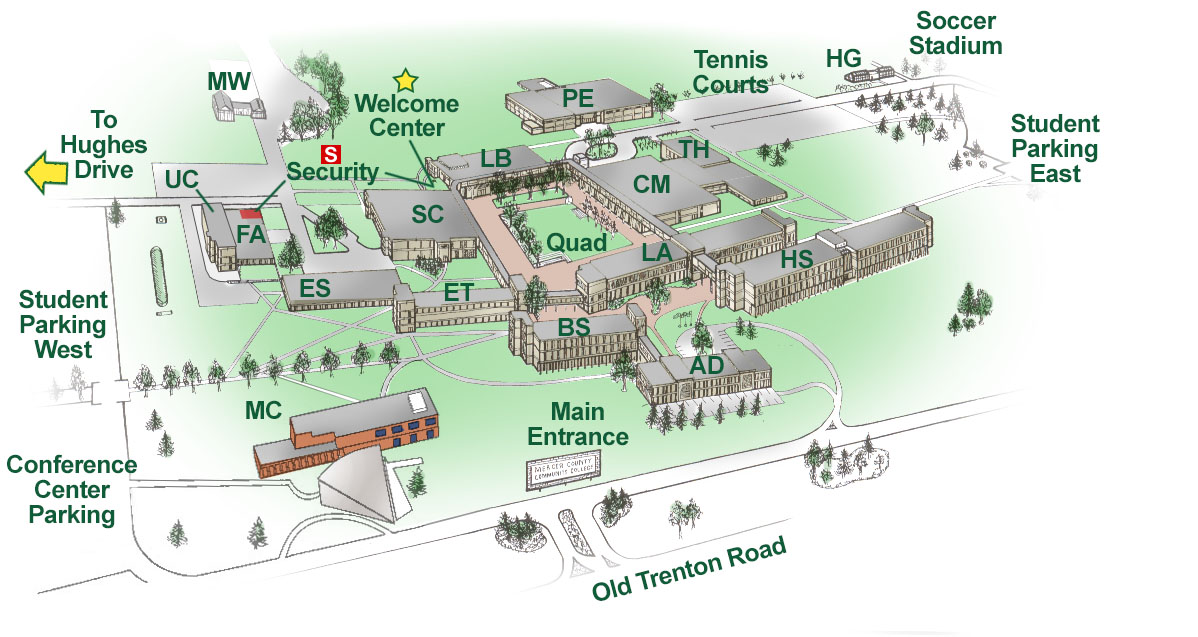
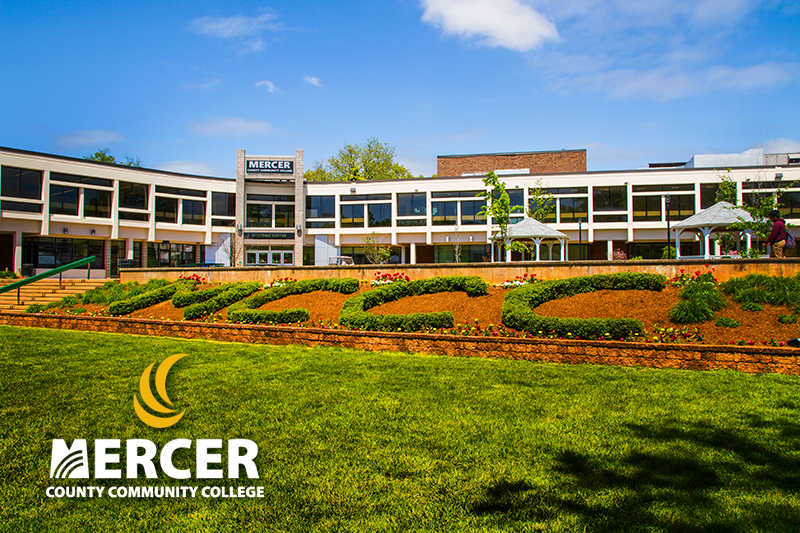
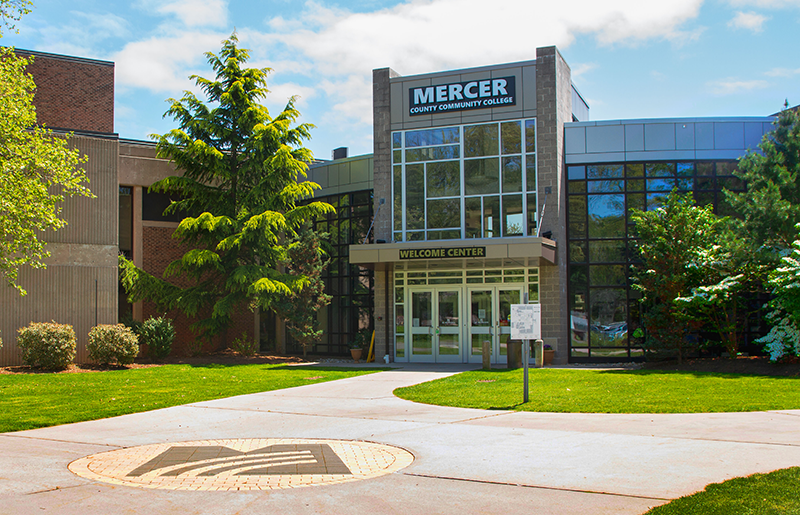
Mercer County Community College is a sprawling, open-access institution in West Windsor, NJ, that serves as a critical academic and vocational launchpad for its region. It operates with a distinctly practical, no-frills ethos, offering a vast menu of over 68 degree programs and 34 certificates designed to get students into the workforce or seamlessly transfer to four-year schools. While its graduation rates are low, its low cost and open-door policy make it a foundational piece of New Jersey's higher education ecosystem, particularly for first-generation students and career-changers.
More details
- Undergrad enrollment
- 5,404
- In-state tuition
- $5,310
- Out-of-state tuition
- $9,174
- Student Clubs
- 40+
- Popular Majors
- Liberal Arts, Nursing, Business
- Graduation Rate
- 22%
- Financial Aid Forms
- Grants, scholarships, work-study, loans
- Degrees & Certificates
- 68 programs, 34 certificates
- Median Earnings (10yr)
- $43,264
- First-Year Retention Rate
- 67%
Outcomes & value
Outcomes & value
- Median earnings (10 yr)
- $43,264
- Value (earnings ÷ net price)
- 8.2×
- Median debt at graduation
- $10,500
- Reducing loan balance (3 yr)
- 38%
- Pell (lower-income) share
- 30%
- First-gen share (among federal-aid recipients)
- 50%
Earnings = median of students working ~10 years after entry; debt = median of graduates. Value divides 10-yr earnings by one year’s net price — read it as earnings per dollar of annual cost, not a full lifetime ROI; it favors lower-cost schools. Source: U.S. Dept. of Education College Scorecard. Figures lag ~2 years and reflect all students, not your intended major.
Campus & location
Campus safety
- On-campus violent crimes (2024)
- 0
On-campus criminal offenses classed as violent (murder/non-negligent manslaughter, rape, robbery, aggravated assault) for the most recent reported year. Source: U.S. Dept. of Education Campus Safety and Security (Clery Act). Counts reflect what’s reported to the school, and urban campuses often report more partly due to non-student incidents nearby — read alongside campus size and setting, not as a standalone safety verdict.
Climate
- Pleasant days / yr
- 88
- Summer high
- 85°F
- Winter low
- 29°F
- Annual rain
- 51.2"
- Annual snow
- 14.7"
- Natural-hazard risk
- Relatively High
Pleasant days counts days per year with a mean temperature of 55–75°F, a high at or below 90°F, a low at or above 45°F, and little precipitation — a transparent comfort measure, not a weighting we invented. Computed from Open-Meteo ERA5 daily history (2019–2023). Natural-hazard risk is the county’s composite rating from the FEMA National Risk Index.
Deep dive — research, future-scholar output & economic mobility
Research output
- Institutional h-index
- 19
- Scholarly works
- 127
Institutional research volume and impact from OpenAlex. The h-index reflects large research universities and will be low for teaching-focused liberal-arts colleges — not a measure of undergraduate quality.
Economic mobility
- Mobility rate
- 1.0%
- Bottom → top quintile
- 11%
- From bottom quintile
- 9%
Mobility rate = the share of students who both start in the bottom household-income quintile and reach the top quintile; bottom → top is that chance conditional on starting at the bottom. Source: Opportunity Insights Mobility Report Cards (Chetty, Friedman, Saez, Turner & Yagan). Reflects 1980–82 birth cohorts, so it’s directional, not current.
Quick answers
- How much does Mercer County Community College cost?
- At Mercer County Community College, the average net price (after aid) is about $5,279 per year. Actual cost varies with financial aid and residency.
- How many undergraduates attend Mercer County Community College?
- Mercer County Community College enrolls approximately 5,404 undergraduate students.
- Where is Mercer County Community College located?
- Mercer County Community College is located in West Windsor, NJ.
Admissions
Mercer County Community College has an open admissions policy. The college's official admissions page states, "Admission to Mercer County Community College is open." This is corroborated by the National Center for Education Statistics (NCES), which notes that admissions and test score data are presented only for institutions that do not have an open admission policy, implying MCCC does. Third-party sources consistently report a 100% , with one noting that 9,335 students applied and 9,335 were accepted for a recent cycle. While the process is open, there are specific steps for enrollment, including the submission of test scores for placement purposes (e.g., an SAT Evidence-Based Reading & Writing score of 480 or higher, or an ACT Reading score of 22 or higher). The college also holds a designation as a Hispanic-Serving Institution, having met criteria involving at least a 25 percent enrollment of full-time students who self-identify as Hispanic or Latino.
Academics
The academic offering at MCCC is its central engine, described by the college itself as "among the most diverse and comprehensive in the country." Students can choose from 68 degree program options and 34 credit certificates. The curriculum is organized into clusters, including Business, Technology, and Professional Studies, where faculty are noted not just for academic qualifications but for holding professional experience and industry certifications. Popular majors, according to Niche data, include Liberal Arts and Humanities (182 graduates), Nursing (116), Business (113), Funeral Service and Mortuary Science (54), and Police and Criminal Science (37). The college emphasizes practical, career-ready education; several programs offer cooperative education components, allowing students to earn an income while gaining experience. The course selection is vast, encompassing both credit and noncredit options designed to meet a wide range of educational and vocational expectations.
Compare Mercer County Community College
vs SUNY Buffalo State Universityvs United States Naval Academyvs SUNY at Purchase Collegevs United States Air Force Academy
See colleges similar to Mercer County Community College →Sources
- 2023-2024 Annual Report
- Admissions
- Mercer County Community College - DFR Report HTML
- Common Data Set: Home
- Common Data Set Repository
- Common Data Set Explorer 2026: Compare 100 Colleges
- Mercer County Community College
- Mercer County Community College | Class of 2030 ...
- Steps to Enroll
- Mercer County Community College SAT Scores, ACT ...
- Mercer County Community College
- Mercer County Community College