Loading…
← All schools
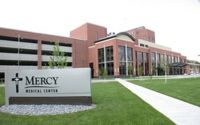
Mercy-St Luke's School of Radiologic Technology
Cedar Rapids, IAprivate nonprofitmercycare.org
Mercy-St Luke's School of Radiologic Technology is a hyper-focused, single-purpose institution that operates like a professional apprenticeship embedded within the Cedar Rapids hospital system. With just 21 students total, it offers a no-frills, 24-month certificate program that trades campus life for immediate clinical immersion, funneling graduates directly into the healthcare workforce. This is a school for decisive, career-minded individuals who want to bypass the traditional college experience and get to work.
More details
- Undergrad enrollment
- 21
- Setting
- Urban
- Degree Offered
- Certificate
- Program Length
- 24 months
- Pell Grant Recipients
- 27%
- Avg. Aid Award (for recipients)
- $6,416
- Earnings 1 Year After Graduation
- $36,427
- Earnings 5 Years After Graduation
- $45,519
Outcomes & value
Outcomes & value
- Pell (lower-income) share
- 32%
Earnings = median of students working ~10 years after entry; debt = median of graduates. Value divides 10-yr earnings by one year’s net price — read it as earnings per dollar of annual cost, not a full lifetime ROI; it favors lower-cost schools. Source: U.S. Dept. of Education College Scorecard. Figures lag ~2 years and reflect all students, not your intended major.
Campus & location
Campus safety
- On-campus violent crimes (2024)
- 2
On-campus criminal offenses classed as violent (murder/non-negligent manslaughter, rape, robbery, aggravated assault) for the most recent reported year. Source: U.S. Dept. of Education Campus Safety and Security (Clery Act). Counts reflect what’s reported to the school, and urban campuses often report more partly due to non-student incidents nearby — read alongside campus size and setting, not as a standalone safety verdict.
Climate
- Pleasant days / yr
- 88
- Summer high
- 82°F
- Winter low
- 16°F
- Annual rain
- 35.7"
- Annual snow
- 31"
- Natural-hazard risk
- Relatively Moderate
Pleasant days counts days per year with a mean temperature of 55–75°F, a high at or below 90°F, a low at or above 45°F, and little precipitation — a transparent comfort measure, not a weighting we invented. Computed from Open-Meteo ERA5 daily history (2019–2023). Natural-hazard risk is the county’s composite rating from the FEMA National Risk Index.
Quick answers
- How many undergraduates attend Mercy-St Luke's School of Radiologic Technology?
- Mercy-St Luke's School of Radiologic Technology enrolls approximately 21 undergraduate students.
- Where is Mercy-St Luke's School of Radiologic Technology located?
- Mercy-St Luke's School of Radiologic Technology is located in Cedar Rapids, IA.
Admissions
Admission to Mercy-St Luke's is a competitive, direct-to-career gateway. The school is highly selective for its size, with an of approximately 38%, translating to about 20 students accepted from the applicant pool each year. This selectivity is notably higher than the reported national average acceptance rate of around 68%. The process is straightforward and professional: applicants must complete an online application and submit a $25 application fee via check made payable to 'SLH School of Radiologic Technology.' The institution is tiny, with a full-time enrollment of 21 students and no part-time students, meaning 100% of the student body is fully committed to the intensive program. There is no mention of a or consideration of demonstrated interest; the focus appears to be on academic prerequisites and professional readiness for a rigorous clinical education.
Academics
The academic model is pure vocational intensity. Mercy-St Luke's hosts a single, 24-month academic program that confers a certificate in Radiologic Technology. It is not a broad-based college; it is a trade school in the truest sense, with its top (and only) major being Allied Health Diagnostic, Intervention, and Treatment Professions, specifically Radiologic Technology/Science - Radiographer. Typically, about 10 students graduate with this credential each cycle. The program's roots are deep, established in the early 1940s when both Mercy and St. Luke's hospitals independently recognized the need to train professionals in this emerging field. The curriculum is built around "competency based, patient-centered clinical education," meaning classroom theory is immediately applied in the affiliated hospital settings of Mercy Medical Center and St. Luke's Hospital. This is an education designed for one outcome: producing job-ready radiologic technologists.
Compare Mercy-St Luke's School of Radiologic Technology
See colleges similar to Mercy-St Luke's School of Radiologic Technology →Sources
- School of Radiologic Technology Admissions ...
- Mercy/St. Luke's School of School of Radiologic Technology
- Mercy-St Luke's School of Radiologic Technology ...
- Mercy/St. Luke's School of Radiologic Technology
- Mercy-St Luke's School of Radiologic Technology
- Mercy-St Luke's School of Radiologic Technology
- Acceptance rate into radiography program? : r/Radiology
- Mercy-St Luke's School of Radiologic Technology
- Mercy-St Luke's School of Radiologic Technology - Sallie